Hoodoos (irregular columns of rock) exist on every continent, but here is the largest concentration found anywhere on Earth. Situated along a high plateau at the top of the Grand Staircase, the park's high elevations include numerous life communities, fantastic dark skies, and geological wonders that defy description.
35.8Kacres of parkland
2Mrecreation visits, 2025
Jun · Aug · Sepnearby climate picks
Seasonal access & reservations
Winter roads and trails Dates vary
Winter snow closes the Fairyland Point and Paria View spur roads. Some trails close seasonally, and storms can temporarily close the southern scenic drive. Exact dates depend on conditions.
Before you go: Check winter road and trail status.
Choose an open below-rim route appropriate for your group, or explore additional scenic-road overlooks. Leave time for the night sky if conditions permit.
Editorial recommendations, reviewed 2026-10-17. Full park days, excluding travel to and from the region. A first-visit outline for a general traveler; adapt to mobility, fitness, season, reservations, and current conditions. These are suggested days, not reserved activities or guaranteed routes.
See the Bryce Amphitheater Activity Fee: No (Entrance fees may apply) Reservations: No Activity: Scenic Driving Pets: Yes with Restrictions Duration: 1–3 Hours Season: Winter, Spring, Summer, Fall Time of Day: Any Time By far the most iconic section of the park, the Bryce Amphitheater is home to the greatest concentration of irregular rock spires (called "hoodoos") found anywhere on Earth. Viewpoints along the first 3 miles (4.8 km) of the main road provide access to views overlooking this area. View Details
Activity Fee: No (Entrance fees may apply)
Reservations: No
Activity: Scenic Driving
Pets: Yes with Restrictions
Duration: 1–3 Hours
Season: Winter, Spring, Summer, Fall
Time of Day: Any Time
Bryce Canyon National Park Hoodoo Geology Talk Activity Fee: No (Entrance fees may apply) Reservations: No Activity: Guided Tours Pets: Yes Location: Sunset Point Duration: 20–30 Minutes Time of Day: Day Typically offered year-round at Sunset Point at 11 a.m. Geologists have spent years studying the unique geologic story of Bryce Canyon and its amphitheaters of hoodoos. Join the Ranger along the rim at Sunset Point to explore the evolution of the hoodoos and the groups of people who have passed through this magical terrain. View Details
Activity: Guided Tours
Location: Sunset Point
Duration: 20–30 Minutes
Time of Day: Day
Drive the Southern Scenic Drive Activity Fee: No (Entrance fees may apply) Reservations: No Activity: Scenic Driving Pets: Yes Duration: 2–12 Hours Season: Winter, Spring, Summer, Fall Time of Day: Any Time The main park road is 18 miles (29 km) from the park entrance in the north to the end of the road at Rainbow at Yovimpa Points. While the Bryce Amphitheater area is found along its first 3 miles (4.8 km), the next 15 miles (24 km) to the road's end are known as the Southern Scenic Drive. Along this section of the main road are 9 scenic overlooks and vehicle pullouts that offer opportunities to see the lesser-seen geology and wildlife of Bryce Canyon. View Details
Duration: 2–12 Hours
Explore the Visitor Center Museum Activity Fee: No (Entrance fees may apply) Reservations: No Activity: Museum Exhibits Pets: No Location: Visitor Center Duration: 15–60 Minutes Season: Winter, Spring, Summer, Fall Time of Day: Day The park museum is found within the Visitor Center and contains exhibits focused on scales of time: Geological, Ecological, Human, and with special exhibits on the Night Sky and Air Quality. View Details
Activity: Museum Exhibits
Location: Visitor Center
Duration: 15–60 Minutes
Bryce Canyon National Park See the Park Film Activity Fee: Yes Reservations: No Activity: Park Film Pets: No Location: Visitor Center Duration: 24–30 Minutes Season: Winter, Spring, Summer, Fall Time of Day: Day "A Song of Seasons" plays in the Visitor Center theater every half hour when the Visitor Center is open. View Details
Activity Fee: Yes
Activity: Park Film
Duration: 24–30 Minutes
Bryce Canyon National Park Plan a Picnic Activity Fee: No (Entrance fees may apply) Reservations: No Activity: Picnicking Pets: Yes Location: CCC Picnic Area Looking for a good place to enjoy a picnic? Here is a list of Bryce Canyon picnic areas. View Details
Activity: Picnicking
Location: CCC Picnic Area
Bryce Canyon National Park Sunset Point to Sunrise Point Hike Activity Fee: No (Entrance fees may apply) Reservations: No Activity: Front-Country Hiking Pets: Yes Location: Sunset Point Duration: 20–60 Minutes The Rim Trail hike meanders along the rim of the iconic Bryce Canyon Amphitheater, giving you views of the hoodoos below. This portion of the Rim Trail, from Sunset Point to Sunrise Point, is the only paved section of this trail and is the easiest walk in the park. Pets are allowed on this trail but must remain on paved surfaces. View Details
Activity: Front-Country Hiking
Duration: 20–60 Minutes
Bryce Canyon National Park Queen's Garden Trail Activity Fee: No (Entrance fees may apply) Reservations: No Activity: Front-Country Hiking Pets: No Location: Queen's Garden Trail Duration: 1–2 Hours The Queen's Garden Trail is the least difficult of the trails descending from the rim into the Bryce Canyon Amphitheater. Hike this out-and-back trail to the Queen Victoria hoodoo at the end of a short spur trail and experience the splendor of hiking amongst the hoodoos. This trail is commonly combined with the Navajo Loop to create a 2.9 mile round trip trail where you can descend at Sunrise Point and ascend at Sunset Point. View Details
Location: Queen's Garden Trail
Duration: 1–2 Hours
Bryce Canyon National Park Navajo Loop Trail Activity Fee: No (Entrance fees may apply) Reservations: No Activity: Front-Country Hiking Pets: No Location: Navajo Loop Trailhead Duration: 1–2 Hours The iconic Navajo Loop Trail begins and ends at Sunset Point. Its switchbacks wind between narrow walls of colorful limestone with views of towering Douglas-fir trees and the park's most famous hoodoo: Thor's hammer. The loop has two sides: Two Bridges and Wall Street. The Two Bridges side is open year-round, however, the Wall Street side is closed during the winter months. During this time Two-Bridges can be hiked as an out-and-back trail or combined with other trails. View Details
Location: Navajo Loop Trailhead
Bryce Canyon National Park Queen's/Navajo Combination Loop Activity Fee: No (Entrance fees may apply) Reservations: No Activity: Front-Country Hiking Pets: No Location: Queen's Garden Trailhead Duration: 2–3 Hours Our most popular hike in the park and the one we most recommend to first-time visitors. The Queen's/Navajo Combination Loop combines the open views and unique hoodoos of the Queen's Garden Trail with the iconic switchbacks and towering canyon walls of the Navajo Loop Trail. Descend Queen's Garden at Sunrise Point, ascend the Navajo Loop to Sunset Point, and then complete the loop back to Sunrise Point via the Rim Trail, enjoying views into the Bryce Canyon Amphitheater below. View Details
Location: Queen's Garden Trailhead
Duration: 2–3 Hours
Bryce Canyon National Park Mossy Cave Trail Activity Fee: No (Entrance fees may apply) Reservations: No Activity: Front-Country Hiking Pets: No Location: Mossy Cave Duration: 30–60 Minutes Season: Winter, Spring, Summer, Fall Mossy Cave trail is one of the lowest elevation hikes in the park as well as one of the only hikes that begins with a climb and ends with a descent. This trail provides access to Water Canyon in one direction and to a sheltered overhang known as Mossy Cave in the other. This area is filled with mosses in the summer and icicles in the winter. Please stay on the main trail and respect all posted signs. Pets are not permitted on this trail. View Details
Location: Mossy Cave
Duration: 30–60 Minutes
Duration
Half Day
Topic(s)
Scenic Views, Animals, Geology, Native American Heritage, Natural Sounds, Night Sky, Ancient Seas, Archeology, Canyons and Canyonlands, Plateaus and Mesas, Fossils and Paleontology, Rock Landscapes and Features, Farming and Agriculture, Freshwater Springs, Astronomy, Trails, Schools and Education, Photography more »
Activities
Scenic Driving, Museum Exhibits, Guided Tours, Front-Country Hiking, Picnicking, Park Film more »
Type
Active, Relaxed, Indoors, Outdoors, Group Friendly
See the Bryce Amphitheater Activity Fee: No (Entrance fees may apply) Reservations: No Activity: Scenic Driving Pets: Yes with Restrictions Duration: 1–3 Hours Season: Winter, Spring, Summer, Fall Time of Day: Any Time By far the most iconic section of the park, the Bryce Amphitheater is home to the greatest concentration of irregular rock spires (called "hoodoos") found anywhere on Earth. Viewpoints along the first 3 miles (4.8 km) of the main road provide access to views overlooking this area. View Details
Activity Fee: No (Entrance fees may apply)
Reservations: No
Activity: Scenic Driving
Pets: Yes with Restrictions
Duration: 1–3 Hours
Season: Winter, Spring, Summer, Fall
Time of Day: Any Time
Drive the Southern Scenic Drive Activity Fee: No (Entrance fees may apply) Reservations: No Activity: Scenic Driving Pets: Yes Duration: 2–12 Hours Season: Winter, Spring, Summer, Fall Time of Day: Any Time The main park road is 18 miles (29 km) from the park entrance in the north to the end of the road at Rainbow at Yovimpa Points. While the Bryce Amphitheater area is found along its first 3 miles (4.8 km), the next 15 miles (24 km) to the road's end are known as the Southern Scenic Drive. Along this section of the main road are 9 scenic overlooks and vehicle pullouts that offer opportunities to see the lesser-seen geology and wildlife of Bryce Canyon. View Details
Duration: 2–12 Hours
Bryce Canyon National Park Hoodoo Geology Talk Activity Fee: No (Entrance fees may apply) Reservations: No Activity: Guided Tours Pets: Yes Location: Sunset Point Duration: 20–30 Minutes Time of Day: Day Typically offered year-round at Sunset Point at 11 a.m. Geologists have spent years studying the unique geologic story of Bryce Canyon and its amphitheaters of hoodoos. Join the Ranger along the rim at Sunset Point to explore the evolution of the hoodoos and the groups of people who have passed through this magical terrain. View Details
Activity: Guided Tours
Location: Sunset Point
Duration: 20–30 Minutes
Time of Day: Day
Ride Your Bike in Bryce Canyon Activity Fee: No (Entrance fees may apply) Reservations: No Activity: Biking Pets: Yes with Restrictions Location: Historic Service Station Season: Spring, Summer, Fall Time of Day: Day, Dawn, Dusk The best way to cycle within the first three miles of the park is by using the Shared-use path. It provides 5 miles (8 km) of vehicle-free two-lane path connecting the shuttle station north of the park with the Visitor Center, Sunrise Point, Sunset Point, and Inspiration Point. Bicyclists looking for a longer ride can travel along the main park road to the southern end of the park. View Details
Activity: Biking
Location: Historic Service Station
Season: Spring, Summer, Fall
Time of Day: Day, Dawn, Dusk
Bryce Canyon National Park Go Horseback Riding Activity Fee: Yes Reservations: Yes Activity: Horseback Riding Age: 7 and Older Pets: No Location: Canyon Trail Rides Corral Duration: 2–4 Hours Season: Spring, Summer, Fall Time of Day: Day Horseback riding is a great way to slow down and experience Bryce Canyon National Park. Horses have been used to explore Bryce Canyon National Park since before it was set aside for federal protection. To support this activity, the National Park Service completed 4.5 miles of foot and horse trails in 1931 that are still in use today. View Details
Activity Fee: Yes
Reservations: Yes
Activity: Horseback Riding
Age: 7 and Older
Location: Canyon Trail Rides Corral
Duration: 2–4 Hours
Bryce Canyon National Park Get a Passport Stamp Activity Fee: No (Entrance fees may apply) Reservations: No Activity: Bookstore and Park Store Pets: No Location: Bryce Canyon Visitor Center Season: Winter, Spring, Summer, Fall Time of Day: Day Are you a "Passport to Your National Parks" cancellation collector? Bryce Canyon has a cancellation stamp to commemorate your visit in your passport book. View Details
Activity: Bookstore and Park Store
Location: Bryce Canyon Visitor Center
Bryce Canyon National Park Bryce Canyon Evening Program Activity Fee: No (Entrance fees may apply) Reservations: No Activity: Guided Tours Pets: No Location: Bryce Canyon Lodge Auditorium Duration: 45–60 Minutes Season: Summer Time of Day: Dusk Evening programs, typically offered from Memorial Day through Labor Day, offer topics that go beyond the rim! Check the calendar for daily times and locations. This is a Ranger’s Choice program offering an exploration into compelling stories, interesting themes, and unique resources that make Bryce Canyon special. View Details
Location: Bryce Canyon Lodge Auditorium
Duration: 45–60 Minutes
Time of Day: Dusk
Explore the Visitor Center Museum Activity Fee: No (Entrance fees may apply) Reservations: No Activity: Museum Exhibits Pets: No Location: Visitor Center Duration: 15–60 Minutes Season: Winter, Spring, Summer, Fall Time of Day: Day The park museum is found within the Visitor Center and contains exhibits focused on scales of time: Geological, Ecological, Human, and with special exhibits on the Night Sky and Air Quality. View Details
Activity: Museum Exhibits
Location: Visitor Center
Duration: 15–60 Minutes
Get Your Junior Ranger Badge Activity Fee: No (Entrance fees may apply) Reservations: No Activity: Junior Ranger Program Pets: Yes with Restrictions Duration: 1–4 Hours Season: Winter, Spring, Summer, Fall Time of Day: Any Time Junior Rangers can be thought of as potential Park Rangers in training. This nationwide program is designed to not only familiarize children with the duties and responsibilities of a park ranger, but also to spark an interest in the whole family for the resources and stories each National Park Service area preserves. View Details
Activity: Junior Ranger Program
Duration: 1–4 Hours
Bryce Canyon National Park Stargazing at Bryce Canyon Activity Fee: No (Entrance fees may apply) Reservations: No Activity: Stargazing Pets: Yes Location: Paria View Season: Winter, Spring, Summer, Fall Time of Day: Night Bryce Canyon's high elevation, clean air, and remote location creates some of the darkest skies in the country. In fact, in 2019 Bryce Canyon officially gained International Dark Sky status. During a new Moon on a clear weather night, you can see thousands of stars and the spectacular band of the Milky Way Galaxy shooting across the sky. We take pride in our ability to protect the night skies for the present and future generations. View Details
Activity: Stargazing
Location: Paria View
Time of Day: Night
Night Sky Telescope Program Activity Fee: No (Entrance fees may apply) Reservations: No Activity: Guided Tours Pets: No Location: Bryce Canyon Visitor Center Duration: 60–75 Minutes Season: Summer Time of Day: Night Offered June through July around 9:45 p.m. at Sunset Point. Experience the dark sky of Bryce Canyon with our telescopes! Rangers will guide you on your magical adventure through the celestial ceiling of our amphitheaters of hoodoos. View Details
Duration: 60–75 Minutes
Bryce Canyon National Park Queen's/Navajo Combination Loop Activity Fee: No (Entrance fees may apply) Reservations: No Activity: Front-Country Hiking Pets: No Location: Queen's Garden Trailhead Duration: 2–3 Hours Our most popular hike in the park and the one we most recommend to first-time visitors. The Queen's/Navajo Combination Loop combines the open views and unique hoodoos of the Queen's Garden Trail with the iconic switchbacks and towering canyon walls of the Navajo Loop Trail. Descend Queen's Garden at Sunrise Point, ascend the Navajo Loop to Sunset Point, and then complete the loop back to Sunrise Point via the Rim Trail, enjoying views into the Bryce Canyon Amphitheater below. View Details
Activity: Front-Country Hiking
Location: Queen's Garden Trailhead
Duration: 2–3 Hours
Bryce Canyon National Park Bryce Amphitheater Traverse Activity Fee: No (Entrance fees may apply) Reservations: No Activity: Front-Country Hiking Pets: No Location: Bryce Point Duration: 3–4 Hours The Bryce Amphitheater Traverse is a one-way hike combining the Peekaboo Loop with the Queen's Garden trail. Hikers descend from Bryce Point, turning left (clockwise) on Peekaboo Loop and then connecting to the Queen's Garden trail to ascend to Sunrise Point. View Details
Location: Bryce Point
Duration: 3–4 Hours
Bryce Canyon National Park Navajo/Peekaboo Combination Loop Activity Fee: No (Entrance fees may apply) Reservations: No Activity: Front-Country Hiking Pets: No Location: Navajo Loop Trailhead Duration: 3–4 Hours Combine two of our most iconic trails, the Navajo and Peekaboo Loop trails, into a a mini Figure-8 combination loop. Start the hike at Sunset Point, descend down either side of the Navajo Loop (Two Bridges in winter), connect to the Peekaboo Loop (we recommend hiking it in a clockwise direction), and ascend Navajo back to Sunset Point. View Details
Location: Navajo Loop Trailhead
Bryce Canyon National Park Fairyland Loop Activity Fee: No (Entrance fees may apply) Reservations: No Activity: Front-Country Hiking Pets: No Location: Fairyland Loop Trailhead Duration: 4–5 Hours The Fairyland Loop is a quiet 8 mile hike that combines hiking along the plateau rim near Boat Mesa with a hike in the canyon with long views of the Bryce Amphitheater surrounded by unique hoodoos. You can start this hike at Fairyland Point or on the rim trail north of Sunrise Point at the Tower Bridge trailhead. We recommend hiking in a counter-clockwise direction. There is no shuttle pick-up at Fairyland Point, so you will need to hike to your starting point. View Details
Location: Fairyland Loop Trailhead
Duration: 4–5 Hours
Bryce Canyon National Park Figure-8 Combination Activity Fee: No (Entrance fees may apply) Reservations: No Activity: Front-Country Hiking Pets: No Location: Queen's Garden Trailhead Duration: 4–5 Hours The Figure-8 Combination combines three amphitheater hikes, Queen's Garden, Navajo Loop, and the Peekaboo Loop, into one ultimate hike! We recommend a clockwise direction descending Queen's Garden, connecting to the Peekaboo Loop (we recommend hiking it in a clockwise direction), and ascending either side of the Navajo Loop (Two Bridges in winter). From there you can complete the trail by hiking back to Sunrise Point along the Rim Trail. View Details
Bryce Canyon National Park Swamp Canyon Loop Activity Fee: No (Entrance fees may apply) Reservations: No Activity: Backcountry Hiking Pets: No Location: Swamp Canyon Overlook Duration: 3–4 Hours Swamp Canyon appears relatively small and sheltered from the overlook, allowing the viewer to develop a more intimate connection with the landscape than some of the grander viewpoints in the park. The Swamp Canyon Loop, which starts at the viewpoint, is more rugged than the Bryce Amphitheater trails, taking hikers into a more forested backcountry hike. There is less signage on this hike and hikers are encouraged to carry a map. View Details
Get a different perspective of the park on a guided horseback ride.
Bryce Canyon National Park
NPS Photo / Peter Densmore
Guided Trail Rides
Want to get a different perspective of Bryce Canyon, check it out from the back of a horse. Canyon Trail Rides, the park's concessioner, offers 2-hour and 3-hour guided horse and mule rides into the Bryce Amphitheater along a dedicated horse trail and the Peek-a-boo Loop Trail. Guided trail rides typically begin in April and run until October 31st, depending on weather.
For information, visit their web site or call them directly at 1(435) 834-5500.
Bring Your Own Horse or Mule
The use of privately-owned stock on the trails of Bryce Canyon is permitted in certain areas and at specific times. Stock is defined as horse and mules. Llamas and goats are prohibited. For information on scheduling a private horse or mule ride, the park's private stock regulations, and more, visit the Bryce Canyon Horseback Riding & Stock Use page.
Canyon Trail Rides, the park's concessioner, offers 2-hour ($75 per person) and 3-hour ($100 per person) guided horse and mule rides into the Bryce Amphitheater along a dedicated horse trail and the Peek-a-boo Loop Trail.
For the guided trail ride, children must be 7 or older for the 2 hour ride. For the 3 hour ride, they must be 10 or older.
Canyon Trail Rides, the park's concessioner, offers 2-hour ($75 per person) and 3-hour ($100 per person) guided horse and mule rides into the Bryce Amphitheater along a dedicated horse trail and the Peek-a-boo Loop Trail. For private horse and mule use, reservations must be made in order to avoid conflict with other horse rides and for the safety of other visitors and stock. All private horseback riding must be scheduled for a specific date and time prior to entering the park. Please write e-mail us at least 72 hours in advance to schedule a reservation.
This is the meeting point for guided horseback rides provided by Canyon Trail Rides. If you're bringing your own horse or mule, you will be given a private location for your trailer to park when you make your reservation.
Accomodations are possible. Please contact Canyon Trail Rides directly to discuss at 435-679-8665
Check out the Park App 's "Tours" section for a guided walkthrough of how to take a driving tour of this area. The main park road is 18 miles (29 km) from the park entrance in the north to the end of the road at Rainbow at Yovimpa Points. While the Bryce Amphitheater area is found along its first 3 miles (4.8 km), the next 15 miles (24 km) to the road's end are known as the Southern Scenic Drive. Along this section of the main road are 9 scenic overlooks that display a lesser-seen beauty of Bryce Canyon. One aspect that makes the Southern Scenic Drive unique is that the park's elevations increase the further south you travel. While the Visitor Center is situated at 7,894 ft (2,406 m), Rainbow and Yovimpa Points exceed 9,000 ft (2,743 m). This change in elevation is the result uneven tectonic forces that uplifted this region over the last 20 million years, and creates a dramatic contrast--with exceptionally long views and unique features--between the north and south ends of the park.
Winter Closures
The high elevations along this section of the main road also lead to temporary winter closures at the Mile 3 gate, so be sure to visit the Conditions page for the latest road status.
Planning Your Drive
It takes about 40 minutes to drive to the end of the Southern Scenic Drive from the Visitor Center. It is recommended that you begin by first doing this all the way to Rainbow and Yovimpa Points. After enjoying these viewpoints, those you will have passed along the road can be visited on the way back. This way, everything will be on the right-hand side of the road; much safer than pulling across traffic everytime you want to see a viewpoint. Typically a trip of only driving and viewpoints will take around 2-3 hours.
It is easy to enjoy all the views along the road, as none of them require much walking to reach. That said, most visitors would likely agree that Rainbow Point, Yovimpa Point, Agua Canyon and Natural Bridge are not to be missed. As you drive south and gain elevation, you'll notice the park's forest community changing from ponderosa forest to a mixture of colorful quaking aspen and denser stands of white fir and Douglas-fir.
Pull-outs and viewpoints along the Southern Scenic Drive also give opportunities for wildlife watching. Species seen further south in the park may include elk, black bears, mule deer, birds associated with mixed-conifer forests (such as Clark's nutcrackers and dusky grouse) and high-elevation cliffs (such as peregine falcons).
Walks and Hikes
All the viewpoints along the Southern Scenic Drive are located a very short walk from their parking lots, so no hiking is required to enjoy this trip. That said, very little can be seen from the car, so you will want to walk the short distances to the railings to enjoy the view. There are two popular day hikes located along this drive: the easy Bristlecone Loop at Rainbow and Yovimpa Points (usually takes about an hour to hike) and the Swamp Canyon Loop at Swamp Canyon overlook (often takes 3 to 4 hours). Backcountry hiking options also exist, with the Under-the-Rim Trail running approximately 22.9 miles (36.9 km) from Bryce Point to Rainbow Point. Connecting trails offer access from along the Southern Scenic Drive and intersect the Under-the-Rim Trail at Swamp Canyon, and Whiteman Bench. The Riggs Spring Loop is an 8.6 mile (13.9 km) hike beginning and ending at the Rainbow and Yovimpa Point parking lot at the south end of the Scenic Drive. Either the Yovimpa or Rainbow Point trailhead may be used to access this loop. A backcountry hiking map with mileage is available at the Visitor Center. More information
Depending on whether you just enjoy the drive and the viewpoints or choose to take a hike along the way, the Southern Scenic Drive can be a relatively short excursion or your whole day.
This trip provides opportunities to see 9 unique viewpoints along the southern, higher elevation stretches of the main park road. These viewpoints not only overlook unique geologic features, but the grand landscape of the Paria Valley and the Grand Staircase beyond.
Pets are permitted on all paved surfaces in the park: campgrounds, parking lots, paved roads, paved viewpoint areas, on the paved trail between Sunset Point and Sunrise Point, and on the paved Shared Use Path between the park entrance and Inspiration Point.
Pets are not permitted on unpaved trails or viewpoints, in public buildings or on public transportation vehicles. These regulations also apply to pets that are carried.
Pets must be on a leash at all times ; the leash must be no longer than 6 feet.
Pet owners may not leave pet(s) unattended or tied to an object. Pets may not be left in vehicles while their owners hike. Be aware that idling and generator use is not permitted in park parking lots.
Pets may not make unreasonable noise.
Pet owners are required to pick-up after their pets (excrement and other solid waste).
All viewpoints along the Southern Scenic Drive are paved and provide relatively flat access to the views. The exception to this is Piracy Point, which is reached via a flat 1,000 foot (39m) unpaved path that provides good access when dry. Visit our Accessibility page for more information.
A shorter visit should focus on the Bryce Canyon Amphitheater along the first 3 miles of the park. Enjoy an easy or moderate hike.
Bryce Canyon National Park
bryce canyon national park
bryce amphitheater viewpoints
See the Bryce Amphitheater Activity Fee: No (Entrance fees may apply) Reservations: No Activity: Scenic Driving Pets: Yes with Restrictions Duration: 1–3 Hours Season: Winter, Spring, Summer, Fall Time of Day: Any Time By far the most iconic section of the park, the Bryce Amphitheater is home to the greatest concentration of irregular rock spires (called "hoodoos") found anywhere on Earth. Viewpoints along the first 3 miles (4.8 km) of the main road provide access to views overlooking this area. View Details
Activity Fee: No (Entrance fees may apply)
Reservations: No
Activity: Scenic Driving
Pets: Yes with Restrictions
Duration: 1–3 Hours
Season: Winter, Spring, Summer, Fall
Time of Day: Any Time
Bryce Canyon National Park Go For a Winter Hike Activity Fee: No (Entrance fees may apply) Reservations: Yes Activity: Hiking Pets: No Season: Winter Many hikes are available to visitors during the winter season, in both the front and backcountry, but might require some additional equipment. For much of the winter the most popular trails are so icy that steep sections cannot be safely traversed without some sort of additional traction device for your hiking shoes or boots. View Details
Reservations: Yes
Activity: Hiking
Bryce Canyon National Park Snowshoe Hikes Activity Fee: No (Entrance fees may apply) Reservations: Yes Activity: Snowshoeing Age: 8 and Older Pets: No Location: Visitor Center Duration: 90–120 Minutes Season: Winter Time of Day: Day Here at 8,000 feet (2,438 m) the scenery changes dramatically in the colder months. Come experience this magical season by taking a snowshoe-hike! Snowshoeing is allowed throughout the park on all trails so you can head out on your own or join a ranger-led snowshoe hike. These hikes are offered in winter as weather and snow conditions permit and are designed for all levels of experience, from beginner to expert. View Details
Activity: Snowshoeing
Age: 8 and Older
Location: Visitor Center
Duration: 90–120 Minutes
Time of Day: Day
Bryce Canyon National Park Go Cross-Country Skiing Activity Fee: No (Entrance fees may apply) Reservations: No Activity: Cross-Country Skiing Pets: No Season: Winter A great way to explore Bryce Canyon in winter is on cross-country skis. Though it is illegal to ski off of the rim into the canyon, you can enjoy a variety of routes above the rim. These include sections of the Rim Trail along the edge of the Main Amphitheater, the Bristlecone Loop Trail; Paria Ski Loop; and the unplowed Paria View and Fairyland Point roads. View Details
Activity: Cross-Country Skiing
Explore the Visitor Center Museum Activity Fee: No (Entrance fees may apply) Reservations: No Activity: Museum Exhibits Pets: No Location: Visitor Center Duration: 15–60 Minutes Season: Winter, Spring, Summer, Fall Time of Day: Day The park museum is found within the Visitor Center and contains exhibits focused on scales of time: Geological, Ecological, Human, and with special exhibits on the Night Sky and Air Quality. View Details
Activity: Museum Exhibits
Duration: 15–60 Minutes
Bryce Canyon National Park See the Park Film Activity Fee: Yes Reservations: No Activity: Park Film Pets: No Location: Visitor Center Duration: 24–30 Minutes Season: Winter, Spring, Summer, Fall Time of Day: Day "A Song of Seasons" plays in the Visitor Center theater every half hour when the Visitor Center is open. View Details
Activity Fee: Yes
Activity: Park Film
Duration: 24–30 Minutes
Bryce Canyon National Park Sunset Point to Sunrise Point Hike Activity Fee: No (Entrance fees may apply) Reservations: No Activity: Front-Country Hiking Pets: Yes Location: Sunset Point Duration: 20–60 Minutes The Rim Trail hike meanders along the rim of the iconic Bryce Canyon Amphitheater, giving you views of the hoodoos below. This portion of the Rim Trail, from Sunset Point to Sunrise Point, is the only paved section of this trail and is the easiest walk in the park. Pets are allowed on this trail but must remain on paved surfaces. View Details
Activity: Front-Country Hiking
Location: Sunset Point
Duration: 20–60 Minutes
Bryce Canyon National Park Queen's Garden Trail Activity Fee: No (Entrance fees may apply) Reservations: No Activity: Front-Country Hiking Pets: No Location: Queen's Garden Trail Duration: 1–2 Hours The Queen's Garden Trail is the least difficult of the trails descending from the rim into the Bryce Canyon Amphitheater. Hike this out-and-back trail to the Queen Victoria hoodoo at the end of a short spur trail and experience the splendor of hiking amongst the hoodoos. This trail is commonly combined with the Navajo Loop to create a 2.9 mile round trip trail where you can descend at Sunrise Point and ascend at Sunset Point. View Details
Location: Queen's Garden Trail
Duration: 1–2 Hours
Bryce Canyon National Park Queen's/Navajo Combination Loop Activity Fee: No (Entrance fees may apply) Reservations: No Activity: Front-Country Hiking Pets: No Location: Queen's Garden Trailhead Duration: 2–3 Hours Our most popular hike in the park and the one we most recommend to first-time visitors. The Queen's/Navajo Combination Loop combines the open views and unique hoodoos of the Queen's Garden Trail with the iconic switchbacks and towering canyon walls of the Navajo Loop Trail. Descend Queen's Garden at Sunrise Point, ascend the Navajo Loop to Sunset Point, and then complete the loop back to Sunrise Point via the Rim Trail, enjoying views into the Bryce Canyon Amphitheater below. View Details
Location: Queen's Garden Trailhead
Duration: 2–3 Hours
Bryce Canyon National Park Mossy Cave Trail Activity Fee: No (Entrance fees may apply) Reservations: No Activity: Front-Country Hiking Pets: No Location: Mossy Cave Duration: 30–60 Minutes Season: Winter, Spring, Summer, Fall Mossy Cave trail is one of the lowest elevation hikes in the park as well as one of the only hikes that begins with a climb and ends with a descent. This trail provides access to Water Canyon in one direction and to a sheltered overhang known as Mossy Cave in the other. This area is filled with mosses in the summer and icicles in the winter. Please stay on the main trail and respect all posted signs. Pets are not permitted on this trail. View Details
Location: Mossy Cave
Duration: 30–60 Minutes
Duration
Half Day
Topic(s)
Animals, Geology, Native American Heritage, Natural Sounds, Night Sky, Canyons and Canyonlands, Forests and Woodlands, Scenic Views, Trails, Plateaus and Mesas, Wilderness, Farming and Agriculture, Freshwater Springs, Rock Landscapes and Features, Astronomy, Schools and Education, Climate Change, Photography more »
Activities
Museum Exhibits, Cross-Country Skiing, Hiking, Front-Country Hiking, Scenic Driving, Park Film, Snowshoeing more »
After enjoying the Bryce Canyon Amphitheater, visit the Southern Scenic Drive, enjoy longer hikes and take in a ranger program.
Bryce Canyon National Park
See the Bryce Amphitheater Activity Fee: No (Entrance fees may apply) Reservations: No Activity: Scenic Driving Pets: Yes with Restrictions Duration: 1–3 Hours Season: Winter, Spring, Summer, Fall Time of Day: Any Time By far the most iconic section of the park, the Bryce Amphitheater is home to the greatest concentration of irregular rock spires (called "hoodoos") found anywhere on Earth. Viewpoints along the first 3 miles (4.8 km) of the main road provide access to views overlooking this area. View Details
Activity Fee: No (Entrance fees may apply)
Reservations: No
Activity: Scenic Driving
Pets: Yes with Restrictions
Duration: 1–3 Hours
Season: Winter, Spring, Summer, Fall
Time of Day: Any Time
Drive the Southern Scenic Drive Activity Fee: No (Entrance fees may apply) Reservations: No Activity: Scenic Driving Pets: Yes Duration: 2–12 Hours Season: Winter, Spring, Summer, Fall Time of Day: Any Time The main park road is 18 miles (29 km) from the park entrance in the north to the end of the road at Rainbow at Yovimpa Points. While the Bryce Amphitheater area is found along its first 3 miles (4.8 km), the next 15 miles (24 km) to the road's end are known as the Southern Scenic Drive. Along this section of the main road are 9 scenic overlooks and vehicle pullouts that offer opportunities to see the lesser-seen geology and wildlife of Bryce Canyon. View Details
Duration: 2–12 Hours
Explore the Visitor Center Museum Activity Fee: No (Entrance fees may apply) Reservations: No Activity: Museum Exhibits Pets: No Location: Visitor Center Duration: 15–60 Minutes Season: Winter, Spring, Summer, Fall Time of Day: Day The park museum is found within the Visitor Center and contains exhibits focused on scales of time: Geological, Ecological, Human, and with special exhibits on the Night Sky and Air Quality. View Details
Activity: Museum Exhibits
Location: Visitor Center
Duration: 15–60 Minutes
Time of Day: Day
Bryce Canyon National Park See the Park Film Activity Fee: Yes Reservations: No Activity: Park Film Pets: No Location: Visitor Center Duration: 24–30 Minutes Season: Winter, Spring, Summer, Fall Time of Day: Day "A Song of Seasons" plays in the Visitor Center theater every half hour when the Visitor Center is open. View Details
Activity Fee: Yes
Activity: Park Film
Duration: 24–30 Minutes
Get Your Junior Ranger Badge Activity Fee: No (Entrance fees may apply) Reservations: No Activity: Junior Ranger Program Pets: Yes with Restrictions Duration: 1–4 Hours Season: Winter, Spring, Summer, Fall Time of Day: Any Time Junior Rangers can be thought of as potential Park Rangers in training. This nationwide program is designed to not only familiarize children with the duties and responsibilities of a park ranger, but also to spark an interest in the whole family for the resources and stories each National Park Service area preserves. View Details
Activity: Junior Ranger Program
Duration: 1–4 Hours
Bryce Canyon National Park Go Cross-Country Skiing Activity Fee: No (Entrance fees may apply) Reservations: No Activity: Cross-Country Skiing Pets: No Season: Winter A great way to explore Bryce Canyon in winter is on cross-country skis. Though it is illegal to ski off of the rim into the canyon, you can enjoy a variety of routes above the rim. These include sections of the Rim Trail along the edge of the Main Amphitheater, the Bristlecone Loop Trail; Paria Ski Loop; and the unplowed Paria View and Fairyland Point roads. View Details
Activity: Cross-Country Skiing
Bryce Canyon National Park Go Snowshoeing Activity Fee: Yes Reservations: Yes Activity: Snowshoeing Age: 8 and Older Pets: No Season: Winter Time of Day: Any Time Snowshoeing is allowed throughout the park on all trails. But be aware that though snowshoes make it possible to travel through deep powdery snow, snowshoeing is still a highly strenuous activity. Most snowshoers enjoy walks along the Rim Trail, Bristlecone Loop, Fairyland Road, and Paria Road. View Details
Reservations: Yes
Activity: Snowshoeing
Age: 8 and Older
Bryce Canyon National Park Go For a Winter Hike Activity Fee: No (Entrance fees may apply) Reservations: Yes Activity: Hiking Pets: No Season: Winter Many hikes are available to visitors during the winter season, in both the front and backcountry, but might require some additional equipment. For much of the winter the most popular trails are so icy that steep sections cannot be safely traversed without some sort of additional traction device for your hiking shoes or boots. View Details
Activity: Hiking
Bryce Canyon National Park See the Night Sky Activity Fee: Yes Reservations: No Activity: Stargazing Pets: Yes with Restrictions Season: Winter, Spring, Summer, Fall Time of Day: Night Bryce Canyon is a sanctuary for natural darkness. Bryce Canyon's skies are so dark, that in 2019 the park was designated as a Gold Tier International Dark Sky Park. Since the park is open 24 hours a day, whether you head off to a viewpoint yourself or join a night sky ranger program, we welcome you to the dark side! View Details
Activity: Stargazing
Time of Day: Night
Bryce Canyon National Park Mossy Cave Trail Activity Fee: No (Entrance fees may apply) Reservations: No Activity: Front-Country Hiking Pets: No Location: Mossy Cave Duration: 30–60 Minutes Season: Winter, Spring, Summer, Fall Mossy Cave trail is one of the lowest elevation hikes in the park as well as one of the only hikes that begins with a climb and ends with a descent. This trail provides access to Water Canyon in one direction and to a sheltered overhang known as Mossy Cave in the other. This area is filled with mosses in the summer and icicles in the winter. Please stay on the main trail and respect all posted signs. Pets are not permitted on this trail. View Details
Activity: Front-Country Hiking
Location: Mossy Cave
Duration: 30–60 Minutes
Bryce Canyon National Park Bristlecone Loop Trail Activity Fee: No (Entrance fees may apply) Reservations: No Activity: Front-Country Hiking Pets: No Location: Bristlecone Loop Trailhead Duration: 30–60 Minutes Season: Spring, Summer, Fall The Bristlecone Loop, an easy 1 mile hike, meanders through the forest atop this highest portion of the park, reaching elevations over 9,100 feet (2778 m). Here you will pass by bristlecone pines up to 1,800-years-old and experience vistas reaching into the Four Corners area. View Details
Location: Bristlecone Loop Trailhead
Season: Spring, Summer, Fall
Bryce Canyon National Park Queen's Garden Trail Activity Fee: No (Entrance fees may apply) Reservations: No Activity: Front-Country Hiking Pets: No Location: Queen's Garden Trail Duration: 1–2 Hours The Queen's Garden Trail is the least difficult of the trails descending from the rim into the Bryce Canyon Amphitheater. Hike this out-and-back trail to the Queen Victoria hoodoo at the end of a short spur trail and experience the splendor of hiking amongst the hoodoos. This trail is commonly combined with the Navajo Loop to create a 2.9 mile round trip trail where you can descend at Sunrise Point and ascend at Sunset Point. View Details
Location: Queen's Garden Trail
Duration: 1–2 Hours
Bryce Canyon National Park Queen's/Navajo Combination Loop Activity Fee: No (Entrance fees may apply) Reservations: No Activity: Front-Country Hiking Pets: No Location: Queen's Garden Trailhead Duration: 2–3 Hours Our most popular hike in the park and the one we most recommend to first-time visitors. The Queen's/Navajo Combination Loop combines the open views and unique hoodoos of the Queen's Garden Trail with the iconic switchbacks and towering canyon walls of the Navajo Loop Trail. Descend Queen's Garden at Sunrise Point, ascend the Navajo Loop to Sunset Point, and then complete the loop back to Sunrise Point via the Rim Trail, enjoying views into the Bryce Canyon Amphitheater below. View Details
Location: Queen's Garden Trailhead
Duration: 2–3 Hours
Bryce Canyon National Park Peekaboo Loop Activity Fee: No (Entrance fees may apply) Reservations: No Activity: Front-Country Hiking Pets: No Location: Bryce Point Duration: 3–4 Hours The Peekaboo Loop descends 670 feet (204 meters) from Bryce Point to this hoodoo-filled loop trail before ascending back up to Bryce Point. In summer months, hikers will encounter horses/mules on this trail. We recommend hiking this trail in a clockwise direction. View Details
Location: Bryce Point
Duration: 3–4 Hours
Bryce Canyon National Park Fairyland Loop Activity Fee: No (Entrance fees may apply) Reservations: No Activity: Front-Country Hiking Pets: No Location: Fairyland Loop Trailhead Duration: 4–5 Hours The Fairyland Loop is a quiet 8 mile hike that combines hiking along the plateau rim near Boat Mesa with a hike in the canyon with long views of the Bryce Amphitheater surrounded by unique hoodoos. You can start this hike at Fairyland Point or on the rim trail north of Sunrise Point at the Tower Bridge trailhead. We recommend hiking in a counter-clockwise direction. There is no shuttle pick-up at Fairyland Point, so you will need to hike to your starting point. View Details
Location: Fairyland Loop Trailhead
Duration: 4–5 Hours
Duration
Full Day
Topic(s)
Birds, Photography, Forests and Woodlands, Coniferous Forests, Geology, Scenic Views, Animals, Native American Heritage, Natural Sounds, Night Sky, Canyons and Canyonlands, Plateaus and Mesas, Rock Landscapes and Features, Wilderness, Schools and Education, Trails, Farming and Agriculture, Freshwater Springs, Astronomy more »
Activities
Front-Country Hiking, Scenic Driving, Museum Exhibits, Junior Ranger Program, Cross-Country Skiing, Hiking, Snowshoeing, Stargazing, Park Film more »
Type
Kid Friendly, Active, Relaxed, Solitary/Remote, Educational, Outdoors more »
Though it is illegal to ski off of the rim into the canyon, you can enjoy a variety of routes above the rim.
Bryce Canyon National Park
Photo courtesy of Jay Dash Photography
A great way to explore Bryce Canyon in winter is on cross-country skis. Though it is illegal to ski off of the rim into the canyon , you can enjoy a variety of routes above the rim. These include sections of the Rim Trail along the edge of the Main Amphitheater, the Bristlecone Loop Trail; Paria Ski Loop; and the unplowed Paria View and Fairyland Point roads. Cross-country skiing opportunities are abundant just outside the park, too! Bryce Canyon City also maintains many miles of groomed ski trails . Grooming reports may be available online.
Snowshoe and Cross-country Ski Rentals
The closest option for renting snowshoes and crosscountry skis is Ruby's Inn Winter Adventure Center in Bryce Canyon City.
Many hikes are available to visitors during the winter season but might require some additional equipment.
Bryce Canyon National Park
Many hikes are available to visitors during the winter season, in both the front and backcountry, but might require some additional equipment. After a big snowfall most of the park's day hiking trails require snowshoes. However, after a few days of melt, and with continued use, the trails become so well packed and icy that snowshoes are no longer effective to provide traction and stable footing.
Traction Devices
For much of the winter the most popular trails are so icy that steep sections cannot be safely traversed without some sort of additional traction device for your hiking shoes or boots. Mountaineering crampons or other, lighter options which fasten over your winter footwear work well. We recommend wearing these devices throughout the park, especially in parking lots and other paved areas to avoid injuries from slipping and falling.
Traction devices are available for purchase at the Bryce Canyon Association's bookstore at the Visitor Center.
Winter Backpacking
Traversing Bryce Canyon's backcountry is challenging year-round. Winter conditions include deep snow and sub-zero temperatures. Finding and following the trail can be extremely difficult in deep snow. Losing the trail makes it difficult to find the key routes back up to the rim and the Rainbow Point Road. For this and other reasons (open fires are prohibited, the Rainbow Point Road may be closed for several days after a big storm, etc.) winter backcountry permits are issued to only the most experienced and well-prepared adventurers. Ski and/or snowshoe equipment is highly recommended.
Join Randy Ringtail and Ruby the Rufous Hummingbird as they explore Bryce Canyon National Park and learn about how to plan ahead, stay on trail, and never feed or get close to wildlife.
Brian B. Roanhorse
What is a Junior Ranger?
Junior Rangers can be thought of as potential Park Rangers in training. This nationwide program is designed to not only familiarize children with the duties and responsibilities of a park ranger, but also to spark an interest in the whole family for the resources and stories each National Park Service area preserves.
How can you become a Junior Ranger?
At Bryce Canyon National Park, our Junior Rangers must successfully complete two tasks:
Learn about the park by exploring the park museum, attending a presentation or hike given by a Park Ranger, or watching the park movie.
Work through an activity booklet completing an age appropriate number of activities.
Upon completing these requirements, Junior Ranger candidates must return to the Visitor Center where they will be inducted as Junior Rangers and receive a free badge. Other unique Junior Ranger souvenirs are available for purchase from the park bookstore.
Becoming a Junior Ranger is a mark of distinction. These special badges that are issued cannot be purchased or otherwise obtained except through the dedication of the child and the support of his or her parents or guardians. Parents wishing their children to become Junior Rangers should plan to allocate 3-6 hours of their Bryce Canyon visit toward the completion of this program.
Download the Bryce Canyon Junior Ranger book here:
You can download the Bryce Canyon Junior Ranger book [PDF 6.4 MB] and get started as soon a you arrive to the park. Printed copies of the book are also available at the visitor center.
Completing the Book from Home?
Once you've completed your book, please take a photo of your favorite page or activity with an adult's signature on that page (certifying you've completed all your activities) to brca_information@nps.gov Be sure to include your mailing address in the e-mail. We would also love to hear about why you enjoyed that page or activity! Please do not mail your book. Mailed books will not be returned. Due to shipping costs we are unable to mail complimentary physical badges and will provide a complimentary gold foil official Junior Ranger sticker badge instead.
Sending a Pre-Paid Envelope
If you would like a wooden badge or a printed Junior Ranger Book, you will need to cover shipping by sending the park a pre-paid envelope.The enclosed envelope will need first class package postage, and for wooden badges will need to be a padded bubble envelope (regular envelopes for badges will be rejected by the park and USPS). If you are only requesting a book, it can be sent in a regular envelope. Badges are 0.2 oz each. Books are 3.0 oz each and are 8.5 inches by 11 inches. Your postmaster should be able to tell you what your postage will be from your zip code. You can mail the pre-paid envelope to the park at: Bryce Canyon National Park PO Box 640201 Bryce, UT 84764
Hints and Word Keys!
If you get stuck while working on your book, try checking out some of the hints below.
Pages 2 - 3 (Planning Your Day at Bryce Canyon)
Get Ready Bingo
Pages 4 - 5 (Being in Bryce Canyon)
Pages 6 - 7 (Geology of Bryce Canyon)
Pages 8 - 9 (Plants of Bryce Canyon)
Pages 10 - 11 (Animals of Bryce Canyon)
Pages 12 - 13 (Humans of Bryce Canyon)
Pages 14 - 15 (Night Skies of Bryce Canyon)
Pages 16 - 17 (Protecting the Future of Bryce Canyon)
Pages 18 - 19 (The Way of the Junior Ranger)
Explore. Learn. Protect.
More information on other Junior Ranger programs throughout the national park system is also available.
Check the park calendar to discover what events will be offered during your visit.
All programs are subject to change due to staffing availability and weather conditions. Check at the visitor center upon your arrival for up-to-date information.
Book a tour, private shuttle, or other commercial service.
Currently Authorized Commercial Vendors
Bicycle Tours: This commercial service allows groups of bicyclists accompanied by a leader to ride through designated portions of Bryce Canyon National Park.
Hiking/Walking Frontcountry: This commercial service is defined as natural or cultural resource information provided by a designated leader to a specified group of people above and below the rim of the canyon.
Motorcycle/Scooter Tours: This commercial service allows groups of motorcycles accompanied by a leader to ride through designated portions of Bryce Canyon National Park.
Photography Instruction: These workshops are allowed to give technical and artistic instructions on composition of photographs and paintings related to the unique resources protected in Bryce Canyon National Park.
Transport (non-tour) - road, air, water based : Commercial shuttle service is authorized for the point-to-point transportation and drop-off of passengers in Bryce Canyon National Park at designated parking areas, pullouts, and developed areas.
Road Based Commercial Tour: New for Bryce Canyon in January 2026! This commercial service allows persons traveling by vehicle (16+ capacity) on an improved roadway: On an itinerary that someone has packaged and sold for leisure/recreational purposes, and which provides no other services except those incidental to road-based travel in an area unit of the National Park System (on-board interpretation and incidental stops at visitor centers, restaurants, wayside exhibits, etc.) and only takes place above the rim of the canyon Persons travelling in a vehicle with a capacity of 15 or less and on an itinerary that someone has packaged and sold for leisure/recreational purposes, and which provides no other services except those incidental to road-based travel in an area unit of the National Park System must apply for a CUA under the Guided Motorized Tour- 15 passengers or less category as of 03/19/2026 (or may hold a Hiking/ Walking- Frontcountry CUA if issued prior to 03/19/2026).
On an itinerary that someone has packaged and sold for leisure/recreational purposes, and which provides no other services except those incidental to road-based travel in an area unit of the National Park System (on-board interpretation and incidental stops at visitor centers, restaurants, wayside exhibits, etc.) and only takes place above the rim of the canyon
Persons travelling in a vehicle with a capacity of 15 or less and on an itinerary that someone has packaged and sold for leisure/recreational purposes, and which provides no other services except those incidental to road-based travel in an area unit of the National Park System must apply for a CUA under the Guided Motorized Tour- 15 passengers or less category as of 03/19/2026 (or may hold a Hiking/ Walking- Frontcountry CUA if issued prior to 03/19/2026).
Guided Motorized Tour- 15 passengers or less: New for Bryce Canyon as of 03/19/2026! This category is for persons travelling in a vehicle with a capacity of 15 passengers or less and on an itinerary that someone has packaged and sold for leisure/recreational purposes, and which provides no other services except those incidental to road-based travel in an area unit of the National Park System.
Bryce Canyon National Park has two campgrounds, North campground (open year-round) and Sunset campground (closed in winter).
Book Your Campsite
Interactive Campground Map
Camping Information
Seasons & Reservations
Fees & Discounts
Campground Maps
Frequently Asked Questions
Loop A & B now open for 2026 Season. Reservation only.
Loop A now open for 2026 Season. Reservation only.
Experience the solitude of Bryce Canyon's forested backcountry and wilderness areas.
The Sunset Campground Group Site can accommodate up to 30 people with a sliding scale for fees.
It is your responsibility to review and understand campground regulations.
2026 Campground Seasons and Reservations
North Campground (Open Year-Round)
Non-Peak Season, January 1 – May 16, 2026 (Loop A open year round, Loop B open March 25, 2026): Up to 6-month advance reservations via Recreation.gov Peak Seaon, May 17 - October 4, 2026: Up to 6-month advance reservations via Recreation.gov October 5 – December 31, 2026: Up to 6-month advance reservations via Recreation.gov
Sunset Campground (Closed in Winter)
Usual Non-Peak Season, April 15 – May 16, 2026 (weather & snowpack depending): Up to 14-day advance reservations via Recreation.gov Peak Season, May 17 – October 11, 2026: Up to 14-day advance reservations via Recreation.gov October 12, 2025 – April 14, 2026: Closed (weather dependent)
Sunset Campground Group Site - Still closed as of March 25, 2026
April 15 – May 17: CLOSED May 18 – October 17: Up to 14-day advance reservations via Recreation.gov October 18 – October 31: Reservation only (weather-dependent)
Sunset Campground ADA Accessible Sites
Loop A has two accessible sites: Site 224 and Site 223. To reserve these ADA-accessible sites you may send your request to: Bryce Canyon National Park, PO Box 640201, Bryce, UT 84764, Attention: Campground Supervisor. Or, you may leave a message on the Campground phone: 435-834-4771. Be sure to include your name, contact information (phone # and/or email address) and the dates you wish to reserve. If ADA sites are available, they can also be reserved on a first-come, first-served basis by inquiring with the campground host.
Golden Age & Golden Access Passes;
America the Beautiful Federal Lands Senior Pass (lifetime pass for U.S. residents 62 years and older);
America the Beautiful Federal Lands Access Pass (lifetime pass for U.S. residents with a permanent disability).
Can't Find a Campsite?
The park has become an extremely popular destination in recent years. Due to this popularity, front-country park campgrounds can fill by noon on weekends May through October. If you arrive too late to get a site in a designated campground, you have the following options: Go to a private campground or stay in lodging in gateway communities. Visit Garfield County Tourism Bureau for more information. Check out options for dispersed camping (note: you are responsible for understanding and abiding by all USFS regulations). Camping along the roadside or at a roadside pull off is not allowed within the park and violators may be subject to a citation.
Learn more about hiking and camping in Bryce Canyon's backcountry.
No Rainbow Bus Tour
The Rainbow Bus Tour, which was sometimes used by hikers to shuttle south to Rainbow Point, has been discontinued. For alternative options, visit our Commercial Tours and Services page.
NPS/Peter Densmore
Experience the solitude of Bryce's forested backcountry and wilderness areas! To preserve this experience, backcountry camping is permitted only in designated campsites and a backcountry permit must be obtained prior to any overnight trips.
There are 7 campsites on the 22.9 mile (36.9 km) Under-the-Rim Trail . The Under-the-Rim Trail connects Rainbow Point in the south with Bryce Point in the north, following the forested base of the plateau's eastern edge. Hikers typically spend 1 to 2 nights along this route.
There are 3 campsites (and 1 group site) on the 8.6 mile (13.9 km) Riggs Spring Loop Trail . The Riggs Spring Loop Trail starts and ends at Yovimpa Point, at the southern end of the park. Hikers typically spend 1 night along this route.
Both trails are strenuous, with multiple changes in elevation ranging from 6,800 feet (2,073 m) to 9,115 feet (2778 m)
First time visiting?
Please note that most first-time visitors are seeking the iconic scenery of the park's Bryce Amphitheater area . There are only day hikes located in this area, and no overnight camping below the rim. By contrast, Bryce Canyon's backcountry areas are defined more by forest punctuated with views of distant cliffs and features. While also beautiful, we suggest those looking to experience the park's most iconic scenery consider a combination of frontcountry camping and day hikes for their first visit.
Permits and Fees: New Process
Beginning December 1st 2022, overnight visitors to Bryce Canyon’s backcountry areas will be able to reserve permits for peak season trips up to three months in advance using the website Recreation.gov . Permits for peak season trips occurring March through November will be available online up to three months in advance. Online permit holders are still required to check in at the Visitor Center before departing on their overnight trip to review backcountry regulations, check-out a free bear canister, or have yours inspected. Permits for winter trips occurring December through February will remain on a walk-in basis, issued up to 48 hours in advance.
Permit pick-up is available at the Visitor Center from 8 a.m. until one hour before the Visitor Center closes . All site reservations are subject to availability.
Overnight stays are limited to a maximum of 14 nights.
Cost is $10/permit + $5/person to obtain a permit. Credit cards accepted.
Permits are required for all overnight backcountry stays.
Trip Planning Information
Please review the information below to help you prepare for your backcountry experience.
Backcountry Guidelines and Regulations
Campsites - Camping is permitted in designated sites only; campers must use the established tent pads to set up tents
Bear canisters - Bear canisters on overnight backcountry hikes are required. See more information below.
Pets - Pets are not allowed on any trails or in backcountry areas. You may not bring pets on day hikes or backcountry trips. Pets are restricted to paved walkways and roads in the developed areas of the park.
Hammocks - Hammocks are not permitted. Attaching items to trees (hanging, nailing, anchoring, etc.) is not permitted.
Water - Carry plenty of water and check water availability with a ranger at the Visitor Center before you leave. Backcountry water must be purified.
Hygiene - Wash dishes and bathe at least 100 feet (30 m) from water sources, trails and campsites.
Waste - Dig "catholes" 6 to 8 inches (15 cm) deep at least 200 feet (60 m) away from water, trails and campsites to bury human waste.
Fires - No open fires in the backcountry. Use only pressurized gas stoves for cooking. “Alternative fuel” stoves are not permitted. Please ask the backcountry ranger if you are unsure about your stove. Report any campfire violations to a park ranger.
Safety - Carry a detailed topographic map, compass, extra clothing, food and water, rain gear, hat and sunscreen. Check the weather forecast prior to departure. Always let a friend or family member know your plans.
Travel - Stay on designated trails. Shortcutting trail switchbacks is illegal, dangerous and causes erosion!
Leave No Trace - Pack out all trash and any you find that has been left by others. Pack out toilet paper. and food scraps!
Groups - Backcountry campsites are limited to 6 people per regular site, and 15 people per group site. Three tent pads are available at each backcountry site. Permits are issued for each individual tent pad. The maximum for each tent pad/permit is two people (Six people total per site).
Backcountry Trails
The Under-the-Rim Trail is approximately 22.9 miles (36.9 km) from Bryce Point to Rainbow Point. Connecting trails offer access from the park's Scenic Drive and intersect the Under-the-Rim Trail at Swamp Canyon and Whiteman Bench trailheads. Agua Canyon Connector Trail at Ponderosa Point is closed indefinitely due to rockslides and extremely unstable conditions. The Riggs Spring Loop is 8.8-mile (14.2 km) beginning and ending at the Rainbow/Yovimpa Point parking lot at the south end of the Scenic Drive. Either the Yovimpa or Rainbow Point trailhead may be used to access this loop.
The Under-the-Rim Trail May Be Broken into Sections as Follows:
Note: Hitchhiking is not allowed in Bryce Canyon National Park.
Map and Brochure
Backcountry Brochure (The DATUM provided for each site was derived from a handheld GPS unit and does not represent NPS approved information.)
Water in the Backcountry
We recommend you carry at least one gallon (4 liters) of water per person per day.
Water sources are unreliable.
Water from backcountry sources must be purified.
Purify water by boiling (10 minutes), filtering, or iodine treatment.
Please check at the Visitor Center for the most current information on water availability. Depending on seasonal variations you find water at the following backcountry locations:
Yellow Creek (near all campsites)
Sheep Creek (near campsite; campsite is closed to campers)
Iron Spring (trail near campsite)*
Riggs Spring (inside log fence area)
Yovimpa Spring (below Yovimpa Pass campsite)
* Note: Water in Iron Spring has substantial sediment and metallic taste Water Caching Water caching is permitted. Water must be labeled with your name and the date. Caches are typically placed at the junction of the Under-the-Rim trail and Swamp Canyon Connector.
The Bryce Canyon Shuttle provides optional transportation to and from Sunrise, Sunset, Inspiration, and Bryce Points April - October. It does not serve the southern end of the park. For transportation to the southern end of the park, contact one of our approved Commercial Shuttle providers. Private vehicles can also be parked at trailheads during your trip. A parking pass will be provided to you when you pick up your permit at the Visitor Center.
Bears and Other Wildlife
Bryce Canyon is home to many animals including mountain lions, coyotes and black bears. Squirrels, snakes and other small animals may also be present near your campsite.
Bear-resistant canisters are required, and available for loan, free of charge, at the Visitor Center If you have your own bear-resistant canister, you must present it to the backcountry ranger to make sure it meets park requirements (hard-sided and lockable)
If you have your own bear-resistant canister, you must present it to the backcountry ranger to make sure it meets park requirements (hard-sided and lockable)
Feeding or harassing wildlife in the park is a violation of Federal law (36 CFR 1002.2) and such behavior is subject to fines or other penalties
Due to the presence of black bears within Bryce Canyon National Park, the following regulations and recommendations are also in place:
All food must be prepared and stored in the designated Food Prep Area
Store all food and scented personal items in the bear canister
Do not eat or use scented items in your tent
Do not sleep in the clothes you were wearing when you cooked
Keep bear canisters locked when not tending to them
Hanging food from trees is prohibited
In the summer of 2010, a Black Bear had to be killed because it was conditioned to associate food with humans and began to exhibit aggressive behavior. Feeding wild animals is a form of animal cruelty. Please take your food storage practices seriously.
Before your trip, we recommend you take a moment to review information on how to respond to bear encounters . Information about other animals that may be encountered in Bryce Canyon can be viewed at the park's wildlife page .
Required: Approved Bear Canisters
Bear-resistant canisters are required, and available for loan, free of charge, at the Visitor Center
Model 812 Backpackers' Cache (Garcia) www.backpackerscache.com
The Bearikade Weekender (1766 and higher) and The Bearikade Expedition MKII (1766 and higher) www.wild-ideas.net
The Bear Keg (Counter Assault) www.counterassault.com
The Bare Boxer Contender (101) and Champ (202) www.bareboxer.com
Lighter1 Big Daddy and Lil' Sami www.lighter1.com
UDAP No-Fed-Bear www.udap.com
Thru-Hikers (e.g. Hayduke Trail)
Thru-hikers (Hayduke Trail) traveling and/or staying overnight in Bryce Canyon are still subject to park regulations. If you intend to stay overnight within the park, you will need to stop into the Visitor Center and obtain a permit. Plan ahead and make sure you have the proper bear-resistant canister and camp stove. Campsites fill up during the summer, so do not expect to arrive at any site at your leisure and start setting up camp without first checking in with a backcountry ranger and obtaining a permit. You may want to consider camping outside the park boundaries if obtaining a permit and complying with park regulations is difficult. The Dixie National Forest has different regulations on dispersed camping. Check their website or call the local USFS Ranger Station for more information.
General Water Information
Junction of Under-The-Rim Trail and Whiteman Connector Trail (1 Mile down fromthe Whiteman Bench pullout)
Junction of Under-The-Rim Trail and Swamp Canyon Connecting trail (0.9 Miles down from the Swamp Canyon Overlook pullout)
Treating Water, Step-by-step
The first step in the process is to collect the water you will drink. Chose a collection spot that is on higher elevations or near the water's source, away from established campsites, and away from animal grazing areas. The next step in the water purification process is filtration . Filtration by itself does not purify water. It must be followed by boiling or disinfection to purify water for drinking.
Most water filters are made of a screen with many tiny holes in it. These filters can remove protozoa and some bacteria, but they cannot filter out viruses because viruses are too small.
Filters also remove bigger contaminants like leaves, silt, dirt, and sand. If the water is cloudy or has floating material in it, you should filter it even if you plan to boil or disinfect it.
Filtration systems with absolute pore size less than or equal to 1 micron filter ( NSF Standards 53 or 58 rated “cyst reduction / removal ) have a high effectiveness in removing cryptosporidium and giardia .
Be sure to use and care for your filter according to the manufacturer’s instructions. Filters don’t work as well if they aren’t taken care of over time.
The final step is disinfection . This can be done by either boiling, or treating with a disinfectant. This is the most important step. These methods will kill any remaining organisms in the water, especially those that could make you sick.
Boiling: Boiling is the best way to kill disease-causing organisms, including viruses, bacteria, and parasites. The high temperature and time spent boiling are very important to effectively kill the organisms in the water. Boiling will also effectively treat water if it is still cloudy or murky. Bryce Canyon National Park recommends boiling water for approximately 10 minutes.
Disinfection: Disinfection happens when a chemical or UV light is added to water to kill bacteria, viruses, and other potentially harmful organisms. Many factors can impact the effectiveness of these methods including water temperature, pH, and cloudiness. With disinfectants, it is important to allow the chemical or UV light enough time to treat the water and kill the organisms before drinking – this is called contact time. Chemical Disinfection: Chemical disinfection involves adding one or more chemicals to your filtered water that are effective at killing waterborne organisms.
Chemical tablets or liquid drops are the most common ways to disinfect natural water. Iodine or chlorine dioxide are the most frequently used disinfection agents. National Sanitation Foundation (NSF) approved products are recommended.
Follow the manufacturer’s instruction for disinfecting the water. Contact time to disinfect the water varies by product (example: 30 minutes to 4 hours). If the water is cloudy or has floating debris, it will be more effective to pre-filter the water before disinfecting.
WARNING: Do not use pool-cleaning tablets to disinfect drinking water! Poolcleaning tablets are not intended to be consumed. WARNING : Consult with your physician before using any disinfection products. Some tablets or drops, especially iodine, may not be safe for pregnant women, people with thyroid issues or iodine hypersensitivities, or for user over long periods of time.
Official NPS features and USGS park boundaries, imported 2026-10-17. An inventory snapshot, not live trail or parking availability.
Loading official park features…
TrailsPoints of interestParkingZoom with buttons or pinch. Toggle layers on the map.
Map coverage varies. Trail names may represent segments, connectors, or shared park units; mapped lines are not a hiking recommendation. Use official conditions and navigation resources before heading out.
NPS public GIS inventory, imported 2026-10-17. “Existing” is an inventory classification, not confirmation that a trail is open. Segment counts are not route distances. Parking records do not indicate space availability, fees, or accessibility certification. View government source ↗
Climate for Cedar City, 79 km from the park reference point. 1991–2020 normals. Source elevation: 1,782 m.
Daytime highNighttime lowOctober: 61° / 35°
Daytime high61°
Precipitation36 mm
Daylight11.0 hrs
Wind8.4 km/h
Mountain, rim, valley, and coastal conditions can differ sharply from the source town. Check park forecasts and current conditions before travel.
Monthly climate data 12 months · °F
Month
High
Low
Rain / snow water
Wet days
Daylight
37°
15°
41 mm
6.7
9.7 h
40°
18°
51 mm
7.5
10.5 h
47°
24°
52 mm
7.6
11.7 h
55°
30°
40 mm
7.0
12.9 h
66°
39°
29 mm
6.2
14.0 h
79°
49°
11 mm
2.3
14.6 h
84°
56°
25 mm
5.3
14.3 h
82°
55°
27 mm
5.5
13.5 h
74°
46°
26 mm
4.5
12.3 h
61°
35°
36 mm
5.2
11.0 h
47°
23°
32 mm
4.8
10.0 h
37°
15°
38 mm
5.9
9.4 h
RESEARCH WITH THE SOURCE IN VIEW
The practical field guide.
Official NPS excerpts imported 2026-10-17. Fees, permits, road access, and operations can change; use the source link to confirm the latest information.
Where to find everything from medical assistance to Wi-Fi.
Learn about entrance and campground fees or buy a digital pass.
You don't need a reservation to enter the park but information on other permits and reservations can be found here.
Wondering where you can take your pet? Start here.
Check for alerts and current conditions in the park.
Our most frequently asked visitor questions, answered all in one place.
Basics of Visiting Bryce Canyon
Bryce Canyon has one main 18-mile road that runs north-south through the park. Most visitors will first be looking for views of the Bryce Amphitheater, found along the first 3 miles (4.8 km) of the road. Here one finds the four most popular overlooks in the park: Bryce Point, Inspiration Point, Sunset Point, and Sunrise Point. These viewpoints are also trailheads for some of the parks most popular trails (e.g. both Sunset and Sunrise Points are trailheads for the popular 2.9 mile (4.6 km) Queen's/Navajo Combination Loop). This area is best for those visiting 1 to 3 hours. Longer visits often include a trip down the full length of the main road (known as the Southern Scenic Drive) to Rainbow Point, Natural Bridge, and other viewpoints. Visitors typically travel the full length of the road to Rainbow and Yovimpa Points and then stop at viewpoints on the way back.
Loop A & B now open for 2026 Season. Reservation only.
Loop A now open for 2026 Season. Reservation only.
Experience the solitude of Bryce Canyon's forested backcountry and wilderness areas.
The Sunset Campground Group Site can accommodate up to 30 people with a sliding scale for fees.
It is your responsibility to review and understand campground regulations.
2026 Campground Seasons and Reservations
North Campground (Open Year-Round)
Non-Peak Season, January 1 – May 16, 2026 (Loop A open year round, Loop B open March 25, 2026): Up to 6-month advance reservations via Recreation.gov Peak Seaon, May 17 - October 4, 2026: Up to 6-month advance reservations via Recreation.gov October 5 – December 31, 2026: Up to 6-month advance reservations via Recreation.gov
Sunset Campground (Closed in Winter)
Usual Non-Peak Season, April 15 – May 16, 2026 (weather & snowpack depending): Up to 14-day advance reservations via Recreation.gov Peak Season, May 17 – October 11, 2026: Up to 14-day advance reservations via Recreation.gov October 12, 2025 – April 14, 2026: Closed (weather dependent)
Sunset Campground Group Site - Still closed as of March 25, 2026
April 15 – May 17: CLOSED May 18 – October 17: Up to 14-day advance reservations via Recreation.gov October 18 – October 31: Reservation only (weather-dependent)
Sunset Campground ADA Accessible Sites
Loop A has two accessible sites: Site 224 and Site 223. To reserve these ADA-accessible sites you may send your request to: Bryce Canyon National Park, PO Box 640201, Bryce, UT 84764, Attention: Campground Supervisor. Or, you may leave a message on the Campground phone: 435-834-4771. Be sure to include your name, contact information (phone # and/or email address) and the dates you wish to reserve. If ADA sites are available, they can also be reserved on a first-come, first-served basis by inquiring with the campground host.
Golden Age & Golden Access Passes;
America the Beautiful Federal Lands Senior Pass (lifetime pass for U.S. residents 62 years and older);
America the Beautiful Federal Lands Access Pass (lifetime pass for U.S. residents with a permanent disability).
Can't Find a Campsite?
The park has become an extremely popular destination in recent years. Due to this popularity, front-country park campgrounds can fill by noon on weekends May through October. If you arrive too late to get a site in a designated campground, you have the following options: Go to a private campground or stay in lodging in gateway communities. Visit Garfield County Tourism Bureau for more information. Check out options for dispersed camping (note: you are responsible for understanding and abiding by all USFS regulations). Camping along the roadside or at a roadside pull off is not allowed within the park and violators may be subject to a citation.
Learn about wheelchair accessibility and how to plan an accessible visit to Bryce Canyon National Park.
Learn about the all terrain wheel chair !
General Accessibility
Fairyland Point (good access) : Unpaved viewpoint (firmly compacted sediment), 89 ft (27m) from parking lot to overlook. Road is closed to vehicles in winter . Elevation gain: 3.3 ft (1.0m); Typical grade: 3.7% (Max. 4.7%); Typical cross slope: 1.6% (Max. 2.6%)
Sunrise Point (good access) : Paved trail, approximately 1,584 ft (482m) from the parking lot to the rim. Additional 78.8 ft (24m) to continue from the bottom of the viewpoint to the top on unpaved, firm native sediment; 20.7% maximum grade (not recommended) . Paved Trail - Elevation gain: 50 ft (15m)/Elevation Loss: 20 ft (6m); Typical grade: 3.9% (Max. 10.4%); Typical cross slope: 2.3% (Max. 9.0%) Bottom of Viewpoint to Top - Elevation gain: 15 ft (4.5m); Typical grade: 18.6% (Max. 20.7%); Typical cross slope: 7.5% (Max. 16.2%)
Bottom of Viewpoint to Top - Elevation gain: 15 ft (4.5m); Typical grade: 18.6% (Max. 20.7%); Typical cross slope: 7.5% (Max. 16.2%)
Sunset Point (very good access) : Paved, level trail, about 494 ft (150m) from parking lot to the viewing area. Elevation gain: 7.6 ft (2.3m); Typical grade: 1.7% (Max. 4.1%); Typical cross slope: 1.9% (Max. 3.3%)
Inspiration Point (good access) : Sloping sidewalk, 218 ft (66m) from parking lot to lower overlook. Additional 1,225 ft (373m) to the middle and upper overlooks along an unpaved trail; 26% maximum grade (not recommended) . Elevation gain: 6 ft (1.8m); Typical grade: 3.7% (Max. 6.3%); Typical cross slope: 1.9% (Max. 3.6%)
Bryce Point (very good access) : Paved viewpoint, 270 ft (82m) from parking lot to first overlook. Additional 258 ft (78m) to the end of the viewpoint (good access but may be icy in winter) . Elevation gain: 11.8 ft (3.6m)/Elevation loss: 27.8 ft (8.47m); Typical grade: 5.5% (Max. 11.3%); Typical cross slope: 1.0% (Max. 2.8%)
Elevation gain: 11.8 ft (3.6m)/Elevation loss: 27.8 ft (8.47m); Typical grade: 5.5% (Max. 11.3%); Typical cross slope: 1.0% (Max. 2.8%)
Paria View (very good access) : Paved viewpoint, 129 ft (39m) from parking lot to first overlook. Additional 631 ft (192m) paved, sloping sidewalk to the end of the viewpoint (good access in summer, might require showshoeing to reach viewpoint in winter).
Yovimpa Point (very good access) : Paved, level sidewalk, approximately 79 ft (24m) from parking lot to viewing area. Elevation gain: 5.1 ft (1.5m); Typical grade: 1.3% (Max. 7.1%); Typical cross slope: 2.0% (Max. 3.8%)
Rainbow Point (very good access) : Paved viewpoint, 359 ft (107m) along a paved, sloping trail to end of viewpoint. Elevation gain: 1.6 ft (0.49m); Typical grade: 2.4% (Max. 5.6%); Typical cross slope: 1.1% (Max. 1.4%)
Join a ranger for a 20-minute talk on the geologic features of Bryce Canyon. Talks are held at Sunset Point. Learn the story behind the scenery, while enjoying a canyon view. During inclement weather, talk is held indoors at specified location. Rim Walks Enjoy the afternoon colors and longer shadows as a ranger discusses Bryce Canyon’s geology, and natural and cultural history. This 45-60 minute walk follows the rim along a paved, relatively level section of trail.
Auditoriums in both the Visitor Center and Bryce Canyon Lodge are wheelchair accessible. The Outdoor Theater is not recommended for Wheelchairs.
Service Animals
The park receives many questions about what constitutes a service animal and where they're permitted to go. Only Service Animals recognized by the ADA are permitted to accompany their owners off pavement. Service animals are permitted to go anywhere visitors are permitted to go. NPS policy defines a service animal as a dog that has been individually trained to do work or perform tasks for the benefit of an individual with a disability, including a physical, sensory, psychiatric, intellectual, or other mental disability. The tasks performed by the animal must be directly related to the person’s disability.
Is my Emotional Support Animal considered a service animal?
No. Provision of emotional support, well-being, comfort, or companionship does not constitute work or tasks for the purposes of what is defined as a service animal in the NPS policy. Emotional support, therapy, comfort, or companion animals can be any animal, not just a dog. The presence of these animals provides a calming effect for many people, but they do not qualify as service animals because they have not been trained to perform a specific job or task. Therefore, a park can treat an emotional support animal as a pet in accordance with its pet policy.
Get an entrance pass You may enter the park with a Standard , Annual , or America the Beautiful Pass . The fee for a Standard entrance pass is $20.00–$35.00. Non-US residents (16 and over) must pay an additional $100 per person fee unless admitted with an Annual or America the Beautiful Pass. Help me choose an entrance pass
You may enter the park with a Standard , Annual , or America the Beautiful Pass .
The fee for a Standard entrance pass is $20.00–$35.00.
Non-US residents (16 and over) must pay an additional $100 per person fee unless admitted with an Annual or America the Beautiful Pass.
Plan to go cashless This park does not accept cash.
Choosing an Entrance Pass
Do you have or qualify for a discounted America the Beautiful Pass?
If you already have an America the Beautiful—the National Parks and Federal Recreational Lands Pass, that's the only entrance pass you need. Seniors, military, visitors with a permanent disability, and families with a 4th grader are eligible for a free or discounted America the Beautiful pass.
America the Beautiful Pass
How often do you plan to visit national parks in the next 12 months?
If you don't qualify for a discounted America the Beautiful pass, we recommend choosing an entrance pass based on your trip plans.
Entrance Passes
Nonresident Fees
Standard Entrance Pass
Non-US residents must pay a $100 per person fee in addition to the standard entrance pass fee. More about nonresident fees
If you enter the park in a motorized vehicle, your entrance pass covers both you and your passengers. Your passengers do not need a separate pass.
Private Vehicle $35.00
In-person Purchase Locations
Fee Stations Credit/Debit Only
Buy a Digital Pass Credit/Debit Only
Motorcycle $30.00
For Individuals without a Vehicle
If you enter the park on a bicycle or on foot and are at least 16 years old, you need your own entrance pass. Children under the age of 16 don't need an entrance pass.
Per Person $20.00
Annual Entrance - Park
As US citizens and residents, valid for entry into Bryce Canyon National Park for 12 months from purchase date.
US citizens and residents
America the Beautiful—the National Parks and Federal Recreational Lands Pass
Covers entrance fees and standard amenity (day-use) fees at lands managed by
National Park Service
US Fish & Wildlife Service
US Forest Service
Bureau of Land Management
Bureau of Reclamation
US Army of Corps of Engineers
Depending on the type of entrance fee charged at a site, covers One private vehicle fee or Four per person fees
America the Beautiful Passes are non-refundable, non-transferable and cannot be replaced if lost or stolen . Passholders must show valid photo identification (ID) with each pass.
How to Get an America the Beautiful Pass
Physical passes can be purchased or picked up at over 1,000 federal recreation sites.
Purchase and pickup locations
To receive your pass by mail, order online at the USGS Online Store . Online orders are for physical passes, not digital passes, and may take up to three weeks to be processed and delivered. Order receipts may not be used in place of a physical pass. We recommend ordering at least three weeks in advance of your visit, or picking up a pass in person instead.
Skip the wait! Get a Digital America the Beautiful Pass through recreation.gov. Your digital pass can be saved to a mobile device and used immediately.
Get a Digital America the Beautiful Pass
Each non-US resident aged 16 and older visiting Bryce Canyon National Park must pay a $100 nonresident fee (in addition to the standard entrance fee), unless admitted with an Annual or America the Beautiful Pass. This includes nonresidents entering as part of a commercial tour group, commercial use authorization (CUA) group, or concessioner tour group.
More about nonresident fees
2026 Free Entrance Days in the National Parks
Come experience the national parks! All National Park Service sites that charge an entrance fee will offer free admission to US citizens and residents (other fees, including timed entry or reservation fees, may apply). Mark your calendar for these entrance fee-free dates:
February 16 : Presidents Day (Washington's Birthday)
May 25 : Memorial Day
June 14: Flag Day/President Trump's birthday
July 3–5: Independence Day weekend
August 25: 110th Birthday of the National Park Service
September 17: Constitution Day
October 27 : Theodore Roosevelt's birthday
November 11: Veterans Day
Forms of Payment
Acceptable forms of payment for Bryce Canyon National Park's entrance fees and passes include credit cards, traveler's checks, money orders, cashier's checks, gift checks, personal checks, and business checks.
Academic Fee Waivers
National Park Service regulations allow school groups and other bona fide national and international academic institutions to obtain a waiver for park entrance fees, provided that the visit is for educational or scientific purposes, and the resources or facilities the group proposes to use support those purposes. Please visit the Academic Fee Waiver page for more information.
Noncommercial Organized Groups
Valid for 7 days.
Organized groups such as Scouts, Rotary, Clubs, Youth Groups, Churches, Reunions, etc. that do not qualify for an Academic Fee Waiver are charged as follows:
Nonc ommercial Vehicles
Vehicle capacity of 15 or less
$35 per vehicle
Vehicle capacity of 16 or greater
Fees will not exceed the commercial fee for the same-sized vehicle. Youth 15 and younger are free. Individuals or families with any valid Annual or Lifetime pass may use their pass for entry at the per person rate. Pass and photo ID must be present upon entry.
Developed campgrounds - There are two developed campgrounds with in Bryce Canyon National Park. For more information on camping at Bryce Canyon and how to make a reservation please visit the Campground page.
Backcountry camping - Backcountry camping permits are available by reservation. For more information on backcountry camping please visit the Backcountry Camping page.
Commercial Use Authorizations & Special Use Permits
Commercial Use Authorizations - A Commercial Use Authorization (CUA) is a business permit with the National Park Service. It authorizes you to conduct commercial activities and to provide specific visitor services within a national park. For more information about CUAs, visit our Commercial Use Authorization page.
Special Use Permits - Permits are required for activities within the park that need written authorization and some degree of management control from the NPS in order to protect park resources and the public interest. Examples include: filming/photography, weddings, and scattering cremated remains. For more information, please visit our Special Use Permits page.
For Organizations & Businesses
Commercial Sedan (1-6 seats) Activity Based
Commercial Van (7-15 seats) Activity Based
Commercial Mini-bus (16-25 seats) $60.00
Commercial Motor Coach (26+ seats) $150.00
I'm visiting...
We recommend
This park, once
Standard Pass
This park, multiple times
Annual Pass
More than one national park or federal recreation site
America the Beautiful Pass
Type
Available to
Price
Resident Annual Pass
US citizens and residents
$80.00
Non-Resident Annual Pass
Non-US residents
$250.00
Senior Annual Pass
US citizens and residents 62+ years old
$20.00
Senior Lifetime Pass
US citizens and residents 62+ years old
$80.00
Military Annual Pass
Current US military and dependents
Free
Military Lifetime Pass
Gold Star Family members and veterans
Free
Access Pass
US citizens and residents with permanent disability
Free
4th Grade Pass
US 4th graders
Free
Volunteer Pass
Federal recreation site volunteers with 250 service hours
Free
Nonc ommercial Vehicles
Fee
Vehicle capacity of 15 or less
$35 per vehicle
Vehicle capacity of 16 or greater
$20 per person
I'm visiting...
We recommend
This park, once
Standard Pass
This park, multiple times
Annual Pass
More than one national park or federal recreation site
America the Beautiful Pass
Type
Available to
Price
Resident Annual Pass
US citizens and residents
$80.00
Non-Resident Annual Pass
Non-US residents
$250.00
Senior Annual Pass
US citizens and residents 62+ years old
$20.00
Senior Lifetime Pass
US citizens and residents 62+ years old
$80.00
Military Annual Pass
Current US military and dependents
Free
Military Lifetime Pass
Gold Star Family members and veterans
Free
Access Pass
US citizens and residents with permanent disability
Free
4th Grade Pass
US 4th graders
Free
Volunteer Pass
Federal recreation site volunteers with 250 service hours
Bryce Canyon National Park UT-63 Bryce, Utah 84764
Official GPS Coordinates at the Visitor Center:
Latitude: N 37° 38' 24" / Longitude: W 112° 10' 12" Latitude: 37.6 / Longitude: -112.1 Elevation: 7,894 feet/2,406 meters
The closest major airports are in Las Vegas (LAS), Nevada and Salt Lake City (SLC), Utah, each approximately 270 miles from the park. There are smaller airports in Cedar City (CDC), Utah (80 miles) and St. George (SGU), Utah (125 miles).
By Car/Motorcycle/Bus:
From the North:
Take I-15 south to UT-20 (exit 95). Travel east on UT-20 to US-89. Follow US-89 south to UT-12. Travel east on UT-12 to UT-63. Take UT-63 south to Bryce Canyon National Park. The visitor center sits 1 mile inside the park boundary.
From the South through Zion National Park :
Take I-15 north to UT-9 (exit 16). Follow UT-9 east through Zion National Park to US-89. Travel north on US-89 to UT-12. Go east on UT-12 to UT-63. Take UT-63 south to Bryce Canyon National Park. The visitor center sits 1 mile inside the park boundary.
Take I-15 north to exit 59. Go east on 200 north, then south on Main Street to Center Street/UT-14. Travel east on UT-14 to US-89. Go north on US-89 to UT-12. Follow UT-12 east to UT-63. Take UT-63 south to Bryce Canyon National Park. The visitor center sits 1 mile inside the park boundary. This is a very scenic route during the summer months and early fall.
From the South through Bear (Dog) Valley :
Take I-15 north to UT-20 (exit 95). Go east on UT-20 to US-89. Follow US-89 south to UT-12. Travel east on UT-12 to UT-63. Take UT-63 south to Bryce Canyon National Park. The visitor center sits 1 mile inside the park boundary.
Public Transportation:
Public transportation to the park is not available.
Getting Around in the Park:
The free Bryce Canyon Shuttle Service takes visitors to the park's most popular viewpoints, trails and facilities. Using the shuttle is encouraged but not required. Shuttle bus schedule is subject to change. If you are interested in driving your own vehicle you can get parking lot information and see when they are busiest on our Parking Information page.
The park is open year-round. Roads are plowed and sanded after heavy snowstorms. Some roads may be temporarily closed during and immediately following winter storms, but the park is always open.
Access the park brochure, newspaper, and other helpful maps.
Traffic & Travel Tips
Learn more about traveling to Bryce Canyon and surrounding areas.
Ride the Free Shuttle
Avoid crowded parking lots by riding the free shuttle.
Learn to plan like a park ranger for your visit to Bryce Canyon.
Top 10 Causes of Injuries at Bryce Canyon
#10 Unsafe Driving
Speeding (posted limits are 15 to 45 mph).
Failure to wear seat belts.
Passing on a double yellow line.
Auto vs. animal. Watch for Wildlife!
Stop in pullouts, never in road.
Reduce speed on wet or icy roads.
#9 Climbing / Sliding Down Cliffs
The rock at Bryce forms crumbly cliffs and steep gravely slopes. Hand and toe holds support nothing heavier than chipmunks. Climbing the rocks and sliding on the slopes is not only illegal but also dangerous.
#8 Feeding Wildlife
Fed animals become aggressive. Even small animals can inflict bites requiring stitches and worse yet transmit disease. Watch wildlife from a distance and discourage animals that approach you.
#7 Ignoring Extreme Weather
At Bryce, it is possible for the difference between the daily high and low to be as much as 50° F / 27° C!
#6 Rumble, Rumble....BOOM!
Lightning is a year-round danger –especially during summer storms! If you can hear thunder, lightning is within 10 miles (16 km) and you need to seek the shelter of a building or your vehicle immediately. Read more about lightning safety .
Drink 1 quart / liter every 1-2 hours. A well hydrated body is better able to regulate body temperature and is more resistant to heat exhaustion. Sunburns also lead to dehydration. Wear a hat, sunscreen, and sunglasses to protect from the sun overhead and reflected UV light. Hydration Stations to fill your water bottles are found in several locations in the park. Check for locations on the map in the park newspaper.
#4 Leaving the Trail
Stay on designated trails and away from cliff edges where footing can be tricky. Even on seemingly gentle slopes, it can be impossible to keep your footing. Bring your park map to avoid getting lost.
#3 Over-Exertion
Park elevations reach 9115 ft (2778 m) subjecting you to 70% of the oxygen you might be used to. Bryce's trails start at the top which means all returns will be uphill. Turn back before you become tired. Know and respect your own physical limitations.
#2, & #1 Bad Choice of Footwear
Wear hiking boots with good ankle support and "lug" traction. Sport-sandals &"trainers" are not safe hiking footwear. In winter, traction devices are strongly recommended for all areas of the park. Wearing shoes or boots not designed for hiking is the number one cause of rescues and injuries that require hospital visits at Bryce Canyon National Park.
Always check Current Conditions for any alerts or trail closures.
Know Before You Go
Activities to Pair With a Day Hike
Hiking in Bryce Canyon
Hikes with elevation gains of 200 feet or less and shorter in length.
Hikes with less than 1,000 feet of elevation gain and moderate lengths.
Strenuous Hikes
Hikes with rapid elevation gains and longer lengths.
1 - 3 Hour Hikes
Only have a limited time to hike? Start here.
An overhead photo of a red rock filled canyon with clouds in the background
Hikes in the Bryce Amphitheater
Most of the park's day hikes can be found here.
Hikes outside the Bryce Amphitheater
Explore hikes outside the Bryce Amphitheater
Hiking with Children
Easy and moderate family-friendly hikes.
Hiking in Winter
Hikes for the winter season.
Pets and Emotional Support Animals
Be a Good B.A.R.K. Ranger!
Bag your pet’s poop: Help keep your national park clean by collecting and disposing of all pet waste. Garbage containers are located throughout the park.
Always keep your pet on a leash: For the safety and comfort of all the park’s visitors, keep your pet dogs on a leash six feet or less in length.
Respect wildlife: Bryce Canyon can be home to migrating birds, rabbits, lizards, snakes, and other wildlife. Please keep your dog at a respectful distance from any animals you may encounter.
Know where you can go: Pets are only allowed on paved surfaces , including park roads and campgrounds, the Shared-use Path, paved viewpoints (all viewpoints except Piracy Point), and the 1/2 mile (0.8 km) section of Rim Trail between Sunset and Sunrise Points. Thank you for not leaving your pets unattended in your vehicle as heat poses a serious threat to pets.
Emotional Support Animals
Hiking Etiquette
Stay on trail: Don’t step off trail unless you absolutely must when yielding. Do not use "social" trails. These social trails contribute to plant death, aggressive erosion, and visitor/wildlife confrontations, including those with rattlesnakes .
Do not climb the hoodoos: The rock at Bryce forms crumbly cliffs and steep gravely slopes. Hand and toe holds support nothing heavier than chipmunks. Climbing the rocks and sliding on the slopes is not only illegal but also dangerous.
Keep noise levels down: Be respectful to other visitors and wildlife when hiking, keep noise levels low and refrain from playing music out loud.
Do not feed or disturb wildlife: Animals that are fed by humans learn to frequent roadsides and parking lots, dramatically increasing their chances of being run over by a careless motorist. Fed animals also pose a threat to humans. Feeding rodents is especially dangerous because they can transmit diseases deadly to humans.
Leave No Trace: Remember to dispose of waste properly, leave rocks, plants and other natural objects as you find them and follow all other Leave No Trace principles .
Choose appropriate footwear: Wearing shoes or boots not designed for hiking is the number one cause of rescues and injuries that require hospital visits at Bryce Canyon National Park .Wear hiking boots with good ankle support and "lug" traction. Sport-sandals &"trainers" are not safe hiking footwear. In winter, traction devices are strongly recommended for all areas of the park.
Weather: Lightning is a year-round danger –especially during summer storms! If you can hear thunder, lightning is within 10 miles (16 km) and you need to seek the shelter of a building or your vehicle immediately. Learn more about lightning safety .
Dehydration and Over-exertion: Park elevations reach 9115 ft (2778 m) subjecting you to 70% of the oxygen you might be used to. Bryce's trails start with a descent which means all returns will be uphill. Turn back before you become tired. Know and respect your own physical limitations. Drink 1 quart / liter every 1-2 hours. A well hydrated body is better able to regulate body temperature and is more resistant to heat exhaustion. Sunburns also lead to dehydration. Wear a hat, sunscreen, and sunglasses to protect from the sun overhead and reflected UV light. Learn more about hiking at high altitudes .
Loading results...
Learn to plan like a park ranger for your visit to Bryce Canyon.
TRAIL NAME
DISTANCE
ELEV CHANGE
DESCRIPTION
Sunset to Sunrise Sunset Point
1.0 mi 1.6 km 1 hr
40 ft/ 12 m
Paved portion of Rim Trail; easiest hike with views of the scenic Bryce Amphitheater. Pets are allowed on this easy walk.
Rim Trail Walk the rim of the scenic Bryce Amphitheater (not a loop)
1.0-11.0 mi 1.6-17.7km 1-7.5 hrs
719 ft/ 219 m One-way Bryce to Fairyland
View the hoodoos from above. Trail paved between Sunrise and Sunset Points.
Bristlecone Loop Rainbow Point or Yovimpa Point
1.0 mi 1.6 km 1 hr
200 ft/ 61 m
Hike through spruce-fir forests with bristlecone pines and expansive vistas.
Mossy Cave North end of park, 4 mi East on Hwy 12
0.8 mi 1.3 km 1 hr
150 ft/ 46 m
Streamside walk up to a mossy grotto that fills with spectacular icicles in winter, and dripping mosses in summer. Note: This small trail has become extremely crowded; visitation is not recommended between 10 a.m. and 6 p.m. Vehicles parking outside of the provided parking lot are subject to being ticketed or towed.
TRAIL NAME
DISTANCE
ELEV CHANGE
DESCRIPTION
Queen’s Garden Sunrise Point (not a loop)
1.8 mi 2.9 km 1-2 hrs
450 ft/ 137 m
The least difficult trail that descends into the canyon. See Queen Victoria at the end of a short spur trail.
Navajo Loop Sunset Point *Not a loop in winter
1.3 mi 2.2 km 1-2 hrs
515 ft/ 157 m
See Thor’s Hammer, Two Bridges, and the bottom of Wall Street on this short but steep trail.
Queen’s/Navajo Combination Loop Sunset / Sunrise Point Most Popular Trail!
2.9 mi 4.6 km 2-3 hrs
625 ft/ 191 m
Combine Queen’s Garden & Navajo Loop to form a 2.9-mile loop. Clockwise direction recommended; use Two Bridges in winter.
Tower Bridge North of Sunrise Point (Portion of the Fairyland Loop)
3.0 mi 4.8 km 2-3 hrs
760 ft/ 232 m
See Bristlecone pines and the Chinese Wall. A shady 1/4-mile spur trail leads to the bridge.
Swamp Canyon Loop Swamp Canyon
4.0 mi 6.4 km 3-4 hrs
800 ft/ 244 m
A beautiful hike through a section of the park’s quiet backcountry.
TRAIL NAME
DISTANCE
ELEV CHANGE
DESCRIPTION
Hat Shop Bryce Point (not a loop)
4.0 mi 6.4 km 3-4 hrs
1380 ft/ 421 m
Descend the Under-the-Rim Trail to see a cluster of balanced-rock hoodoos.
Fairyland Loop Fairyland Point or north of Sunrise Point
8.0 mi 12.9 km 4-5 hrs
1900 ft/ 579 m
See the Chinese Wall, Tower Bridge, and tall hoodoos on a picturesque, less crowded trail.
Peekaboo Loop Bryce Point
5.5 mi 8.8 km 3-4 hrs
1560 ft/ 474 m
Steep, spectacular hike through the heart of the park. See the Wall of Windows. Clockwise direction required.
Navajo / Peekaboo Combination Loop Sunset Point
4.9 mi 7.8 km 3-4 hrs
1475 ft/ 450 m
Combine Navajo and Peekaboo Loop Trails into a mini figure-8. Clockwise direction required on Peekaboo Loop.
The Figure-8 Combination Sunrise / Sunset Point
6.4 mi 10.2 km 4-5 hrs
1575 ft/ 480 m
Combine Queen’s Garden, Peekaboo Loop, and Navajo Loop into one ultimate hike! Clockwise direction required on Peekaboo Loop.
Bryce Amphitheater Traverse Bryce Point
4.7 mi 7.5 km 3-4 hrs
1145 ft/ 349 m
Descend From Bryce Point. turn left (clockwise) on Peekaboo Loop, connect to Queen’s Garden and Ascend to Sunrise Point. Use shuttle or 3.2 mi Rim return.
TRAIL NAME
DISTANCE
ELEV CHANGE
DESCRIPTION
Sunset to Sunrise Sunset Point
1.0 mi 1.6 km 1 hr
40 ft/ 12 m
Paved portion of Rim Trail; easiest hike with views of the scenic Bryce Amphitheater. Pets are allowed on this easy walk.
Rim Trail Walk the rim of the scenic Bryce Amphitheater (not a loop)
1.0-11.0 mi 1.6-17.7km 1-7.5 hrs
719 ft/ 219 m One-way Bryce to Fairyland
View the hoodoos from above. Trail paved between Sunrise and Sunset Points.
Bristlecone Loop Rainbow Point or Yovimpa Point
1.0 mi 1.6 km 1 hr
200 ft/ 61 m
Hike through spruce-fir forests with bristlecone pines and expansive vistas.
Mossy Cave North end of park, 4 mi East on Hwy 12
0.8 mi 1.3 km 1 hr
150 ft/ 46 m
Streamside walk up to a mossy grotto that fills with spectacular icicles in winter, and dripping mosses in summer. Note: This small trail has become extremely crowded; visitation is not recommended between 10 a.m. and 6 p.m. Vehicles parking outside of the provided parking lot are subject to being ticketed or towed.
TRAIL NAME
DISTANCE
ELEV CHANGE
DESCRIPTION
Queen’s Garden Sunrise Point (not a loop)
1.8 mi 2.9 km 1-2 hrs
450 ft/ 137 m
The least difficult trail that descends into the canyon. See Queen Victoria at the end of a short spur trail.
Navajo Loop Sunset Point *Not a loop in winter
1.3 mi 2.2 km 1-2 hrs
515 ft/ 157 m
See Thor’s Hammer, Two Bridges, and the bottom of Wall Street on this short but steep trail.
Queen’s/Navajo Combination Loop Sunset / Sunrise Point Most Popular Trail!
2.9 mi 4.6 km 2-3 hrs
625 ft/ 191 m
Combine Queen’s Garden & Navajo Loop to form a 2.9-mile loop. Clockwise direction recommended; use Two Bridges in winter.
Tower Bridge North of Sunrise Point (Portion of the Fairyland Loop)
3.0 mi 4.8 km 2-3 hrs
760 ft/ 232 m
See Bristlecone pines and the Chinese Wall. A shady 1/4-mile spur trail leads to the bridge.
Swamp Canyon Loop Swamp Canyon
4.0 mi 6.4 km 3-4 hrs
800 ft/ 244 m
A beautiful hike through a section of the park’s quiet backcountry.
TRAIL NAME
DISTANCE
ELEV CHANGE
DESCRIPTION
Hat Shop Bryce Point (not a loop)
4.0 mi 6.4 km 3-4 hrs
1380 ft/ 421 m
Descend the Under-the-Rim Trail to see a cluster of balanced-rock hoodoos.
Fairyland Loop Fairyland Point or north of Sunrise Point
8.0 mi 12.9 km 4-5 hrs
1900 ft/ 579 m
See the Chinese Wall, Tower Bridge, and tall hoodoos on a picturesque, less crowded trail.
Peekaboo Loop Bryce Point
5.5 mi 8.8 km 3-4 hrs
1560 ft/ 474 m
Steep, spectacular hike through the heart of the park. See the Wall of Windows. Clockwise direction required.
Navajo / Peekaboo Combination Loop Sunset Point
4.9 mi 7.8 km 3-4 hrs
1475 ft/ 450 m
Combine Navajo and Peekaboo Loop Trails into a mini figure-8. Clockwise direction required on Peekaboo Loop.
The Figure-8 Combination Sunrise / Sunset Point
6.4 mi 10.2 km 4-5 hrs
1575 ft/ 480 m
Combine Queen’s Garden, Peekaboo Loop, and Navajo Loop into one ultimate hike! Clockwise direction required on Peekaboo Loop.
Bryce Amphitheater Traverse Bryce Point
4.7 mi 7.5 km 3-4 hrs
1145 ft/ 349 m
Descend From Bryce Point. turn left (clockwise) on Peekaboo Loop, connect to Queen’s Garden and Ascend to Sunrise Point. Use shuttle or 3.2 mi Rim return.
If you choose to bring a pet to the park, please observe the following regulations:
Pets are only permitted on paved surfaces in the park; this includes:
Paved viewpoint areas (all viewpoints except Piracy Point)
On the Rim Trail between Sunset Point and Sunrise Point
On the paved Shared Use Path between the park entrance and Inspiration Point
Pet owners not adhering to regulations may be cited (minimum fine is $75). 36-CFR 2.15 provides more details concerning pets within National Park Service areas.
Kennels near Bryce Canyon are located in Panguitch (30 mi, 48 km), Richfield (100 mi, 160 km), Cedar City (85 mi, 136 km), and Kanab (74 mi, 119 km).
Only Service Animals recognized by the ADA are permitted to accompany their owners off pavement. Service animals are permitted to go anywhere visitors are permitted to go. NPS policy defines a service animal as a dog that has been individually trained to do work or perform tasks for the benefit of an individual with a disability, including a physical, sensory, psychiatric, intellectual, or other mental disability. The tasks performed by the animal must be directly related to the person’s disability. Read more about Accessibilty at Bryce Canyon .
Is my Emotional Support Animal considered a service animal?
No. Provision of emotional support, well-being, comfort, or companionship does not constitute work or tasks for the purposes of what is defined as a service animal in the NPS policy. Emotional support, therapy, comfort, or companion animals can be any animal, not just a dog. The presence of these animals provides a calming effect for many people, but they do not qualify as service animals because they have not been trained to perform a specific job or task. Therefore, a park can treat an emotional support animal as a pet in accordance with its pet policy.
We are happy to introduce a special program just for our furry friends! Sign up for the park’s Bark Ranger program to properly enjoy Bryce Canyon National Park with your pet. Treats are given to four-footed participants!
Sign up for the Bark Ranger program by following these steps:
Ask about the Bark Ranger program at the Visitor Center front desk;2) Read and agree to the rules on the official Bark Ranger card;3) Get a pet treat as our way of thanking you and your new Bark Ranger;Bark Ranger pet tags and patches are also for sale in the Visitor Center's Bryce Canyon Natural History Association Bookstore .
When you visit, remember to B.A.R.K.:
B ag your pet’s waste:
Help keep your national park clean by collecting and disposing of all pet waste. Garbage containers are located throughout the park.
A lways keep your pet on a leash:
For the safety and comfort of all the park’s visitors, keep your pet dogs on a leash six feet or less in length.
R espect wildlife:
Bryce Canyon can be home to migrating birds, rabbits, lizards, snakes, and other wildlife. Please keep your dog at a respectful distance from any animals you may encounter.
K now where you can go:
Pets are only allowed on paved surfaces, including park roads and campgrounds, the Shared-use Path, paved viewpoints (all viewpoints except Piracy Point), and the 1/2 mile (0.8 km) section of Rim Trail between Sunset and Sunrise Points. Thank you for not leaving your pets unattended in your vehicle as heat poses a serious threat to pets.
Due of its high elevation climate, weather at Bryce Canyon through autumn, winter, and spring can be highly variable. Check current conditions for any weather-related closures, and the current National Weather Service forecast for Bryce Canyon . If you'll be driving, you can check area road conditions by visiting Utah Department of Transportation's Traffic Site . Snowstorms in October are not unusual, yet there are also many sunny and pleasant autumn days during the month. From October to May temperatures fall below freezing nearly every night. The park typically experiences its coldest and snowiest periods from December through February. Spring storms in March and April can still produce heavy snowfall that may impact travel in the region.
In summer the days tend to be pleasant, with daytime highs in June typically in the high 60s to low 70s (F), high 70s to low 80s in July and August, while September is similar to June. The rainy season occurs in July and August with frequent, usually brief, afternoon thunderstorms which produce heavy rain and frequent lightning. If visiting during these months remember that lightning kills and "when thunder roars go indoors!"
Typical Weather
The weather can change quickly in any season at this high elevation, but winter storms can create some of the most challenging conditions. Review historic weather data below, and check out the 7-day forecast as your visit approaches.
Stay hydrated (aim for a gallon of water a day and avoid alcohol).
Limit your exertion (5 miles at Bryce is likely very different than 5 miles at home).
If you notice early signs of altitude illness begin heading to lower elevations.
Address any concerns about exerting yourself at higher elevations with your physician before your visit.
Remember: Hikes in the Bryce Canyon amphitheater start at the top which means all returns will be uphill. Turn back before you become tired. Know and respect your own physical limitations.
Going down is optional, but coming back up is mandatory!
Attaching lines to vegetation, including ponderosa pines, is prohibited. Hammocks and other items are not permitted to be hung from trees anywhere in the park. Hammocks must only be used with free-standing supports.
Explore a map of North Campground
Campground Features
Fire/Stove Policy
Operating Hours & Seasons
Contact Information & Directions
Phone number (Voice)
Mailing Address
Physical Address
Additional Information & Regulations
Additional Information
Cell Phone Additional Information
Internet Additional Information
Can't Find a Campsite?
The park has become an extremely popular destination in recent years. Due to this popularity, front-country park campgrounds usually fill by noon on weekends May through October. If you arrive too late to get a site in a designated campground, you have the following options: Check out popular alternatives for campground and dispersed camping . Go to a private campground or stay in lodging in gateway communities. Visit Garfield County Tourism Bureau for more information. Camping along the roadside or at a roadside pull off is not allowed and violators may be subject to a citation.
Fire Management work around Sunset Campground in 2026
Bryce Canyon National Park will conduct forest thinning work in and around Sunset Campground during the 2026 season (expected June to November). Campers may experience chainsaw noise during the day (8:00 am to 5:00 pm). This work is important to help protect the campground and its amenities from threats such as wildfire, insects, and disease. Thank you for your patience and understanding. For more information on our efforts to improve forest health and resilience, click on this link: Fire Management - Bryce Canyon National Park (U.S. National Park Service) For your safety, do not enter work zones and do not take wood from constructed slash piles. GATHERING WOOD IS PROHIBITED IN THE PARK.
Attaching lines to vegetation, including ponderosa pines, is prohibited. Hammocks and other items are not permitted to be hung from trees anywhere in the park. Hammocks must only be used with free-standing supports.
Explore a map of Sunset Campground
Campground Features
Fire/Stove Policy
Operating Hours & Seasons
Contact Information & Directions
Phone number (Voice)
Mailing Address
Physical Address
Additional Information & Regulations
Additional Information
Cell Phone Additional Information
Internet Additional Information
Can't Find a Campsite?
The park has become an extremely popular destination in recent years. Due to this popularity, front-country park campgrounds usually fill by noon on weekends May through October. If you arrive too late to get a site in a designated campground, you have the following options: Check out popular alternatives for campground and dispersed camping . Go to a private campground or stay in lodging in gateway communities. Visit Garfield County Tourism Bureau for more information. Camping along the roadside or at a roadside pull off is not allowed and violators may be subject to a citation.
Generators are only permitted in Loops A & B. Generator hours: 8 a.m. to 10 a.m. and 6 p.m. to 8 p.m.
Campground Use Limits
6 Adult (Age 16+) Occupants per site, 10 occupants total. 12 person max gatherings.
2 cars, or 4 motorcycles, or 1 RV / trailer with 1 tow vehicle maximum per site.
3 tents maximum on established sites only, each within 20 feet (6 meters) of fire grate.
14-day consecutive stay maximum; up to 30 days/year.
RVs in Loops A & B of North Campground and Loop A of Sunset Campground only. No vehicles over 20 ft (6 m) permitted in Loops C & D of North Camground or Loops B & C of Sunset Campground.
Fifth wheels must place a board beneath their trailer jack.
Vehicle Parking
All vehicles, including trailers, must be kept on designated parking areas, not on vegetation.
Free parking is available at the Additional Parking lot just south of the Visitor Center.
Food Storage and Sanitation
Food and trash must be stored in a vehicle or a hard-sided lockable container.
Feeding wildlife is strictly prohibited.
Dispose gray water and sewage at Dump Station (south side of North Campground) or outside park.
Wash dishes in service sink adjoining restrooms, not at freshwater taps.
Dispose of trash and recyclables at dumpsters and recycling bins, never in fire rings.
Clean up all pet excrement.
Bathing and washing at public faucets or in restrooms is prohibited.
Fires and Fireworks
Wood gathering is prohibited in the park. Wood is available for purchase at the
Sunrise Point General Store and in Bryce Canyon City.
Fires are only allowed in fire grates at each site. Do not leave fires unattended.
During fire restrictions , check with a park ranger or a camp host for additional information.
Fireworks are prohibited in Bryce Canyon National Park.
Ensure fire is completely extinguished and cold before leaving site.
Pets must be restrained at all times. Leashes must be no longer than six feet (1.8 meters).
Walking with pets is allowed only on paved surfaces, including park roads, the Shared-use Path, paved viewpoints, and the 0.5 mile (0.8 km) section of Rim Trail between Sunset and Sunrise Points.
Do not leave pets unattended.
Pet owners are responsible for picking up and properly disposing of pet excrement.
Hammocks, Showers, and Recreation Equipment
Suspending any items from trees (e.g. hammocks, lights, etc.) is prohibited.
Assembly and use of portable showers, changing rooms, or portable toilets is prohibited.
Bicycles are allowed on park roads and the Shared-use Path. Bicycles should never leave pavement.
In-line skates, skateboards, and non-motorized scooters are only allowed on campground roads and the Shared-use Path.
Installation of sports equipment such as horseshoe pits and stakes, volleyball nets, etc. is prohibited.
Use of OHVs and ATVs is prohibited.
Use only marked trails; observe all posted signage.
The colorful Claron formation supports many small, fragile, and rare plant species. By staying only on marked trails and respecting all posted signage you can help us to preserve both seen and not-so-easily seen aspects of this special place for future generations.
Accessible Sites
Loop A of Sunset Campground has two accessible sites (224 and 223). These can be reserved in advance by contacting the park directly or by inquiring with the campground host upon arrival.
By Mail: Bryce Canyon Attn: Campground Supervisor, PO Box 640201, Bryce, UT 84764
By Phone: 435-834-4771 Be sure to include your name, contact information, and requested dates.
A FEW REASONS TO GO
A closer look.
14 official park photos
Viewpoints of the iconic Bryce Amphitheater are located along the first 3 miles of the park road and are a popular destination at sunrise.NPS Photo / Peter Densmore Images link to the original government source.Here at 8,000' (2438 m) winter comes early and stays late. Snow transforms the landscape and requires seasonal closures in some areas and trails.NPS Photo / Keith Moore More strenuous trails below the rim provide up-close views of the hoodoo rock spires, while easier walks along the rim give perspective from above.NPS Photo / Peter Densmore The park's highest elevations at its southern end and backcountry areas provide views of over 100 miles (161 km) atop high steep cliffs.NPS Photo / Peter Densmore A sloping area of red rock formations interspersed with trees.NPS Photo Backcountry hikers descend the Under-the-Rim Trail from Rainbow PointNPS/Peter Densmore Horseback rides take riders within the Bryce Amphitheater and along the Peekaboo LoopNPS Photo / Peter Densmore Two visitors enjoy a winter hike along the Queen's Garden trail.NPS Natural Bridge is one of nine viewpoints along the Southern Scenic DriveNPS Photo / Peter Densmore Snowshoe HikesNPS A snowy Bryce Canyon Amphitheater in winter.NPS B.A.R.K. Ranger Sailor keeps her paws on pavement between Sunrise and Sunset Points.NPS Photo
Follow the paths where people have walked for thousands of years. Gaze up at massive sandstone cliffs of cream, pink, and red that soar into a brilliant blue sky. Experience the tall, stretching walls of a narrow slot canyon. Zion’s unique array of plants and animals will enchant you as you absorb the rich history of the past and enjoy the excitement of present-day adventures.
Located in south-central Utah in the heart of red rock country, Capitol Reef National Park is a hidden treasure filled with cliffs, canyons, domes, and bridges in the Waterpocket Fold, a geologic monocline (a wrinkle on the earth) extending almost 100 miles.
Entirely within the state of Arizona, the park encompasses 278 miles (447 km) of the Colorado River and adjacent uplands. Located on the ancestral homelands of 11 present day Tribal Communities, Grand Canyon is one of the most spectacular examples of erosion anywhere in the world—a mile deep canyon unmatched in the incomparable vistas it offers visitors from both north and south rims.
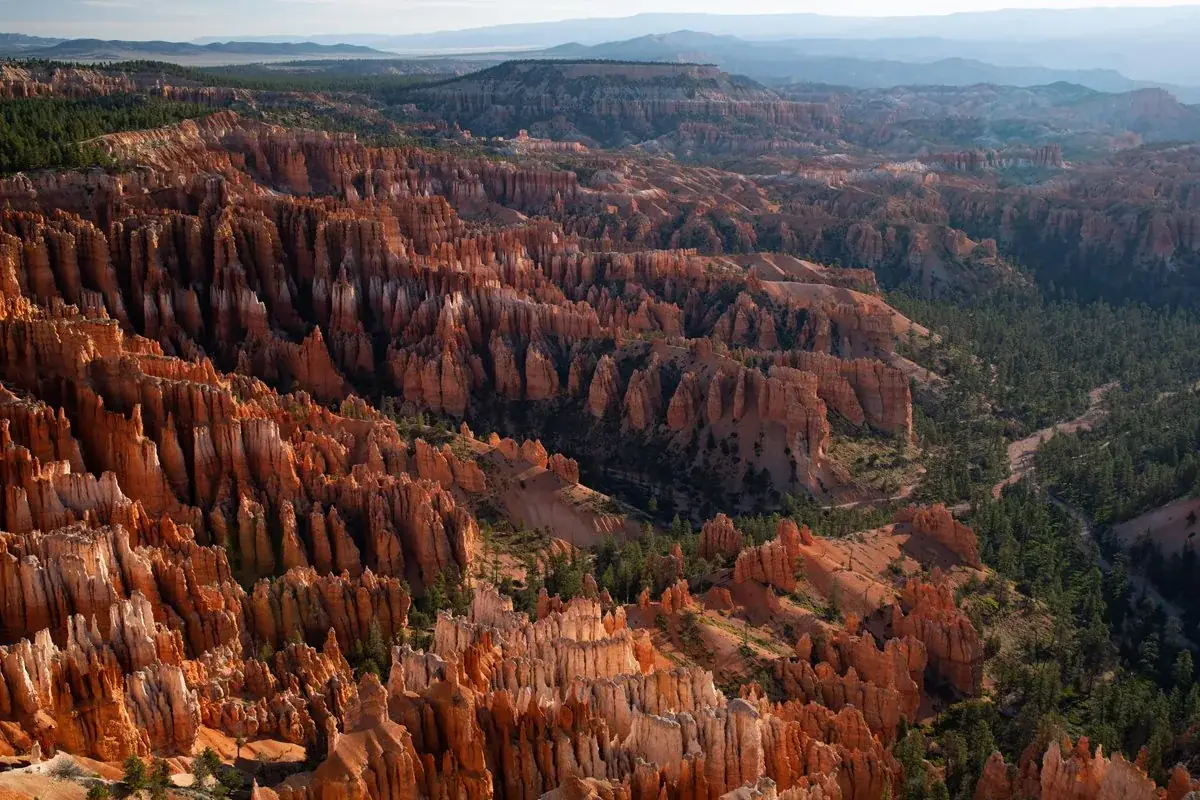


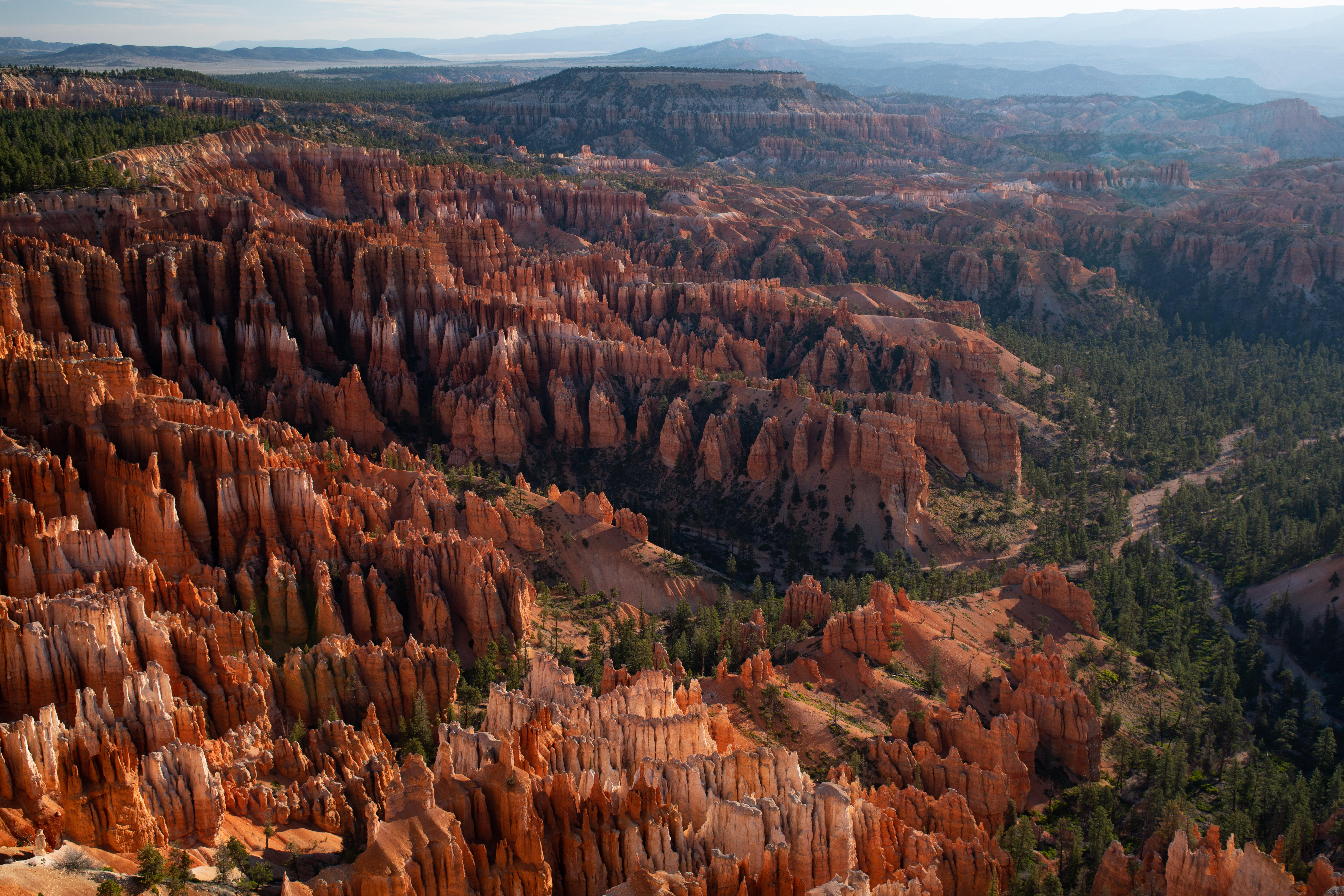
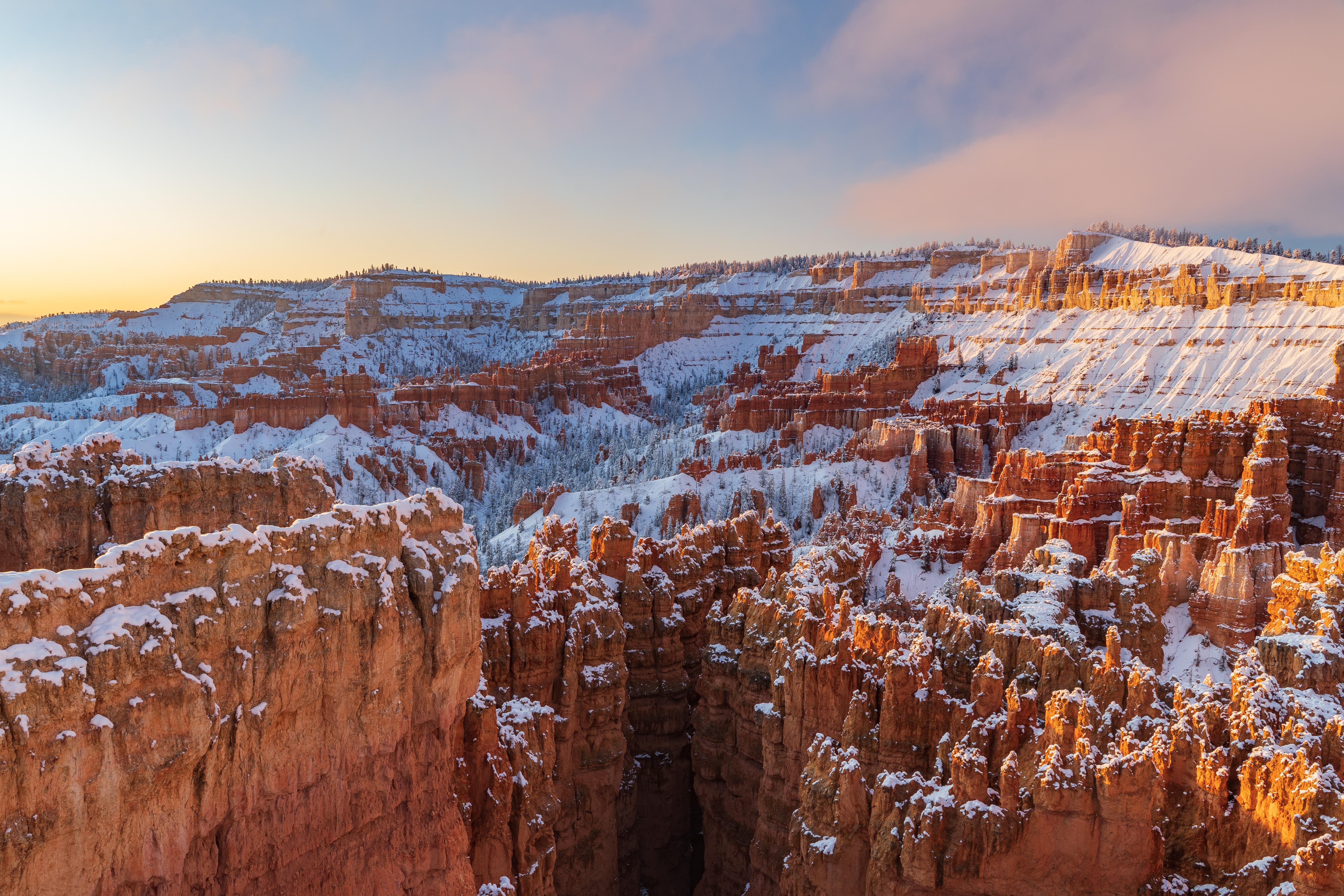
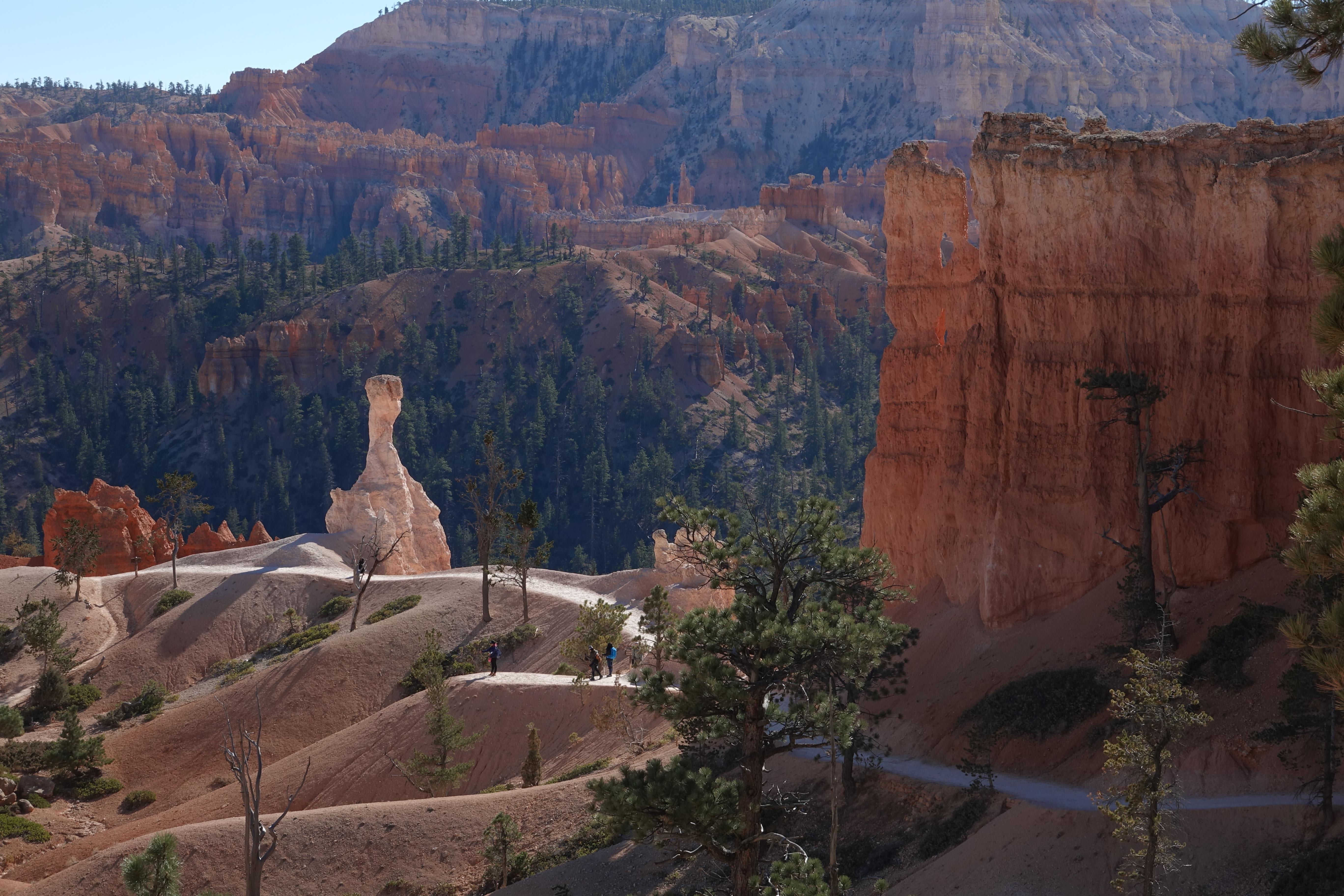
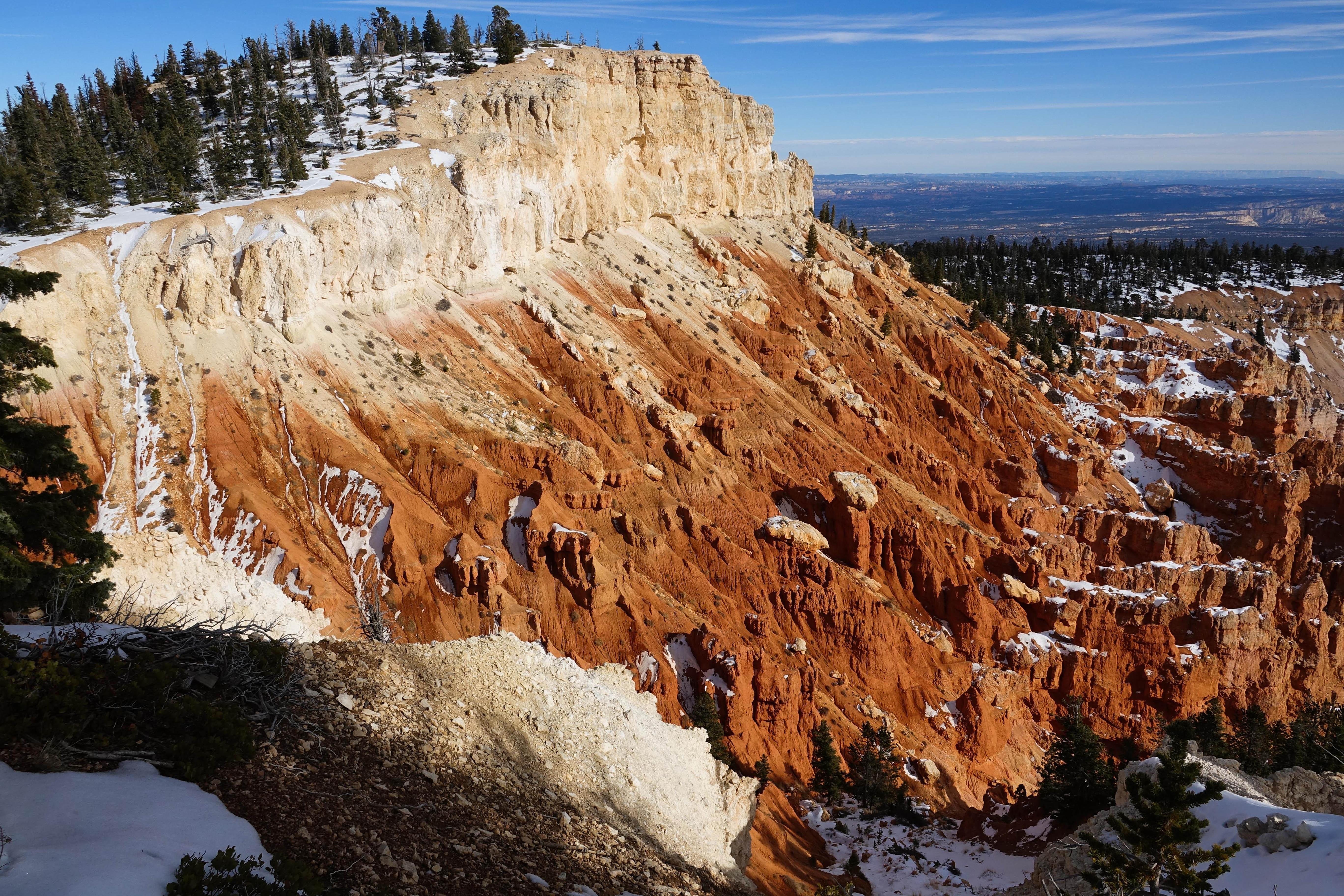


 Canyons