Jackson
20–35 min to Moose; longer to lake districts
Rooms and year-round services.
Tradeoff: Repeated north-district commutes.
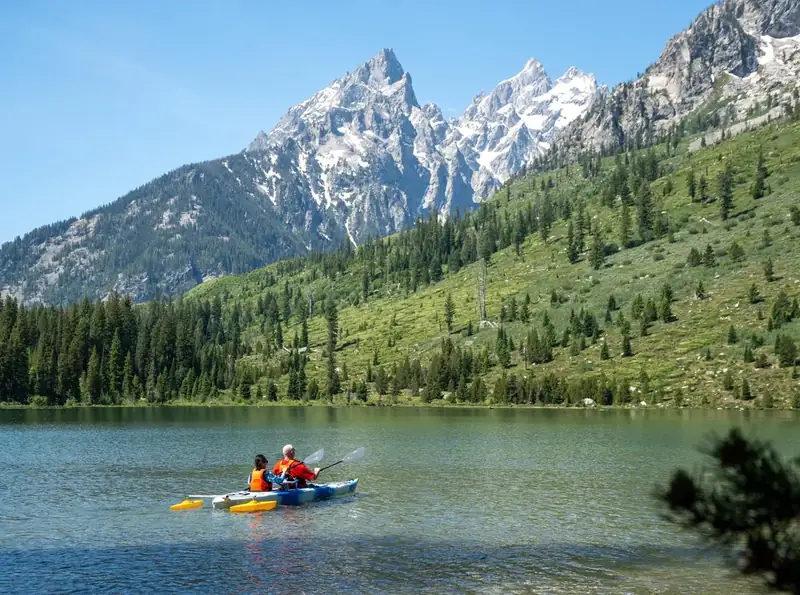
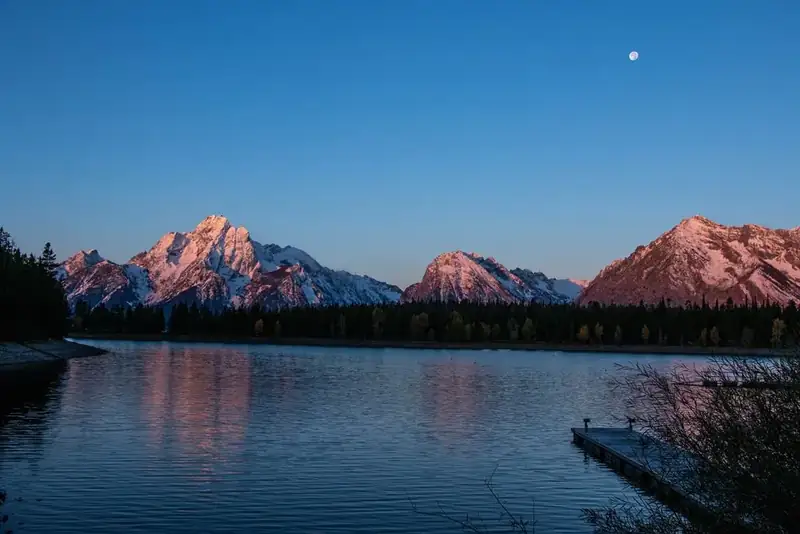
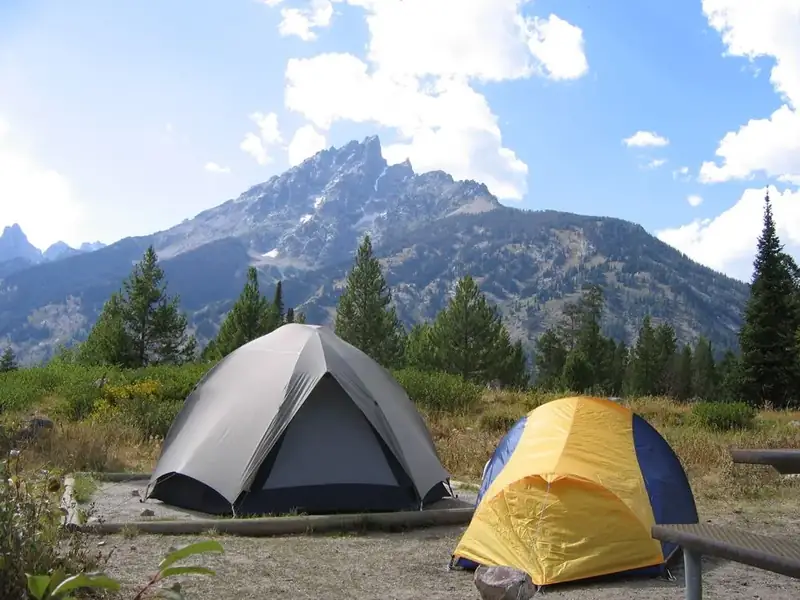
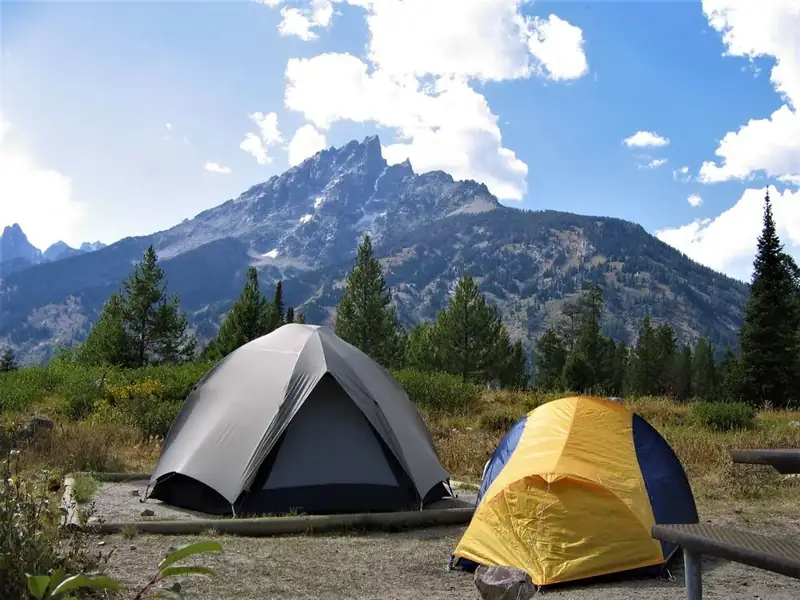
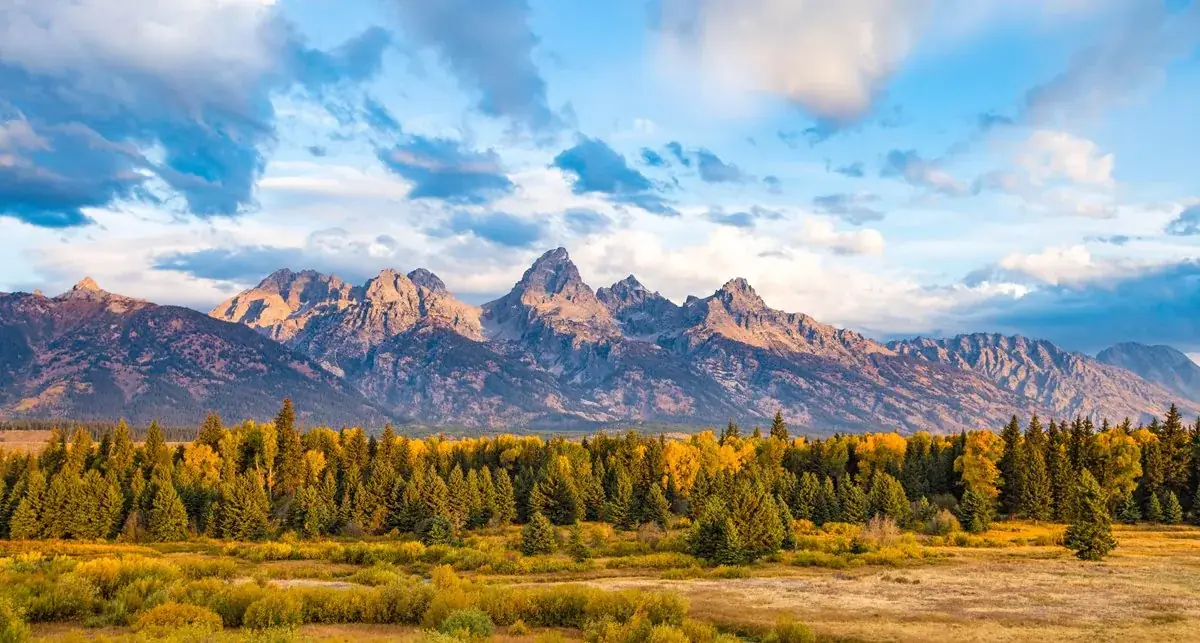
Soaring over a landscape rich with wildlife, pristine lakes, and majestic alpine vistas, the Teton Range stands as a testament to generations of stewards. For over 11,000 years, communities have thrived in the valley known as Jackson Hole, turning these mountains into more than just peaks—they embody imagination and enduring human connection.
NPS describes changing trail and trailhead access during the 2026–2027 construction project. Do not use the standard Taggart approach without reading the dated project notice. The field guide uses Colter Bay as an alternative.
Official guidance ↗ Reviewed 2026-10-18Selected guidance only; separate from climate comfort and current conditions.
Loading the latest saved conditions. You can also check the official report below.
Check current conditions at NPS ↗Separate Jenny Lake, Colter Bay and valley days, avoiding reliance on the construction-affected Taggart trailhead.
Services close in stages; verify lake-road access.
Day 1Jenny Lake Discovery Trail → Jenny Lake Visitor Center
Day 2Colter Bay Lakeshore Trail → Colter Bay picnic and visitor area
Day 3Cunningham Cabin → Elk Ranch Flats signed viewpoints
Editorial planning ranges, not live routing or official trail measurements. Driving excludes lodging commutes unless stated; queues, closures and weather can add substantial time. Walking ranges describe the selected outing, not necessarily the full trail. Arrival and departure travel are additional. Select the season for your dates; this is not a live conditions check.
Explore the interpretive path and shore; no boat or west-shore hike is needed.
Start: South Jenny Lake parking; arrive early and park legally.
Getting there: Allow 20–35 minutes from Moose plus construction and parking delays.
Footing: Paved developed paths; inspect shore connections.
Use Colter Bay if parking is full.
Pair seasonal exhibits with a picnic and a relaxed return drive.
Start: Walk from the South Jenny Lake area.
Getting there: Allow 5–15 minutes on foot plus a meal break.
Footing: Developed area; seasonal opening applies.
Keep a shore picnic if the center is closed.
No boat tickets, Hidden Falls ascent or Taggart access is assumed.
Choose a bounded lakeshore outing; turn back if conditions or energy require.
Start: Use Colter Bay developed parking.
Getting there: Allow 35–55 minutes north from Jenny Lake plus road delays.
Footing: Natural lakeside trail with uneven footing.
Use the developed shore instead of the trail.
Leave room for a picnic and seasonal visitor activities.
Start: Return to the developed area for a meal.
Getting there: Allow 5–15 minutes between nearby facilities.
Footing: Developed paths; seasonal services and water levels vary.
Return toward lodging before services close.
Driving assumes a northern district round trip from Jenny Lake; gateway commutes are extra.
Choose a short historic-site visit instead of relying on construction-affected trails.
Start: Use signed access from the main highway.
Getting there: Allow 25–45 minutes from Moose with traffic.
Footing: Natural paths and uneven historic-site ground.
Use open highway viewpoints if the site is unavailable.
Enjoy valley views without approaching or following wildlife.
Start: Use signed pullouts with legal parking.
Getting there: Allow 10–20 minutes between selected viewpoints.
Footing: Roadside setting; designated stops only.
Skip crowded pullouts and keep the day short.
Taggart is omitted because construction changes its approach. Recheck the project notice for your year.
Compare access to Moose entrance area. Drive ranges are editorial estimates before major queues or weather delays.
20–35 min to Moose; longer to lake districts
Rooms and year-round services.
Tradeoff: Repeated north-district commutes.
5–25 min to northern district stops
Useful for Colter Bay and a Yellowstone connection.
Tradeoff: Seasonal lodging and a longer drive to Jackson.
Use your own quotes to compare room savings with extra time on the road.
Room totals only. Taxes, fuel, parking, vehicle wear and the value of your time are additional. These inputs are examples until you enter your quotes.
Mark your own preparation below. A check means you have handled it; it does not confirm a reservation or availability. Stored on this device.
Construction · Before selecting hikes
The standard Taggart trailhead approach is not assumed available. Read the dated notice.
If unavailable: Use the Colter Bay day.
Check official rules & booking linksLodging · Once dates are known
Check campground seasons and provider booking terms.
If unavailable: Compare Jackson with northern seasonal lodging.
Check official rules & booking linksTransport · Before departure
Confirm Jenny Lake access and any Yellowstone connection separately.
If unavailable: Use the valley or winter highway plan.
Check official rules & booking linksThe PDF and HTML contain the selected days, transport notes, lodging comparisons and booking guidance. Linked maps and websites require a connection.
Official source review: 2026-10-18. Durations, district grouping, gateway drive ranges and recommended pacing are National Parkwise editorial estimates. They are not live routing, current-condition guarantees or accessibility certification.
Official NPS activity guide.
Construction is underway across the park in 2026. Plan ahead and expect traffic delays. Death Canyon Trailhead is closed due to construction on Death Canyon Road. The north side of Taggart Trail between the trailhead and the lake is closed for trail reconstruction. Taggart Trailhead parking and the south side of Taggart Trail is open .
NPS Photo/J. Tobiason
Safety in Bear Country
Backcountry & Trail Conditions
Backcountry Camping
Backcountry Permits
Climbing & Mountaineering
Grand Teton offers incredible hiking opportunities, and with over 250 miles of trails to choose from, there are options ranging from short walks to backcountry excursions. Stop at a visitor center to talk to a ranger about the best trail options for you and the latest trail conditions .
Hiking in Grand Teton National Park can be a challenging experience due to the rugged nature of the landscape, including high elevation, steep trails, and extreme and sudden weather changes.
High elevation may cause breathing difficulties. Pace yourself and carry extra water.
Snow melts gradually, leaving valley trails snow-free by mid-June. Mountain trails and passes may not be snow-free until late July. Be careful crossing snowfields and streams. Do not attempt steep snow unless you have previous experience and the proper equipment.
Be bear aware. Black and grizzly bears live throughout the park. While hiking in the park, make noise, hike in groups of three or more, and carry bear spray and know how to use it.
Carry drinking water. Dehydration is common and can be serious.
Be prepared for rapid weather changes. Carry rain gear and extra layers.
Tell someone where you are going and when you expect to return.
Solo hiking, off-trail hiking, and trail running are not recommended. The use of headphones is strongly discouraged.
Use a topographic map for backcountry hiking. Maps are sold at park bookstores.
All overnight camping in the backcountry requires a permit . Visit our backcountry camping page to learn more.
Carry out all of your garbage.
Hike on established trails to prevent erosion.
Stock (horses, mules, burros, and llamas) has the right-of-way. Step off the trail on the uphill side and wait quietly while stock passes.
Pets, bicycles, and vehicles are not allowed on trails or in the backcountry.
Backcountry sanitation: To prevent waterway contamination, bury human waste in a hole 6-8 inches deep at least 200 feet from water. Pack out used toilet paper, tampons, sanitary napkins, and diapers in sealed plastic bags. Do not bury or burn any materials. Special rules apply in Garnet Canyon.
During most summer and fall months trailhead parking areas fill early in the day, especially at Jenny Lake, String and Leigh Lakes, Lupine Meadows, Laurance S. Rockefeller Preserve, Death Canyon, and Granite Canyon. Be flexible; plan for alternate hikes.
Start your hike early to maximize parking availability.
Parking on natural vegetation results in permanent damage to plants, a fine, and may start a fire. Obey posted parking regulations.
Loading results...
Learn what to do when encountering a bear, and how to use bear spray.
Plan your next Teton adventure in the backcountry. Learn about the best places to go, overnight permits, safety, and regulations.
Find a visitor center in Grand Teton.
Visit the Jenny Lake Ranger Station for climbing and backcountry information.
Download the NPS App before you get here! Explore Grand Teton and discover places to visit, find a bite to eat, and a place to stay.
NPS information imported 2026-10-17. Confirm current details at NPS
Official NPS activity guide.
GTNPF / R. Sheets
Experience the Tetons from a new perspective! Paddling on the The Snake River or on a clear lake offers stunning views, world-class fishing , and breathtaking wildlife viewing opportunities . Boating in the park requires planning, permits, and skill. Regardless of experience, recreating on the water poses significant risks. Know the regulations and safety requirements for boating in the park before you go.
NPS Illustration / B. Wold
Before you go, make sure you have the right permits and decals for your vessel.
All watercraft —motorized and non-motorized, including SUPs and windsurfing boards— must have a valid Grand Teton Boat Permit . Privately owned vessels must register each year with Grand Teton National Park. Permits may be purchased on Recreation.gov or at the Craig Thomas Discovery & Visitor Center , Jenny Lake Ranger Station , or Colter Bay Visitor Center during summer operations. Boaters can also have their permit mailed directly to them within two weeks.
Grand Teton Boat Permit Fees
Motorized craft $75
Non-motorized craft $25 (including: canoes, kayaks, drift boats, & SUPs)
To fulfill the temporary permit requirements, you must:
Have a valid Wyoming AIS Decal
Have a boat sticker attached to the boat's port-side stern.
All watercraft using Wyoming waters are required to display a Wyoming Aquatic Invasive Species decal. The decal can be purchased online at the Wyoming Game and Fish Department website or from a variety of local vendors. Fees collected for the AIS decal will be used to fund the AIS program and inspections in Wyoming along with Game and Fish generated license sale funds.
Motorized registration and decal, WY resident $10
Motorized registration and decal, non-WY resident, $30
Non-motorized decal, WY resident, $5
Non-motorized deacal, non-WY resident, $15
Note: Non-motorized inflatable watercraft 10 feet or less in length, all solid and inflatable paddleboards regardless of length, and all devices defined as water sport toys are exempt from the Wyoming State AIS Decal requirement. They are still required to stop at Grand Teton AIS inspection stations.
NPS Photo / J. Bonney
PREVENT THE SPREAD OF PATHOGENS - CLEAN. DRAIN. DRY.
All boats entering Grand Teton National Park are required to stop for an Aquatic Invasive Species (AIS) inspection. By law, boats coming from out of state must be inspected or have valid proof of inspection before they launch on waters in Wyoming, including waters in the park. This includes motorized boats, rafts, drift boats, canoes, kayaks, stand-up paddle boards, and all watercraft 10 feet and longer. Boaters must also purchase an Aquatic Invasive Species (AIS) decal from the Wyoming Game and Fish Department. Aquatic Invasive Species, such as whirling disease and zebra or quagga mussels, are a serious ecological and economic threat to the Greater Yellowstone Ecosystem. Boats, waders, and anything else that comes in contact with a body of water has the potential to spread non-native plants, pathogens, and other invasive species among water bodies. Make sure to clean, drain, dry, all boating and fishing equipment after use. Starting in 2025, sailboats with gravity fed ballasts are required to undergo 30-day quarantine (dry time) before launching on park waters. Additionally, if non-native Dreissenid mussels (dead or alive) are present on a vessel it will be subject to 30-day quarantine.
Learn more about preventing the spread of AIS.
You are required by law to carry the necessary safety equipment aboard your watercraft. Safety equipment requirements vary by the class of your boat, which is determined by the boat's length. Review required equipment list by class of boat.
Personal Floatation Devices All vessels must carry a United States Coast Guard approved personal flotation device (PFD) of the appropriate size for each person on board. PFDs must be accessible and in good working condition. PFDs should be worn while boating. All passengers under 13 years old must wear a PFD.
Lights Every vessel must use navigation lights when underway from sunset to sunrise.
Fire Extinguisher All motorized boats must have at least the minimum number of portable fire extinguishers required by the USCG.
Signaling Devices All motorized boats shall have an efficient sound producing device on board.
Before you boat in Grand Teton, review all regulations including Wyoming State boating regulations.
Boating under the influence of alcohol or drugs is prohibited.
Motors are prohibited on the Snake River.
Innertubes, air mattresses, float tubes, and similar flotation devices are prohibited on the Snake River.
Only human-powered rubber rafts, canoes, drift boats, and kayaks are permitted on the Snake River within the park and parkway. All other waters within the park and parkways are closed to watercraft, including Pacific Creek, Cottonwood Creek, Buffalo Fork, and the Gros Ventre River.
Fires are prohibitted along the Snake River. Fires are allowed only on Jackson Lake below the high water line with a permit. Fires are not allowed along the east shore from Spaulding Bay to Lizard Creek Campground. Extinguish your fires before leaving.
Floating is prohibited within 1,000 ft of the Jackson Lake Dam.
Pack out all trash.
Pets are not allowed on the water except for day use within boats on Jackson Lake.
Pets are not allowed on the Snake River or aborad watercraft on the Snake River.
Pets are not allowed on shore away from designated launch areas on Jackson Lake.
Pets are permitted for day use only within boats on Jackson Lake. Overnight campers are not allowed to have pets in lakeshore campsites except at Spalding Bay.
Yes, water skiing and wakeboarding are only allowed on Jackson Lake.
Towing skiers is allowed only from sunrise to sunset.
There must be at least 2 persons in the vessel with the passenger in a position to observe the status of the person or persons being towed.
Skiers must wear a U.S. Coast Guard approved personal flotation device.
Water skiing is not allowed in channels or within 500 feet of harbors, swimming beaches or mooring areas or within 100 feet of any person swimming or diving.
Report collisions, accidents, fires or other incidents that results in property loss, property damage, personal injury or death to a park ranger immediately. Each operator of involved vessels must report. This report does not relieve the responsibility of reporting boating accidents as may be required by the State and/or the U.S. Coast Guard. Any operator involved in an accident must also provide in writing his name, address, and identification of his vessel to any injured person and/or to the owner of any damaged property.
No, Jet skis and personal watercraft are prohibited on all park waters.
Yes, however, sailboats and windsurfers may only be used on Jackson Lake and require proper permits and decals.
Yes, shore camping is only permitted at designated numbered sites along Jackson and Leigh lakes. You cannot camp along the Snake River. Camping at numbered lakeshore sites on Jackson Lake is limited to three consecutive nights. Before camping, you will need a backcountry camping permit. Off shore, anchored vessels are allowed to overnight on Jackson Lake. They are required to follow all Coast Guard regulations. A permit from the park is not required. They are limited to 10 nights between June 1 and Labor Day and not more than 30 nights per year. Visitors are not allowed to anchor a vessel, then spend the night on shore.
All motorized boats are allowed on Jackson Lake. Motorized boats 10 HP or under are allowed on Jenny Lake.
You can take non-motorized watercraft, like kayaks, canoes, and stand up paddleboards, on the Snake River and Jackson, Jenny, Phelps, Emma Matilda, Two Ocean, Taggart, Bradley, Bearpaw, Leigh, and String lakes.
You can park trailers at any of the Snake River landings and launches in the park for day use. There is also trailer parking at various marinas. Visitors may leave boats on trailers and empty trailers parked at designated public parking areas (Signal Mountain, Colter Bay, and Leeks Marina) for not more than 72 hours. Please park in designated areas only, illegally parked vehicles may be ticketed and/or towed.
Short-Term Parking (3-night limit)*
Long-Term Parking
Upper parking lot
Colter Bay Village parking lot designated by striping and signed for boats & RVs
Colter Bay Visitor Center parking lot (east side, designated area)
Near Colter Bay Cabin office for GTLC permit with slip or mooring
Signal Mountain
Boat ramp parking area
Mid-lot parking area
Base of Signal Mtn. Summit Road, on the north side, with Signal Mtn. mooring permit
Designated sites, parking permit required
* After 72 hours, the trailer must be removed for 24 hours. Trailers may be parked in short-term parking no more than 30 days during a calendar year. Spalding Bay Trailer Parking Permit Because of limited space, only single axle boat trailers are allowed at Spalding Bay. Trailer parking requires a special parking permit. Parking permits are obtained by calling Teton Interagency Dispatch at 307-739-3397.
Learn what you need to go boating on one of the many lakes in the park.
Travel through Grand Teton on the Snake River.
Fish for trout within valley and alpine lakes.
Find a visitor center in Grand Teton.
Explore hikes throughout Grand Teton National Park.
Learn more about Grand Teton and plan your trip here.
Download the NPS App before you get here! Explore Grand Teton and discover places to visit, find a bite to eat, and a place to stay.
| Location | Day Parking | Short-Term Parking (3-night limit)* | Long-Term Parking |
|---|---|---|---|
| Leek's Marina | Upper parking lot | Upper parking lot | None |
| Colter Bay | Colter Bay Village parking lot designated by striping and signed for boats & RVs | Colter Bay Visitor Center parking lot (east side, designated area) | Near Colter Bay Cabin office for GTLC permit with slip or mooring |
| Signal Mountain | Boat ramp parking area | Mid-lot parking area | Base of Signal Mtn. Summit Road, on the north side, with Signal Mtn. mooring permit |
| Spalding Bay | Designated sites, parking permit required | None | None |
NPS information imported 2026-10-17. Confirm current details at NPS
Official NPS activity guide.
Construction is planned across the park in 2027. Check road construction and parkwide construction for more information.
NPS Photo/J. Tobiason
There are few things better than biking on long and winding roads, exploring pathways designed for views, and mountain fresh air to fill your lungs. Biking in Grand Teton is an exhilarating experience for both the expert and beginner. With these safety tips and knowing park regulations everyone can have a great time biking in the park.
Bike, walk, and ride at the base of the Tetons on the Grand Teton Pathway. Explore the park at your own speed while experienceing the grandeur of the Tetons. Travel through the vast sagebrush steppe and feel the exhilaration of the elements. The pathway extends from the town of Jackson, north to Antelope Flats Road. At Moose Junction the pathway follows the Teton Park Road to Jenny Lake. There are six hubs along the route with parking and bike racks at Gros Ventre Roundabout, Blacktail Butte, Dornans, Moose, Taggart Lake, and Jenny Lake.
The section of pathway through Grand Teton National Park opens seasonally after snow has melted from the pathway surface and park maintenance workers have swept it. The section of the pathway along the National Elk Refuge from Jackson to Gros Ventre Road is closed from November 1 to April 30 due to elk migration.
The Grand Teton Pathway is part of an extensive pathway system through the town of Jackson extending into Teton County. Please visit the Teton County website for maps of the pathway system.
Persons with physical disabilities may use other forms of electric and battery operated transportation.
The pathway is closed from dusk to dawn for wildlife and public safety.
Pets are not permitted on the park pathway. Guide dogs used for the sole purpose of aiding a person with physical disability may travel on the pathway. Ask at a visitor center for suggestions on where to exercise your pet or visit the pets page for a brochure with recommendations and regulations for pets.
Biking is allowed on all paved roads in Grand Teton as well as the Two Ocean Lake Road and Grassy Lake Road (both gravel). The Teton Park Road is closed to vehicles between the Taggart Lake Trailhead and Signal Mountain from November 1-May 1. This section is open to biking when the road is clear of snow but is not plowed during the winter months. The road re-opens to bikes usually by April 1. Some roads in the park have only a very narrow shoulder, or lack one altogether. Extreme caution must be used. Ride with the direction of traffic, in a single file line. Be alert for vehicles, wildlife, and other cyclists. See the map below for suggested routes. Be sure to follow park guidelines when biking in the park. Biking is not allowed on hiking trails in Grand Teton. For mountain biking opportunities, travel into the Bridger-Teton National Forest. Ask for information about area trails at a bike shop.
Bicycle riders in the park and parkway must obey the same rules and regulations that apply to motorized vehicles .
Electric bicycles (e-bikes) are considered bicycles if they have fully operable pedals and an electric motor of less than 750 watts(1hp).
Bicycles are allowed only on paved and unpaved roads and the pathway , unless otherwise posted.
Bicycles are not allowed on any park or parkway trails or in any backcountry areas.
Bicycles are not allowed on roads closed to vehicles except when posted.
Riding a bicycle abreast of another bicycle on paved roads within the park and parkway is prohibited. Ride single file is for your safety and compliance.
During low visibility and between sunset and sunrise, bicyclists must display a white light or reflector from the front and a red light or reflector from the rear . Drivers are often distracted when driving through the park, be aware ride defensively.
A fee is charged when biking into Grand Teton National Park.
Wear a helmet at all times.
Use hand signals to communicate with drivers.
Maintain control of your speed.
Never leave food unattended , including bike panniers and backpacks.
Animals may be on or near roads or the pathway. Never feed, approach, or harass a wild animal. Maintain a distance of 25 yards from bison, elk, moose, and other animals, and a distance of 100 yards from bears and wolves.
When riding e-bikes, follow all applicable regulations and be aware of these special safety considerations: Mount and dismount the bike carefully. The added weight of the battery and motor assist technology can add 20 or more pounds to the weight of the bike. Obey speed limits. Some e-bikes may exceed park speed limits with the motor engaged. Pay attention to traffic. Drivers may not be aware that an e-bike rider is traveling close to their speed. Slow down at intersections. Make eye contact with other drivers before crossing the intersection.
Explore hikes throughout Grand Teton National Park.
Learn about boating and floating regulations in the park.
Find a visitor center in Grand Teton.
Learn more about Grand Teton and plan your trip here.
Download the NPS App before you get here! Explore Grand Teton and discover places to visit, find a bite to eat, and a place to stay.
NPS information imported 2026-10-17. Confirm current details at NPS
Official NPS activity guide.
Many visitors are lured to Grand Teton to experience one of the park’s most popular activities—Fishing. A day of fishing is hallmarked by mountain views, cool waters, and (hopefully) a catch or two. Fishing in Grand Teton is an unforgettable experience here is what you need to know before you go. Fishing is regulated according to Wyoming state laws and a Wyoming fishing license is required. Licenses may be purchased in the park at Flagg Ranch, Colter Bay Marina, Signal Mountain Lodge, or online. Licenses are also available for purchase in the local community at a variety of locations. For more information visit the Wyoming Game and Fish website at Wyoming Game and Fish Department - Fishing and Boating
Lakes: Lakes within Grand Teton National Park are open to fishing year-round.
Rivers and Streams: All cutthroat trout caught in the Snake River must be released to the water immediately from November 1-March 31. Seasonal Closures: December 15-March 31: A section of the Snake River is closed to access from the Buffalo Fork confluence at Moran to Menors Ferry at Moose. The Buffalo Fork is closed from the east park boundary to the Snake River Confluence in Moran. December 1-July 31: All streams and Blacktail Spring Ponds within Grand Teton National Park are closed to access; excluding Polecat Creek, Buffalo Fork River, Pacific Creek, Gros Ventre River, and Snake River in Teton County.
Seasonal Closures: December 15-March 31: A section of the Snake River is closed to access from the Buffalo Fork confluence at Moran to Menors Ferry at Moose. The Buffalo Fork is closed from the east park boundary to the Snake River Confluence in Moran. December 1-July 31: All streams and Blacktail Spring Ponds within Grand Teton National Park are closed to access; excluding Polecat Creek, Buffalo Fork River, Pacific Creek, Gros Ventre River, and Snake River in Teton County.
December 15-March 31: A section of the Snake River is closed to access from the Buffalo Fork confluence at Moran to Menors Ferry at Moose. The Buffalo Fork is closed from the east park boundary to the Snake River Confluence in Moran.
December 1-July 31: All streams and Blacktail Spring Ponds within Grand Teton National Park are closed to access; excluding Polecat Creek, Buffalo Fork River, Pacific Creek, Gros Ventre River, and Snake River in Teton County.
NPS Photo/C. Adams
Two rods or poles may be used with the angler in attendance. Each line may have no more than three single or treble hooks, flies, or lures attached. Flies, Lures, and Bait:
Rivers and Streams: Only artificial flies and lures may be used in the Snake River from the gauging station (1,000ft below Jackson Lake Dam) to the Wyoming Highway 22 Bridge (Wilson Bridge) and all streams; excluding the Buffalo Fork, Gros Ventre River, Pacific Creek, Polecat Creek, and the Snake River upstream of Jackson Lake.
Lakes: On lakes not otherwise restricted to fishing or artificial flies and lures only; the following dead, non-game fish may be used or posessed as bait: redside shiner, speckled dace, longnose dace, Paiute sculpin, mottled sculpin, Utah chub, Utah sucker, and commercially preserved dead baitfish.
Lakes in Grand Teton National Park: Six (6) trout* per day or in possession, no more than three (3) shall be cutthroat trout; and no more than one (1) cutthroat trout shall exceed twelve (12) inches.
Streams in Grand Teton National Park: Three (3) trout*, no more than one (1) shall exceed sixteen (16) inches; and no more than one (1) cutthroat trout shall exceed twelve (12) inches.
In addition to the previous creel limits, anglers may also have in possession: Brook Trout: sixteen (16) Lake Trout: six (6), no more than one (1) shall exceed twenty-four (24) inches Whitefish: twenty-five (25)
Brook Trout: sixteen (16)
Lake Trout: six (6), no more than one (1) shall exceed twenty-four (24) inches
Whitefish: twenty-five (25)
Temperature is one of many stressors that affect fish behavior and survival. Fish, like most animals, have preferred temperatures. When exposed to extremes outside their preferred zones, it can be stressful and make it harder for them to survive. Anglers should be aware that adding stress to a fish already affected by unusually warm water temperatures may adversely impact the fish’s ability to survive. This is especially true in rivers and streams where thermal refuge may not be available.
With your Wyoming fishing license, you are permitted to harvest fish, in accordance with creel limits, for consumption. Fish can be a healthy addition to one’s diet, but anglers should be aware that consumption advisories have been developed by Wyoming Game and Fish Department for the following species of fish in the park: cutthroat, brown, and lake trout as they may contain methyl mercury. Mercury can build up in tissue over time and consuming too much can pose health risks. These advisories are in place to keep the consumption of mercury within safe levels. The advisory includes information specific to sensitive individuals, which include women who are or might become pregnant, nursing mothers and children less than 15 years of age; as well as all other persons. Advisory data is based on Wyoming Game and Fish Department tests to assess mercury levels in fish harvested from the Snake River and Jackson Lake. Each advisory provides specific fish consumption recommendations for fish from those waters.
For other waters and fish in the park, we recommend following this FDA guidance on wild fish consumption:
It is recommended that women of childbearing age and young children avoid those species of fish and seafood known to contain high concentrations of mercury. For women and young children, the Food and Drug Administration (FDA) and Environmental Protection Agency (EPA) currently recommend against eating any shark, swordfish, king mackerel, and tilefish, and also limiting consumption of albacore tuna to one meal per week. Women and young children will receive the health benefits of eating fish without undue exposure to the harmful effects of mercury by eating up to 2 meals per week (A meal is 8 oz. of uncooked fish or 6 oz. of cooked fish) of a variety of fish and shell fish that are low in mercury. Some commonly eaten fish that are low in mercury are Wyoming caught rainbow trout, cutthroat trout, and kokanee and shrimp, canned light tuna, salmon, Pollock and catfish from stores and restaurants. The 2 meals per week include fish from all sources, and should be the total of Wyoming caught fish and fish purchased at stores and restaurants.
PREVENT THE SPREAD OF INVASIVE SPECIES - CLEAN. DRAIN. DRY.
Aquatic invasive species (AIS), such as zebra or quagga mussels, Eurasian milfoil and curly pondweed, are a serious ecological and economic threat to the Greater Yellowstone Ecosystem. Boats, waders, and anything else that comes in contact with a body of water has the potential to spread non-native plants, pathogens, and other invasive species from one water body to another. Never empty containers of bait, fish, plants, or animals into park waters. Learn more about preventing the spread of AIS.
River Fishing Trips Grand Fishing Adventures: www.grandfishing.com Grand Teton Fly Fishing: www.grandtetonflyfishing.com Grand Teton Lodge Company: www.gtlc.com Snake River Angler and Float Trips www.snakeriverangler.com Triangle X Ranch/National Park Float Trips: www.trianglex.com WorldCast Anglers: www.worldcastanglers.com Lost Creek Ranch (Private Ranch, Fishing for Guests Only) Lake Fishing Trips Grand Teton Lodge Company: www.gtlc.com Signal Mountain Lodge: www.signalmountainlodge.com
Paddle on Jenny, String, Leigh, or Jackson Lake.
Explore hikes throughout Grand Teton National Park.
Find a visitor center in Grand Teton.
Learn more about Grand Teton and plan your trip here.
Download our new app before you get here! Explore Grand Teton and discover places to visit, find a bite to eat, and a place to stay.
NPS information imported 2026-10-17. Confirm current details at NPS
Official NPS activity guide.
Photo courtesy of J. Risinger
Climbing is a popular activity in Grand Teton. Every year, thousands of people visit the park hoping to reach one of the iconic peaks. Climbing in the Teton Range can be a fun experience, but is also a dangerous activity. Learn more about climbing in Grand Teton below.
A climbing permit is not required for mountaineering, but climbers on overnight trips must have a backcountry camping permit to camp or bivouac. All Garnet Canyon permits and any trip involving technical climbing and mountaineering must be picked up at the Jenny Lake Ranger Station or Craig Thomas Discovery & Visitor Center from June-September.
Mountain conditions are often vastly different from those in the valley. Snow often stays in the mountains until mid-July. Afternoon storms can pop up without warning and bring lightning, rain, and hail to the peaks. Rockfall can quickly change a route. Conditions in the mountains can change suddenly. Always be prepared when traveling in the high country. Check conditions before heading out, pack for changing weather, let someone know your plans, and be prepared to turn around if conditions worsen. For climbing information, stop by the Craig Thomas Discovery & Visitor Center or Jenny Lake Ranger Station June-September. Summer conditions information: 307-739-3343 Winter conditions information: 307-739-3309. Current conditions are posted online for trails and passes . For information on climbing routes, contact the Jenny Lake Climbing Rangers or check their instagram . If you would like to view conditions reports from before summer 2024, check out the old blogspot .
Mountain Weather NWS Teton Mountain forecast
Backcountry Avalanche Hazard & Weather Forecast 307-733-2664 recorded information 307-733-2759 report avalanche activity
Always check conditions before you go. The Jenny Lake Ranger Station is staffed with experienced backcountry rangers who can answer questions on routes, conditions, and other mountaineering questions.
Plan for changing conditions. Weather can change quickly in the mountains, and being unprepared could be deadly. Always bring additional layers and be prepared to turn around if conditions worsen.
Know your limits. Many peaks in the Teton Range are technical climbs and require the proper equipment and experience. Do not attempt the hardest peak first and talk to a ranger before attempting any climb in the range.
Have a plan. Do you know what to do if someone gets injured, weather changes, or the trip is taking longer than planned? Preparing before your trip will help you make a smart decision when the moment arrives. Set a turn around time and stick to it.
Bring the proper gear. A fall on steep snow and failure to self-arrest with an ice axe is the number one cause of injury and death. Whether traveling across snow or climbing a peak, bring the right gear and know how to use it.
Altitude sickness is a common ailment for those heading up the mountains. Jackson Hole sits at around 6,500ft/1,981m, with the Teton Range rising 7,00ft/2,133m (1.5m/2.5km) above the valley. The best cure for altitude sickness is to retreat to a lower elevation.
Use existing access trails to approach climbs. Short-cutting trails causes plant damage and erosion and is prohibited.
During approach and descent where there are no trails, carefully choose routes to avoid the heavy impact of human feet. Step on rocks and non-vegetated surfaces where possible.
Know and respect environmentally sensitive areas. Be considerate of wildlife and other users. Keep a respectful distance from all animals to avoid disturbing their natural routines.
Leave the rock and its environs in its natural condition. Avoid placing permanent protection. Motorized drills are prohibited.
Plan your trip. Know and abide by all park regulations.
Accept responsibility for yourself and other. "Leave No Trace" depends more on attitude and awareness than on regulations.
Pack out all litter. Use toilets where available or busy human waste 200ft from water and high use areas. Double bag toilet paper in Ziploc bags and carry it out, or use natural options such as stones, sticks, or snow.
Teton Summit Registers: http://www.tetonclimbinghistory.com
A Climber's Guide to the Teton Range provides complete route descriptions for approximately 800 routes and more than 200 peaks with difficulty ratings. Information on access, approach considerations, equipment recommendations, climbing history, geology and climate.Ninety climbing route topos and 120 black-and-white photos.
Explore hikes throughout Grand Teton National Park.
Visit the Jenny Lake Ranger Station for climbing and backcountry information.
Travel into the Teton backcountry for an overnight stay.
Learn more about Grand Teton and plan your trip here.
Download our new app before you get here! Explore Grand Teton and discover places to visit, find a bite to eat, and a place to stay.
NPS information imported 2026-10-17. Confirm current details at NPS
Official NPS activity guide.
Construction is planned across the park in 2027. Check road construction and parkwide construction for more information.
NPS Photo/J. Bonney
Need to double-check your travel route? View maps of Grand Teton National Park .
Do not stop in the middle of the road to view wildlife.
Watch for large animals on the road. Drive slowly at night. The speed limit on US Highway 26/89/191 is 45 mph from 30 minutes after sunset to 30 minutes before sunrise. Elk, bison, mule deer, and pronghorn frequently migrate at night and may be difficult to see. Moose use roads as travel corridors. Hitting a large animal at highway speeds has resulted in fatal accidents. Always wear your seatbelt when driving in the park. Careful driving protects you and the wildlife.
Loading results...
Explore hikes throughout Grand Teton National Park.
Find a visitor center in Grand Teton.
Learn how to plan like a park ranger by following our list of the top 10 tips you should know before visiting.
Learn more about Grand Teton and plan your trip here.
Download the NPS App before you get here! Explore Grand Teton and discover places to visit, find a bite to eat, and a place to stay.
NPS information imported 2026-10-17. Confirm current details at NPS
Official NPS activity guide.
NPS Photo/C. Adams
All animals require food, water and shelter. Each species also has particular living space, or habitat, requirements. Knowing these requirements helps understand where wildlife can be found. To learn more about wildlife habitats and animal behavior, attend ranger-led programs , and review the tips for viewing wildlife below, and download the mammals brochure for Grand Teton National Park.
Always keep a safe distance when viewing wildlife . Whether you are in your vehicle or on foot, you must maintain a distance of at least 100 yards from bears and wolves, and 25 yards from all other wildlife. Animals in the park are wild and may act aggressively if approached.
Watch a video podcast with helpful tips to view wildlife in Grand Teton National Park.
Oxbow Bend One mile east of Jackson Lake Junction. Slow-moving water provides habitat for fish such as suckers and trout that become food for river otters, ospreys, bald eagles, American white pelicans and common mergansers. Look for swimming beavers and muskrats. Moose browse on abundant willows at the water's edge. Elk occasionally graze in open aspen groves to the east. Timbered Island A forested ridge southeast of Jenny Lake. Small bands of pronghorn antelope, the fastest land animal in North America, forage on nearby sagebrush throughout the day. Elk leave the shade of Timbered Island at dawn and dusk to eat the grasses growing among the surrounding sagebrush. Mormon Row East of US Highway 26/89/191, one mile north of Moose Junction. Along Mormon Row and Antelope Flats Road, bison and pronghorn can be seen grazing in spring, summer and fall. Also watch for coyotes, Northern harriers, and American kestrels hunting mice, Uinta ground squirrels, and grasshoppers. Sage grouse, sage thrashers and sparrows also frequent the area.
Snake River Jackson Lake Dam south to Moose. Elk and bison graze in grassy meadows along the river. Bison also eat grasses in the sagebrush flats on the benches above the river. Bald eagles, ospreys and great blue herons build large stick nests within sight of the river. Beavers and moose eat willows that line the waterway.
Cascade Canyon West of Jenny Lake. Look for, but do not feed, golden-mantled ground squirrels at Inspiration Point. Pikas and yellow-bellied marmots live in scattered boulder fields. Mule deer and moose browse on shrubs growing at the mouth of the canyon. Listen for the numerous songbirds that nest in the canyon. Habituated animals such as ground squirrels often beg for food. Feeding human food to animals increases dependency on unnatural food sources. Do not let animals bite you; they may carry diseases such as rabies.
Blacktail Pond Half-mile north of Moose on US Highway 26/89/191. Old beaver ponds have filled with sediment and now support grassy meadows where elk graze during the cooler parts of the day. Several kinds of ducks feed in the side channels of the Snake River. Moose browse on willows growing along the river.
Use binoculars, spotting scopes or long lenses for close views and photographs. Always maintain a safe distance of at least 100 yards from wolves and bears, and at least 25 yards from all other wildlife.
Never position yourself between an adult and its offspring. Females with young are especially defensive.
It is illegal to feed wildlife, including ground squirrels and birds. Feeding wild animals makes them dependent on people, and animals often bite the hand that feeds them.
Do not harass wildlife. Harassment is any human action that causes unusual behavior, or a change of behavior, in an animal. Repeated encounters with people can have negative, long-term impacts on wildlife, including increased levels of stress and the avoidance of essential feeding areas.
Nesting birds are easily disturbed. For wildlife, raising young is a private affair. If an adult bird on a nest flies off at your approach, or circles you or screams in alarm, you are too close to the nest. Unattended nestlings readily succumb to predation and exposure to heat, cold, and wet weather.
Allow other visitors a chance to enjoy wildlife. If your actions cause an animal to flee, you have deprived other visitors of a viewing opportunity. Use an animal's behavior as a guide to your actions.
Find a visitor center in Grand Teton.
Learn more about Grand Teton by attending a ranger led program.
Experience Grand Teton and become a Junior Ranger. Open to all ages.
Learn more about Grand Teton and plan your trip here.
Download our new app before you get here! Explore Grand Teton and discover places to visit, find a bite to eat, and a place to stay.
NPS information imported 2026-10-17. Confirm current details at NPS
Official NPS activity guide.
NPS Photo/J. Bonney
NPS Photo/C. Adams
Bear behavior is complex. Like people, bears react differently to each situation.
Bears may appear tolerant of people and then attack without warning. A bear's body language can help you determine its mood. In general, bears show agitation by swaying their heads, huffing, and clacking their teeth. Lowered head and laid-back ears also indicate aggression. Bears may stand on their hind legs or approach to get a better view, but these are not necessarily signs of aggression; the bear may not have identified you as a human yet.
DO NOT RUN. Bears can easily out run any human. Running may elicit attacks from non-aggressive bears.
If the bear is unaware of you, detour quickly and quietly.
If the bear is aware but has not acted aggressively, back slowly away while talking in an even tone or not at all.
Use your peripheral vision. Bears may interpret direct eye contact as threatening.
Do not drop your pack - this teaches bears how to obtain human food. Your pack can also protect your body in the case of an attack.
Do not climb trees - all black bears and some grizzly bears can also climb trees.
The vast majority of bear attacks have occurred when people surprised a bear. In this situation the bear may attack as a defensive maneuver. The bear may be protecting young or defending a carcass.
DO NOT RUN. Some bears will bluff their way out of a threatening situation by charging, then veering off or stopping suddenly.
Bear experts generally recommend standing still until the bear stops and then slowly back away.
If you have bear spray this is the time to use it!
If the bear makes contact with you, drop to the ground and lie flat on your stomach with your legs spread apart slightly and play dead. Cover the back of your neck with your hands. Keep your pack on to protect your back. Do not move until you are certain the bear has left.
In rare cases, bears have attacked at night or after stalking people. These attacks are very serious: it may mean the bear sees you as prey. If you are attacked at night or if you feel you have been stalked and attacked as prey, fight back. Use your bear spray, shout, and try to intimidate the bear with a stick or rock. In this type of situation, do whatever it takes to let the bear know you are not easy prey. Learn more about bear ecology
Bear spray should be used as a last resort when encountering an aggressive or charging bear. Carry bear spray in a place where it immediately available, not in your pack. Keep the safety in place until you are in a situation where you may need to use your bear spray. If you encounter a bear, grab your bear spray in case you need to use it. Do not spray a bear just because it's there: only spray a charging or aggressive bear. To use bear spray:
Remove safety clip and hold cannister with both hands.
Point nozel towards bear, aiming at the bears feet.
Wait until the bear is about 30ft away then hold down the trigger for 1-2 seconds. The spray will leave the cannister in a cloud.
Continue spraying if the bear continues to charge.
After using bear spray, leave the area. Do not run.
Bear spray is sold at park shops, gift shops, grocery stores, and service stations inside the park, as well as in local communities.
Always select an EPA-approved product that is specifically designed to stop bears.
Every bear spray has an expiration date. Be sure your canister is not expired.
Leave the safety clip on the trigger unless you are ready to spray an agressive bear. The spray may accidentally discharge otherwise.
Consider the use of bear spray when affected by wind, rain, cold temperatures, and age.
Follow the manufacturer's instructions, know how to use the spray, and be aware of its limitations, including the expiration date.
If you use the spray to stop a bear, leave the area immediately.
Bear spray is NOT a repellant ! Do not spray it on people, tents or backpacks.
Do NOT store your bear spray in a vehicle. It may overheat and explode.
Bear spray is oil based. If you get bear spray on you, remove all affected clothes and wash skin with water.
Under no circumstances should bear spray create a false sense of security or serve as a substitute for standard safety precautions in bear county.
Black and grizzly bears live throughout the park. Many popular hiking trails pass through prime bear habitat, so encountering a bear is always a possibility. Bears occasionally use trails to travel on - just because a bear is on a trail doesn't mean it's aggressive.
Bears usually avoid people if they hear them coming. To prevent surprising a bear:
Talk loudly or call out (“Hey bear!”) at regular intervals
Clap your hands, especially in dense vegetation or on blind corners
Don’t rely on bear bells—they're often not loud enough
Be particularly careful near streams, when it's windy, in dense vegetation, or in any circumstance that limits line of sight (e.g. a blind corner or rise in the trail).
NPS Photo/A. Falgoust
Never approach a bear. Each bear reacts differently, and their comfort zones vary. All bears are wild, unpredictable, and potentially dangerous. Treat black and grizzly bears with the same level of respect.
Keep children close and hike in groups when possible
Avoid hiking early morning, late evening, or after dark
Leave headphones and earbuds behind
It's okay to bring food on a day hike,but keep it with you at all times.
If a bear approaches while you’re eating, pack up immediately and back away
Never throw food or your pack at a bear to distract it
Bears that get human food can become aggressive and may have to be killed. Keeping your food secure protects both you and the bears.
Food and drinks (even empty containers)
Trash and recyclables
Coolers and ice chests
Clean or dirty cookware, stoves, and grills
Toiletries: toothpaste, soap, deodorant, etc.
Fuel, bug spray, sunscreen
Pet food, bowls, and treats
Only take out the food you're actively using, immediately store all other items
If a bear approaches, take all food with you and leave the area
Clean up immediately after meals and dispose of all trash in bear-resistant dumpsters
Unattended or improperly stored food may be confiscated, and violations can result in fines
Keep pets under physical control at all times; never leave them unattended
Report careless campers and all bear sightings to the nearest ranger or campground kiosk
Learn about the ecology of black bears and grizzly bears in Grand Teton.
Read about how Grand Teton is working to reduce human-bear conflicts
Learn more about Grand Teton and plan your trip here.
Find things to do while in Grand Teton.
Download the NPS App before you get here! Explore Grand Teton and discover places to visit, find a bite to eat, and a place to stay.
NPS information imported 2026-10-17. Confirm current details at NPS
Official NPS activity guide.
Construction is underway across the park in 2026. Plan ahead and expect traffic delays. Death Canyon Trailhead is closed due to construction on Death Canyon Road. The north side of Taggart Trail between the trailhead and the lake is closed for trail reconstruction. Taggart Trailhead parking and the south side of Taggart Trail is open .
The most successful backcountry trips are a combination of the right trail, doable mileage, camp spots, and the right gear. In Grand Teton, there are many things to consider, from late season snow, to permit availability, to bear safety. With all the moving parts, use this planner to prepare for your trip into the backcountry.
Permits are required for all overnight stays in the backcountry , whether the destination is a lakeshore site on Jackson Lake or Leigh Lake, a camping zone along the Teton Crest Trail, a Technical Climbing/Garnet Canyon area site, or a site in the remote Northern Canyons.
The Grand Teton Backcountry point to point mileage map provides trail distances and campsite locations.
Topographical maps and books describing the trails are available for purchase at the Grand Teton Association website .
NPS Illustration
Know before you go Learn the lay of Grand Teton’s backcountry. Find out when the snow melts and what the trail is like.
Know your limits Decide what kind of trip you’re looking for. There is a trip for every level.
Map out your trip Find your route and decide where to camp.
Get your permit Use your plan A (or B) to get a permit from recreation.gov or at a permit office.
Get on the trail Learn best backcountry camping practices and enjoy your trip!
Pick the best route and camping spots for you and your group.
Learn when the snow melts and what the trail will be like.
Map out your route and find a place to camp.
Explore hikes throughout Grand Teton National Park.
After you've made your plan A (and B...and maybe C), the next step is to get a permit. Backcountry camping permits are in high demand, especially in the summer months. Be flexible with your plan and dates.
Current pricing and tips for getting a permit
Get the gear, it's time to go backcountry camping! Learn how to backcountry camp in bear country and how to travel safely in the mountains. Watch the park's video to help plan your adventure to the high country in Grand Teton National Park. Learn about safe travel, camping in bear country, clean camping practices and summer weather.
Learn the best practices for backcountry camping.
Minimize your impact and Leave No Trace of your visit to wilderness.
Tell someone where you are going and when you expect to return.
Solo hiking and off-trail hiking are not recommended. Check with a ranger for current information on trail conditions .
Be prepared for rapid weather changes; bring rain gear and extra clothing. Thunderstorms occur frequently during the summer, even when not forecasted. Please watch our "Summer Weather" video for more information.
High elevation may cause breathing difficulties; pace yourself. The best cure for altitude sickness is retreating to a lower elevation.
Snow melts gradually, leaving valley trails by mid-June and canyon trails by late July. Be careful crossing snowfields and streams. Do not attempt crossing steep snow without previous experience and the proper equipment.
Carry drinking water. Water sources are found throughout the park, but water should be treated. Bring tablets or water filtration devices to purify water in the backcountry.
This is bear country. Make bears aware of your presence and avoid surprising them by making loud noises like shouting or singing. Please watch our "Which Bear Did I See?" and "Protect Wildlife, Keep Your Food Safe" videos .
Help protect resources and ensure the backcountry experience. By signing the backcountry permit, you agree to respect the backcountry. Read and abide by the backcountry regulations printed on the back of your permit as well as park regulations and safety advisories . Failure to comply may result in fines and revocation of the permit.
Your permit is valid only for the dates, locations, and number of persons indicated.
Wood and charcoal fires are permitted only at Jackson, Leigh, Bearpaw, and Trapper lakes within established metal rings. Creating a fire ring is prohibited. Fires must be kept small. Fires must never be left unattended. Dead and downed wood may be collected. Fires must be fully extinguished, and ashes must be cool to the touch upon departure. Fuel stoves are permitted.
Pets, bikes, wheeled vehicles (wheelbarrows, kayak carts, etc.), and motorized equipment (generators, chainsaws, drones, etc.) are not permitted in the backcountry.
All garbage and food scraps must be carried out. Never bury or burn trash. Your campsite must be left clean after your stay.
Human waste must be disposed of at least 200 feet from water, the trail, and/or the campsite. Dig a 6 inch cathole for solid waste. Pack out used tissue paper and hygiene products. On Jackson Lake, all solid human waste must be packed out from the site and shoreline. Permit offices may provide WAG (waste-and-garbage) bags.
Short-cutting trails is prohibited. When hiking off-trail, stay on rock, snow, or bare ground. Avoid hiking on vegetation.
Camping is not permitted within 200 feet of water and the trail.
Drinking water must be treated.
Lakes and streams must be kept free of soap, suds, food scraps, etc.
Scented items (food, toiletries, trash, etc.) must be stored in an Interagency Grizzly Bear Committee approved, bear-resistant canister. Food must not be left unattended.
Grand Teton's bear-canister loan program is a complimentary service. Canisters must be clean upon return. Failure to return a canister is a federal violation and may require a mandatory court appearance.
Horse and stock use is limited to established trails and stock camps. Where provided, the of use of hitchrails is encouraged. Stock may not be tied to trees. Grazing is not permitted. Stock feed must be carried.
Visit the backcountry FAQs page to learn more about permits and route finding.
Find out what you need a permit for.
Visit the Jenny Lake Ranger Station for climbing and backcountry information.
Find a visitor center in Grand Teton.
Learn more about Grand Teton and plan your trip here.
Download the NPS App before you get here! Explore Grand Teton and discover places to visit, find a bite to eat, and a place to stay.
NPS information imported 2026-10-17. Confirm current details at NPS
Official NPS activity guide.
Car camping or sleeping overnight in vehicles is NOT allowed in park pullouts, parking areas, picnic grounds, or any place other than a designated campground. Overnight parking at trailheads is only permitted with a backcountry permit.
All park campground sites are reserved by advanced reservations only. Campsites are reservable on Recreation.gov . Plan ahead and reserve your night under the stars up to six months in advance.
NPS Photo/A. Mattson
Camping is a great way to immerse yourself in the stunning scenery of Grand Teton National Park. There are many options for camping. If you are feeling adventurous and searching for solitude, get a permit to pitch a tent in the backcountry . Looking for a few more comforts? You can tent camp or park and plug in your recreational vehicle at any of the 1,000 campsites in seven park campgrounds.
All park campgrounds are reserved by advanced reservations only. Campsites are reservable on Recreation.gov . Plan ahead and reserve your night under the stars up to six months in advance. Most sites offer standard amenities including modern comfort stations, potable water, metal fire grates, picnic tables, and metal bear boxes.
The maximum length of stay is seven days per person at Jenny Lake, and 14 days at all other campgrounds—no more than 30 days in the park per year.
Camping is not permitted within the park along roadsides, at overlooks, or parking areas. Doubling up in campsites is prohibited and there are no overflow facilities.
Other options include camping in the John D. Rockefeller Memorial Parkway, National Forest , or Yellowstone National Park , or at private campgrounds in the local area—for more information, contact the Jackson Hole Chamber of Commerce, 307-733-3316 or visiting their website. .
Grassy Lake Road in the John D. Rockefeller, Jr. Memorial Parkway has 14 designated campsites in eight areas along the road, free, first-come-first-served sites that are accessible once the road opens in mid-June. These sites are primitive with no water but do include shared toilets, bear boxes, and trash facilities. Camp only in designated sites, proper food storage required to protect wildlife, park only in parking areas, no discharging of firearms, and follow leave- no-trace guidelines.
Explore lodging options in Grand Teton.
Find a visitor center in Grand Teton.
Travel into the Teton backcountry for an overnight stay.
Learn more about Grand Teton and plan your trip here.
Download our new app before you get here! Explore Grand Teton and discover places to visit, find a bite to eat, and a place to stay.
| Campground | Type | Reserve | Amenities/Restrictions |
|---|---|---|---|
| Gros Ventre Campground | Standard site (279), Electric hookup (39), Group site (4) | yes | dump station(limited), 45-foot length limit |
| Jenny Lake Campground | Standard site (51), Hiker/biker site (10) | yes | tents only, pay showers nearby |
| Signal Mountain Campground | Standard site (56), Electric hookup (25) | yes | pay showers and laundry nearby, dump station, 30-foot length limit |
| Colter Bay Campground | Standard site (324), Electric hookup (13), Hiker/biker (10), Group site (10) | yes | pay showers and laundry nearby, dump station, 45-foot length limit |
| Colter Bay RV Park | Full hookup pull-through site (102), Full hookup back-in site (10) | yes | pay showers and laundry nearby, full hookups, no fire grates |
| Colter Bay Tent Village | Tent Cabins (66) | yes | tent cabins with 4 bunks & wood-stove, pay showers and laundry nearby |
| Lizard Creek Campground | Standard site (60) | yes | 30-foot length limit |
| Headwaters Campground | Standard site (34), Full hookup pull-through (97), Camper cabins (40) | yes | showers included, 45-foot length limit |
NPS information imported 2026-10-17. Confirm current details at NPS
Official NPS activity guide.
NPS Photo/J. bonney
NPS information imported 2026-10-17. Confirm current details at NPS
Official NPS activity guide.
When you attend a ranger program, you can ask all the questions you have, and get answers to questions you didn't know to ask! Ranger programs are designed to bring out the relevance and meaning in the park. They can help you understand how different plants and animals interact in an ecosystem, how ancient people lived off the land, how geologic processes shape the landscape, historic events, and more. What's more, ranger programs can be a fun social outing as well. Grand Teton attracts visitors from across the country and around the globe – share in a memorable experience together.
Check at a visitor center to learn about special programs or check the website's event calendar.
Drop in and stop by anytime during the listed hours to chat with a ranger at these informal meetups, who can share a bit of Grand Teton knowledge with you.
Most Days • Check locally
Laurance S. Rockefeller Preserve
Drop in and visit with a ranger. Ask questions about your hike and learn about the legacy of the Laurance S. Rockefeller Preserve.
Drop in and learn everything you wanted to know about bears and being safe in bear country.
Most Days • Check locally Jenny Lake Plaza
When visiting Jenny Lake, look for the green tent outside the visitor center. Rangers are frequently there with stories, art, activities, and more.
Colter Bay Visitor Center Back Deck
Stop by and join a ranger for questions, trip planning, and good conversation. This is a great program for those working on the Jr. Ranger Program.
NPS information imported 2026-10-17. Confirm current details at NPS
Official NPS activity guide.
NPS Photo/J. Tobiason
Grand Adventure
Complete The Grand Adventure, an activity booklet for children of all ages, in order to become a Junior Ranger! Participants earn a Junior Ranger badge by completing the activities for their age. Check at visitor centers or the park newspaper for ranger-led programs and suggested activities to help complete the booklet. The Grand Adventure is available at any park visitor center.
Celebrate Junior Ranger Day in Grand Teton National Park on the first Saturday in May at the Craig Thomas Discovery and Visitor Center in Moose. This event includes activities for kids of all ages. Families can play park-themed games, explore rescue vehicles, learn from a ranger, and earn a Junior Ranger badge. The Grand Teton Association will offer a 15% discount on all bookstore purchases.
This family event is free and open to the public. For more information call: 307-739-3399
Learn more about Grand Teton by attending a ranger led program.
Find a visitor center in Grand Teton.
NPS information imported 2026-10-17. Confirm current details at NPS
Official NPS activity guide.
The following businesses and organizations are authorized to provide guided visitor activities in Grand Teton National Park:
Backcountry Skiing, Ski Mountaineering, and Avalanche Courses Exum Mountain Guides: www.exumguides.com Jackson Hole Mountain Guides: www.jhmg.com Teton Backcountry Guides: www.tetonbackcountryguides.com Backpacking for Youth Teton Valley Ranch Camp Education Foundation: www.tvrcamp.org Wilderness Adventures: www.wildernessventures.com
NPS information imported 2026-10-17. Confirm current details at NPS
Official NPS activity guide.
On March 1, 1872, Yellowstone became the first national park for all to enjoy the unique hydrothermal and geologic wonders. Today, the park hosts millions of visitors annually, from winter visitors exploring wintery snowscapes to summer visitors observing wildlife in an intact ecosystem and watching those same hydrothermal wonders. What are some of your favorite Yellowstone memories?
The vast, wild landscape of Bighorn Canyon National Recreation Area offers visitors unparalleled opportunities to immerse themselves in the natural world, and experience the wonders of this extraordinary place. With over 120,000 acres, one can find an astounding diversity in ecosystems, wildlife, and more than 10,000 years of human history to explore.
The Tower is an astounding geologic feature that protrudes out of the prairie surrounding the Black Hills. It is considered sacred by Northern Plains Indians and indigenous people. Hundreds of parallel cracks make it one of the finest crack climbing areas in North America. Devils Tower entices us to learn more, explore more and define our place in the natural and cultural world.
Originally established as a private fur trading fort in 1834, Fort Laramie evolved into the largest and best known military post on the Northern Plains before its abandonment in 1890. This “grand old post” witnessed the entire sweeping saga of America’s western expansion and Indian resistance to encroachment on their territories.
Some of the world's best preserved fossils are found in the flat-topped ridges of southwestern Wyoming's cold sagebrush desert. Fossilized fishes, insects, plants, reptiles, birds, and mammals are exceptional for their abundance, variety, and detail of preservation. Most remarkable is the story they tell of ancient life in a subtropical landscape.
The National Elk Refuge provides, preserves, restores, and manages winter habitat for the nationally significant Jackson Elk Herd as well as habitat for endangered species, birds, fish, and other mammals.
The National Museum of Wildlife Art, founded in 1987, is a Jackson Hole museum holding more than 5,000 artworks representing wild animals from around the world. Featuring work by prominent artists such as Georgia O’Keeffe, Andy Warhol, Robert Kuhn, John James Audubon, and Carl Rungius, the Museum’s unsurpassed permanent collection chronicles much of the history of wildlife in art, from 2500 B.C. to the present.
Founded in 1958 by avocational archaeologist and western history enthusiast Slim Lawrence, Jackson Hole Historical Society and Museum plays a critical role in the Jackson Hole community and Greater Yellowstone. In addition to collecting, preserving and exploring the past, the museum supports educational programs and research that focuses on archaeology and the history of the Native American presence in the Intermountain West. The fur trade, homestead, ranching and dude ranch eras, development of tourism, mountaineering, skiing and other outdoor recreation, are also part of our mission, as well as the importance of the region’s role in the history of the country’s national and international conservation movements.
Located in Western Wyoming, the Bridger-Teton offers more than 3.4 million acres of public land for your outdoor recreation enjoyment. With its pristine watersheds, abundant wildlife and immense wildlands, the Bridger-Teton National Forest comprises a large part of the Greater Yellowstone Ecosystem - the largest intact ecosystem in the lower 48 United States. Offering nearly 1.2 million acres of designated Wilderness, over 3,000 miles of road and trail and thousands of miles of unspoiled rivers and streams, the Bridger-Teton offers something for everyone. 307-739-5500
The Caribou-Targhee National Forest occupies over 3 million acres and stretches across southeastern Idaho, from the Montana, Utah, and Wyoming borders. This Forest is also home to the Curlew National Grassland. The spectacular scenery of the Forest is easily reached from highways, byways and back doors. The bond between forest and community spans generations through family activities such as camping, hiking, hunting, fishing and riding off-highway vehicles. During the winter, the forest offers vast expanses of untracked powder. 208-624-3515
Jackson Hole Chamber of Commerce
Grand Teton Association
Grand Teton National Park Foundation
Teton Science Schools
NPS information imported 2026-10-17. Confirm current details at NPS
Official NPS activity guide.
Learn the hours and seasons for facilities in the park.
Get a backcountry camping permit to camp along the shores of Jackson or Leigh lakes
Find directions, operating times, and other general information about Grand Teton.
Find things to do while in Grand Teton.
Find pricing to enter Grand Teton National Park.
Check road conditions and construction updates around the park.
Learn what weather to expect when you visit Grand Teton.
Explore hikes throughout Grand Teton National Park.
Paddle on Jenny, String, Leigh, or Jackson Lake.
Travel into the Teton backcountry for an overnight stay.
Bike in Grand Teton.
Climb in the Teton Range.
Learn how to stay safe in bear country.
Learn more about the wildlife in Grand Teton.
Find a visitor center in Grand Teton.
Learn more about Grand Teton by attending a ranger led program.
Experience Grand Teton and become a Junior Ranger. Open to all ages.
Find a place to camp in Grand Teton.
Find a place to stay in Grand Teton.
Learn about accessibility in Grand Teton.
Report lost property or return a found item.
Learn pet regulations in Grand Teton.
For additional information pickup a Grand Teton Guide while in the park or download the Grand Teton App .
Visit our online store for books, maps, and guides to the park. Operated by the nonprofit Grand Teton Association , store proceeds directly benefit Grand Teton National Park.
Jackson Hole Chamber of Commmerce Grand Teton Association Grand Teton National Park Foundation Teton Science Schools
NPS information imported 2026-10-17. Confirm current details at NPS
Official NPS activity guide.
The NPS App is the official app for the National Park Service and offers tools for trip planning and exploration of all the national park sites, including Grand Teton. You'll find interactive maps, audio tours, and information on things to do, hiking, lodging, and so much more.
The NPS App is free and available on the Apple App Store and on Google Play .
Cell phone reception is not available everywhere in the park. To ensure access to Grand Teton's content, download the park for offline use.
NPS information imported 2026-10-17. Confirm current details at NPS
Open an activity to read its details here. Source links open in a new tab; check current conditions and permit requirements before travel.
Official NPS features and USGS park boundaries, imported 2026-10-17. An inventory snapshot, not live trail or parking availability.
Map coverage varies. Trail names may represent segments, connectors, or shared park units; mapped lines are not a hiking recommendation. Use official conditions and navigation resources before heading out.
122 matching named trail records
| Trail / mapped route | Surface | Recorded uses |
|---|---|---|
| Alaska Basin Shelf Trail Inventory record · 1 source segments; not a route distance. | Earth | Hiker/Pedestrian | Pack and Saddle |
| Alaska Basin Trail Inventory record · 2 source segments; not a route distance. | Earth | Hiker/Pedestrian | Pack and Saddle |
| Arizona Creek Inventory record · 1 source segments; not a route distance. | Native | Hiker/Pedestrian|Pack and Saddle |
| Aspen Ridge Trail Inventory record · 1 source segments; not a route distance. | Earth | Hiker/Pedestrian |
| Avalanche Divide Trail Inventory record · 1 source segments; not a route distance. | Earth | Hiker/Pedestrian | Pack and Saddle |
| Bearpaw Lake Trail Inventory record · 1 source segments; not a route distance. | Earth | Hiker/Pedestrian | Pack and Saddle |
| Berry Creek Trail Inventory record · 3 source segments; not a route distance. | Earth | Hiker/Pedestrian | Pack and Saddle |
| Blacktail Ponds Trail Inventory record · 1 source segments; not a route distance. | Soil | Hiker/Pedestrian |
| Boat Dock Inventory record · 1 source segments; not a route distance. | Native | Hiker/Pedestrian |
| Boulder Ridge Trail Inventory record · 7 source segments; not a route distance. | Earth | Hiker/Pedestrian |
| Bradley Lake Trail Inventory record · 1 source segments; not a route distance. | Native | Hiker/Pedestrian | Pack and Saddle |
| Bug Canyon Trail Inventory record · 1 source segments; not a route distance. | Earth | Hiker/Pedestrian | Pack and Saddle |
| Cascade Canyon Inventory record · 1 source segments; not a route distance. | Native | Hiker/Pedestrian | Pack and Saddle |
| Christian Pond Loop Inventory record · 1 source segments; not a route distance. | Native | Hiker/Pedestrian | Pack and Saddle |
| Christian Pond Loop Trail Inventory record · 2 source segments; not a route distance. | Earth | Hiker/Pedestrian | Pack and Saddle |
NPS public GIS inventory, imported 2026-10-17. “Existing” is an inventory classification, not confirmation that a trail is open. Segment counts are not route distances. Parking records do not indicate space availability, fees, or accessibility certification. View government source ↗
Climate for Rexburg, 80 km from the park reference point. 1991–2020 normals. Source elevation: 1,483 m.
Mountain, rim, valley, and coastal conditions can differ sharply from the source town. Check park forecasts and current conditions before travel.
| Month | High | Low | Rain / snow water | Wet days | Daylight |
|---|---|---|---|---|---|
| 30° | 15° | 44 mm | 10.7 | 9.1 h | |
| 35° | 19° | 33 mm | 8.7 | 10.2 h | |
| 45° | 27° | 41 mm | 9.7 | 11.6 h | |
| 55° | 33° | 52 mm | 11.9 | 13.2 h | |
| 65° | 41° | 61 mm | 10.3 | 14.5 h | |
| 75° | 48° | 38 mm | 6.7 | 15.2 h | |
| 85° | 55° | 12 mm | 3.0 | 14.9 h | |
| 84° | 54° | 15 mm | 3.4 | 13.8 h | |
| 73° | 46° | 28 mm | 4.3 | 12.3 h | |
| 58° | 36° | 39 mm | 7.1 | 10.8 h | |
| 42° | 24° | 36 mm | 8.7 | 9.5 h | |
| 31° | 15° | 47 mm | 10.3 | 8.8 h |
Official NPS excerpts imported 2026-10-17. Fees, permits, road access, and operations can change; use the source link to confirm the latest information.
This address is to Park Headquarters in Moose, Wyoming:
Weather in Grand Teton
Internet & Cellular Access Details
Download the NPS App before you get here! Explore Grand Teton and discover places to visit, find a bite to eat, and a place to stay.
Here's an updated list of the dates of operation for visitor centers, lodges, restaurants, shops, and other services within the park.
Find pricing to enter Grand Teton National Park.
Find out what you need a permit for.
Check road conditions and construction updates around the park.
Learn what weather to expect when you visit Grand Teton.
The latest park news may be found in the the park's newspaper, by reading the latest news release, or by following the park on social media.
Find a place to camp in Grand Teton.
Find a place to stay in Grand Teton.
Learn pet regulations in Grand Teton.
Find answers to many frequently asked questions.
Learn about accessibility in Grand Teton.
Find things to do while in Grand Teton.
Learn more about Grand Teton and plan your trip here.
Car camping or sleeping overnight in vehicles is NOT allowed in park pullouts, parking areas, picnic grounds, or any place other than a designated campground. Overnight parking at trailheads is only permitted with a backcountry permit.
All park campground sites are reserved by advanced reservations only. Campsites are reservable on Recreation.gov . Plan ahead and reserve your night under the stars up to six months in advance.
NPS Photo/A. Mattson
Camping is a great way to immerse yourself in the stunning scenery of Grand Teton National Park. There are many options for camping. If you are feeling adventurous and searching for solitude, get a permit to pitch a tent in the backcountry . Looking for a few more comforts? You can tent camp or park and plug in your recreational vehicle at any of the 1,000 campsites in seven park campgrounds.
All park campgrounds are reserved by advanced reservations only. Campsites are reservable on Recreation.gov . Plan ahead and reserve your night under the stars up to six months in advance. Most sites offer standard amenities including modern comfort stations, potable water, metal fire grates, picnic tables, and metal bear boxes.
The maximum length of stay is seven days per person at Jenny Lake, and 14 days at all other campgrounds—no more than 30 days in the park per year.
Camping is not permitted within the park along roadsides, at overlooks, or parking areas. Doubling up in campsites is prohibited and there are no overflow facilities.
Other options include camping in the John D. Rockefeller Memorial Parkway, National Forest , or Yellowstone National Park , or at private campgrounds in the local area—for more information, contact the Jackson Hole Chamber of Commerce, 307-733-3316 or visiting their website. .
Grassy Lake Road in the John D. Rockefeller, Jr. Memorial Parkway has 14 designated campsites in eight areas along the road, free, first-come-first-served sites that are accessible once the road opens in mid-June. These sites are primitive with no water but do include shared toilets, bear boxes, and trash facilities. Camp only in designated sites, proper food storage required to protect wildlife, park only in parking areas, no discharging of firearms, and follow leave- no-trace guidelines.
Explore lodging options in Grand Teton.
Find a visitor center in Grand Teton.
Travel into the Teton backcountry for an overnight stay.
Learn more about Grand Teton and plan your trip here.
Download our new app before you get here! Explore Grand Teton and discover places to visit, find a bite to eat, and a place to stay.
| Campground | Type | Reserve | Amenities/Restrictions |
|---|---|---|---|
| Gros Ventre Campground | Standard site (279), Electric hookup (39), Group site (4) | yes | dump station(limited), 45-foot length limit |
| Jenny Lake Campground | Standard site (51), Hiker/biker site (10) | yes | tents only, pay showers nearby |
| Signal Mountain Campground | Standard site (56), Electric hookup (25) | yes | pay showers and laundry nearby, dump station, 30-foot length limit |
| Colter Bay Campground | Standard site (324), Electric hookup (13), Hiker/biker (10), Group site (10) | yes | pay showers and laundry nearby, dump station, 45-foot length limit |
| Colter Bay RV Park | Full hookup pull-through site (102), Full hookup back-in site (10) | yes | pay showers and laundry nearby, full hookups, no fire grates |
| Colter Bay Tent Village | Tent Cabins (66) | yes | tent cabins with 4 bunks & wood-stove, pay showers and laundry nearby |
| Lizard Creek Campground | Standard site (60) | yes | 30-foot length limit |
| Headwaters Campground | Standard site (34), Full hookup pull-through (97), Camper cabins (40) | yes | showers included, 45-foot length limit |
| Campground | Type | Reserve | Amenities/Restrictions |
|---|---|---|---|
| Gros Ventre Campground | Standard site (279), Electric hookup (39), Group site (4) | yes | dump station(limited), 45-foot length limit |
| Jenny Lake Campground | Standard site (51), Hiker/biker site (10) | yes | tents only, pay showers nearby |
| Signal Mountain Campground | Standard site (56), Electric hookup (25) | yes | pay showers and laundry nearby, dump station, 30-foot length limit |
| Colter Bay Campground | Standard site (324), Electric hookup (13), Hiker/biker (10), Group site (10) | yes | pay showers and laundry nearby, dump station, 45-foot length limit |
| Colter Bay RV Park | Full hookup pull-through site (102), Full hookup back-in site (10) | yes | pay showers and laundry nearby, full hookups, no fire grates |
| Colter Bay Tent Village | Tent Cabins (66) | yes | tent cabins with 4 bunks & wood-stove, pay showers and laundry nearby |
| Lizard Creek Campground | Standard site (60) | yes | 30-foot length limit |
| Headwaters Campground | Standard site (34), Full hookup pull-through (97), Camper cabins (40) | yes | showers included, 45-foot length limit |
The Craig Thomas Discovery & Visitor Center, Jenny Lake, and Colter Bay visitor centers and the Flagg Ranch Information Station provide accessible restrooms, TDD, parking spaces, curb cuts, and entrances. Exhibits at Colter Bay and Jenny Lake may require assistance. Many accessible interpretive activities are listed on the Ranger Programs page. For more information, please email us or call TTY/TDD 307-739-3301. For a summary of access in the park, you may print our Accessibility Brochure or our Large Format Accessibility Brochure . Campgrounds at Gros Ventre, Jenny Lake (partially accessible restrooms) and Colter Bay (partially accessible restrooms) are located on relatively flat terrain. Lizard Creek and Signal Mountain campgrounds are hilly and access is more difficult. Inquire for most accessible sites. Eight campsites along Grassy Lake Road, west of Flagg Ranch, provide easy access by vehicle and accessible vault toilets. The Headwaters Lodge & Cabins at Flagg Ranch have camping and RV sites that provide accessible facilities.
All lodging facilities provide some units that are accessible except the American Alpine Club Climber's Ranch. Please contact each facility for assistance and reservations. Restaurants with accessible facilities are located at Flagg Ranch, Leeks Marina, Colter Bay, Signal Mountain Lodge, Jackson Lake Lodge and Jenny Lake Lodge. Please contact facilities directly for details.
A few trails are accessible, with asphalt surfaces, appropriate grades and good views including Colter Bay headwall, Jackson Lake Dam overview, Menors Ferry Historic District, and the Jenny Lake shore trail. Persons with disabilities may use any type of assistive technology to access the park. Wayside exhibits and overlooks have curb cuts and designated parking.
Learn more about Service Animals in the park.
Learn more about Physical / Mobility Access in the park.
Learn more about Deaf / Hearing Loss Access in the park.
Learn more about Blind / Low Vision Access in the park.
Learn more about Cognitive / Learning Disabilities in the park.
Although an entrance fee is required to enter Grand Teton National Park, vehicle reservations are not needed. Keep in mind summer is busy, so be prepared for crowds at popular areas and lines at the entrance gates, in construction areas, and at roadside wildlife sightings. Find out more about entrance passes below.
Visitors traveling to or from Yellowstone National Park through Grand Teton National Park must pay a separate entrance fee.
Get an entrance pass You may enter the park with a Standard , Annual , or America the Beautiful Pass . The fee for a Standard entrance pass is $20.00–$35.00. Non-US residents (16 and over) must pay an additional $100 per person fee unless admitted with an Annual or America the Beautiful Pass. Help me choose an entrance pass
You may enter the park with a Standard , Annual , or America the Beautiful Pass .
The fee for a Standard entrance pass is $20.00–$35.00.
Non-US residents (16 and over) must pay an additional $100 per person fee unless admitted with an Annual or America the Beautiful Pass.
Plan to go cashless This park does not accept cash.
If you already have an America the Beautiful—the National Parks and Federal Recreational Lands Pass, that's the only entrance pass you need. Seniors, military, visitors with a permanent disability, and families with a 4th grader are eligible for a free or discounted America the Beautiful pass.
America the Beautiful Pass
If you don't qualify for a discounted America the Beautiful pass, we recommend choosing an entrance pass based on your trip plans.
Passes are available at entrances and permits desks at the Craig Thomas Discovery and Visitor Center and the Colter Bay Visitor Center. Entrance into the park with a pass requires a driver's license or other form of picture identification.
Nonresident Fees
Non-US residents must pay a $100 per person fee in addition to the standard entrance pass fee. More about nonresident fees
If you enter the park in a motorized vehicle, your entrance pass covers both you and your passengers. Your passengers do not need a separate pass.
Costs for vehicles with more than 15 passengers are listed below under Organizations and Businesses .
Moose Entrance Station Credit/Debit Only
Valid for 7 days. Admits up to 2 private, non-commercial motorcycles with up to 4 total passengers.
If you enter the park on a bicycle or on foot and are at least 16 years old, you need your own entrance pass. Children under the age of 16 don't need an entrance pass.
Park entrance fee for 7 days for each visitor 16 years and older entering by foot, bicycle, ski, etc.
Schools or other bona fide educational institutions (accredited, officially recognized, or tax exempt for educational purposes) may request an educational fee waiver. The fee waiver will allow qualifying groups free entry into the park for educational or scientific purposes. Prior approval required before entry to park. See additional Education Fee Waiver page. More information
A commercial tour is defined as consisting of one or more persons traveling on an itinerary that has been packaged, priced, or sold for leisure or recreational purposes by an organization that realizes financial gain through the provision of the service. The cost is $25 + $20 per person. Pass is good for seven days as long as it's the same passenger group.
Based upon the total capacity of a vehicle that can carry 7-15 passengers, regardless of the actual number of passengers. A commercial tour is defined as consisting of one or more persons traveling on an itinerary that has been packaged, priced, or sold for leisure or recreational purposes by an organization that realizes financial gain through the provision of the service. Pass is good for seven days as long as it's the same passenger group.
Based upon the total capacity of a vehicle that can carry 16-25 passengers, regardless of the actual number of passengers. A commercial tour is defined as consisting of one or more persons traveling on an itinerary that has been packaged, priced, or sold for leisure or recreational purposes by an organization that realizes financial gain through the provision of the service. Pass is good for seven days as long as it's the same passenger group.
Based upon the total capacity of a vehicle that can carry 26 or more passengers, regardless of the actual number of passengers. A commercial tour is defined as consisting of one or more persons traveling on an itinerary that has been packaged, priced, or sold for leisure or recreational purposes by an organization that realizes financial gain through the provision of the service. Pass is good for seven days as long as it's the same passenger group.
Pass is valid for one year through the month of purchase. Park Annual Pass provides entrance to pass holder and accompanying passengers in a single private non-commercial vehicle to Grand Teton National Park. Purchase your pass at one of Grand Teton's park entrances and permits desks at the Craig Thomas Discovery and Visitor Center and the Colter Bay Visitor Center.
US citizens and residents
Covers entrance fees and standard amenity (day-use) fees at lands managed by
National Park Service
US Fish & Wildlife Service
US Forest Service
Bureau of Land Management
Bureau of Reclamation
US Army of Corps of Engineers
Depending on the type of entrance fee charged at a site, covers One private vehicle fee or Four per person fees
America the Beautiful Passes are non-refundable, non-transferable and cannot be replaced if lost or stolen . Passholders must show valid photo identification (ID) with each pass.
Physical passes can be purchased or picked up at over 1,000 federal recreation sites.
Purchase and pickup locations
To receive your pass by mail, order online at the USGS Online Store . Online orders are for physical passes, not digital passes, and may take up to three weeks to be processed and delivered. Order receipts may not be used in place of a physical pass. We recommend ordering at least three weeks in advance of your visit, or picking up a pass in person instead.
Skip the wait! Get a Digital America the Beautiful Pass through recreation.gov. Your digital pass can be saved to a mobile device and used immediately.
Get a Digital America the Beautiful Pass
Each non-US resident aged 16 and older visiting Grand Teton National Park must pay a $100 nonresident fee (in addition to the standard entrance fee), unless admitted with an Annual or America the Beautiful Pass. This includes nonresidents entering as part of a commercial tour group, commercial use authorization (CUA) group, or concessioner tour group.
More about nonresident fees
Come experience the national parks! All National Park Service sites that charge an entrance fee will offer free admission to US citizens and residents (other fees, including timed entry or reservation fees, may apply). Mark your calendar for these entrance fee-free dates:
February 16 : Presidents Day (Washington's Birthday)
May 25 : Memorial Day
June 14: Flag Day/President Trump's birthday
July 3–5: Independence Day weekend
August 25: 110th Birthday of the National Park Service
September 17: Constitution Day
October 27 : Theodore Roosevelt's birthday
November 11: Veterans Day
Implementation of the National Park Service (NPS) standardized Road-based Commercial Tour (RBCT) Commercial Use Authorization (CUA) Park Service wide program and changes to commercial tour entrance fees has been delayed. For additional information and status updates, please visit the National CUA web page for the National Park Service.
Schools or other bona fide educational institutions (accredited, officially recognized, or tax exempt for educational purposes) may request an educational fee waiver. The fee waiver will allow qualifying groups free entry into the park for educational purposes. Learn more about Academic Fee Waivers and application process.
Commercial group tour entrance fees are charged to operators conducting road-based tours of Grand Teton National Park. The commercial group tour entrance pass is a seven-day pass that authorizes the pass holder to enter the park and make stops at visitor centers, park concession facilities, and paved turnouts. Learn more about Commercial Group Tours.
Find a place to stay in Grand Teton.
Find a place to camp in Grand Teton.
Get a backcountry camping permit to camp along the shores of Jackson or Leigh lakes
Learn about boating and floating regulations in the park.
Find out what you need a permit for.
Park Roads and Construction Check the status and seasonal closing dates of park roads.
Bear and Wildlife Safety Learn how to stay safe in bear country.
Green Your Visit Discover how to Green Your Visit to Grand Teton National Park!
| I'm visiting... | We recommend | |
|---|---|---|
| This park, once | Standard Pass | |
| This park, multiple times | Annual Pass | |
| More than one national park or federal recreation site | America the Beautiful Pass | |
| Type | Available to | Price |
| Resident Annual Pass | US citizens and residents | $80.00 |
| Non-Resident Annual Pass | Non-US residents | $250.00 |
| Senior Annual Pass | US citizens and residents 62+ years old | $20.00 |
| Senior Lifetime Pass | US citizens and residents 62+ years old | $80.00 |
| Military Annual Pass | Current US military and dependents | Free |
| Military Lifetime Pass | Gold Star Family members and veterans | Free |
| Access Pass | US citizens and residents with permanent disability | Free |
| 4th Grade Pass | US 4th graders | Free |
| Volunteer Pass | Federal recreation site volunteers with 250 service hours | Free |
| I'm visiting... | We recommend |
|---|---|
| This park, once | Standard Pass |
| This park, multiple times | Annual Pass |
| More than one national park or federal recreation site | America the Beautiful Pass |
| Type | Available to | Price |
|---|---|---|
| Resident Annual Pass | US citizens and residents | $80.00 |
| Non-Resident Annual Pass | Non-US residents | $250.00 |
| Senior Annual Pass | US citizens and residents 62+ years old | $20.00 |
| Senior Lifetime Pass | US citizens and residents 62+ years old | $80.00 |
| Military Annual Pass | Current US military and dependents | Free |
| Military Lifetime Pass | Gold Star Family members and veterans | Free |
| Access Pass | US citizens and residents with permanent disability | Free |
| 4th Grade Pass | US 4th graders | Free |
| Volunteer Pass | Federal recreation site volunteers with 250 service hours | Free |
Construction is underway across the park in 2026. Plan ahead and expect traffic delays.
Grand Teton National Park covers nearly 310,000 acres in northwestern Wyoming, just south of Yellowstone National Park. Grand Teton has four road entrances, and several are closed or have limited access to vehicles from November to May. It can take hours to drive between these entrances, so be sure to check the status of roads at the entrance you intend to use while planning your trip and before you arrive. We also recommend checking traveler information websites maintained by Wyoming .
You can reach Grand Teton National Park and the Jackson Hole valley from multiple directions depending on the season. .
From Yellowstone Travel south to Grant and then 20 miles to the South Entrance to the John D. Rockefeller, Jr. Memorial Parkway.
From Idaho Falls Travel east from Idaho Falls/Eastern Idaho towards Victor, ID to state highway east ID-33. Depending on season, vehicle size, and driving experience a choice of going over the Teton Pass or through the Snake River Canyon.
From Eastern Wyoming
Know where to go. See the status of parking lots across the park.
Navigate around Grand Teton with one of our park maps.
Plan ahead and expect road closures and delays throughout the park.
Download the NPS App before you get here! Explore Grand Teton and discover places to visit, find a bite to eat, and a place to stay.
Learn more about Grand Teton and plan your trip here.
Always wear your seat belt.
Obey posted speed limits. Be aware that the night speed limit is 45 mph on the main highway.
Check road conditions before you leave on a trip.
Be prepared for changing weather conditions.
Watch for animals on the road, especially in evening and morning.
Plan ahead and expect road closures and delays throughout the park.
Check road conditions and construction updates around the park.
Know what to expect in the park today.
Maintain a distance of at least 100 yards (300 feet) from bears and wolves and 25 yards (75 feet) from all other wildlife.
Never put yourself between an adult animal and its offspring.
Do not feed any wild animal.
Don't approach or chase wildlife.
Bear behavior is complex. Like people, bears react differently to each situation.
Bears may appear tolerant of people and then attack without warning. A bear's body language can help you determine its mood. In general, bears show agitation by swaying their heads, huffing, and clacking their teeth. Lowered head and laid-back ears also indicate aggression. Bears may stand on their hind legs or approach to get a better view, but these are not necessarily signs of aggression.
DO NOT RUN. Bears can easily out run any human. Running may elicit attacks from non-aggressive bears.
If the bear is unaware of you, detour quickly and quietly.
If the bear is aware but has not acted aggressively, back slowly away while talking in an even tone or not at all.
Use your peripheral vision. Bears may interpret direct eye contact as threatening.
Do not drop your pack - this teaches bears how to obtain human food. Your pack can also protect your body in the case of an attack.
Do not climb trees - all black bears and some grizzly bears can also climb trees.
The vast majority of bear attacks have occurred when people surprised a bear. In this situation the bear may attack as a defensive maneuver. The bear may be protecting young or defending a carcass.
DO NOT RUN. Some bears will bluff their way out of a threatening situation by charging, then veering off or stopping suddenly.
Bear experts generally recommend standing still until the bear stops and then slowly back away.
If you have bear spray this is the time to use it!
If the bear makes contact with you, drop to the ground and lie flat on your stomach with your legs spread apart slightly and play dead. Cover the back of your neck with your hands. Keep your pack on to protect your back. Do not move until you are certain the bear has left.
Modern theories of bear management, and the work of the Wildlife Brigade, in Grand Teton National Park keeps bears wild and people safe.
Learn about hiking, camping, and backpacking in bear country.
Learn what to do when encountering a bear, and how to use bear spray.
Know where you can go. Follow all temporary and wildlife closures.
NPS / J. Bonney
Swimming, boating, floating, and wading in park waters is at your own risk . There are no lifeguards anywhere in the park.
Life jackets save lives. A U.S. Coast Guard–approved life jacket (PFD) is required for each person when boating or floating in the park. It must be properly sized and readily accessible.
Children under 13 must wear a life jacket when a vessel is underway, unless they’re inside an enclosed cabin.
Life jackets are available for purchase at the Colter Bay Marina.
Water is cold —even in summer. Glacial lakes and the Snake River often stay below 60°F. Hypothermia can set in quickly, even on a warm day.
If awaiting rescue, assume a fetal position to conserve body heat.
Check the advanced river map for weekly updates on flow rates and caution areas.
For Snake River flow info, call 1-800-658-5771.
Strong currents
Submerged trees (strainers)
Slippery rocks and sudden drop-offs
Uneven riverbeds
Pack an extra paddle or oar, waterproof container with dry clothes, first aid kit, and waste receptacle.
Inflatable boats should carry a patch kit, bailing bucket, and air pump.
Swimming in the river is not recommended.
Respect the current. Even shallow water can sweep you off your feet. Many people are caught off guard by fast-moving water.
Stay sober and alert. Even on shore or when swimming, impaired judgement can put you and others at risk. Operating any vessel—motorized or not—under the influence of alcohol or drugs is illegal and dangerous.
Assign a water watcher. Distractions can be deadly. Keep a close eye on kids and others near the water.
Travel through Grand Teton on the Snake River.
Learn what you need to go boating on one of the many lakes in the park.
Paddle on Jenny Lake or the neighboring String and Leigh Lakes!
Visit the Jenny Lake Ranger Station or Craig Thomas Discovery & Visitor Center to speak to a climbing ranger about weather and route conditions.
Leave an agenda with friends or family.
Solo climbing and backcountry travel is not recommended.
Be prepared with appropriate equipment such as an ice ax, mountaineering boots, crampons, etc.
Climb in the Teton Range.
Learn what weather to expect when you visit Grand Teton.
Current pricing and tips for getting a permit
Build campfires only in designated areas, monitor them, and make sure they are completely extinguished.
Grind out cigarettes, cigars, or pipe tobacco, then properly dispose of them.
Ashtrays should be used in vehicles and should never be emptied on the ground.
Fireworks and other pyrotechnic devices are prohibited at all times in the park.
Obey posted fire restrictions. Restricts are posted as Alerts at the top of this page and at all visitor centers.
Find out the current fire danger level and fire activity.
Read these tips to make sure you won't accidentally start a fire while camping or recreating outdoors.
NPS / J. Tobiason
Wear a helmet at all times.
Ride bicycles only on the multi-use pathway and roadways, not on trails.
Ride on the right side of the road in single file.
Obey the rules of the road at all times.
Use hand signals to communicate with other drivers.
Learn more about bicycling in the park.
Hiking alone is not recommended.
Stay on established trails for your own safety and to prevent soil erosion.
Horses have the right of way; step off the trail and remain quiet while they pass.
Construction is underway across the park in 2026. Plan ahead and expect traffic delays. Death Canyon Trailhead is closed due to construction on Death Canyon Road. The north side of Taggart Trail between the trailhead and the lake is closed for trail reconstruction. Taggart Trailhead parking and the south side of Taggart Trail is open .
NPS Photo/J. Tobiason
Safety in Bear Country
Backcountry & Trail Conditions
Backcountry Camping
Backcountry Permits
Climbing & Mountaineering
Grand Teton offers incredible hiking opportunities, and with over 250 miles of trails to choose from, there are options ranging from short walks to backcountry excursions. Stop at a visitor center to talk to a ranger about the best trail options for you and the latest trail conditions .
Hiking in Grand Teton National Park can be a challenging experience due to the rugged nature of the landscape, including high elevation, steep trails, and extreme and sudden weather changes.
High elevation may cause breathing difficulties. Pace yourself and carry extra water.
Snow melts gradually, leaving valley trails snow-free by mid-June. Mountain trails and passes may not be snow-free until late July. Be careful crossing snowfields and streams. Do not attempt steep snow unless you have previous experience and the proper equipment.
Be bear aware. Black and grizzly bears live throughout the park. While hiking in the park, make noise, hike in groups of three or more, and carry bear spray and know how to use it.
Carry drinking water. Dehydration is common and can be serious.
Be prepared for rapid weather changes. Carry rain gear and extra layers.
Tell someone where you are going and when you expect to return.
Solo hiking, off-trail hiking, and trail running are not recommended. The use of headphones is strongly discouraged.
Use a topographic map for backcountry hiking. Maps are sold at park bookstores.
All overnight camping in the backcountry requires a permit . Visit our backcountry camping page to learn more.
Carry out all of your garbage.
Hike on established trails to prevent erosion.
Stock (horses, mules, burros, and llamas) has the right-of-way. Step off the trail on the uphill side and wait quietly while stock passes.
Pets, bicycles, and vehicles are not allowed on trails or in the backcountry.
Backcountry sanitation: To prevent waterway contamination, bury human waste in a hole 6-8 inches deep at least 200 feet from water. Pack out used toilet paper, tampons, sanitary napkins, and diapers in sealed plastic bags. Do not bury or burn any materials. Special rules apply in Garnet Canyon.
During most summer and fall months trailhead parking areas fill early in the day, especially at Jenny Lake, String and Leigh Lakes, Lupine Meadows, Laurance S. Rockefeller Preserve, Death Canyon, and Granite Canyon. Be flexible; plan for alternate hikes.
Start your hike early to maximize parking availability.
Parking on natural vegetation results in permanent damage to plants, a fine, and may start a fire. Obey posted parking regulations.
Loading results...
Learn what to do when encountering a bear, and how to use bear spray.
Plan your next Teton adventure in the backcountry. Learn about the best places to go, overnight permits, safety, and regulations.
Find a visitor center in Grand Teton.
Visit the Jenny Lake Ranger Station for climbing and backcountry information.
Download the NPS App before you get here! Explore Grand Teton and discover places to visit, find a bite to eat, and a place to stay.
To download official maps in PDF, Illustrator, or Photoshop file formats, visit the National Park Service cartography site.
The free NPS App includes an interactive park maps. The map is easy to use while outdoors and features large font sizes, illustrated trails and services, scenic highlights, and multiple zoom levels. By tapping the “Locate me” icon you will always know where you are.
Check the status and seasonal closing dates of park roads.
Know where to go. See the status of parking lots across the park.
Learn more about Grand Teton and plan your trip here.
Download the NPS App before you get here! Explore Grand Teton and discover places to visit, find a bite to eat, and a place to stay.
Plan your next Teton adventure in the backcountry. Learn about the best places to go, overnight permits, safety, and regulations.
For more detailed maps visit our bookstore
NPS Photo/J. Bonney
To ensure that you and your pet enjoy a safe visit, follow all pet regulations while in the park. Wildlife may be drawn to pets and their owners. Pets can wander away and may never be found. The park is a wild place.These regulations are enforced to protect you, your pet, park resources and other visitors.
Pets are allowed in Grand Teton National Park, but they must be restrained at all times and are not permitted on hiking trails, inside visitor centers or other facilities. A good rule of thumb is that a pet may go anywhere a car may go: roads and road shoulders, campgrounds and picnic areas, parking lots, etc. Pets must be on a leash (six feet or less), under physical restraint, and within 30 feet of the roadway. Pets are not permitted on any park trails or in the backcountry. Pets are not considered pack animals.
You are responsible for clean-up and disposal of all pet waste.
Pets must be kept under physical control at all times - caged, crated, or restrained on a leash not to exceed six feet in length.
Pets are prohibited in the backcountry and on park trails.
Pets are prohibited from public buildings and swimming beaches.
Pets are prohibited from riding in boats on park waters, except for Jackson Lake.
Pets must stay within 30 feet of any roadway.
Pets must not be left unattended and/or tied to an object.
Pets are prohibited from making unreasonable noise or frightening wildlife.
Pets running-at-large may be impounded and their owner charged for the care and feeding.
Dog sledding and ski-jorring is prohibited.
Pets are not allowed on the park's multi-use pathway.
Service animals used for the sole purpose of aiding a person with a disability are permitted, but should be clearly marked as a working animal. Dogs whose sole function is to provide comfort or emotional support do not qualify as service animals under the Americans with Disabilities Act (ADA).
Pets may accompany you in developed campgrounds, turnouts, and picnic areas. Pets may be walked along any roads that cars are permitted on, but must yield to traffic. Pets are allowed in the surrounding Bridger-Teton National Forest trails and backcountry, unless otherwise posted.
Every year, from November 1 through April 30, the park closes portions of the Teton Park Road to traffic, allowing for public recreation. You may walk your pet in the designated pet walking lane. Do not allow your pet to destroy the groomed cross-country ski track. Pick up after your pet and dispose of pet waste in garbage cans. Pets may not be farther than 30 feet from the roadway.
If you are planning on exploring areas of the park that are closed to pets, we recommend that you contact a local pet care provider. Commercial kennels and pet sitters are available in surrounding communities. Please check local listings. Reservations are strongly advised and may be required.
Service Animals are allowed in the park subject to regulations of the ADA.
See the Service Animals page for more information .
Weather in Grand Teton National Park in summer and winter can be drastically different. Moose, the location of the Craig Thomas Discovery & Visitor Center, can see over a dozen feet of snowfall in the winter and often reaches temperatures in the eighties during summer. In both winter and summer, signifficant weather events can occur. Check conditions information, forecasts, and avalanche warnings before recreating. Consult the safety page for information on staying safe and prepared.
Left image Wildflowers in summer
Right image Skiers in the winter
Loading weather forecast...
Jackson Hole Airport is located in the southern portion of Grand Teton National Park.
Humidity Wind Speed Barometer Dewpoint Visibility Wind Chill
Weather forecast for Colter Bay, a popular area in the far north of Grand Teton National Park.
Provided by the National Weather Service
Mountain conditions are often vastly different from those in the valley. Snow often stays in the mountains until mid-July. Afternoon storms can pop up without warning and bring lightning, rain, and hail to the peaks. Rockfall can quickly change a route. Check Mountain Weather and NWS Teton Mountain forecast .
For recorded avalanche information - (307) 733-2664 To report observed avalanche activity - (307) 739-2607
View current snow maps for estimated snow depths within the park. Keep in mind that snow can be present on trails even in the summer months.
The chart below was calculated using data collected at Moose, Wyoming from 1958 to 2016.
Avg. Precip (inches)
Avg. Snowfall (inches)
Avg. Snow Depth (inches)
Mid-April, May, June Mild days and cool nights alternate with rain and snow. Valley trails are usually snow covered until late May.
July and August Warm days and cool nights prevail, with afternoon thundershowers common.
September, October, November Sunny days and cold nights alternate with rain and occasional snow storms.
December through mid-April Between storms the days are sunny and nights are frigid. Snow blankets the mountains and valley. Vehicles with four-wheel drive, all-wheel drive, or all-weather tires are recommended for winter travel, roads may be closed during blizzards. Drive at or below posted speed limits as conditions warrant; moose and other wildlife are often seen crossing roads during the winter.
Find out the current fire danger level and fire activity.
Smoke from neighboring wildfires can be present in Grand Teton.
Know what to expect before heading out on trail.
Know what to expect in the park today.
Learn more about Grand Teton and plan your trip here.
Find directions, activities, operating times, and other general information about Grand Teton.
Find things to do while in Grand Teton.
| Month | Avg. Max. Temp | Avg. Min. Temp | Avg. Precip (inches) | Avg. Snowfall (inches) | Avg. Snow Depth (inches) |
| January | 26.1 | 0.9 | 2.62 | 43.1 | 27 |
| February | 31.0 | 3.2 | 1.89 | 28.7 | 33 |
| March | 39.4 | 12.1 | 1.61 | 20.3 | 30 |
| April | 49.3 | 22.3 | 1.52 | 9.5 | 12 |
| May | 60.9 | 30.8 | 1.95 | 2.4 | 0 |
| June | 70.7 | 37.3 | 1.74 | 0.1 | 0 |
| July | 80.6 | 41.6 | 1.15 | 0 | 0 |
| August | 79.2 | 39.7 | 1.33 | 0 | 0 |
| September | 69.3 | 32.1 | 1.40 | 0.4 | 0 |
| October | 55.7 | 23.2 | 1.44 | 4.7 | 0 |
| November | 38.3 | 13.6 | 2.14 | 23.4 | 4 |
| December | 26.5 | 1.8 | 2.55 | 39.5 | 16 |
| Annual | 52.3 | 21.6 | 21.33 | 172.2 | 10 |
All park campgrounds are by advanced reservations only. Campsites are reservable on Recreation.gov . Plan ahead and reserve your night under the stars up to six months in advance.
NPS Photo/A. Mattson
Fire/Stove Policy
Phone number (Voice)
Mailing Address
Physical Address
Additional Information
Cell Phone Additional Information
Internet Additional Information
Find a place to camp in Grand Teton.
Explore lodging options in Grand Teton.
Explore hikes throughout Grand Teton National Park.
Paddle on Jenny, String, Leigh, or Jackson Lake.
Find a visitor center in Grand Teton.
Learn more about Grand Teton and plan your trip here.
Download our new app before you get here! Explore Grand Teton and discover places to visit, find a bite to eat, and a place to stay.
All park campgrounds are by advanced reservations only. Campsites are reservable on Recreation.gov . Plan ahead and reserve your night under the stars up to six months in advance.
NPS Photo/A. Mattson
Fire/Stove Policy
Phone number (Voice)
Mailing Address
Physical Address
Additional Information
Cell Phone Additional Information
Internet Additional Information
Explore hikes throughout Grand Teton National Park.
Travel into the Teton backcountry for an overnight stay.
Find a visitor center in Grand Teton.
Learn more about Grand Teton by attending a ranger led program.
Plan your visit to Jenny Lake.
Learn more about Grand Teton and plan your trip here.
Download the NPS App before you get here! Explore Grand Teton and discover places to visit, find a bite to eat, and a place to stay.
All park campgrounds are by advanced reservations only. Campsites are reservable on Recreation.gov . Plan ahead and reserve your night under the stars up to six months in advance.
NPS Photo/A. Mattson
Fire/Stove Policy
Phone number (Voice)
Mailing Address
Physical Address
Additional Information
Cell Phone Additional Information
Internet Additional Information
Explore hikes throughout Grand Teton National Park.
Travel into the Teton backcountry for an overnight stay.
Find a visitor center in Grand Teton.
Learn more about Grand Teton by attending a ranger led program.
Experience Grand Teton and become a Junior Ranger. Open to all ages.
Learn more about Grand Teton and plan your trip here.
Download the NPS App before you get here! Explore Grand Teton and discover places to visit, find a bite to eat, and a place to stay.
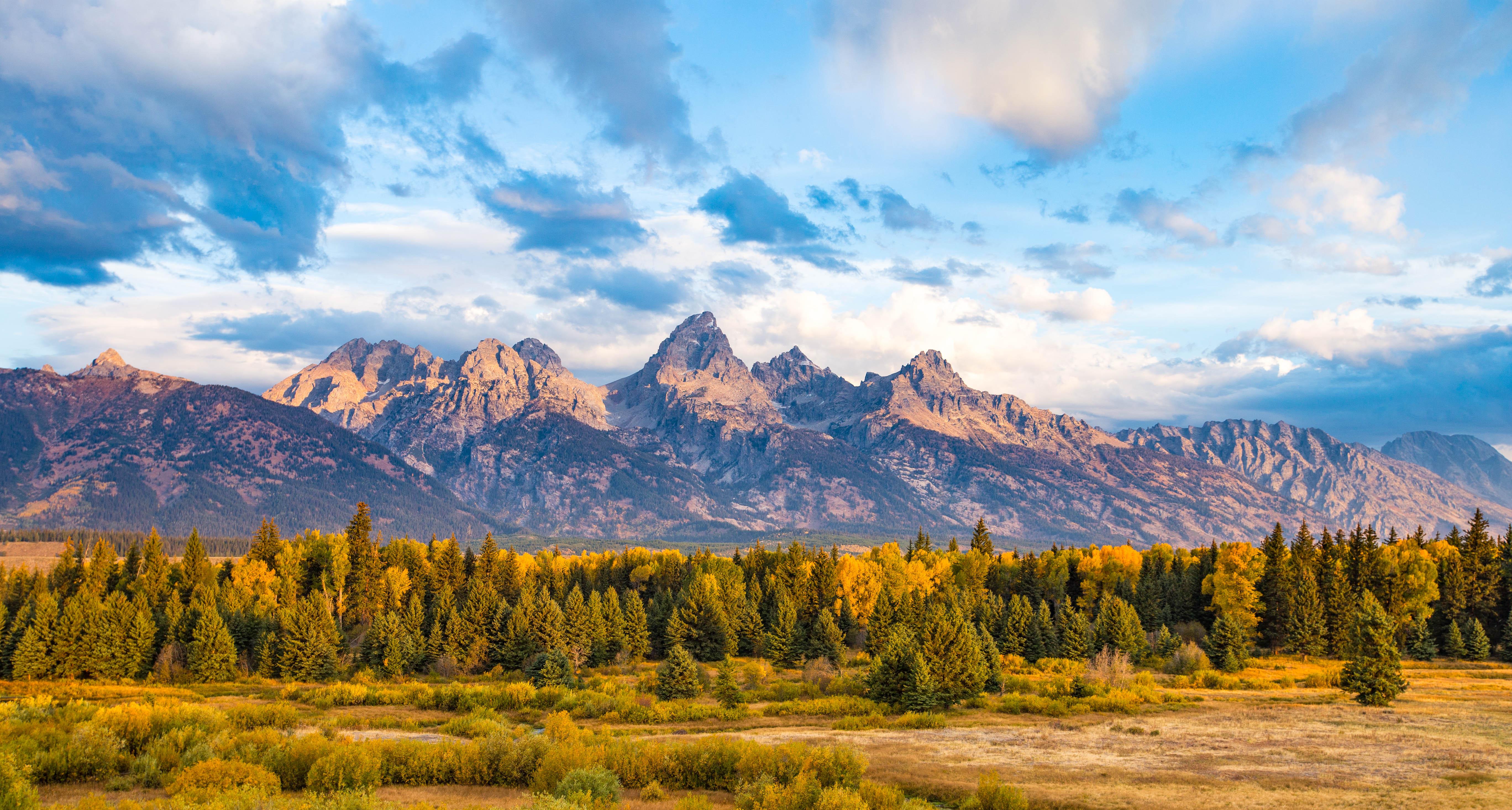
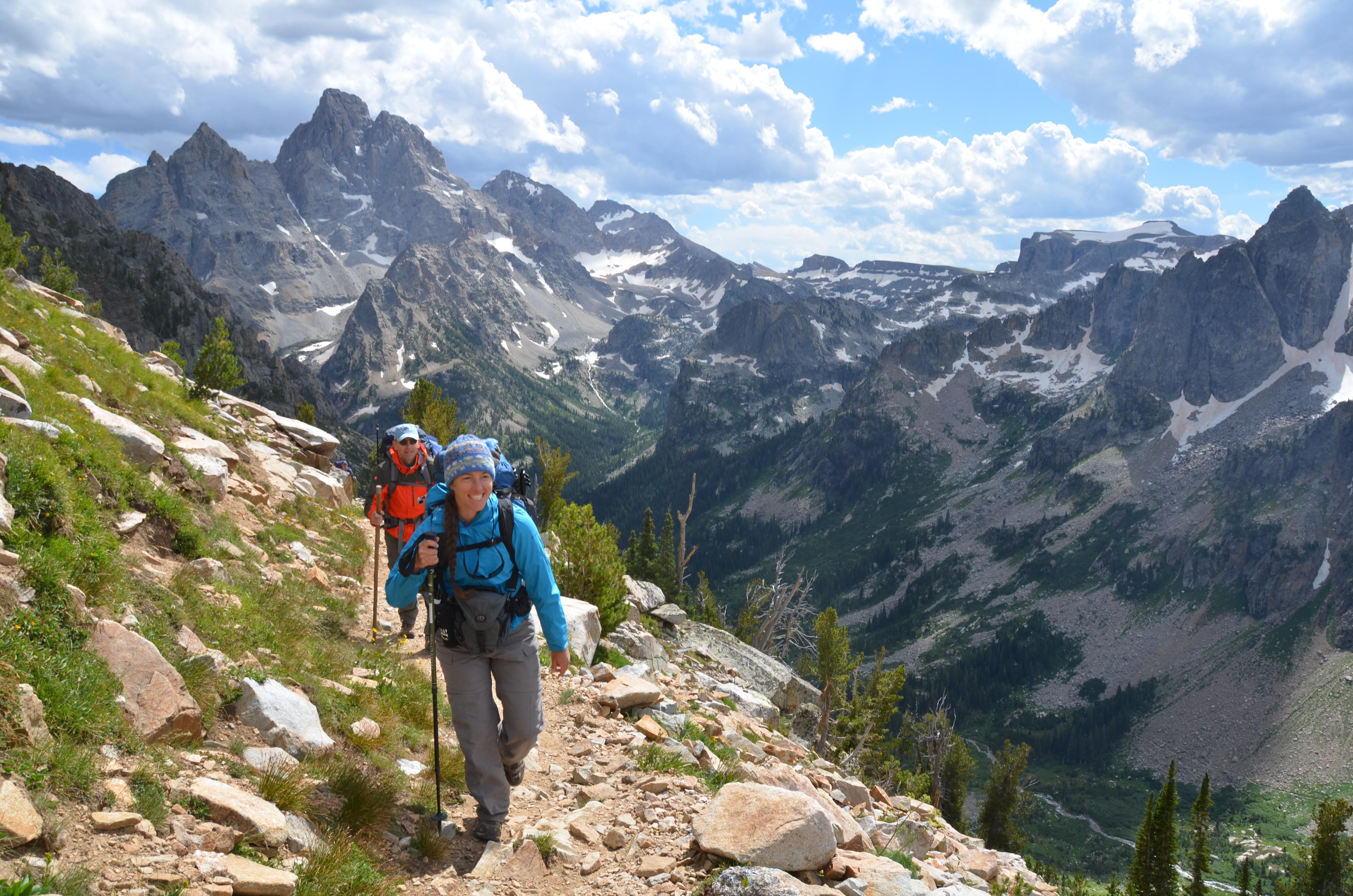
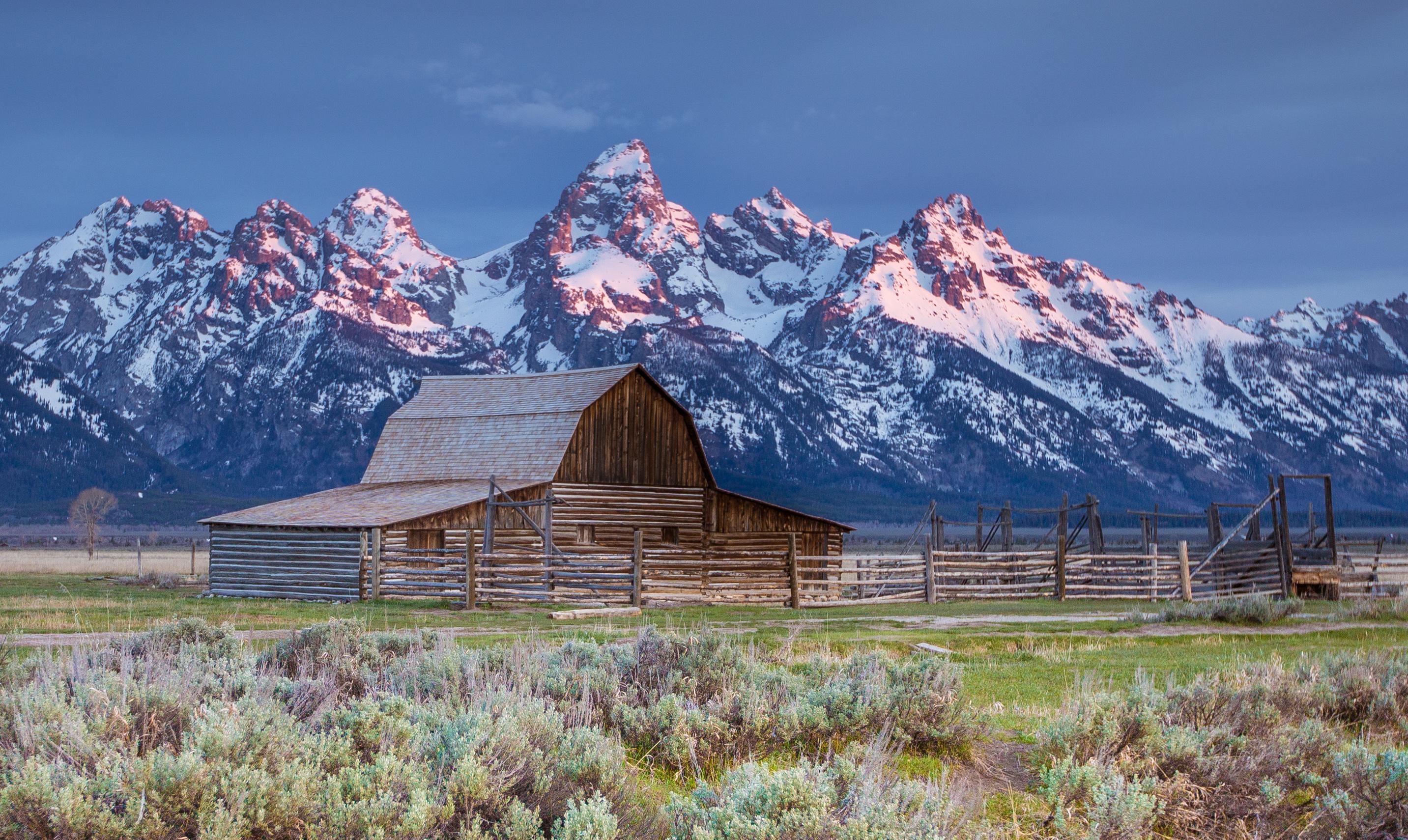
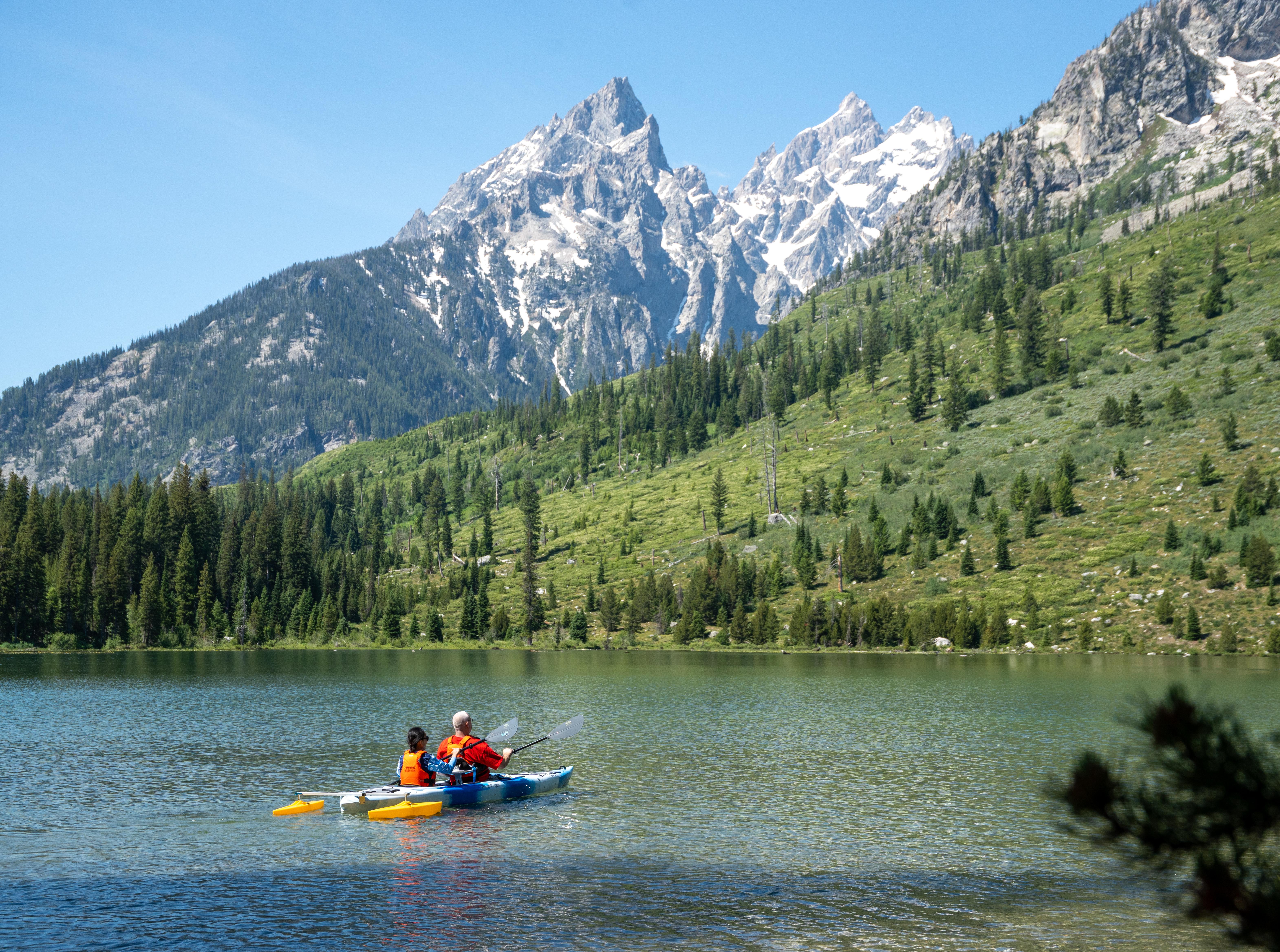
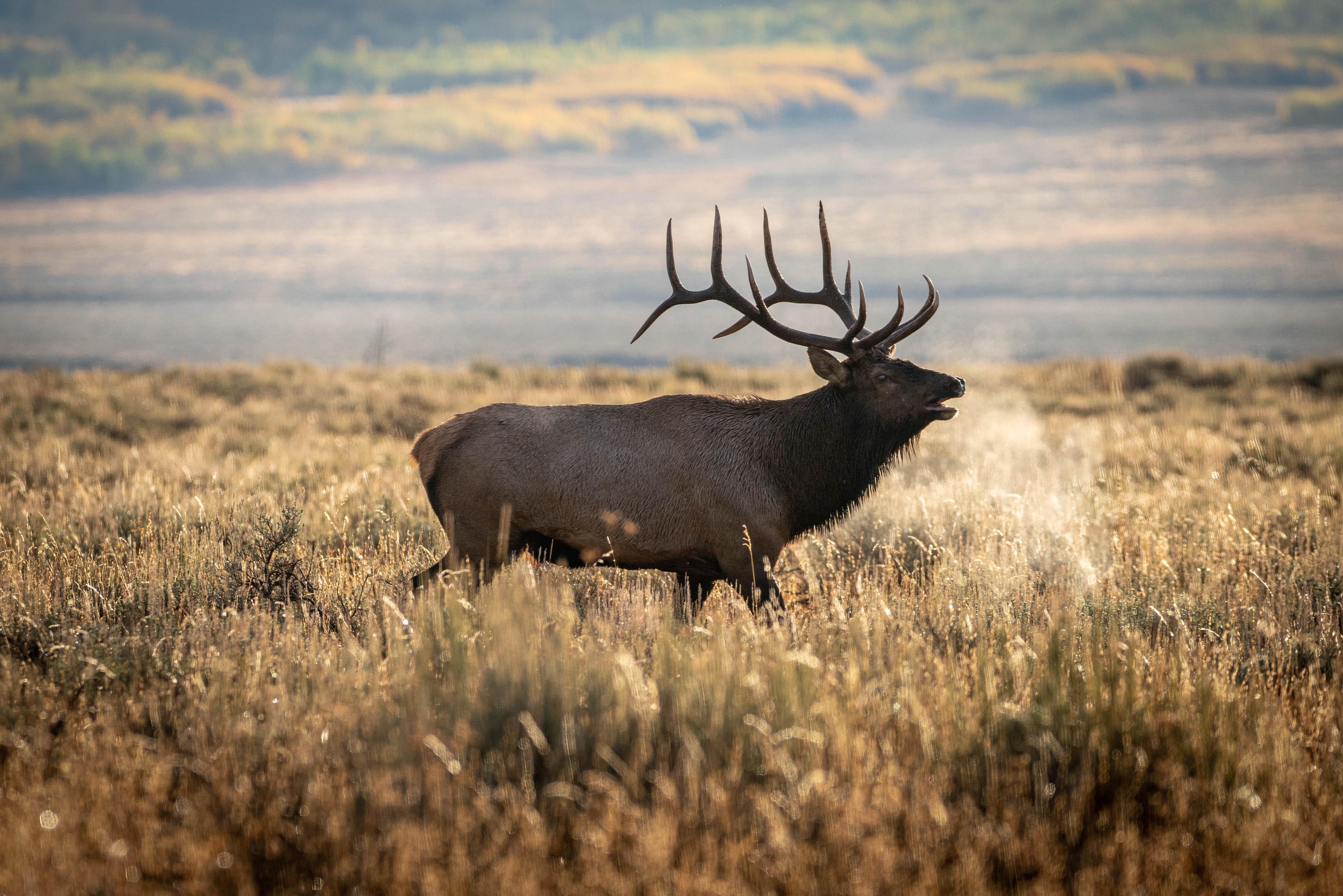
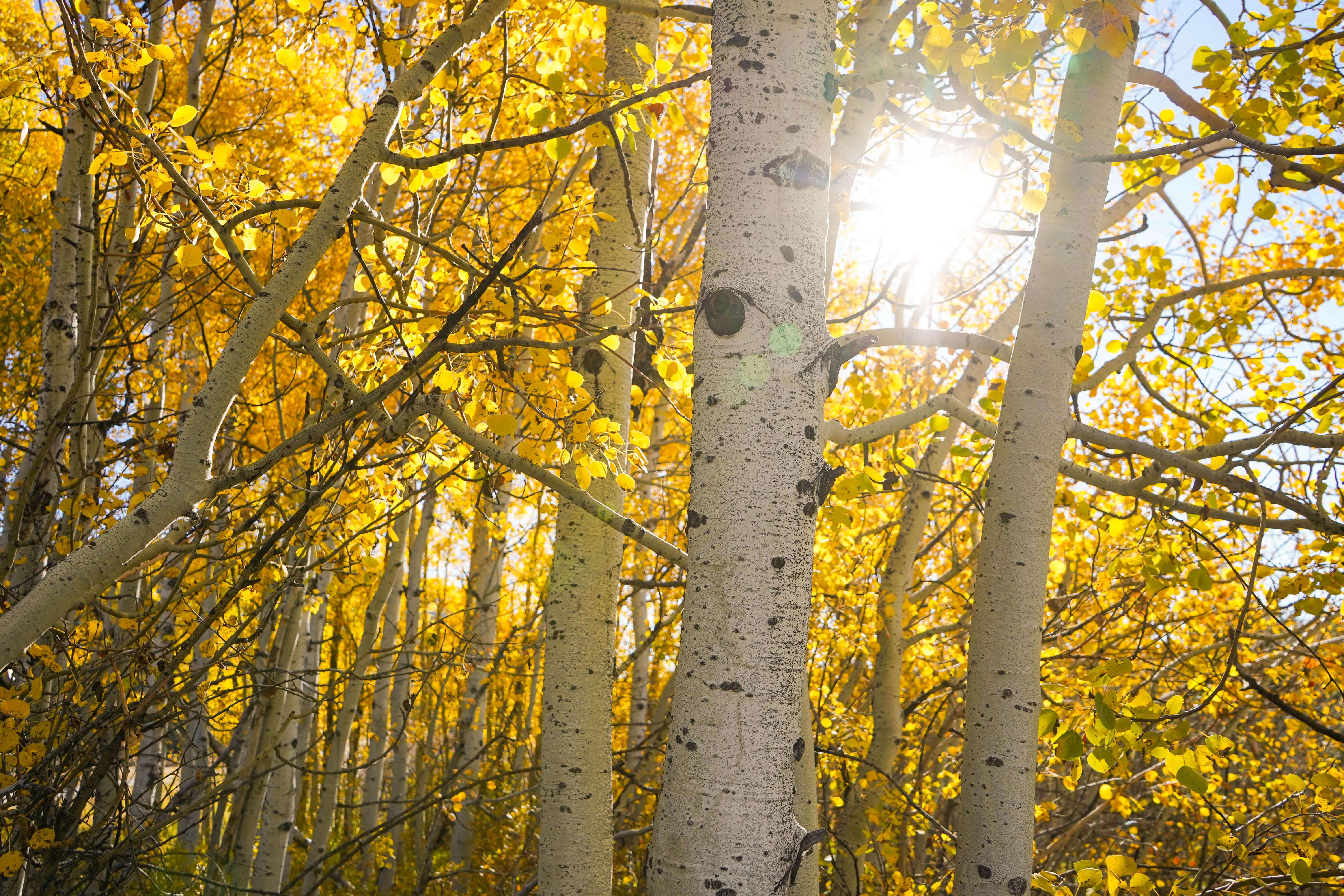
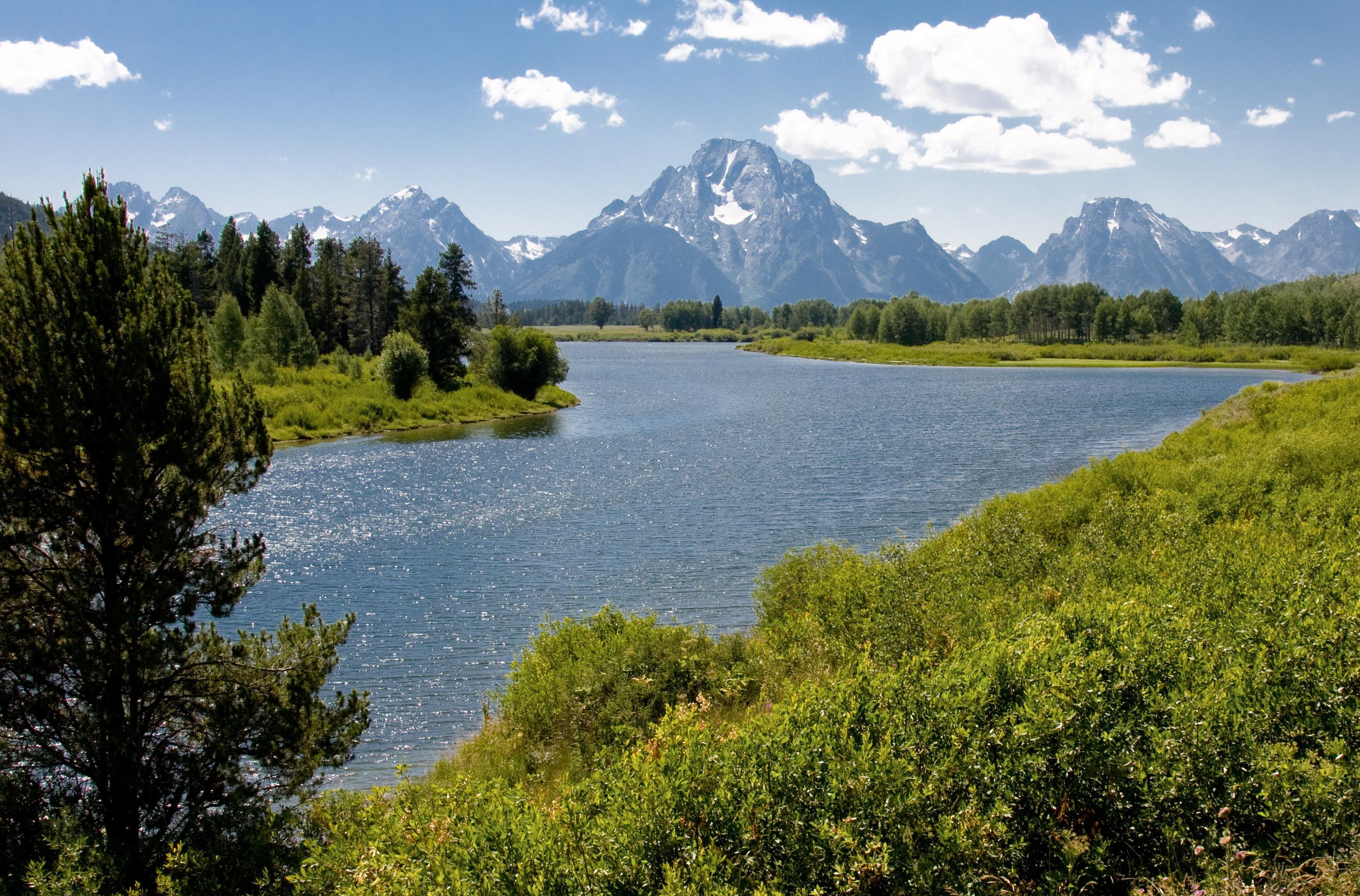


No structured outing assessments have been reviewed for this park yet. Check the official accessibility guide for your requirements.
Compare accessibility details →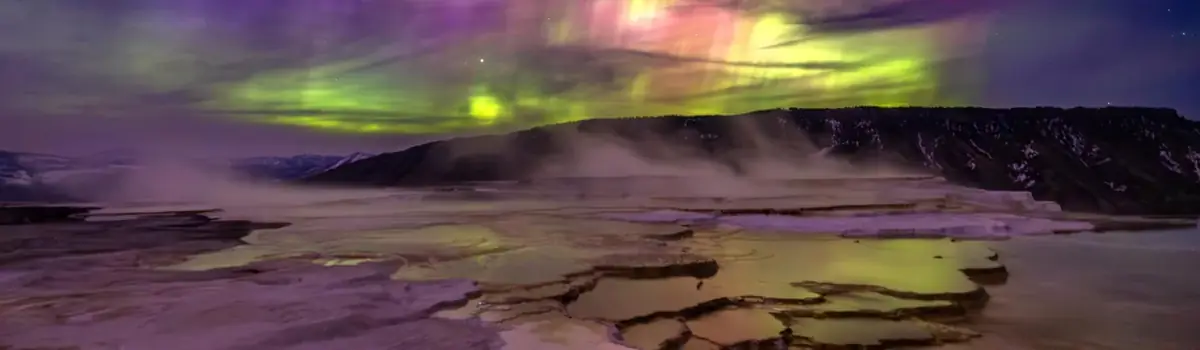 Volcanic
Wyoming · Montana · Idaho
On March 1, 1872, Yellowstone became the first national park for all to enjoy the unique hydrothermal wonders. Today, millions of people come here each year to camp, hike, and enjoy the majesty of the park.
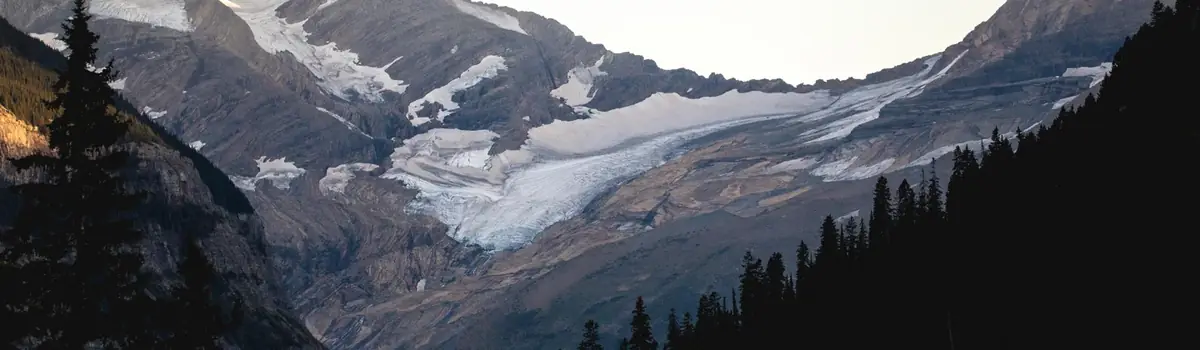 Mountains
Montana
A showcase of melting glaciers, alpine meadows, carved valleys, and spectacular lakes. With over 700 miles of trails, Glacier is a paradise for adventurous visitors seeking a landscape steeped in human culture. Relive the days of old through historic chalets, lodges, and the famous Going-to-the-Sun Road.
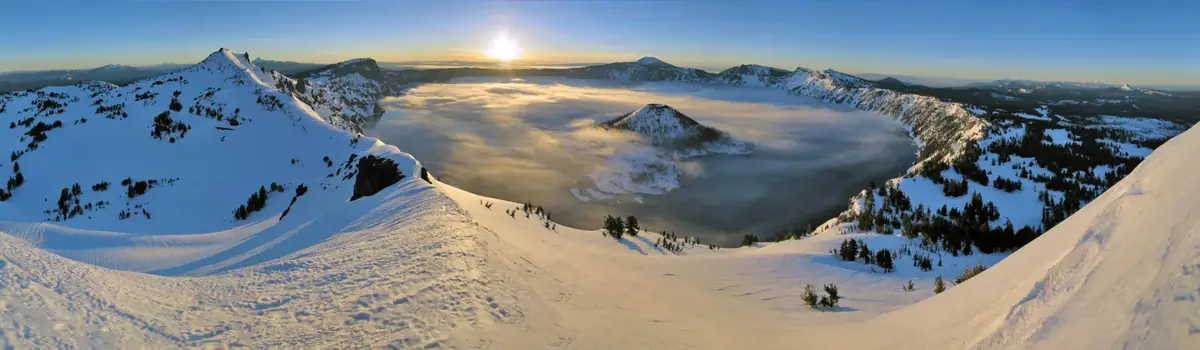 Volcanic
Oregon
Crater Lake inspires awe. Native Americans witnessed its formation 7,700 years ago, when a violent eruption triggered the collapse of a tall peak. Scientists marvel at its purity—fed by rain and snow, it’s the deepest lake in the USA and one of the most pristine on Earth. Artists, photographers, and sightseers gaze in wonder at its blue water and stunning setting atop the Cascade Mountain Range.