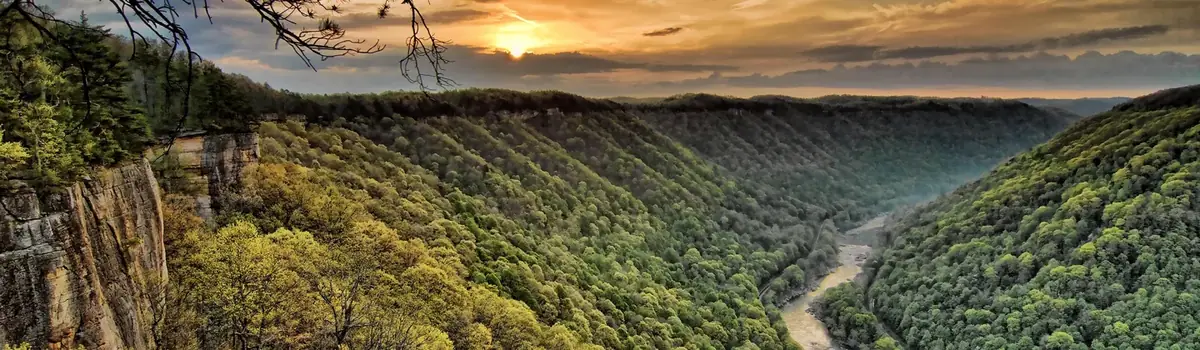
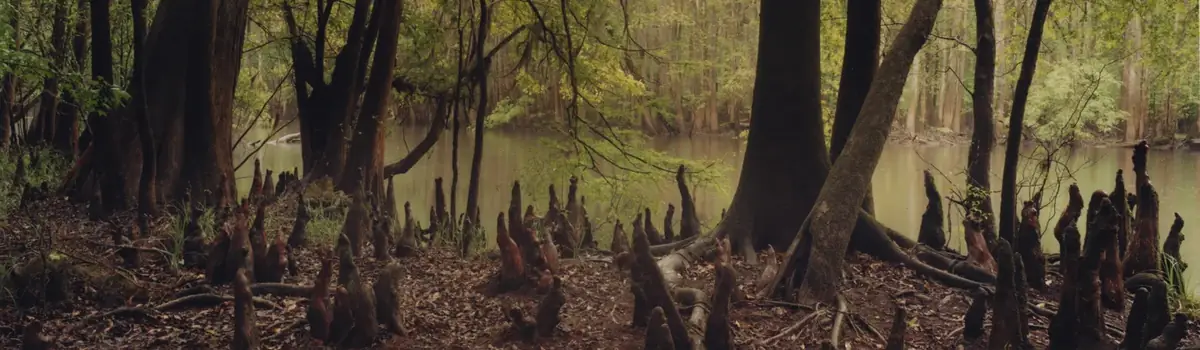
Rolling hills, deep river valleys, and the world's longest known cave system. Mammoth Cave National Park is home to thousands of years of human history and a rich diversity of plant and animal life, earning it the title of UNESCO World Heritage Site and International Biosphere Region.
72.5Kacres of parkland
660.7Krecreation visits, 2025
May · Sep · Octnearby climate picks
Seasonal access & reservations
No reviewed guidance for this selection. Check the park's official planning pages; missing coverage does not establish access.
Selected guidance only; separate from climate comfort and current conditions.
Official conditions Not checked
The conditions feed has not been connected for this park.
Explore more surface trails or book a contrasting cave tour. Consider a separately arranged river activity only with suitable conditions and experience.
Editorial recommendations, reviewed 2026-10-17. Full park days, excluding travel to and from the region. A first-visit outline for a general traveler; adapt to mobility, fitness, season, reservations, and current conditions. These are suggested days, not reserved activities or guaranteed routes.
Ranger-led programs and cave tour route availability and times change depending on the season. Before arriving at the park or trying to reserve tickets for a tour, please review the tour schedule posted on our Cave Tours webpage to search for the dates of your trip. The park may not publish the complete schedule or variety of tours until 1 to 3 months prior to tour date.
A journey into Mammoth Cave on a guided cave tour is an essential part of a visit to the park. Whether it is your first time to the park or your tenth, there are several things to consider when planning your trip.
To go into the cave, you must purchase a tour ticket.
Reservations for cave tour tickets are strongly recommended as they can sell out weeks in advance.
Cave tour options range from a fully wheelchair accessible tour to off-trail crawling tours. Be sure to fully read the tour descriptions before purchasing your tour tickets.
We are in the Central Time Zone.
Open Transcript
Welcome to Mammoth Cave National Park, home to the world's longest known cave system. Before you embark on your underground adventure, here are some helpful things to know before your cave tour. We highly recommend reserving your tour in advance @recreation.gov. There you can choose from a variety of tours based on distance, time, and difficulty. Be prepared for stairs. Many of our tours require climbing and descending several sets of stairs. Make sure to know what to expect on your tour. Some cave trails can be uneven. Wear sturdy shoes and watch your step on the rugged pathways. Some areas of the cave are tight and have low ceiling. You may need to duck or walk single file on your tour. It's all part of the underground experience. Cave temperatures are cool, averaging around 54°F. It's a good idea to bring a light jacket. Lighting in the cave is dim. Be aware if you have difficulty seeing in low light. Some tours require a short bus ride to different cave entrances. Make sure you're ready to board with your guide when your tour is ready to leave. All tours except the self-guided discovery Tour are led by a knowledgeable park ranger.
Make sure to follow your guide and stay with your group. Arrive at least 30 minutes before your tour to pick up your tickets and prepare for your tour at the visitor center. Only service animals are allowed on cave tours. You cannot bring weapons, flash photography back child carriers or large backpacks. We are excited to see you on your next mammoth cave adventure! For tours, schedules, and descriptions, visit nps.gov Smack aka see you in the cave.
Ready to discover the hidden wonders beneath the surface at Mammoth Cave National Park? Check out these helpful planning hints to make the most of your visit to world's longest cave system!
Plan Your Underground Adventure
Tour route availability and times change depending on the season. Before arriving at the park or trying to reserve tickets for a tour, please review the tour schedule for the dates of your trip. The park may not publish the complete schedule or variety of tours until 1 to 3 months prior to tour date. Read more about tour descriptions at the bottom of this page.
Cave tours often sell out and reservations are strongly recommended. Reservations are the only way to ensure a spot on a tour is available for your party. Please plan accordingly by visiting Recreation.gov or calling 877-444-6777 to secure your tickets in advance. Availability of walk-up tickets for tours is not guaranteed.
Visit Recreation.gov To
Contact Recreation.gov
By Phone: (877) 444-6777 TDD (hearing impaired): (877) 833-6777 Online: www.recreation.gov Call Center Hours: 9:00 am - 9:00 pm Central Time
Cave Tour Cancellation Policy
Refunds will be processed if you cancel before your tour time and date. There will be $1 per ticket charge regardless the reason for the cancellation. Customers who cancel any tour after the reservation time and date or no-shows will forfeit the tour fee. For Wild Cave, Introduction to Caving, and Trog tours:
Cancellations made 10 or more days prior to the Tour Date will be no charge.
Cancellation made 10 days or less prior to the Tour Date will be charged the following amount per ticket: Wild Cave Tour: $12.00 Introduction to Caving Tour: $6.00 Trog Tour: $4.00
Wild Cave Tour: $12.00
Introduction to Caving Tour: $6.00
Trog Tour: $4.00
Know Before You Go
Things To Leave Behind
To ensure the safety of all visitors and the continued protection of Mammoth Cave the following items are not permitted on cave tours:
Flash photography (photography is allowed if the flash is turned off)
Child backpack carriers (front packs are permitted)
Strollers,Tripods/Monopods, Walking sticks (except canes used to assist visitors who would otherwise have difficulty walking)
Metal framed backpacks and backpacks that are higher than the shoulder or that are of a length that extends below the hips (i.e. large trekking backpacks)
Firearms or other weapons
Pets (Day use kennels at the Lodge at Mammoth Cave are available for rent. Proof of vaccination must be provided upon entering the kennel. Learn more about pets in the park .)
Mammoth Cave is for Everyone
During the spring and fall seasons the park is a very popular destination for school trips and other parties. As a result, your tour may include other group(s) of various ages.
Dress Appropriately
You may wish to bring a light jacket during your tour. Cave temperatures can vary widely near entrances (especially in winter), deep cave temperature is 54ºF (12ºC) while surface temperatures in the summer can exceed 90ºF (32ºC).
Cave Tour Accessibility
Visitors with limited mobility may find some cave tours too strenuous. Please review cave tour descriptions and consider your limitations when choosing a tour. For members of the deaf and hard of hearing community, assisted listening devices and sign language interpreter services are available with advanced arrangements. The park is committed to providing accessible options for all visitors. Learn more about accessibility in the park .
When traveling to the park for a cave tour, plan for adequate travel time to the visitor center to arrive around 30 minutes before the start of your scheduled tour. This will allow for time to find parking, pick up your physical paper tour tickets and time to use the restroom. Do not rely on your mobile GPS or web based mapping applications. These services often lead visitors off track onto routes requiring river crossings via ferry or onto narrow winding roads not suitable for large vehicles. More information about travel directions to the park are available.
White-nose Syndrome Alert
White-nose Syndrome has been confirmed in Mammoth Cave. All participants on cave tours must walk on bio-security mats immediately following the conclusion of their tour. No exceptions. Your assistance is required to slow the spread of this fungal disease affecting bats.
Explore All Tours
Mammoth Cave offers numerous cave tours throughout the year. The selection of tours changes seasonally and with staffing availability. You can read descriptions and learn more about these other cave tours before planning your trip to the park. Check back with our cave tour schedule or park calendar to see future offerings of these other cave tours.
Tour Route Photo Galleries
2 hours | 2 miles (3.2 km) | 540 stairs
2.25 hours | 2 miles (3.2 km) | 540 stairs
2.5 hours | 2.5 miles (4 km) | 600 stairs
2 hours | 1 miles (1.6 km) | 160 stairs
1.25 hours | 0.75 miles (1.2 km) | 135 stairs
0.5 hours | 0.75 miles (1.2 km) | 130 stairs
1.25 hours | 0.25 miles (0.4 km) | 64 stairs, optional 98 stairs
Attending a ranger-led program in the park is a great way to discover new things and learn more about the Mammoth Cave National Park. The park offers a variety of ranger-led programs such as cave tours and programs on the surface like talks, walks, and junior ranger activities. All surface programs are offered free of charge, however, there is a fee for cave tours. Be sure to check the current program and event schedule for the dates of your visit to the park to see what programs are available.
Program Availability
Ranger-led programs on the park's surface are subject to change or cancelation due to inclement weather conditions or staff availability. Please check at the visitor center when you arrive at the park for the most up-to-date program schedule.
Program Schedule
Daily until Oct. 31
12 p.m. – Echo River Spring Walk
Sunday Only, Sept. 6 – Oct. 25
8:30 a.m. – Let's Go Birding
Surface Area Walks and Talks
Visitor Center Area Programs
Join a park ranger at the back porch of the visitor center for a 10-minute presentation on a variety of topics inspired by Mammoth Cave. Program topics may include plants, animals, history, scientific research and more.
Meets at the back porch of the visitor center. Difficulty: Easy Duration: 10 minutes Accessibility: Wheelchair accessible
Join one of our park rangers inside the visitor center exhibit area and learn about the unique cultural and natural history of Mammoth Cave National Park! Rangers will be scheduled to present a variety of talks. Topics may be plants, animals, exploration, geology, early community life, and many more! Meets in the visitor center exhibit area. Difficulty: Easy Duration: 30 minutes Accessibility: Wheelchair accessible
Start your day at Mammoth Cave by chatting with a ranger! Join one of Mammoth Cave's park rangers as they are available to answer any questions you may have, provide area information, or just discuss the various opportunities to enjoy your experience in the park. Meets in the visitor center exhibit area. Difficulty: Easy Duration: 30+ minutes Accessibility: Wheelchair Accessible
Heritage Trail Walk
Discover stories of the people and activities that shaped the early history of Mammoth Cave. Enjoy this accessible loop trail that takes you past the site of the original Mammoth Cave Hotel, Sunset Point, and the Old Guide's Cemetery. Meets at the back porch of the visitor center. Difficulty : Easy Distance : 0.5 miles (0.8 km) Duration : 1 hour Accessibility : Wheelchair accessible
Transportation Talk
Join a park ranger to view a restored 19th century stagecoach and learn about early transportation methods used in the Mammoth Cave region.
Meets in the lobby of the Lodge at Mammoth Cave. Difficulty: Easy Duration: 15 minutes Accessibility: Wheelchair accessible
Let's Go Birding
Join a knowledgeable volunteer for an exciting bird-watching adventure. This bird walk is a wonderful opportunity to see and hear a variety of bird species, from our resident birds to the beautiful spring migrants that pass through. We will have few binoculars to check out for the hike.
Meets at the back porch of the visitor center. Difficulty: Moderate Distance: 1 to 1.5 mi | 1.6 to 2.41 km Duration: 2 hours
Wildflower Hike
Join a knowledgeable volunteer to discover spring wildflowers, ferns, and critters while hiking the trails at Mammoth Cave National Park. Destination to be determined by the size of the group and weather conditions. Please wear sturdy, comfortable walking shoes.
Meets at the back porch of the visitor center. Difficulty: Easy Duration: Up to 2 hours
Programs Throughout Park
Cedar Sink Hike
Join an experienced volunteer on a hike through some of the most scenic areas filled with beautiful seasonal wildflowers. Discover how to identify common wildflowers, learn about their peak seasons, find the best spots in the park, and explore traditional uses of different species.
Meets at the Cedar Sink trailhead. Difficulty: Moderate Duration: 2 hours Distance : 1 mi | 1.6 km
Echo River Spring Walk
Join a ranger on this accessible surface walk and learn about the karst landscape. See where the Echo River exits the dark passages of Mammoth Cave and enters into the sunlit world above. Discover the close connection between the surface and subsurface and how we relate to world around us. Meets at the Echo River Spring Trailhead. Difficulty: Easy Duration: 45 minutes Distance : 0.6 miles (1 km) Accessibility : Wheelchair accessible
Evening Program
Spend an evening beneath the stars and join a park ranger to learn about a variety of topics inspired by Mammoth Cave National Park. Program topics are ranger's choice and could include local stories, history, plants, animals, geology, and more! Meets at the park amphitheater near the Mammoth Cave Campground. Difficulty : Easy Duration : 30 minutes Accessibility : Wheelchair accessible
Sand Cave Almanac
A progressive walking and driving tour telling the saga of Floyd Collins, trapped in Sand Cave in 1925. See the Collins' family home place and end your journey at the Mammoth Cave Baptist Church at the gravesite of Floyd Collins. This activity is conducted in a caravan in which visitors drive their own vehicles. The caravan traces a 5.2 mile distance from Sand Cave Trailhead to Mammoth Cave Baptist Church. Meets at the Sand Cave Trailhead on Cave City Road. Difficulty: Easy Duration: 2 hours Distance : 5.2 miles (driving) Accessibility: Wheelchair accessible
Junior Ranger Activities
Junior Ranger Oath
Meet with a park ranger to take your Junior Ranger Oath and receive your Junior Ranger Badge. Be sure to have your Junior Ranger Book with you. A self-paced junior ranger activity book is available at the visitor center for those wishing to earn their Mammoth Cave junior ranger badge. Meets in the visitor center. Difficulty: Easy Duration: 10 minutes Accessibility: Wheelchair accessible
Nature Tracks for Kids
An activity designed for children to learn and explore more about Mammoth Cave National Park. Join park rangers in a variety of activities that enable children to discover more about the park's plants, animals, cave forming processes, and the delicate balance of the ecosystem. Meets at the visitor center. Difficulty: Easy Duration: 30 minutes
Cave tours are offered thorough the year and follow a variety of tour routes inside Mammoth Cave and other caves in the park. For more information about cave tours, ticket reservations and tour schedules visit our cave tour page .
Plan your Mammoth Cave experience
Cave Tour & Ranger-led Program Schedule
See our scheduled programs and events
Accessible Activities
Description of Accessible Cave Tours, Ranger Walks & Talks, and Self-Guided Adventures
Several unpaved trails and service roads are available in the park for cyclists with mountain bikes. Trails not listed below are closed to bicycle use. Remember that when on trails shared by hikers and horses, cyclists are required to yield to the other trail users.
Mammoth Cave Railroad Bike and Hike Trail
9 miles (14.4 km)
Originally opened in 1886 the Mammoth Cave Railroad brought early tourists to Mammoth Cave and other neighboring caves in the area. The train line continued its service for 45 years and made its final run on August 1, 1931. Today, a portion of the path of the former Mammoth Cave Railroad has been converted into a 9-mile hike and bike trail. This trail can be accessed from Park City, KY, several points along Mammoth Cave Parkway, and the park’s visitor center area. Along the trail, cyclists and hikers can stop at historic sites, interpretive waysides, and scenic overlooks. While on the Trail:
Dismount and walk your bicycle at all road crossings.
Be aware of hills and steep grades. Walk your bicycle when signs instruct you to do so.
Keep your children near at all times.
Observe warning signs.
Bicycle helmets are recommended for all riders.
Remain on the trail and always practice Leave No Trace.
Big Hollow Trail
9.1 miles (14.6 km) North Loop: 5.3 miles (8.5 km) South Loop: 3.7 miles (5.9 km)
Connector Trail from the Big Hollow Trailhead to the Maple Springs Trailhead
1 mile (1.6 km)
The Big Hollow Trail Loop Trails and Connector Trail offer over 10 miles of single track mountain bike trail that winds through dense woodlands and rocky outcroppings. The trail can be accessed from the trailhead within Maple Springs Campground.
For visitors wishing to travel to Mammoth Cave National Park on two wheels instead of four, the park roadways offer miles of scenic and forested landscape to enjoy on the ride. While on the Road:
Cyclists must respect and obey all rules that apply to automobile traffic, including speed limits and stop signs.
Bicycle helmets are highly recommended for all riders.
No bike lanes exist on park roads. Bicycles must be ridden single file and well to the right-hand side of the road, except when passing or turning left.
Cyclists should use extreme caution, particularly along narrow areas and blind curves. Wear bright, highly-visible clothing to help drivers see you.
Part of the U.S. Bicycle Route System
Mammoth Cave National Park is included in two U.S. Bicycle Routes (USBRS) that connect urban and rural communities across the United States via signed roads and trails.
TransAmerica Bicycle Route, USBR 76
The TransAmerica Bicycle Trail was designated in 1982 and spans the nation from coast to coast. On its 4,228-mile (6804.3 km) journey, the trail passes through the states of Oregon, Idaho, Montana, Wyoming, Colorado, Kansas, Missouri, Illinois, Kentucky, and Virginia. Along the way riders can take several spur routs to scenic destinations like Mammoth Cave National Park.
Cave Country Bicycle Route, USBR 23
Designated in 2019, the Cave Country Bike Route connects USBR 76 to the Tennessee border, through Kentucky’s Cave Region. The 109-mile (175.4 km) route takes riders through Mammoth Cave National Park and connects to small towns and historic sites.
What is an e-bike? The term “e-bike” means a two or three-wheeled cycle with fully operable pedals and an electric motor of less than 750 watts (1 HP). Where can I ride my e-bike in the park? E-bikes are allowed in the park where traditional bicycles are allowed. Can I ride my e-bike by using only the electric motor? Using the electric motor to move an e-bike without pedaling is prohibited on bike trails and service roads. The sole use of the electric motor is allowed only where motor vehicle use by the public is allowed, i.e. paved roadways. Learn more about e-bikes in national parks .
Whether riding on one of the parks scenic roadways or on an off-road trail, your safety is your responsibility. Make your visit more enjoyable by learning about safety while in the park.
Children ages 12 and under are required to wear a personal flotation device (PFD or life jacket) at all times while onboard a watercraft in Mammoth Cave National Park. It is important that PFDs are properly fitted and US Coast Guard approved.
Over 30 miles of the Green and Nolin Rivers trace through the Mammoth Cave National Park and offer a wealth of recreational opportunities. Angle for muskellunge, bluegill, catfish, bass, perch, crappie, and other game fish. Canoe or kayak the rivers looking for wildlife, springs and river bluffs. Camp on islands, in the floodplain, or by the river at the Houchin Ferry Campground . These rivers offer something for everyone.
About the Rivers
Kentucky's First National Water Trail
The rivers inside of the park are part of the Green and Nolin Rivers Blueway , a National Water Trail encompassing 36 miles of navigable waterway and 7 public access sites. This designation actively supports public access for safe river recreational use, promotes stewardship, and connects communities and visitors to enjoyment and appreciation of the overall health of the river system and surrounding lands.
Planning Your River Trip
Always wear a life jacket. Personal flotation devices (PFDs/life jacket) are encouraged for all river users and required to be worn by children ages 12 and under at all times while on rivers inside of Mammoth Cave National Parks. It is important that your PFD is properly fitted, and US Coast Guard approved. Federal and state law requires a Type I, II, or III PFD for each person onboard a watercraft.
Let someone know your plan. You should always leave a float plan with family/friends and inform them of your departure and return. Do not forget to inform them when you return so an unnecessary search is not started.
Leave alcohol at home. Alcohol is prohibited on the rivers inside the park.
Know the water level and weather forecast. River use is prohibited when river levels are at or exceed 20 feet on the park's water level gauges.
More information on boating and watersports throughout the national park system is available for you to review, including safety and trip planning tips.
River Access Points
Within the park there are three river access points accessible by car: Dennison Ferry, Green River Ferry, and Houchin Ferry. All of these sites are located on the south side of the Green River. Outside of the park on the Nolin River is the Tailwater Recreation Area.
Dennison Ferry consists of a wooden canoe and kayak ramp with a series of concrete stairs to the water.
Green River Ferry consists of a wooden canoe and kayak ramp with a concrete staircase to the water and an auto ferry ramp that doubles as a launch site for motorboats.
Houchin Ferry consist of a temporary canoe and kayak launch ramp. This launch site is often very muddy, please use caution.
Tailwater Recreation Area consists of a paved boat ramp to access the Nolin River.
Dennison Ferry to Green River Ferry
Green River Ferry to Houchin Ferry
Nolin River Dam to Houchin Ferry
Houchin Ferry to Brownsville
More Trip Ideas
Paddling in the area is not limited to the rivers in the park. Visit Cave Country Trails for more information on paddling options in the greater Mammoth Cave area.
Learn your responsibilities when recreating on the river.
Rent a boat for a day on the river.
Fishing regulations and more.
Learn more about backcountry camping in the park.
Camp along the Green River in a campground.
Current and Forecasted Water Levels on the Green River
In cooperation with the US Geological Survey, the park maintains a water level monitoring station on the Green River inside the park boundary. The National Weather Service in Louisville, in coordination with the Ohio River Forecast Center, maintains a Daily Forecast for the Green River at Mammoth Cave National Park . Flood Warnings will be issued on the National Weather Service site when water levels are expected to reach or exceed the Minor Flood Stage level of 32 feet. The following flood stages have been established at Mammoth Cave, KY:
Moderate: 52 ft.
Lock and Dam 6 Rapids
Class 2 rapids have developed on the Green River at the former site of Lock and Dam 6 at Mile Marker 182. The rapids area starts just past the park's western boundary and before you reach the Brownsville Boat Ramp. Please adjust your plans accordingly.
Swimming in park waters is not recommended. At normal stage, the Green River flows at a relatively brisk 4.3 knots, about 5 miles per hour, which is too strong to swim against. There is no designated swimming area in the park and no lifeguards on duty. Wading in shallow water can also pull you off of your feet. Stay far enough back from moving water so that an accidental trip or slip on wet rocks will not cause you to fall into the current and be swept away.
Swimming, wading, or bathing within 200 feet (61 m) of the Green River Ferry crossing is prohibited.
The use of tubes, inflatable pool toys, or pool rafts to float the rivers is prohibited.
What comes to mind when you think about fishing? Patience, relaxation, challenge, and memories? You may find all that and a sense of stewardship, conservation, and preservation. Take some time to explore our fishing information and learn what the park has to offer as well as your responsibilities before casting a line or flicking a fly into the water.
No fishing license or permit is required within the boundary of Mammoth Cave National Park.
Fishing Regulations
In addition to the rules outlined in 36 CFR 2.3 , 36 CFR 7.36 , and the Superintendent’s Compendium , the following fishing regulations apply within the boundaries of Mammoth Cave National Park.
Prohibited Fishing Methods
Do Not Collect Mussels
To learn more about fishing regulations the National Park Service, visit the Fish & Fishing website.
Fish Consumption Advisories in National Park Waters
The Environmental Protection Agency, states, territories, and tribes provide advice on fish and shellfish caught in the waters in their jurisdiction to help people make informed decisions about eating fish. Advisories are recommendations to limit your consumption of, or avoid eating entirely, certain species of fish or shellfish from specific bodies of water due to chemical or biological contamination. Fish is part of a healthy balanced diet, but eating wild fish and shellfish caught in park waters is not risk free. Parks are “islands”, but the much larger “ocean” that surrounds them affects the natural resources inside a park. Other aquatic toxins are the result of natural biological processes. Also, chemical contaminants that originate outside of park boundaries can come into parks. Mercury is an example of a toxin originating outside a park that can find its way into a park. Mercury exists naturally in some rocks, including coal. When power plants burn coal, mercury can travel in the air long distances before falling to the ground, usually in low concentrations. Once on the ground, microorganisms can change this elemental mercury to methyl mercury. This type of mercury can build up in animal tissues, and it can increase in concentration to harmful levels. This high concentration can occur in large predatory fish - those often pursued and eaten by anglers. Studies have shown that fish in some National Park System waters have mercury levels that may be a concern to people who regularly eat a lot of fish.
Mammoth Cave National Park Fish Consumption Advisories
All Kentucky waters are under a consumption advisory for mercury. More information about fish consumption advisories throughout Kentucky are available from the Kentucky Department of Fish & Wildlife Resources . To learn more about this topic, the National Park Service maintains information about Fish Consumption Advisories and Mercury and Toxins in Nature .
Aquatic Invasive Species
Imagine your favorite fishing spot and the wonderful memories. Things may look fine but underneath the surface there is a serious threat. Everything you remembered is now cemented together in a sharp, smelly mess. Invaders have wiped out the fish species you used to catch. Aquatic invasive species are not native to an ecosystem. Their introduction can cause harm to the economy, the environment, or to human health. Aquatic invasive species are a growing risk to parks and their values. In the United States alone, there are more than 250 non-native aquatic species. For many centuries, humans have contributed to spreading non-native species around the globe. You can make a difference. To learn more about Aquatic Invasive Species in the National Park Service, visit their Fish & Fishing website.
How You Can Help – Stop Aquatic Hitchhikers
You can help stop the spread of aquatic invasive species in park waters and other waterways by following the simple guidelines outlined by the campaign to Stop Aquatic Hitchhikers!
Fishing Throughout the National Park Service
We invite you to visit the Fish and Fishing website for more information about fish and fishing in the National Park Service. You will learn about conservation, different fish species, and parks that offer fishing.
Current River Level and Forecast for the Green River
Mammoth Cave National Park is an exceptional destination for anyone who loves to see the world from the back of a horse. Riders will find miles of wooded backcountry trails suitable for many skills and ages. The trails range from wide, smooth dirt paths that two riders can travel together, to daring, single file, ridgeline trails.
Bringing your horse to the park
60 miles of backcountry trails north of the Green River are open for horseback riding.
Trailer Parking
Day-use horseback riders can park trailers at the following trailheads on the north side of the park:
First Creek Trailhead
Lincoln Trailhead
Maple Springs Trailhead
Maple Springs Campground, across the road from bulletin board
Temple Hill Trailhead
Vehicle size limit on the Green River Ferry
The Green River Ferry is the most direct route from the visitor center to the park’s north side backcountry trials and the Maple Springs Campground. The ferry has a 8-ton load limit. However, some vehicles (i.e. long horse trailers) cannot be ferried solely because of the length or ground clearance. The ferry is open daily from 6:00 AM - 9:55 PM (except when closed for repairs or during hazardous river conditions). Alternate routes via state and county roads are available and may be more practical for trailers.
Guided Horseback Riding
Commercially guided horseback riding is a great way to explore the park without needing to bring your own horse. Suitable for new riders and beginners, it may even nurture a life-long passion! Guided outings in the park are only available through authorized operators with a commercial use authorization from the National Park Service.
Double J Riding Stables and Campground
Camping With Your Horse
Maple Spring Campground
Backcountry Camping
Trail Rules and Stewardship
Horseback riders can provide an excellent example to all visitors by following the Seven Leave No Trace Principles as well as these park rules:
Horseback riding is prohibited on all park roads.
When hikers and horses meet, horses must be slowed to a walk and hikers should remain quiet.
Stay on marked trails only. Do not shortcut trails or follow social trails - this erodes and damages trails.
Trails can become muddy in some locations after rain. To preserve the trail surface avoid riding after recent rainstorms or when trails are excessively wet.
Always hitch horses more than 100 feet away from designated campsites, trails or water sources.
Never tie horses to trees. Always cross-tie horses between trees.
Leave no litter in the backcountry. Remember: Take only memories; leave only footprints.
Backcountry Safety
Make sure your ride in the park is a happy one. Learn more about park safety and how to ride and hike smart before your trip in the park.
Group campsites, horseback group campsites, and RV campsites just a 10 minute drive from the visitor center.
Rugged undeveloped tent sites, horseback sites, and paddle-in riverside sites.
Explore over 60 miles of trails on the north side of the park.
Upcoming forecasts and what to expect of the weather to help plan ahead for your camping, kayaking, and hiking adventures.
Take time to learn how you can protect Mammoth Cave's campsites while staying in the park.
Left image The Lodge at Mammoth Cave welcomes thousands of guests each year. Credit: NPS Photo/ Thomas DiGiovannangelo
Right image Beneath their feet, sits the Rotunda, one of the largest rooms inside Mammoth Cave. Credit: NPS Photo/ Thomas DiGiovannangelo
The Beneath Your Feet program is designed to help you appreciate the mysteries and geological wonders of Mammoth Cave while exploring the park’s above-ground walking trails. Wayside signs are located at 14 locations along trails and walking paths throughout the park’s visitor center and campground area. They include images and information about the natural history of the cave passages that are found beneath your feet, as well as, smartphone ready QR Code links to scan and watch videos of park rangers teaching you about the location below you.
NPS Photo/ Tegan Sorensen
How to Get Started
While in the Park
Start by downloading the official NPS mobile app on your smartphone and navigate to the Mammoth Cave National Park page. Using the NPS app, you can follow along to the various Beneath Your Feet locations as you walk around the visitor center area. Your smartphone camera application can also be used to scan the QR Code on the Beneath Your Feet wayside signs to open the web link to watch videos and learn more about the cave passage below.
The virtual tour information along with video recordings are available on the links below, so you can explore Mammoth Cave from the comfort of your home.
The free, official NPS app includes an interactive Beneath Your Feet, under Self-Guided Tours.
“How did you discover the above-ground locations…?”
Park scientists use radio telemetry to map out where important parts of the cave are in relation to the locations directly above ground. Also known as a “cave radio,” it is one of many fascinating ways that scientists create surveys and maps of caves . A surveyor inside the cave creates a magnetic signal while surveyors on the surface use a receiver to pick up the frequency. This allows the above-ground team to find the location directly above the cave passage. This information helps draw us closer to the below ground world and lets us know what is truly beneath our feet.
Since prehistoric times, humans have looked up at the night sky and pondered the wonders of the universe. People have used the stars and planets to navigate, keep track of time, and to connect with other cultures. Regardless of your reason, Mammoth Cave National Park provides an ideal place for stargazing. After a day of hiking, kayaking and exploring the cave, the fun doesn’t have to stop there, because half the park is after dark!
Tips for Stargazing in the Park
A red light works best. Flashlights with red lights will allow you to navigate walkways in the dark without disturbing your night vision.
Find a wide-open area. The grass fields and parking lots near the visitor center can make a great spot to have a wide view of the sky. Tall trees and hills may block your view.
Avoid areas with artificial light sources. You’ll want to find a place that you can step away from car headlights and lights from buildings, to get the best experience.
You don’t need a telescope. While a telescope can be a great tool to see smaller night sky objects, they aren’t always necessary. Many planets and constellations can be seen with the naked eye. For an extra boost, try using a pair of binoculars.
Stargaze with a Ranger
Ranger-led stargazing programs are offered throughout the year to provide an opportunity to experience unfettered views of the starry night and evoke a new appreciation for the park’s dark sky environment. Attendees get to view planets and other night sky delights through telescopes provided by the park. Check our park calendar to find available programs on the dates of your visit.
Junior Ranger Night Explorer
Explore the starry side of your national parks and become a Junior Ranger Night Explorer .
Can you Spot the Station?
The International Space Station can often be seen passing overhead by the watchful stargazer. To the naked eye the station usually looks like a bright white dot moving very quickly as it passes without changing direction. It is often the brightest object in the night sky second only to the moon.
Preserving Dark Skies
The National Park Service is working to help protect our night skies and reconnect the world to the stars above. An overabundance of artificial light at night can impact not only people but wildlife too. You can help protect our night skies by turning off lights when they are not needed, and by learning more about the dark skies in the park.
Official NPS features and USGS park boundaries, imported 2026-10-17. An inventory snapshot, not live trail or parking availability.
Loading official park features…
TrailsPoints of interestParkingZoom with buttons or pinch. Toggle layers on the map.
Map coverage varies. Trail names may represent segments, connectors, or shared park units; mapped lines are not a hiking recommendation. Use official conditions and navigation resources before heading out.
NPS public GIS inventory, imported 2026-10-17. “Existing” is an inventory classification, not confirmation that a trail is open. Segment counts are not route distances. Parking records do not indicate space availability, fees, or accessibility certification. View government source ↗
Climate for Bowling Green, 37 km from the park reference point. 1991–2020 normals. Source elevation: 161 m.
Daytime highNighttime lowOctober: 70° / 50°
Daytime high70°
Precipitation94 mm
Daylight11.0 hrs
Wind9.9 km/h
Mountain, rim, valley, and coastal conditions can differ sharply from the source town. Check park forecasts and current conditions before travel.
Monthly climate data 12 months · °F
Month
High
Low
Rain / snow water
Wet days
Daylight
45°
30°
101 mm
10.2
9.8 h
49°
33°
106 mm
9.9
10.6 h
59°
40°
125 mm
11.9
11.7 h
69°
49°
130 mm
11.6
12.9 h
77°
59°
122 mm
11.9
14.0 h
85°
67°
103 mm
12.5
14.5 h
88°
71°
97 mm
11.7
14.3 h
87°
69°
84 mm
10.3
13.4 h
82°
62°
88 mm
8.2
12.3 h
70°
50°
94 mm
8.0
11.0 h
57°
40°
97 mm
9.2
10.0 h
48°
33°
116 mm
10.7
9.5 h
RESEARCH WITH THE SOURCE IN VIEW
The practical field guide.
Official NPS excerpts imported 2026-10-17. Fees, permits, road access, and operations can change; use the source link to confirm the latest information.
Description of Accessible Cave Tours, Ranger Walks & Talks, and Self-Guided Adventures
Physical Address
Operating Hours & Seasons
Current Weather Forecast
Entry to Mammoth Cave National Park and its surface features is free of charge. There is, however, a charge to tour the cave, stay in campgrounds, or reserve picnic shelters. Visitor Center Ticket Counter is open 8:00 am to 5:00 pm. Central Time Learn more about Fees & Passes .
Visitor Centers
Internet & Cellular Access
Internet & Cellular Access Details
Entrance to the park is free, learn about fees for tours, camping, and more.
Reserve a campground, cave tour, or apply for a special use permit.
You are responsible to know the rules and regulations of the national park prior to your visit.
Plan ahead for your trip to the park.
Upcoming forecasts and what to expect of the weather to help plan ahead for your camping, kayaking, and hiking adventures.
Tips for a great visit with your pet.
Find answers to some of the most frequently asked questions.
More information on food, shopping, and other amenities.
Mammoth Cave National Park has three frontcountry campgrounds that offer common camping amenities and close proximity to the park’s visitor center area and cave tours. Goods & Services , such as laundry machines, shower facilities, and camping supplies, are also available in the park. The park's designated backcountry campsites and riverside camping options offer campers the opportunity to find solitude in the park’s rugged hills and majestic woodlands. Reaching these remote sites requires hiking, riding a horse, or paddling on the river for several miles. All camping in the park requires a permit and most sites are available by reservation. Reserving a campsite in advance is highly recommended, especially around holidays and weekends. Book directly from our website to the Recreation.gov reservation system. Explore the various campgrounds listed below for more information including prices and seasonal availability. Make sure to check out our Camping Regulations before your visit. Provide an excellent example to all visitors by following the Seven Leave No Trace Principles .
Mammoth Cave Campground Tent campsites, group campsites, RV campsites, and accessible campsites just a short walk from the visitor center.
Maple Springs Campground Group campsites, horseback group campsites, and RV campsites just a 10 minute drive from the visitor center.
Houchin Ferry Campground Tent only campsites a 20 minute drive from the visitor center
Mammoth Cave National Park is a place for all people, with activities for every level of ability. We are committed to providing an accessible and inclusive experience for everyone. We will continue to update existing infrastructure and programs as we strive for inclusivity for all. If you have questions or suggestions please let us know .
Physical/Mobility Accessibility
Deaf/Hearing Loss Accessibility
Blind/Low Vision Accessibility
Cognitive/Learning Disability Accessibility
Text Version of the park brochure with audio link
Join a park ranger as they take you on a audio tour of Mammoth Cave.
Description of Accessible Cave Tours, Ranger Walks & Talks, and Self-Guided Adventures
An entrance pass is not required to access Mammoth Cave National Park.
Other National Park Service sites may require an entrance pass or fee. Depending on your trip plans, an interagency pass may save you money.
2026 Free Entrance Days in the National Parks
Come experience the national parks! All National Park Service sites that charge an entrance fee will offer free admission to US citizens and residents (other fees, including timed entry or reservation fees, may apply). Mark your calendar for these entrance fee-free dates:
February 16 : Presidents Day (Washington's Birthday)
May 25 : Memorial Day
June 14: Flag Day/President Trump's birthday
July 3–5: Independence Day weekend
August 25: 110th Birthday of the National Park Service
September 17: Constitution Day
October 27 : Theodore Roosevelt's birthday
November 11: Veterans Day
Mammoth Cave National Park does not charge an entrance fee. Tickets are required for cave tours. On free entrance days either the Mammoth Passage tour or Self-guided Discovery tour may be offered. These tours are subject to availability as tour schedules and staffing allow and are not guaranteed. For more information on entrance fee free days in the national parks, visit the Free Entrance Days website .
Mammoth Cave National Park participates in the congressionally authorized Federal Recreation Lands Enhancement Act. Under this program, parks keep 80% of all fees collected; the remaining 20% is deposited in a special account to be used in parks where fees are not collected. Funds generated by the fees are used to accomplish projects the parks have been unable to fund through annual Congressional allocations. Entrance fees help support projects in the park to improve the experience for visitors. For more information, call (270) 758-2180.
Cave tour offerings change by season. Before arriving to the park for a cave tour, check the current cave program schedule . Advanced reservations are recommended and can be made at Recreation.gov or by calling (877) 444-6777.
All individuals under 16 years of age must be accompanied by an adult age 18 years or older. An America the Beautiful Interagency Senior or Access Pass may provide a 50% discount on cave tour tickets for the cardholder only. Inquire at the park for more information.
Frozen Niagara Tour
Gothic Avenue Tour
Grand Avenue Tour
Great Onyx Lantern Tour
Introduction to Caving Tour
Mammoth Passage Tour
River Styx Cave Tour
Star Chamber Lantern Tour
Violet City Lantern Tour
Wondering Woods Tour
Adult (ages 13+)
Youth (ages 6-12)
Children (ages 3-5)
Accessible Tour ♿
Cleaveland Avenue Tour
Domes & Dripstones Tour
Extended Discovery Tour
Extended Historic Tour
Focus Photo Tour
Picnic Shelter Reservation Fees
There are two picnic shelters located in the picnic area near the visitor center. Each picnic shelter has ten picnic tables and the open shelter includes a working fireplace. The picnic area also has fire grates, restrooms, fresh water, and a garbage dumpster. Reservations for the picnic shelters can be made on Recreation.gov .
Open Picnic Shelter
$55.00/day (includes ten picnic tables and a working fireplace)
Enclosed Picnic Shelter
$85.00/day (includes ten tables with chairs and heat and air conditioning)
There are three developed campgrounds within the park. Camping fees vary depending on the site. Reservations are recommended and can be made through Recreation.gov . Backcountry camping permits are $10 and available online through Recreation.gov or in person at the Mammoth Cave Campground Kiosk.
Mammoth Cave Campground
Mammoth Cave Campground is located on Mammoth Cave Parkway, 1/4 mile from the visitor center.
Access ♿ or Senior Pass Holders
Regular Site (No hookups)
Group Site (No hookups/Tent Only)
Maple Springs Group Campground
Maple Springs Group Campground is located on the park's north side on Maple Springs Loop, six miles from the visitor center and three miles north of Green River Ferry. All sites are group sites. pe
Group Site (Hookups)
Horseback Group Site (Hookups)
Houchin Ferry Campground
Houchin Ferry Campground is located on the park's west side on Houchin Ferry Road, 15 miles from the visitor center and one and a half miles from the town of Brownsville, Kentucky.
Access ♿ or Senior Pass Holder Fee
Forms of Payment
Acceptable forms of payment for Mammoth Cave National Park’s fees and passes include cash, all major credit cards, Apple Pay, Google Pay, personal checks, business checks, and traveler checks.
Educational Group Fees
Educational programs are eligible for discounted group rates on cave tours. Contact the park at (270) 758-2180 for more information.
Commercial Use Authorization
A Commercial Use Authorization (CUA) is a business permit with the National Park Service. It authorizes you to conduct commercial activities and to provide specific visitor services within a national park. For more information about CUAs, visit our Commercial Use Authorization page.
Cave Tour Cancelation Policy
All changes of tour reservation will be considered a cancellation and charged $1.00 per ticket. Cancellations made fewer than 24 hours in advance of the tour will not receive a refund. For Wild Cave, Introduction to Caving, and Trog tours:
Cancellations made 10 or more days prior to the Tour Date will be no charge.
Cancellation made 10 days or less prior to the Tour Date will be charged the following amount per ticket: Wild Cave Tour: $12.00 Introduction to Caving Tour: $6.00 Trog Tour: $4.00
Wild Cave Tour: $12.00
Introduction to Caving Tour: $6.00
Trog Tour: $4.00
Frozen Niagara Tour
$26
$22
$7
Gothic Avenue Tour
$23
$19
———
Grand Avenue Tour
$42
$34
———
Great Onyx Lantern Tour
$31
$26
———
Historic Tour
$24
$18
$6
Introduction to Caving Tour
$49
$42
———
Mammoth Passage Tour
$15
$13
$4
River Styx Cave Tour
$26
$20
———
Star Chamber Lantern Tour
$30
$25
———
Trog Tour
N/A
$25
———
Violet City Lantern Tour
$32
$27
———
Wild Cave Tour
$79 (Age 16+)
———
———
Wondering Woods Tour
$26
$22
$7
Cave Tour
Adult (ages 13+)
Youth (ages 6-12)
Children (ages 3-5)
Accessible Tour ♿
$27
$21
$7
Broadway Tour
$22
$17
$6
Cleaveland Avenue Tour
$30
$24
$8
Discovery Tour
$12
$9
$3
Domes & Dripstones Tour
$30
$25
$8
Extended Discovery Tour
$15
$13
$4
Extended Historic Tour
$27
$21
$7
Focus Photo Tour
$25
$21
$6
Picnic Shelter
Open Picnic Shelter
$55.00/day (includes ten picnic tables and a working fireplace)
Enclosed Picnic Shelter
$85.00/day (includes ten tables with chairs and heat and air conditioning)
Site Type
Fee
Access ♿ or Senior Pass Holders
Regular Site (No hookups)
$25.00/night
$12.50/night
Group Site (No hookups/Tent Only)
$40.00/night
$40.00/night
Site Type
Fee
Access ♿ or Senior Pass Holders
Group Site (Hookups)
$50.00/night
$50.00/night
Horseback Group Site (Hookups)
$50.00/night
$50.00/night
Site Type
New Fee
Access ♿ or Senior Pass Holder Fee
Regular Site (No hookups)
$20.00/night
$10.00/night
Frozen Niagara Tour
$26
$22
$7
Gothic Avenue Tour
$23
$19
———
Grand Avenue Tour
$42
$34
———
Great Onyx Lantern Tour
$31
$26
———
Historic Tour
$24
$18
$6
Introduction to Caving Tour
$49
$42
———
Mammoth Passage Tour
$15
$13
$4
River Styx Cave Tour
$26
$20
———
Star Chamber Lantern Tour
$30
$25
———
Trog Tour
N/A
$25
———
Violet City Lantern Tour
$32
$27
———
Wild Cave Tour
$79 (Age 16+)
———
———
Wondering Woods Tour
$26
$22
$7
Cave Tour
Adult (ages 13+)
Youth (ages 6-12)
Children (ages 3-5)
Accessible Tour ♿
$27
$21
$7
Broadway Tour
$22
$17
$6
Cleaveland Avenue Tour
$30
$24
$8
Discovery Tour
$12
$9
$3
Domes & Dripstones Tour
$30
$25
$8
Extended Discovery Tour
$15
$13
$4
Extended Historic Tour
$27
$21
$7
Focus Photo Tour
$25
$21
$6
Picnic Shelter
Open Picnic Shelter
$55.00/day (includes ten picnic tables and a working fireplace)
Enclosed Picnic Shelter
$85.00/day (includes ten tables with chairs and heat and air conditioning)
At nearly 53,000 acres the park is a large place to explore. Luckily, finding your way around is easy with a little trip planning.
Mammoth Cave National Park is divided by the Green River that flows from east to west through the center of the park. The cave tours and most visitor services are found on the south side of the river, but the north side of the park offers backcountry camping, hiking, horseback riding, and mountain biking opportunities.
Make sure to look at a map of the park before you start your journey to get familiar with the park’s layout.
NPS Photo / Jackie Wheat
Directions to the Mammoth Cave Visitor Center
The Mammoth Cave Visitor Center and most visitor services are located in the South Side of the park. These services include:
Cave tour tickets
Cave tour departure sites
Food and dining
Backcountry camping permits
Park Administrative Offices
The Visitor Center offers the best starting point for planning your day at the park.
Take Interstate 65 to Exit 53 (Cave City Exit)
Turn right onto KY-70. Follow 70/255 as it becomes the Mammoth Cave Parkway in the park
Follow the Mammoth Cave Parkway to the visitor center
Take Interstate 65 to Exit 48 (Park City Exit)
Turn left onto KY-255 and follow 255 as it becomes the Park City Road into the park
Follow Park City Road until it joins the Mammoth Cave Parkway
Turn left; follow the Mammoth Cave Parkway to the visitor center
Take KY-70E/Mammoth Cave Road out of Brownsville, KY into park
Follow KY-70E/Mammoth Cave Road until intersection with Mammoth Cave Entrance Road
Turn left onto Mammoth Cave Entrance Road
Follow the Mammoth Entrance Road to the visitor center
Physical Address
Mammoth Cave National Park 1 Mammoth Cave Parkway Mammoth Cave, KY 42259
GPS Coordinates
Lat/Long: N 37° 11' 13.115'' ¦ W 86° 06' 05.197'' Decimal Degrees: +37.186976 ¦ -86.101444 UTM (Zone 16N, NAD83): 579779.491 ¦ 4115977.605 m
DON'T TRUST YOUR VEHICLE NAVIGATION SYSTEM / GPS
Vehicle Navigation Systems and GPS units may provide inaccurate information. These devices can reroute you when trying to reach the visitor center. In some instances, travelers have arrived too late to participate in their scheduled cave tours. Please review your route before you travel to avoid unintended delays.
Vehicle Navigation Systems and GPS units may provide inaccurate information.
These devices can reroute you when trying to reach the visitor center. In some instances, travelers have arrived too late to participate in their scheduled cave tours. Please review your route before you travel to avoid unintended delays.
Eating and Sleeping
Eat and sleep comfortably at the Lodge at Mammoth Cave or opt outdoors at one of our campgrounds. There are plenty of choices to suit you!
There are countless ways to enjoy your trip to Mammoth Cave National Park. Learn about activities you can do during your stay.
Mammoth Cave Visitor Center
Tour tickets, museum exhibits, trip planning information, restrooms, gifts -- the Visitor Center serves many of your needs and more!
NPS Photo / Chelsea Ballard
Directions to North Side Trails and Camping
The north side of the park is home to over 65 miles of scenic Backcountry Trails that are perfect for hiking, biking and horseback riding.
Directions to Maple Springs Group Camping and Trailhead
Maple Springs Group Campground is located just past the Green River Ferry on Green River Ferry Road (SR 1352), and is a convenient central location for trail users interested in camping, hiking, biking, or horseback riding. Follow these directions to get to Maple Springs:
From visitor center area using the Green River Ferry
Exit the visitor center parking lot by taking Mammoth Cave Parkway
After a quarter of a mile, turn right on Green River Ferry Road
At the end of the road, take the Green River Ferry to the North Side of the Park
Maple Springs Group Campground will be on your left
From visitor center area without using Green River Ferry
Exit the visitor center parking lot by taking Mammoth Cave Parkway South
After 3 miles, turn right on KY-70E/Mammoth Cave Road towards Brownsville, KY
After 10 miles, turn right onto S Main Street in Brownsville
Take a slight left onto KY-259N/S Main St in Brownsville
Continue on KY-259N for 7 miles
Turn right onto KY-728, over Nolin River Dam, for 9 miles
Continue straight onto State Hwy 1827
Turn Right onto State Hwy 1352
Continue onto Green River Ferry Road
Destination will be on the right
Directions to Other North Side Trailheads
Visitors can access other trailheads on the north side of the park such as Lincoln, First Creek, Temple Hill, and White Oak. Access to these trailheads can be reached from Ollie Ridge Road, Houchin Ferry North Road, and Dennison Ferry Road.
Check out our park Maps to help determine your route to these destinations.
Backcountry Trails
Explore over 60 miles of trails on the north side of the park.
Maple Springs Campground
Group campsites, horseback group campsites, and RV campsites just a 10 minute drive from the visitor center.
Horseback Riding
Those who love to see the world from horseback are in luck! Explore 60 miles of backcountry trails suitable for many skills and ages.
Transportation to the Park
Most visitors arrive at Mammoth Cave National Park by car. The park is located very close to Interstate 65 (I-65), a major north–south highway which spans from southern Alabama to northern Indiana.
Ride sharing may be available to get to Mammoth Cave National Park from some populous urban areas (e.g. Louisville, KY or Nashville, TN) but is not commonly available in the communities surrounding the park. If you decide to use a ride share service, be sure to make prior arrangements to be picked up at a pre-determined time and location before you are dropped off at the park. Otherwise, you may not be able to find a driver who is willing to come to the park to pick you up at the end of your visit. Taxis and rideshares do not often come to Mammoth Cave.
Bicycling is a popular and green alternative to driving. Several park roads are included within the U.S. Bicycle Route System , and the 9-mile Mammoth Cave Railroad Hike and Bike Trail offers a scenic thoroughfare between Mammoth Cave National Park and Park City, Kentucky.
The closest major airports are in Louisville, KY (89 miles from park headquarters) and Nashville, TN (99 miles from park headquarters). Car rentals are available at both airports.
By Public Transportation
There is no public transportation in the vicinity of the park. Private taxi services may be available in some areas.
By RV, Trailers, or Buses
There are no restrictions on the size of RVs, trailers, or buses allowed on the main park roads, but trailers and RVs may have difficulty crossing the Green River Ferry or traveling on park secondary roads. Please drive carefully and watch for wildlife, bicyclists, and pedestrians. Please note: Commercial vehicles are prohibited on park roads.
Alternative Fuel Vehicle
If you are traveling to the park in an alternative fuel vehicle, your actions will help reduce greenhouse gas emissions and reduce petroleum use. Plan your trip with the Alternative Fueling Station Locator from the Department of Energy. There are no charging stations within the park.
There are no bridges connecting the north and south sides of the park, but visitors can take the Green River Ferry as an alternative to highways outside the park. Ferry operations are subject to closures due to fluctuating water levels. Check the Mammoth Cave Roads and Ferry (@MCNPRoadsFerry) on X or call ahead to make sure the ferry is operating when you visit, (270) 758-2166.
NPS Photo / C. Ballard
Green River Ferry
The Green River Ferry provides shuttle service for thousands of vehicles, hikers and bikers across Green River every year. Hours of operation are 6 a.m. to 6 p.m. CST.
Ferry Advisories
Ferry operations are subject to water levels on the Green River and may be affected by high or low water.
In the event of ferry closure, the nearest crossing is via Hwy 70 through Brownsville.
Vehicles and trailers boarding the ferry must not exceed 12 tons and have a length no more than 16 feet. If you have a large vehicle or trailer, please call ahead to check if your vehicle can board.
Follow Mammoth Cave Roads and Ferry (@MCNPRoadsFerry) on X for current information on ferry operations or call the Ferry Hotline at (270) 758-2166.
Current and Forecasted River Levels at the Green River
The National Weather Service in Louisville in coordination with the Ohio River Forecast Center maintains a Daily Forecast for the Green River at Mammoth Cave National Park . Flood Warnings will be issued on the National Weather Service site when water levels are expected to reach or exceed the Minor Flood Stage level of 32 feet. The following flood stages have been established at Mammoth Cave, KY: Action: 20 ft. Minor: 32 ft. Moderate: 52 ft. Major: 62 ft.
Learn more about ways people have used to travel to Mammoth Cave for more than 200 years.
If you have an emergency, dial 911 or notify any park ranger.
Protect Your Park, Protect Yourself
Mammoth Cave National Park is a special place that is open for everyone. For over two centuries people from around the world have been visiting this place to reconnect with the natural world and the history of the area. Protect yourself and the sights you plan to enjoy by following a few simple rules:
Follow the Leave No Trace Seven Principals. By following the Leave No Trace Seven Principles , you will help protect yourself and the park for years to come.
Never approach animals. The animals in the park are wild and unpredictable, no matter how calm they appear to be.
Never feed wildlife. Animals that become dependent on human food may become aggressive toward people and have to be killed. Keep all food, garbage, or other smelly items packed away when not in use.
Stay on boardwalks and trails. Poison ivy, ticks, and venomous snakes are present in the park. Keep your children close and don’t let them run.
Never park in the road or block traffic. Use pullouts to watch wildlife and let other cars pass.
We can’t guarantee your safety in the park, but these concepts will help you avoid the most common accidents. See below for more great advice, and be sure to review our Laws & Policies .
Your safety depends on your own good judgement, adequate preparation, and knowing what to do in an emergency. Backcountry hikers, bikers, and horseback riders should be in good physical condition and be prepared with proper equipment and the knowledge of how to use it for a safe trip. Your safety is your responsibility. Learn more about how to hike smart when using the trails in the park.
Spending time on the Green and Nolin Rivers inside the park has become a popular activity. These dynamic river systems have many hazards and have the potential to cause serious injury or even death. When recreating in the park remember, your safety, is your responsibility. Learn more about safety and regulations on the rivers .
Heat Related Illness
High temperatures and the risk of heat illness can happen rapidly during the summer months when temperatures can exceed 90ºF (32ºC). Be prepared for heat and humidity while recreating in the park. Always carry and drink plenty of water, as well as eat salty snacks, as excessive sweating can diminish the body’s sodium levels.
Bats and People
Less than 1% of bats in nature have rabies, but bats that act strangely or contact humans are up to 10 times more likely to have rabies. Humans can get rabies by exposure to bat saliva through a bite or scratch. Rabies is 100% preventable in humans with proper medical care, but it's almost always fatal if untreated. Rabies is fatal to bats, too. If you see a dead bat or a bat that is behaving strangely, such as being aggressive, lying on the ground, flying near, or making contact with people, tell a park ranger right away, and do not touch it. More information about rabies is available from the NPS Biological Resource Division.
Ticks, Snakes, and Poison Ivy
Ticks can be prevalent throughout the park and there is a risk of tick-borne illness if one bites you. It is important to take precautions and to be aware of the risks. When in tick habitat:
Wear light-colored clothing, long sleeves, and long pants, with pant legs tucked into socks and shirts tucked into pants. Consider wearing gaiters as well.
Do frequent tick checks of yourself and any children or pets with you.
Always check for ticks after any outdoor activity, both at the end of the day and the next morning.
Consider using chemical applications. 0.5% Permethrin insecticide applied to clothing is effective in reducing tick bites; however, when used improperly it can create negative health effects. DEET repellent has only limited effectiveness against ticks (less than a couple of hours). Picaridin is another repellent option that will not ruin synthetic fabrics or their water-repellent finishes. Always use and store chemicals according to the manufacturers' instructions.
Be alert for venomous snakes. Copperheads and rattlesnakes are generally found on land but may sometimes be seen in the water. Use ordinary precautions: wear shoes and always carry a flashlight after dusk. If you see a snake, leave it alone! All animals in the park are protected by law.
Poison ivy can be found throughout the park and can grow as a shrub or vine. The leaves are red in early spring, shiny green in summer, and an attractive red or orange in the fall. Each leaf consists of three leaflets.
Most people are sensitive in varying degrees to the oils of this plant, which makes skin itch, blister, and swell.
Avoid contact with all parts of the plant. If exposed, wash the affected skin with soap and water as soon as possible. It takes several minutes for the oils to penetrate the skin.
Do not burn campfire deadwood that is entangled with poison ivy leaves or vines. Soot from the fire can carry the sap through the air, and cause serious distress in the eyes, nose, and throat.
Your Safety in the Cave
When on a tour in the cave there are several considerations to keep in mind help protect yourself and the cave resources:
Watch your step while touring the cave. The trails can be uneven and in some places are wet.
Use the handrails.
Watch your head in areas with low ceilings.
Stay on the trail at all times. The trails are clearly marked.
Do not sit, step, or climb on rocks in the cave.
The cave is dimly lit. Lighting of the trail will vary, so be careful when walking in areas with low light.
Always stay with the tour group.
All children under 16 must be within arm's reach of a parent or adult chaperone throughout the tour.
Stop walking when taking pictures or using video cameras. Using cameras while walking is hazardous and can lead to serious personal injury, injury to others, or damage to the cave.
Flash photography is not allowed in the cave. Flashes from cameras can temporarily blind and disorient people.
Do not remove anything from the cave.
Do not leave trash or anything else behind.
Do not write or mark on the cave walls.
Avoid touching the cave or leaning against the walls. The oil in your skin can permanently stain and discolor the rocks and formations.
No tobacco can be used in the cave, including vape pens and e-cigarettes
No gum, food, or drink is allowed in the cave, except for clear bottled water.
Toggle between two maps with different features, Park Tiles or Brochure Map , using the picklist on the top left corner of the map.
To download official maps in PDF, Illustrator, or Photoshop file formats, visit the National Park Service cartography site.
The free, official NPS app includes an interactive park map. The map is easy to use while outdoors and features large font sizes, illustrated trails and services, scenic highlights, and multiple zoom levels. By tapping the “Locate me” icon you will always know where you are.
Print, Braille & Audio Descriptions
The official Mammoth Cave Map & Guide is available in available in a variety of formats , including braille, audio description, and text-only.
Plan ahead for your trip to the park.
Getting to Mammoth Cave National Park – from wherever you are. Plus, coordinates for your navigation device.
Mammoth Cave National Park is an exciting place for pets to visit along with their family while on vacation. Use the B.A.R.K. principles to ensure a fun and safe park visit for both you and your B.A.R.K. Ranger. B.A.R.K. stands for: B ag your pet’s waste. A lways leash your pet. R espect wildlife. K now where you can go.
B ag your pet’s waste.
A lways leash your pet.
R espect wildlife.
K now where you can go.
Where can I visit with my pet?
To help everyone enjoy the park and for the safety of you, your pet, and park wildlife, the following regulations apply in Mammoth Cave National Park.
Pets are not permitted in caves or park buildings.
Pets must be leashed (up to 6 feet) at all times.
Leashed pets are allowed on all surface trails in the park.
Pet-friendly lodging available in the Woodland Cottages.
Tips for a great visit with your pet
Do not leave pets unattended outside or inside your vehicle.
During the summer, high temperatures can affect your pet, ensure your pet has enough water and snacks for a hike in the park.
Pet waste must be immediately collected and disposed of in the nearest trash can.
Pets and their owners may encounter horse riders on park backcountry trails. Please move yourself and your pet to the side of the trail and keep your pet calm while the riders pass by.
Beware of ticks!
Ticks and other biting insects are present in Mammoth Cave National Park. Pet owners are encouraged to speak with their vet about ways to prevent tick bites on their pet during their park adventure.
Day-Boarding Kennel
The self-service outdoor kennel operated by The Lodge at Mammoth Cave can provide a safe place for your pet while you are on your cave tour. Kennels services are available for both large and small dogs or cats during daylight hours. Please note that proof of vaccination must be provided upon kennel entry. Dogs need proof of current inoculation against rabies, DHLP, Bordetella, and parvo.
Call (844) 760-2283 for more information about kennel services.
In 2004, the National Oceanic and Atmospheric Administration installed a climate observing station inside Mammoth Cave National Park as part of the U.S. Climate Reference Network (USCRN). The USCRN's primary goal is to provide long-term temperature, precipitation, and soil moisture and temperature observations that are of high quality and are taken in stable settings. The station within the park is officially known as KY Bowling Green 21 NNE.
Kentucky has a moderate climate with warm, yet moist conditions. Summers average in the high 80s; winters average in the low 40s. Southern Kentucky, where Mammoth Cave is located, receives the highest average precipitation for the state, about 50 inches per year, mostly in spring. Winter can bring mild to moderate snow and ice. Storms happen year-round, and can include tornadoes and flooding in low-lying areas, but severe weather is infrequent. The temperature deep in the cave is a constant 54°F (12°C). The USCRN Program provides online access to near-real-time observations for KY Bowling Green 21 NNE . To learn more about the USCRN’s nationwide collaboration with NPS, see NPS and USCRN: A Collaboration for the Ages .
Weather-Ready Nation
Mammoth Cave National Park is a Weather-Ready Nation (WRN) Ambassador. The WRN initiative is a National Oceanic and Atmospheric Administration (NOAA) program to formally recognize NOAA partners who are improving the nation's readiness against extreme weather, water, and climate events.
Jan
Feb
Mar
Apr
May
Jun
Jul
Aug
Sep
Oct
Nov
Dec
Year
Max Temp (°F)
43.7
45.8
58.6
69.9
76.5
83.7
85.3
85.9
80.0
69.0
57.9
47.8
67.0
Min Temp (°F)
27.0
28.0
38.8
48.5
56.7
64.7
67.0
66.5
59.8
48.5
38.8
32.1
48.0
Ave Temp (°F)
35.4
36.9
48.7
59.2
66. 6
74.2
76.1
76.2
69.9
58.7
48.4
39.9
57.5
Precip (in)
4.17
3.87
4.49
6.23
5.91
3.47
5.30
3.32
3.02
4.35
4.09
5.00
53.22
Visitor Center Area and South Side TrailsNPS guide
A hiking adventure is never out of reach at Mammoth Cave. With 18 miles of easy to access trails found on the south side of the Green River, you can take a day to explore the above ground geology and history of the park, or simply venture out on a quick hike between your cave tours and ranger-led programs .
Visitor Center Area Trails
The area around the park visitor center offers 7.2 miles of scenic trails that feature: ridgetops, river views, sinkholes, cave-fed springs, cemeteries, a historic train engine, and views of the historic entrances to Mammoth Cave and Dixon Cave.
Temporary Closure of Select Trails for Rehabilitation Project
The Old Guides Trail, Heritage Trail, Sunset Point Trail and areas of the Sinkhole Trail are currently closed due to a trail rehabilitation project. Learn more at our project overview page.
Beneath Your Feet
We spend most of life exploring the beauty and wonder found on the earth’s surface, but beneath our feet, unbelievable feats of geology are at work and hundreds of years of modern human history have passed. Perhaps nowhere else in the world is this truer than at Mammoth Cave. Take a hike and find out what really lies Beneath Your Feet .
Want to Learn More?
Stop in to the park visitor center to see the park’s museum where you can check out exhibits on the history and geology of the park, and watch a short film about the exploration of Mammoth Cave.
South Side Trails
Many trails found along the main park roads allow you to explore almost 11 miles of forested trails. The Cedar Sink Trail, Sand Cave Trail, Sloan's Crossing Pond Walk, Turnhole Bend Nature Trail, and the Mammoth Cave Railroad Bike and Hike Trail are great trails to get out into the park and see what lives on the surface of the park.
Suggested Visitor Center Area and South Side Hikes
Loading results...
Four-legged friends are often our favorite hiking companions! Happily, Mammoth Cave National Park allows leashed pets on trails with a few guidelines to follow. Please learn more about bringing your pets to the park.
Ticks, Poison Ivy, and Snakes—oh my!
Mammoth Cave National Park is just as much a home for ticks and snakes as it is for white tail deer, turkeys, and songbirds. Poison Ivy also makes its home here and is found in most areas of the park. Learn more about ticks, poison ivy and snake safety while in the park .
Be a Steward of Mammoth Cave
Mammoth Cave National Park has earned the distinction of several international designations , including being listed as a International Biosphere Reserve and a World Heritage Site. You can help protect your national park by following the seven Leave No Trace principles and doing other simple things like picking up litter, discouraging others from taking keepsakes, carving their initials into trees, or bothering wildlife. Ready to embrace your call to Stewardship? Learn more ways you can Get Involved in protecting your national park.
Backcountry Hiking
Explore backcountry of Mammoth Cave National Park. Great for day hikes and multi-day adventures alike.
Discover whats beneath your feet.
Visit a Historic Church or Cemetery
Discover the history of the communities that once existed in the park.
Trail
Starts at
Mi.
Km.
Amphitheater Trail
Hotel parking/ Cavers' Camp Store
0.2
0.3
Cabins Trail
Hotel Parking
0.2
0.3
Dixon Cave Overlook Trail
Picnic Area
0.1
0.1
Dixon Cave Trail
Historic Entrance
0.4
0.6
Echo River Springs Loop Trail ♿
Green River Ferry
1.0
1.6
Engine No. 4 Trail ♿
Hotel Parking/ Cavers' Camp Store
0.2
0.3
Green River Bluffs Trail
Picnic Area
1.3
2.1
Heritage Trail ♿
Mammoth Cave Hotel
0.5
0.8
Historic Entrance Trail
Visitor Center
0.2
0.3
Mammoth Cave Railroad Bike and Hike Trail - Visitor Center Access Trail
Near Engine No. 4
0.2
0.4
Mammoth Cave Campground Trail
Park Amphitheater
0.2
0.3
Old Guides Trail
Heritage Trail/ Historic Entrance
0.1
0.1
River Styx Spring Trail
Historic Entrance
0.4
0.7
River Valley Trail
Sinkhole Trail/ Echo River Springs Trail
0.3
0.5
Sinkhole Trail
Heritage Trail/ Echo River Springs Trail
1.0
1.7
Sunset Point Trail
Heritage Trail/Echo River Springs Trail
0.3
0.5
Two Springs Trail
River Stix Trail/Echo River Springs Trail
0.6
1.0
Whites Cave Trail
Sinkhole Trail/ Mammoth Cave Campground Trail
0.6
1.0
Trail
Starts at
Mi.
Km.
Cedar Sink Trail
Cedar Sink Trailhead
1.0
1.6
Mammoth Cave Railroad Bike and Hike Trail - North
Hotel Parking
3.3
5.4
Mammoth Cave Railroad Bike and Hike Trail - South
South Park Entrance
5.1
8.2
Mammoth Cave Railroad Bike and Hike Trail - Furlong Cemetery Spur
Spur entry point
0.2
0.4
Mammoth Cave Railroad Bike and Hike Trail - South Entry Spur
South park entry sign
0.2
0.4
Echo River Springs Loop Trail ♿
Echo River Springs Trail Head
0.7
1.13
Sand Cave Trail ♿
Sand Cave Trailhead
0.1
0.2
Sloan's Crossing Pond Walk ♿
Sloan's Crossing Trailhead
0.4
0.6
Turnhole Bend Nature Trail
Turnhole Bend Trailhead
0.5
0.9
Trail
Starts at
Mi.
Km.
Amphitheater Trail
Hotel parking/ Cavers' Camp Store
0.2
0.3
Cabins Trail
Hotel Parking
0.2
0.3
Dixon Cave Overlook Trail
Picnic Area
0.1
0.1
Dixon Cave Trail
Historic Entrance
0.4
0.6
Echo River Springs Loop Trail ♿
Green River Ferry
1.0
1.6
Engine No. 4 Trail ♿
Hotel Parking/ Cavers' Camp Store
0.2
0.3
Green River Bluffs Trail
Picnic Area
1.3
2.1
Heritage Trail ♿
Mammoth Cave Hotel
0.5
0.8
Historic Entrance Trail
Visitor Center
0.2
0.3
Mammoth Cave Railroad Bike and Hike Trail - Visitor Center Access Trail
Near Engine No. 4
0.2
0.4
Mammoth Cave Campground Trail
Park Amphitheater
0.2
0.3
Old Guides Trail
Heritage Trail/ Historic Entrance
0.1
0.1
River Styx Spring Trail
Historic Entrance
0.4
0.7
River Valley Trail
Sinkhole Trail/ Echo River Springs Trail
0.3
0.5
Sinkhole Trail
Heritage Trail/ Echo River Springs Trail
1.0
1.7
Sunset Point Trail
Heritage Trail/Echo River Springs Trail
0.3
0.5
Two Springs Trail
River Stix Trail/Echo River Springs Trail
0.6
1.0
Whites Cave Trail
Sinkhole Trail/ Mammoth Cave Campground Trail
0.6
1.0
Trail
Starts at
Mi.
Km.
Cedar Sink Trail
Cedar Sink Trailhead
1.0
1.6
Mammoth Cave Railroad Bike and Hike Trail - North
Hotel Parking
3.3
5.4
Mammoth Cave Railroad Bike and Hike Trail - South
South Park Entrance
5.1
8.2
Mammoth Cave Railroad Bike and Hike Trail - Furlong Cemetery Spur
Spur entry point
0.2
0.4
Mammoth Cave Railroad Bike and Hike Trail - South Entry Spur
The wild, rugged forest calls to adventurers today, just as it called to people millennia ago. At 37 square miles of forest ridges, valleys, and scenic rivers vistas, the backcountry provides the perfect place for a journey on foot.
Backcountry Trails List
To download official maps in PDF, Illustrator, or Photoshop file formats, visit the National Park Service cartography site.
Planning your Backcountry Hike
Prepare for the season and weather and remember to pack the 10 essentials for any hike. At Mammoth Cave National Park, one of the most common safety concerns while hiking may be ticks, read more on backcountry health and safety . And as always, remember to follow the Leave No Trace Principles . While many hikers find the backcountry perfect for a day hike, others extend their adventure by camping at one of the thirteen backcountry campsites or setting up a campsite at the Maple Springs Campground. Backcountry camping is available by permit. Backcountry maps are available in the visitor center or at the Headquarters Campground Kiosk. If you have more questions about park trails, email us or call us at (270)758-2180.
Park Maps Up-to-date maps of Mammoth Cave National Park
Bicycling Hit the trails and experience the park on two wheels.
Saddle up! Horseback Riding Those who love to see the world from horseback are in luck! Explore 60 miles of backcountry trails suitable for many skills and ages.
Pets in the Park Tips for a great visit with your pet.
Directions Getting to Mammoth Cave National Park – from wherever you are. Plus, coordinates for your navigation device.
The most direct route from the campground to the south side of the park, where the cave tours and visitor center are located, is across the Green River Ferry. Certain weather conditions may not allow for ferry service, and in the event of a closure, the quickest route to reach the park’s south side is via the Nolin River Dam and then through Brownsville, KY. For driving directions and ferry information, schedules, and trailer standards, please call (270) 758-2166 or visit Directions and Transportation .
Campground Features
Fire/Stove Policy
Operating Hours & Seasons
Contact Information & Directions
Phone number (Voice)
Mailing Address
Physical Address
Additional Information & Regulations
Additional Information
Cell Phone Additional Information
Internet Additional Information
Know your responsibilities Camping Regulations Take time to learn how you can protect Mammoth Cave's campsites while staying in the park.
Find Goods & Services More information on food, shopping, and other amenities.
Mammoth Cave Campground Tent campsites, group campsites, RV campsites, and accessible campsites just a short walk from the visitor center.
Houchin Ferry Campground Tent only campsites a 20 minute drive from the visitor center
Ridge upon ridge of forest straddles the border between North Carolina and Tennessee in Great Smoky Mountains National Park. World renowned for its diversity of plant and animal life, the beauty of its ancient mountains, and the quality of its remnants of Southern Appalachian mountain culture, this is America's most visited national park. Plan your visit today!
A rugged, whitewater river flowing northward through deep canyons, the New River is among the oldest rivers on the continent. The park encompasses over 70,000 acres of land along the New River, is rich in cultural and natural history, and offers an abundance of scenic and recreational opportunities.
Astonishing biodiversity exists in Congaree National Park, the largest intact expanse of old growth bottomland hardwood forest remaining in the southeastern United States. Waters from the Congaree and Wateree Rivers sweep through the floodplain, carrying nutrients and sediments that nourish and rejuvenate this ecosystem and support the growth of national and state champion trees.
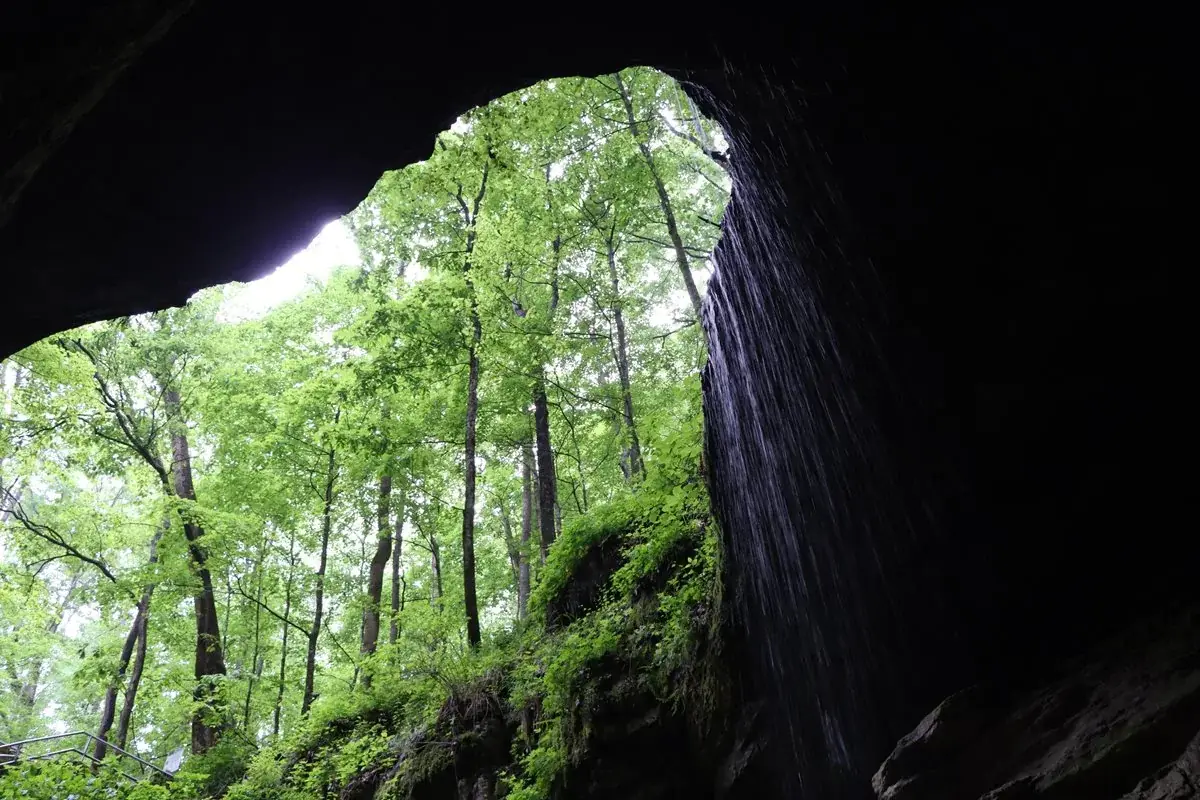
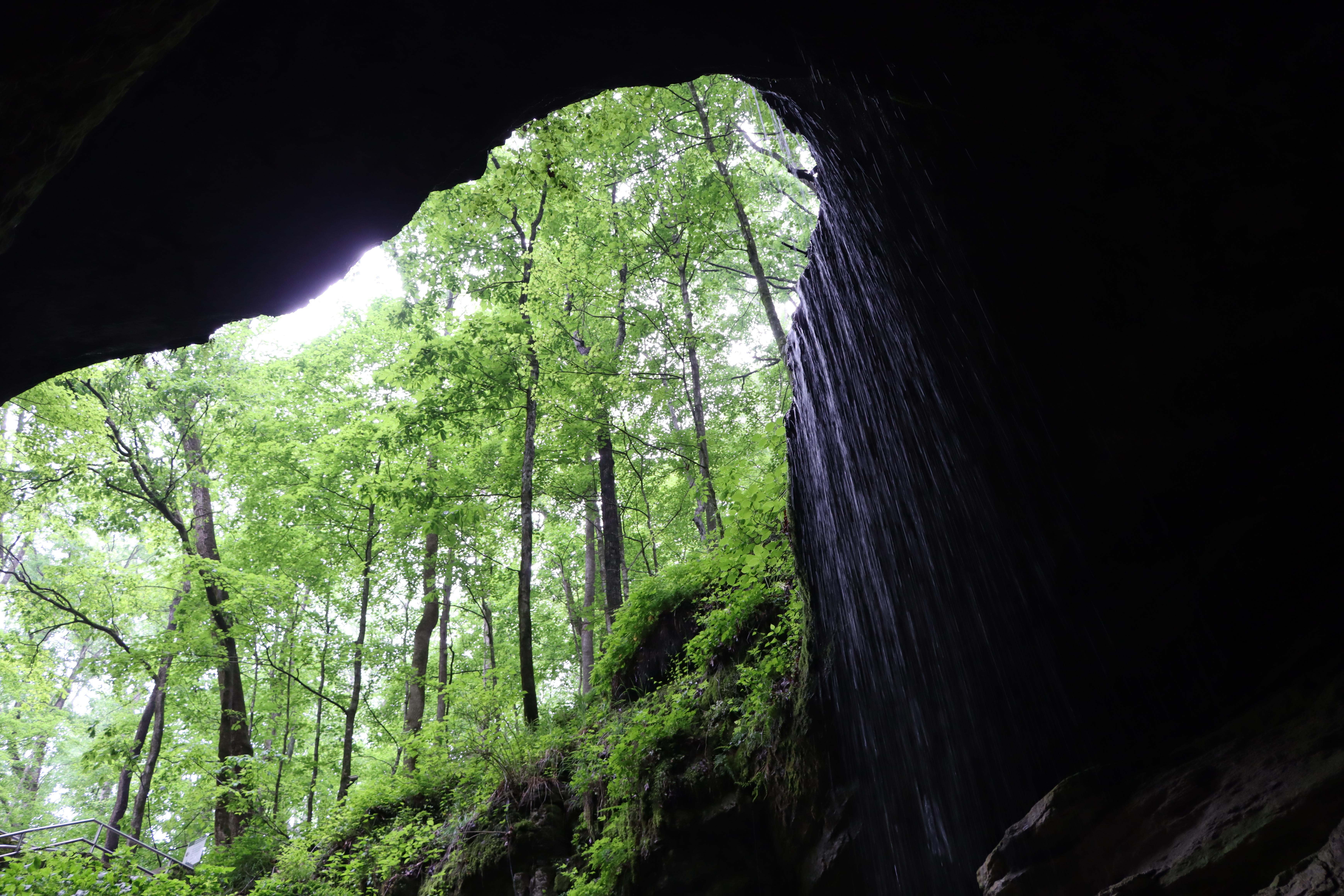
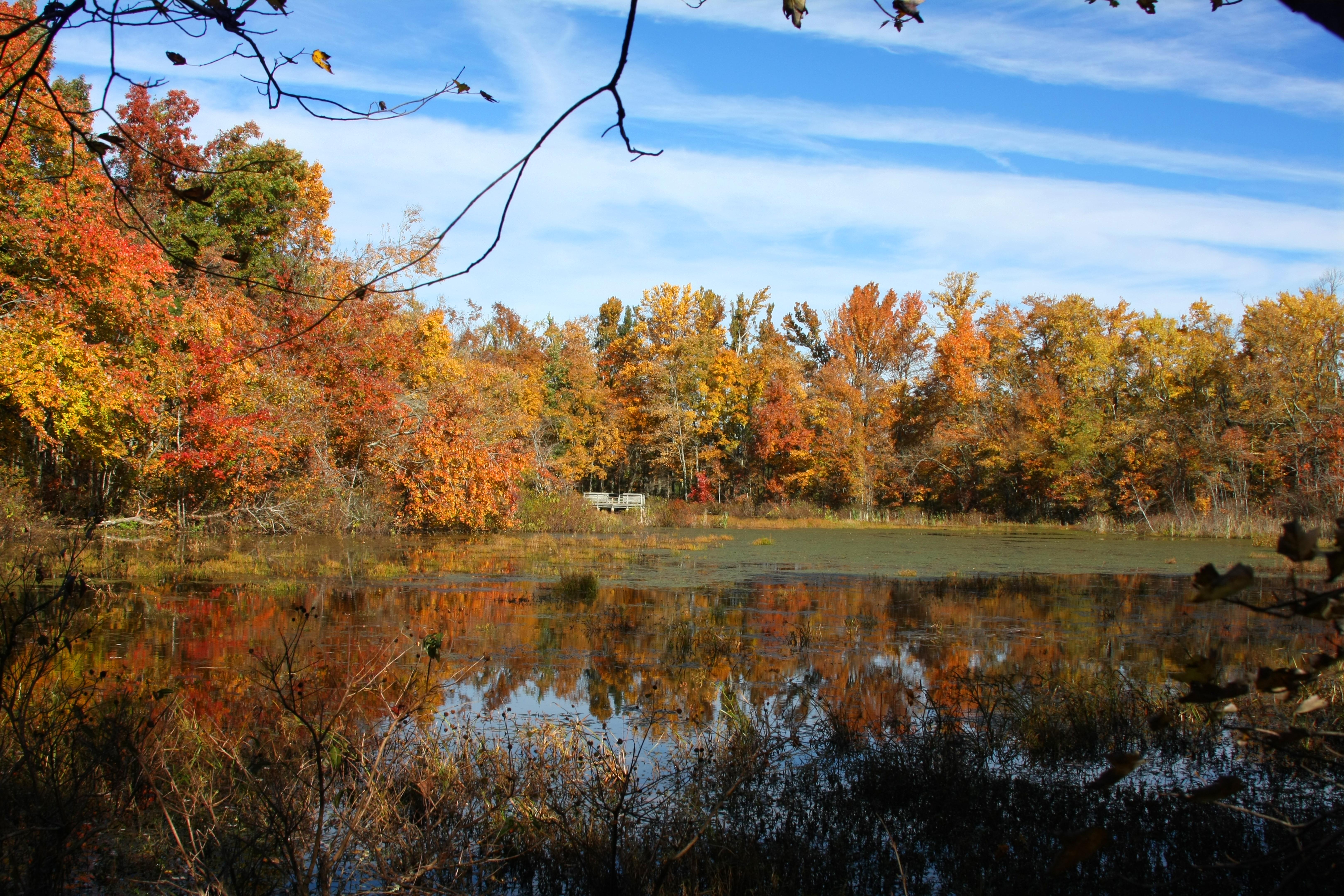


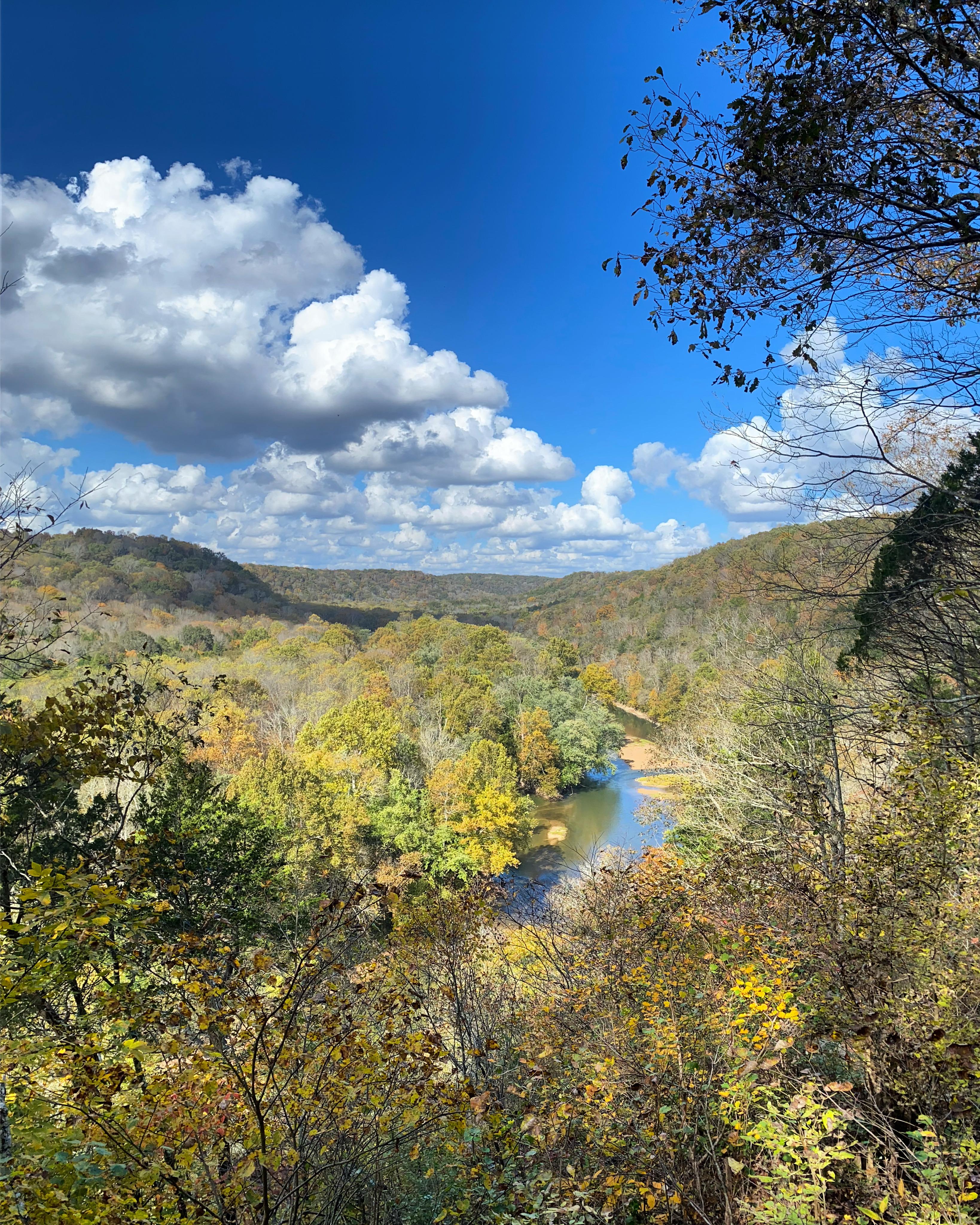


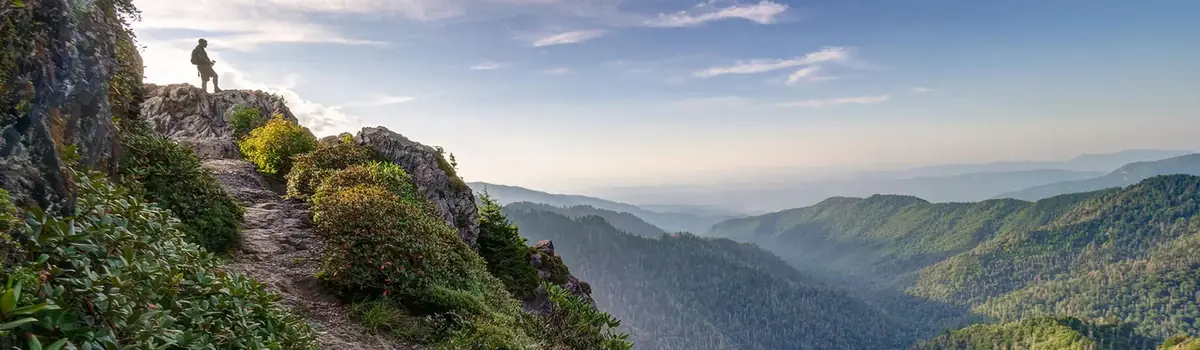 Mountains