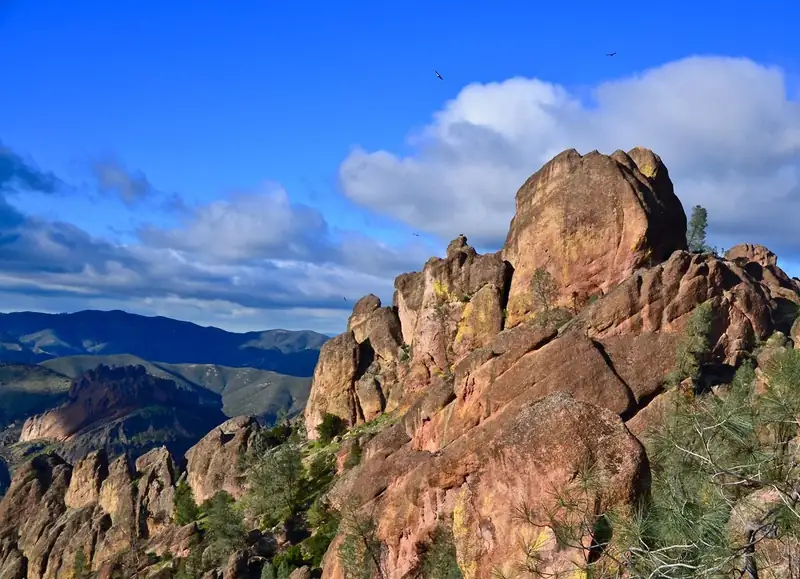
Around 23 million years ago, a series of volcanic eruptions shaped the landscape that is now Pinnacles National Park. The remnants of these ancient eruptions have formed a striking terrain of rocky spires and deep canyons. Visitors can explore diverse environments, from chaparral and oak woodlands to the cool, shaded depths of canyon floors.
26.7Kacres of parkland
343.2Krecreation visits, 2025
May · Jun · Octnearby climate picks
Seasonal access & reservations
No reviewed guidance for this selection. Check the park's official planning pages; missing coverage does not establish access.
Selected guidance only; separate from climate comfort and current conditions.
Official conditions Loading saved check
Loading the latest saved conditions. You can also check the official report below.
Editorial recommendations, reviewed 2026-10-17. Full park days, excluding travel to and from the region. A first-visit outline for a general traveler; adapt to mobility, fitness, season, reservations, and current conditions. These are suggested days, not reserved activities or guaranteed routes.
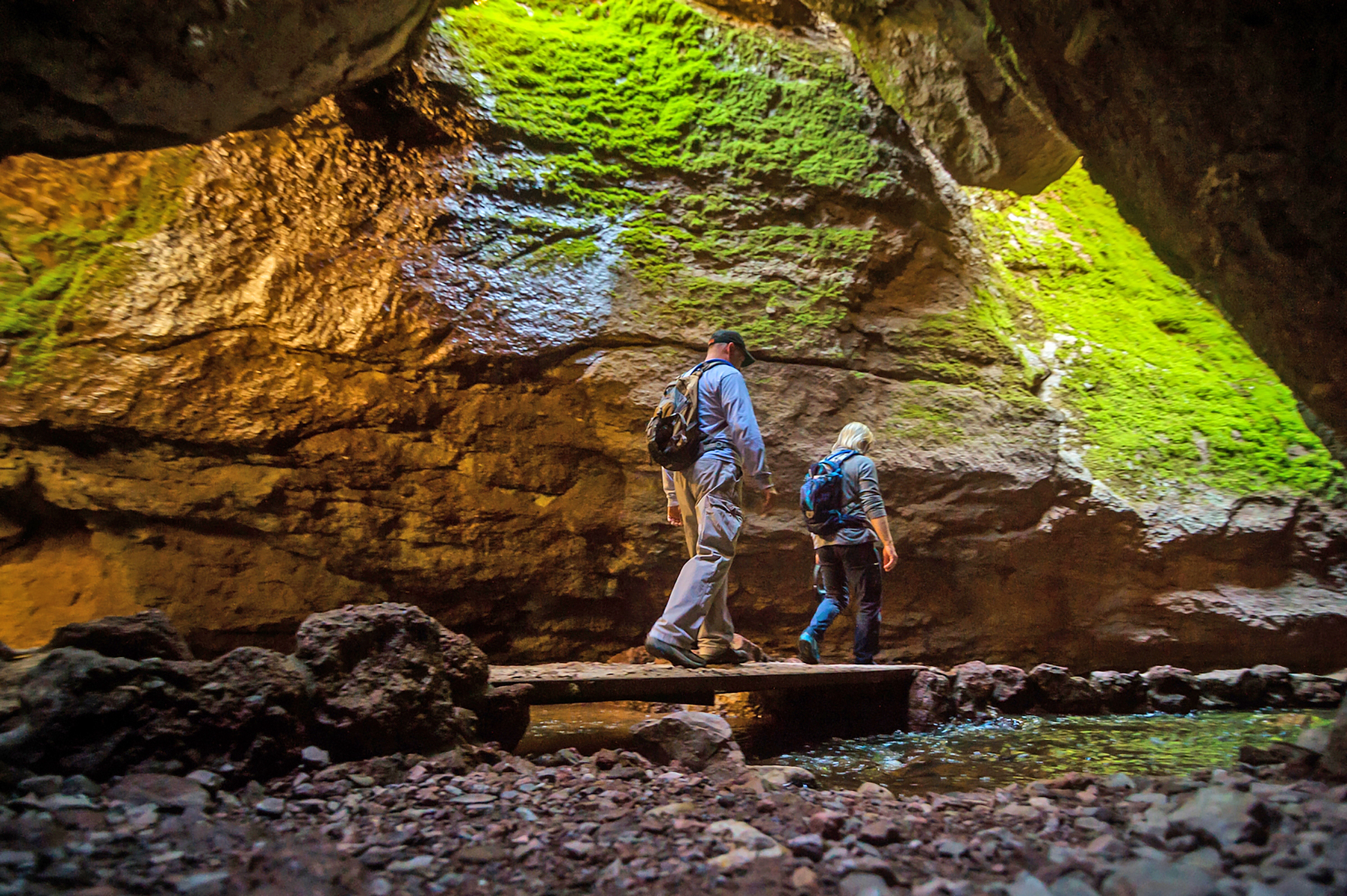
From short, easy trails for the whole family to strenuous hikes for the serious adventurer, Pinnacles has it all!
NPS/Emily Novack
Exploring the Trails of Pinnacles National Park
With over 30 miles of scenic trails, Pinnacles National Park invites hikers of all abilities to explore its diverse landscapes. From peaceful strolls across grassy meadows to exhilarating climbs through talus caves and up the park’s iconic rocky spires, there's a perfect trail for every adventurer. Whether you're new to hiking or a seasoned trailblazer, Pinnacles offers a journey into the heart of nature.
Before you begin, make sure to stop by the Pinnacles East Entrance Station , Bear Gulch Nature Center , or the West Pinnacles Visitor Contact Station . The rangers there can provide valuable information on current trail conditions, parking availability, and personalized trail recommendations to suit your fitness level and experience.
Trail Safety Tips:
Stay Hydrated : Always bring enough water for each person in your group. Plan for at least one liter per hour of hiking, especially during hot weather.
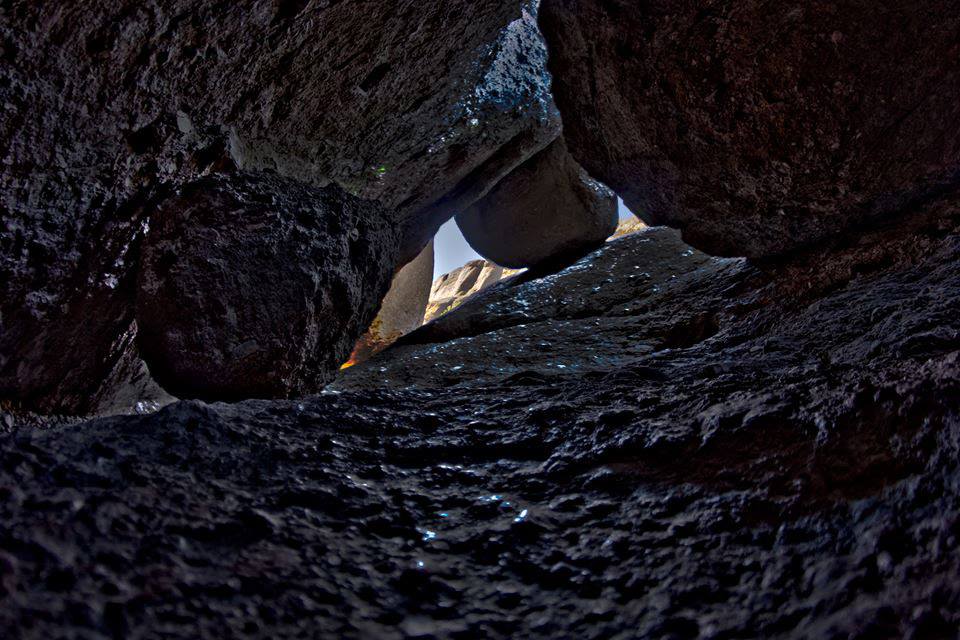
Carry a Flashlight : If your hike takes you through Bear Gulch Cave or Balconies Cave, pack a flashlight or headlamp. Cave sections can be dark, and proper lighting ensures a safe passage.
NPS photo/Kurt Moses.
Trails from Pinnacles Campground
Campground to Bear Gulch Day Use Area
Distance : 2.3 miles one way, 1-1/2 hours
Elevation : 300 feet
Difficulty : Moderate This peaceful hike follows Bear and Chalone Creeks, offering a scenic journey through some of Pinnacles' lower elevations. The trail meanders through riparian habitat, ideal for birdwatching and relaxing by the creek.
Campground to South Wilderness Trail
Distance : 6.5 miles round trip, 3 to 4 hours
Elevation : No gain
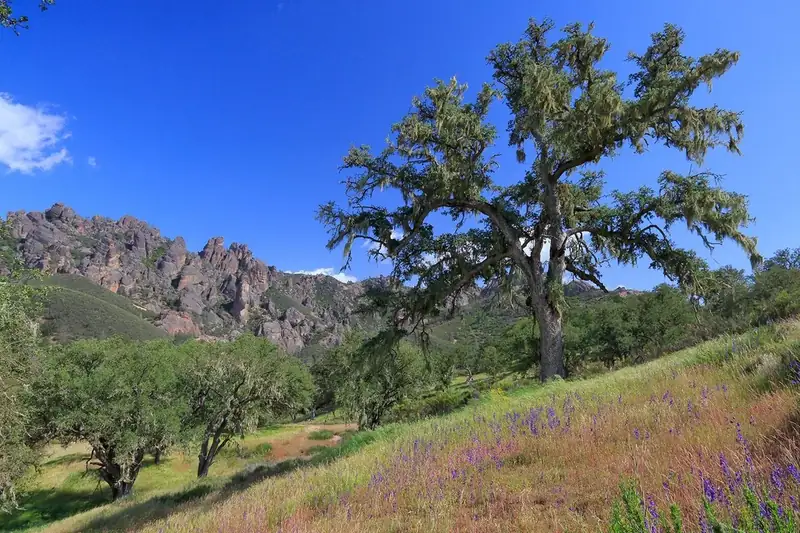
Difficulty : Moderate Escape into a quiet part of the park as you walk beneath towering valley oaks. This unmaintained trail offers solitude, birdwatching opportunities, and a deeper connection with Pinnacles’ natural beauty.
Campground to Balconies Cave
Distance : 9.4 miles round trip, 4 to 6 hours
Difficulty : Moderate For those seeking adventure, this longer hike takes you through sunny grasslands and along the stunning rock formations of Balconies Cliffs. Don't forget your flashlight for the thrilling journey through Balconies Cave.
Trails from Bear Gulch Day Use Area
Moses Spring to Rim Trail Loop
Distance : 2.2 miles round trip, 1 to 1-1/2 hours
Elevation : 500 feet
Difficulty : Moderate A perfect choice for families, this loop offers the quintessential Pinnacles experience with impressive rock formations, caves, and a serene reservoir. The trail is short yet packed with diverse landscapes and fun for all ages.
Condor Gulch to High Peaks Loop
Distance : 5.3 miles round trip, 3 to 5 hours
Elevation : 1,300 feet
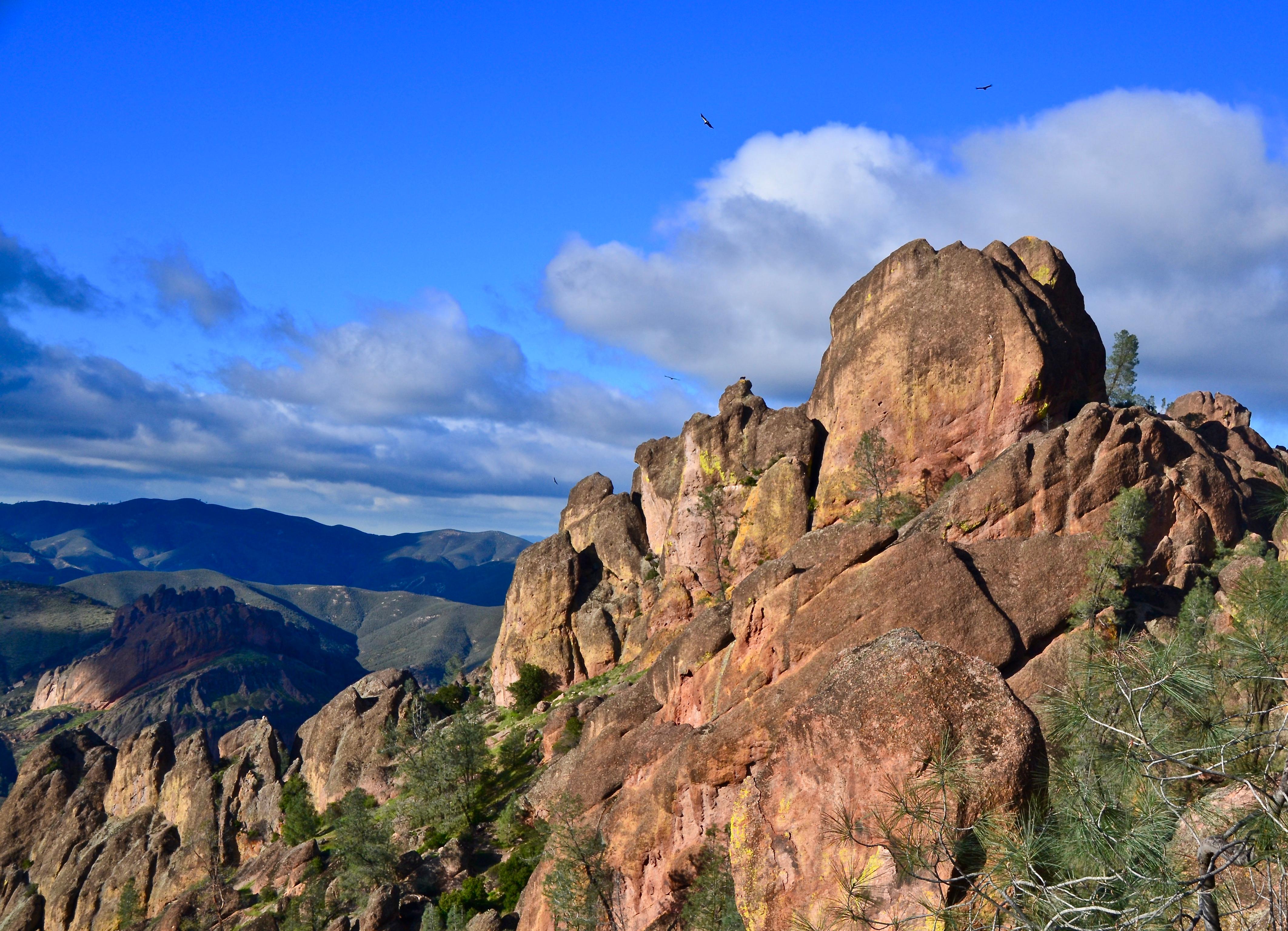
Difficulty : Strenuous This challenging hike rewards your efforts with panoramic views of Pinnacles' iconic High Peaks. The Steep and Narrow section is thrilling, giving you the feeling of walking on top of the world.
High Peaks to Bear Gulch Loop
Distance : 6.7 miles round trip, 4 to 5 hours
Elevation : 1,425 feet
Difficulty : Strenuous This hike gives you the best of Pinnacles—ascending through wildflower-filled meadows in spring, then descending through shady woodlands. The views from the High Peaks are spectacular, making the effort well worth it.
Condor Gulch Trail
Distance : 1.7 miles one way, 1 to 1-1/2 hours
Elevation : 1,100 feet
Difficulty : Moderate to Strenuous This short but rewarding trail offers sweeping views almost immediately as you climb towards the Condor Gulch Overlook. Great for catching sight of Pinnacles’ resident condors soaring above.
Chalone Peak Trail
Distance : 9 miles round trip, 3 to 5 hours
Elevation : 2,040 feet
Difficulty : Strenuous For those looking to challenge themselves, the climb to North Chalone Peak delivers stunning, wide-ranging views of the surrounding valleys. The unmaintained path to South Chalone Peak offers an even greater adventure.
Trails from Old Pinnacles Trailhead
Old Pinnacles Trail to Balconies Cave
Elevation : None
Difficulty : Moderate One of the park’s most popular hikes, this trail takes you along Chalone Creek to Balconies Cave, with massive rock formations like Machete Ridge looming overhead. The caves offer an exciting passage, especially for younger explorers.
Trails from West Pinnacles Contact Station
Prewett Point Trail
Distance : 0.9 miles round trip, 1/2 to 1 hour
Elevation : 70 feet
Difficulty : Easy This short, gentle trail provides wonderful views of the Hain Wilderness and the surrounding landscape. It’s perfect for a quick stop to enjoy the scenery without committing to a longer hike.
Distance : 1.2 miles one way, 1/2 to 1 hour
Elevation : -560 feet
Difficulty : Easy to Moderate Descend along this scenic trail to Jawbone Parking Area, where you can connect to other trails or simply enjoy the unique landscape and rock formations.
Trails from Chaparral (West Pinnacles)
Balconies Cliffs-Cave Loop
Distance : 2.4 miles round trip, 1 to 1-1/2 hours
Elevation : 100 feet
Difficulty : Easy to Moderate This loop is a must for cave lovers and rock formation enthusiasts. Scramble through the caves and enjoy incredible views from the Balconies Cliffs Trail. The cave passages make this trail a unique and memorable experience.
Juniper Canyon Loop
Distance : 4.3 miles round trip, 2 to 3 hours
Elevation : 1,215 feet
Difficulty : Strenuous This steep climb through switchbacks delivers you into the heart of the High Peaks. The dramatic rock formations and breathtaking vistas along the Steep and Narrow section will make every step worthwhile.
North Wilderness Trail Loop
Distance : 9.3 miles round trip, 5 to 8 hours
Elevation : 1,020 feet
Difficulty : Strenuous Venture into remote areas of the park on this unmaintained trail. Experience Pinnacles’ wilderness at its most rugged, navigating ridgelines and rock cairns before returning along Balconies Trail.
High Peaks to Balconies Cave Loop
Distance : 8.4 miles round trip, 4 to 5 hours
Elevation : 1,540 feet
Difficulty : Strenuous Combine the High Peaks' steep climbs with the thrill of exploring Balconies Cave in one epic hike. This loop provides a full Pinnacles experience, from sweeping views to subterranean adventures.
Before You Go: Trail Safety Tips
Exploring Pinnacles’ diverse landscapes is a rewarding experience, but it’s essential to be well-prepared to ensure your safety. Follow these tips to make your hike enjoyable and avoid common hazards:
Stay Hydrated : Carry plenty of water—at least one liter per hour of hiking per person. The park can get very hot, especially in the summer, and dehydration is a serious risk.
Dress Appropriately : Wear sturdy, comfortable hiking shoes with good traction, especially if you plan to explore talus caves or rocky areas. Dress in layers to be prepared for changing weather conditions, and bring sun protection, including a hat, sunscreen, and sunglasses.
Know Your Limits : Choose trails that match your fitness level and experience. Pinnacles offers hikes ranging from easy to strenuous, so it's important not to overextend yourself. Pay attention to trail difficulty and elevation changes before you begin.
Be Prepared for Caves : If your hike takes you through one of Pinnacles' caves, such as Bear Gulch or Balconies Cave, bring a flashlight or headlamp. Some cave sections can be dark and require careful navigation. Be cautious during the winter months, when heavy rains may flood the caves, making them more challenging to pass.
Watch for Wildlife : Pinnacles is home to a variety of wildlife, including rattlesnakes. Stay on marked trails to avoid disturbing animals, and always give wildlife plenty of space. Be aware of your surroundings, especially in rocky areas where animals may seek shelter.
Trail Conditions : Check trail conditions at a visitor center or ranger station before heading out. Some trails may be closed or difficult to navigate due to weather, rockfalls, or maintenance work.
Avoid Hiking Alone : Whenever possible, hike with a partner or group. If hiking alone, let someone know your planned route and expected return time. Cell service is limited in the park, so it's important to plan ahead.
Carry a Map : While many trails are well-marked, it’s a good idea to carry a map of the park. Trail junctions can be confusing, and a map will help ensure you stay on the correct route.
Pinnacles has a variety of routes for climbers of all abilities.
Photo by NPS/Kurt Moses
Climbing at Pinnacles National Park: Routes for Every Level
Pinnacles National Park is renowned for its distinctive volcanic formations, making it a climber’s paradise with routes that cater to both beginners and seasoned climbers. From easy topropes to the challenging multi-pitch climbs along Machete Ridge , there’s something for everyone to explore. Whether you're new to the area or a frequent visitor, each climb offers breathtaking views of the surrounding landscape and the opportunity to experience the park's rich geological features up close.
Before you head out on your climbing adventure, please take some time to read through the safety advisory and our general FAQs , which provide important information about the park’s climbing policies and conditions. It’s essential to come prepared for the unique challenges that Pinnacles' climbing routes present, including the rough terrain and variable weather.
For those planning a trip between January and July , it's critical to review the raptor advisories . These advisories help climbers avoid disturbing sensitive nesting areas for birds of prey, including peregrine falcons and prairie falcons, whose presence is vital to the park’s ecosystem.
Climbing Routes
Pinnacles National Park features a wide variety of climbing routes, including:
Topropes : These easier routes are perfect for beginners looking for a rewarding challenge without the commitment of lead climbing.
Multi-pitch Climbs : For more experienced climbers, routes such as those on Machete Ridge offer multi-pitch climbs with stunning views and technical challenges. These climbs demand a higher level of experience and preparation.
Safety Advisory
Safety is a top priority when climbing at Pinnacles. The rock formations here are composed of volcanic breccia, which can be loose in places, increasing the potential for rockfall. Ensure you wear a helmet and take precautions by testing handholds and footholds before putting full weight on them. Always climb with a partner and let someone know your climbing plans. Be sure to check out the " Safety Advisory " page for the park.
Our general climbing FAQ section covers essential information such as:
Recommended climbing gear
Weather conditions to be aware of
Permitted climbing areas and closures
Guidance on where to park and access specific routes
Raptor Advisories (January - July)
During the nesting season from January through July, certain climbing areas may be temporarily closed to protect sensitive raptor species. The park is home to peregrine falcons and prairie falcons, both of which use cliffside nests. These closures help ensure the safety of the birds and provide them with the environment they need to thrive. Climbing near these areas can disrupt nesting and is prohibited during this time.
By respecting these advisories, you’re contributing to the park’s conservation efforts while enjoying a memorable climbing experience. Check our current raptor advisories before heading out.
Enjoy your climb, stay safe, and help us protect Pinnacles' wildlife and natural resources!
The Pinnacles Campground is located near the Visitor Center. Backpacking is not allowed.
Pinnacles Campground Overview
Located on the east side of Pinnacles National Park, the Pinnacles Campground offers a variety of camping options, including tent, group, and RV sites. Please Note: There are no connecting roads between the east and west entrances of the park, so the campground is only accessible from the east side.
Each tent and group site is equipped with a picnic table and fire ring, while most RV sites have electrical hookups and share community tables and barbecue pits. Water is available throughout the campground, and many campsites are shaded by oak trees. Amenities include coin-operated showers, a dump station, and a swimming pool, which is typically open from mid-April through the end of September, depending on weather conditions.
Pets are welcome in the campground, as well as on paved roads and in parking lots, but they are not allowed on park trails. Pets must be on a six-foot leash at all times and should never be tied to an object or left unattended.
Campfire Regulations
Campfires are permitted only during certain fire conditions. Please check the Current Conditions page for updates on fire regulations in the park. Note that collecting firewood is prohibited in Pinnacles National Park.
Help Protect Wildlife
To keep both visitors and wildlife safe, please do not feed the animals in the park. For more information, visit the Keep Wildlife Wild page.
Campground and Store Information
The Pinnacles Campground and Campground Store are operated by Pinnacles Recreation Company . The Campground Store is open daily from 9:30 am to 5:00 pm . For any questions regarding camping or the store, call (831) 200-1722 .
Tent and RV sites can be reserved up to 6 months in advance.
Group sites can be reserved up to 12 months in advance.
To make a reservation, visit recreation.gov or call (877) 444-6777 .
Pinnacles National Park is a fantastic destination for birdwatching enthusiasts.
NPS/Carlo Arreglo
Birding at Pinnacles National Park: A Comprehensive Guide
Bird watching, or birding, involves the observation, appreciation, and study of birds through sight and often sound. At Pinnacles National Park, birders can experience a diverse array of species across its varied habitats—chaparral, oak/pine woodland, riparian, grassland, and scree communities. The park’s location along the Pacific Flyway makes it a prime spot for seeing migratory birds. The highlight for many birders is the chance to spot the endangered California Condor , but with 181 documented species, there’s plenty to discover for birders of all ages and skill levels.
What You Need for Birding
For an optimal birding experience, consider bringing:
Binoculars : A pair in the 7-10 power range is ideal.
Spotting Scope : Helpful for distant sightings, especially around the High Peaks.
Field Guide : Useful, but take time to observe the bird directly as it may fly off quickly.
Patience : Birding can be unpredictable, so a patient approach is essential.
Proper Clothing : Dress appropriately for the season; summer temperatures can exceed 100°F. Check the park’s Plan Your Visit page for weather updates.
Awareness : Be mindful of rattlesnakes and poison oak in the area.
Water and Sun Protection : Carry plenty of water and wear sunblock or a hat, especially in summer when temperatures can be extreme.
1. Pinnacles Visitor Center (East Side) & Campground This area offers a mix of habitats, including riparian, oak/pine, and chaparral, with human-made water sources that attract birds year-round. Look for California Quail near the group sites and roads in the early morning. Other common species include Northern Flicker , Acorn and Nuttall’s Woodpecker , Red-shouldered Hawk , Oak Titmouse , and more. Migratory species such as flycatchers and warblers are also seen here. This area has accessible paths and facilities, making it suitable for visitors with mobility needs.
2. Bear Gulch Nature Center, Moses Spring Trail, and Bear Gulch Reservoir Bird the trees around the nature center and follow the Moses Spring Trail to the reservoir. Look for species like Canyon Wren , Bewick’s Wren , and Spotted Towhee . The reservoir is great for observing raptors, swifts, and swallows. The Bear Gulch Trail downstream is excellent for bird diversity, especially during spring migration. Note that some trails may be uneven, so visitors should be prepared for moderate hiking conditions.
3. Balconies Trail (West Side Entrance) Accessible from the Chaparral trailhead, this trail offers views of Machete Ridge and Balconies Cliffs . Along the trail, you may encounter Canyon Wren , swallows , and birds of prey like the Golden Eagle , American Kestrel , and California Condor . The Balconies Cliff trail above the talus caves is particularly good for raptor sightings. The gate is open from 7:30 am to 8:00 pm, and the trail is accessible with moderate effort.
4. High Peaks The rocky spires and monoliths provide ideal vantage points for bird watching. Arrive early to spot California Condors roosting before they take flight. This area is also frequented by Turkey Vultures , Peregrine Falcons , and Prairie Falcons . Additionally, the High Peaks are good for observing migrants, including Blue-Gray Gnatcatchers and various warbler species. Due to the rugged terrain, these trails are recommended for more experienced hikers.
Pinnacles National Park is productive for birding year-round, especially for resident species like the Yellow-billed Magpie , Greater Roadrunner , California Condor , and Prairie Falcon . Even resident species can be elusive, so consult field guides and visitor centers for tips on finding specific birds. Early morning and late afternoon are the best times for birding, as birds are most active during these periods, and the light is optimal for viewing.
Accessibility and Regulations
Accessibility : Many birding spots, particularly around the Visitor Center, are accessible and suitable for those with mobility needs.
Permits : Birding on designated trails does not require a permit, but off-trail hiking may be restricted in some areas to protect wildlife.
Safety Precautions : Always check the Raptor Advisory information before heading out, as some areas may have seasonal closures to protect nesting birds.
By respecting these guidelines, birders not only enjoy a fulfilling experience but also contribute to the conservation of Pinnacles’ unique bird populations. Enjoy your birding adventure, and happy bird watching!
Official NPS features and USGS park boundaries, imported 2026-10-17. An inventory snapshot, not live trail or parking availability.
Loading official park features…
TrailsPoints of interestParkingZoom with buttons or pinch. Toggle layers on the map.
Map coverage varies. Trail names may represent segments, connectors, or shared park units; mapped lines are not a hiking recommendation. Use official conditions and navigation resources before heading out.
NPS public GIS inventory, imported 2026-10-17. “Existing” is an inventory classification, not confirmation that a trail is open. Segment counts are not route distances. Parking records do not indicate space availability, fees, or accessibility certification. View government source ↗
Climate for Soledad, 16 km from the park reference point. 1991–2020 normals. Source elevation: 58 m.
Daytime highNighttime lowOctober: 75° / 51°
Daytime high75°
Precipitation15 mm
Daylight11.1 hrs
Wind5.1 km/h
Mountain, rim, valley, and coastal conditions can differ sharply from the source town. Check park forecasts and current conditions before travel.
Monthly climate data 12 months · °F
Month
High
Low
Rain / snow water
Wet days
Daylight
58°
40°
76 mm
7.9
9.8 h
59°
41°
76 mm
8.5
10.6 h
63°
43°
61 mm
7.8
11.7 h
67°
45°
28 mm
4.6
12.9 h
73°
49°
13 mm
2.3
13.9 h
80°
53°
2 mm
0.5
14.4 h
86°
58°
1 mm
0.3
14.2 h
86°
58°
1 mm
0.2
13.4 h
82°
56°
3 mm
0.7
12.2 h
75°
51°
15 mm
2.0
11.1 h
64°
44°
30 mm
4.2
10.1 h
57°
39°
65 mm
7.2
9.6 h
RESEARCH WITH THE SOURCE IN VIEW
The practical field guide.
Official NPS excerpts imported 2026-10-17. Fees, permits, road access, and operations can change; use the source link to confirm the latest information.
At Pinnacles, cool mornings can quickly transform into hot afternoons . To stay comfortable and safe, wear loose-fitting clothing , a hat , and sunscreen . No matter the season, be prepared for temperatures to drop sharply at night. Always check the weather forecast before your hike and plan accordingly.
It’s crucial to carry and drink at least one liter of water per person per hour of hiking. Remember, water is not available on the trails , so bring enough for your entire trip. Operating hours and seasons
Located on the east side of Pinnacles National Park, the Pinnacles Campground offers a variety of camping options, including tent, group, and RV sites. Please Note: There are no connecting roads between the east and west entrances of the park, so the campground is only accessible from the east side.
Each tent and group site is equipped with a picnic table and fire ring, while most RV sites have electrical hookups and share community tables and barbecue pits. Water is available throughout the campground, and many campsites are shaded by oak trees. Amenities include coin-operated showers, a dump station, and a swimming pool, which is typically open from mid-April through the end of September, depending on weather conditions.
Pets are welcome in the campground, as well as on paved roads and in parking lots, but they are not allowed on park trails. Pets must be on a six-foot leash at all times and should never be tied to an object or left unattended.
Campfire Regulations
Campfires are permitted only during certain fire conditions. Please check the Current Conditions page for updates on fire regulations in the park. Note that collecting firewood is prohibited in Pinnacles National Park.
Help Protect Wildlife
To keep both visitors and wildlife safe, please do not feed the animals in the park. For more information, visit the Keep Wildlife Wild page.
Campground and Store Information
The Pinnacles Campground and Campground Store are operated by Pinnacles Recreation Company . The Campground Store is open daily from 9:30 am to 5:00 pm . For any questions regarding camping or the store, call (831) 200-1722 .
Tent and RV sites can be reserved up to 6 months in advance.
Group sites can be reserved up to 12 months in advance.
To make a reservation, visit recreation.gov or call (877) 444-6777 .
Pinnacles National Park is dedicated to ensuring all visitors can enjoy its facilities, trails, and services. Here's a breakdown of accessibility features throughout the park:
Visitor Contact Centers : Both the east and west visitor contact centers are fully ADA accessible.
Restrooms : The restrooms at the West Pinnacles Contact Station are fully accessible.
Parking : Accessible parking spaces are available at both entrances, located conveniently near facilities.
Picnic Areas : While picnic areas can be accessed by wheelchair, some assistance may be needed.
Park brochures are available in multiple formats , including audio-described versions and text-only formats, to accommodate different needs.
Accessible Trails
East Side : Bench Trail: A recently hardened and graded section of the Bench Trail is now accessible for visitors using wheelchairs. This gently rolling trail passes through oak woodlands and offers scenic views of the High Peaks rock formation. The trailhead is located at the Peaks View Picnic Area near the east entrance.
Bench Trail: A recently hardened and graded section of the Bench Trail is now accessible for visitors using wheelchairs. This gently rolling trail passes through oak woodlands and offers scenic views of the High Peaks rock formation. The trailhead is located at the Peaks View Picnic Area near the east entrance.
West Side : Chaparral Area: Visitors can enjoy views of Pinnacles' most stunning geological formations directly from or near the parking area. Prewett Point Trail: This newly constructed accessible trail is less than a mile long and offers panoramic views of the High Peaks and Balconies Cliffs. The trail begins at the West Pinnacles Contact Station.
Chaparral Area: Visitors can enjoy views of Pinnacles' most stunning geological formations directly from or near the parking area.
Prewett Point Trail: This newly constructed accessible trail is less than a mile long and offers panoramic views of the High Peaks and Balconies Cliffs. The trail begins at the West Pinnacles Contact Station.
Website Accessibility
We are committed to making our website accessible to visitors using assistive technologies. If you experience any issues accessing information on our site, please send us an email or by call (831) 389-4486 for assistance.
Get an entrance pass All visitors must have one of these entrance passes: Pass Price Standard Pass $15.00–$30.00 Annual Pass $55.00 America the Beautiful Pass (includes Senior Passes) FREE–$250.00 Help me choose an entrance pass
Plan to go cashless This park does not accept cash.
Choosing an Entrance Pass
Do you have or qualify for a discounted America the Beautiful Pass?
If you already have an America the Beautiful—the National Parks and Federal Recreational Lands Pass, that's the only entrance pass you need. Seniors, military, visitors with a permanent disability, and families with a 4th grader are eligible for a free or discounted America the Beautiful pass.
America the Beautiful Pass
How often do you plan to visit national parks in the next 12 months?
If you don't qualify for a discounted America the Beautiful pass, we recommend choosing an entrance pass based on your trip plans.
Entrance Passes
Standard Entrance Pass
If you enter the park in a motorized vehicle, your entrance pass covers both you and your passengers. Your passengers do not need a separate pass.
Costs for vehicles with more than 15 passengers are listed below under Organizations and Businesses .
Private Vehicle $30.00
In-person Purchase Locations
Pinnacles East Entrance Station Credit/Debit Only
Pinnacles West Entrance Station Credit/Debit Only
Motorcycle $25.00
For Individuals without a Vehicle
If you enter the park on a bicycle or on foot and are at least 16 years old, you need your own entrance pass. Children under the age of 16 don't need an entrance pass.
Per Person $15.00
For Organizations & Businesses
Education/Academic Group $0.00
Non-commercial Group (16+ persons) $15.00
Commercial Sedan (1-6 seats) $30.00
Commercial Van (7-15 seats) $40.00
Commercial Mini-bus (16-25 seats) $40.00
Commercial Motor Coach (26+ seats) $100.00
Annual Entrance - Park
The Pinnacles Annual Pass is available to U.S citizens and residents only. It is valid only at Pinnacles and may be purchased online or in person. It is valid for 12 months from purchase month. This pass admits up to two motorcycles (including passengers), or up to 15 passengers of a single, private (non-commercial) vehicle to Pinnacles National Park.
US citizens and residents
America the Beautiful—the National Parks and Federal Recreational Lands Pass
Covers entrance fees and standard amenity (day-use) fees at lands managed by
National Park Service
US Fish & Wildlife Service
US Forest Service
Bureau of Land Management
Bureau of Reclamation
US Army of Corps of Engineers
Depending on the type of entrance fee charged at a site, covers One private vehicle fee or Four per person fees
America the Beautiful Passes are non-refundable, non-transferable and cannot be replaced if lost or stolen . Passholders must show valid photo identification (ID) with each pass.
How to Get an America the Beautiful Pass
Physical passes can be purchased or picked up at over 1,000 federal recreation sites.
Purchase and pickup locations
To receive your pass by mail, order online at the USGS Online Store . Online orders are for physical passes, not digital passes, and may take up to three weeks to be processed and delivered. Order receipts may not be used in place of a physical pass. We recommend ordering at least three weeks in advance of your visit, or picking up a pass in person instead.
Skip the wait! Get a Digital America the Beautiful Pass through recreation.gov. Your digital pass can be saved to a mobile device and used immediately.
Get a Digital America the Beautiful Pass
2026 Free Entrance Days in the National Parks
Come experience the national parks! All National Park Service sites that charge an entrance fee will offer free admission to US citizens and residents (other fees, including timed entry or reservation fees, may apply). Mark your calendar for these entrance fee-free dates:
February 16 : Presidents Day (Washington's Birthday)
May 25 : Memorial Day
June 14: Flag Day/President Trump's birthday
July 3–5: Independence Day weekend
August 25: 110th Birthday of the National Park Service
September 17: Constitution Day
October 27 : Theodore Roosevelt's birthday
November 11: Veterans Day
Buying a Pass in Person
In addition to Pinnacles National Park Site Pass in California - Recreation.gov , you can buy a park pass at:
East Entrance Station (near the city of Hollister off CA HWY 25) - debit or credit cards only
West Entrance Station (near Soledad off the 101) - debit or credit cards only
Electronic Passes
Purchase digital park entrance passes at Pinnacles National Park, California - Recreation.gov above at no additional cost. Buying your pass ahead of time may help expedite your trip into the park. Once purchased, passes for Pinnacles National Park must be printed or saved on your mobile device prior to use . Connectivity is limited or non-existent in the park, therefore printing the permit or saving it on your phone (so you can access it even if there is no wi-fi or cell service) is highly recommended.
The America the Beautiful, National Parks & Federal Recreational Lands Passes , such as the Annual, Access, Military, or Senior pass, can be obtained online or at a park entrance station upon arrival.
Display Your Pass
Do you already have a park pass? We encourage all visitors to bring one of the valid passes shown below or buy and print one of the four passes available online before you arrive at the park. Please review all pass purchase options and eligiblities described below. A park entrance pass is required year round. All vehicles must display a pass clearly visible through the windshield. Display federal lands passes, such as annual and military passes, on your dashboard with the signature and expiration date facing up. Passes are non-transferable and passholder must be present.
Commercial Tour Group Fees
1-6 Passenger Capacity $15 per passenger or $30, whichever is less
7-15 Passenger Capacity $40.00
16-25 Passenger Capacity $40.00
26 + Passenger Capacity $100.00
Non-Commercial Groups
Groups entering in a vehicle with a capacity of 16 passengers or more will pay an entrance fee of $15 per person on board, with the following exceptions:
Anyone who is 15 years old or younger is exempt from paying any entrance fee.
Passes may be used for entry as defined on the back of the pass.
In many cases the driver will have been hired for transportation only and is exempt from paying the entrance fee.
The total fee charged will not exceed the equivalent commercial fee for that type of vehicle.
Pass
Price
Standard Pass
$15.00–$30.00
Annual Pass
$55.00
America the Beautiful Pass (includes Senior Passes)
FREE–$250.00
I'm visiting...
We recommend
This park, once
Standard Pass
This park, multiple times
Annual Pass
More than one national park or federal recreation site
America the Beautiful Pass
Type
Available to
Price
Resident Annual Pass
US citizens and residents
$80.00
Non-Resident Annual Pass
Non-US residents
$250.00
Senior Annual Pass
US citizens and residents 62+ years old
$20.00
Senior Lifetime Pass
US citizens and residents 62+ years old
$80.00
Military Annual Pass
Current US military and dependents
Free
Military Lifetime Pass
Gold Star Family members and veterans
Free
Access Pass
US citizens and residents with permanent disability
Free
4th Grade Pass
US 4th graders
Free
Volunteer Pass
Federal recreation site volunteers with 250 service hours
Free
Pass
Price
Standard Pass
$15.00–$30.00
Annual Pass
$55.00
America the Beautiful Pass (includes Senior Passes)
FREE–$250.00
I'm visiting...
We recommend
This park, once
Standard Pass
This park, multiple times
Annual Pass
More than one national park or federal recreation site
America the Beautiful Pass
Type
Available to
Price
Resident Annual Pass
US citizens and residents
$80.00
Non-Resident Annual Pass
Non-US residents
$250.00
Senior Annual Pass
US citizens and residents 62+ years old
$20.00
Senior Lifetime Pass
US citizens and residents 62+ years old
$80.00
Military Annual Pass
Current US military and dependents
Free
Military Lifetime Pass
Gold Star Family members and veterans
Free
Access Pass
US citizens and residents with permanent disability
Free
4th Grade Pass
US 4th graders
Free
Volunteer Pass
Federal recreation site volunteers with 250 service hours
When visiting Pinnacles National Park, it’s important to note that there is no road connecting the East and West entrances of the park. The shortest route between the two entrances is through King City on Hwy 101 .
Using Online Maps
If you’re using an online map service, searching "Pinnacles National Park" or entering the park’s address may direct you to the wrong side of the park depending on the platform. To ensure accurate directions, use the following GPS coordinates :
East Entrance (Pinnacles Visitor Center) : 36.493545, -121.146646
West Entrance (Pinnacles Visitor Contact Station) : 36.477700, -121.226136
Using a GPS Device
When entering "Pinnacles National Park" into a GPS device, double-check your route to ensure it’s directing you to the intended entrance. For better accuracy, you can manually input the coordinates listed above.
Driving Directions
From the North (San Francisco Bay Area)
To the East Entrance : Take Hwy 101 South through Gilroy to Hwy 25 South . Pass through Hollister , continuing for about 30 miles to Hwy 146 . Turn right onto Hwy 146. Turn left into the Pinnacles Campground to check in at the Pinnacles Visitor Center . The Bear Gulch Area is 3.5 miles further into the park along Hwy 146.
Turn right onto Hwy 146.
Turn left into the Pinnacles Campground to check in at the Pinnacles Visitor Center .
The Bear Gulch Area is 3.5 miles further into the park along Hwy 146.
To the West Entrance : Take Hwy 101 South to Soledad . Turn left onto Hwy 146 East . Caution : Hwy 146 becomes a one-lane road. Drive carefully. Follow Hwy 146 for 14 miles to the West Entrance .
Turn left onto Hwy 146 East .
Caution : Hwy 146 becomes a one-lane road. Drive carefully.
Follow Hwy 146 for 14 miles to the West Entrance .
To the East Entrance : Take Hwy 101 North to King City . Exit at 1st Street and continue straight as it turns into Bitterwater Rd (G13) or King City Rd . Follow Bitterwater Rd until it intersects with Hwy 25 . Turn left on Hwy 25 (North) and follow for approximately 15 miles . Turn left onto Hwy 146 to enter the park. Turn left into the Pinnacles Campground to check in at the Pinnacles Visitor Center . The Bear Gulch Area is 3.5 miles further into the park along Hwy 146.
Exit at 1st Street and continue straight as it turns into Bitterwater Rd (G13) or King City Rd .
Follow Bitterwater Rd until it intersects with Hwy 25 .
Turn left on Hwy 25 (North) and follow for approximately 15 miles .
Turn left onto Hwy 146 to enter the park.
To the West Entrance : Take Hwy 101 North to Soledad . Turn right onto Hwy 146 East . Caution : Hwy 146 becomes a one-lane road. Drive carefully. Follow Hwy 146 for 14 miles to the West Entrance .
Exploring Pinnacles National Park can be an exhilarating experience, but with its remote location and rugged terrain, safety is key. Whether you're hiking, caving, or climbing, being prepared will help you avoid injuries and ensure a great time. Wear sturdy shoes, bring plenty of water, and always carry a flashlight if you're planning to explore caves. Be mindful of heat, wildlife, and plants like poison oak, and know your limits to ensure a safe adventure.
Looking for More Information?
if you can't find what you need on this page, then please visit the Pinnacles Visitor Center , Bear Gulch Nature Center , or Chaparral Ranger Station to speak to staff. You can also call (831) 389-4485 for additional safety tips.
Talus Caves Safety
If you plan on hiking through Balconies Cave or Bear Gulch Cave , a flashlight is essential. Bear Gulch Cave is only open seasonally, so check with the park for availability before your visit. These caves are dark, with low ceilings, narrow passages, and uneven footing. There may also be flowing water covering parts of the trail. While exploring:
Bring a Flashlight : Navigating these caves in the dark without proper lighting can be dangerous.
Mind Your Head and Feet : Low ceilings and uneven surfaces make it easy to bump into rocks or lose your balance.
Keep Noise to a Minimum : Loud noises can disturb both wildlife and fellow visitors.
Cave Conditions
Bear Gulch Cave : Seasonally open depending on the presence of sensitive wildlife such as the Townsend’s big-eared bat. Flashlights are mandatory.
Balconies Cave : Open year-round but subject to flooding during the rainy season. Be cautious of water covering the trails.
Hiking in Hot Weather
The summer and early fall months at Pinnacles can bring temperatures well above 100°F. Staying hydrated and protecting yourself from the sun is critical. Here are some tips for hot-weather hiking:
Carry Sufficient Water : Bring at least one liter of water per hour of hiking per person.
Dress for the Sun : Wear light-colored clothing, a hat, and sunscreen to shield yourself from direct sunlight.
Be Mindful of Shade : Plan hikes during the cooler parts of the day and take advantage of any available shade along the trails.
Water Availability : Drinking water is only available in developed areas like visitor centers and campgrounds. No water is available on the trails, so plan ahead.
Pinnacles’ trails vary in difficulty, but all are unpaved and may be rocky, steep, or uneven. To ensure a safe hike:
Wear Appropriate Footwear : Sturdy shoes or boots with ankle support and good tread are essential. Avoid sneakers, sandals, or dress shoes, which may not provide adequate grip or protection.
Be Aware of Weather Conditions : Wet weather can make trails impassable, especially the Old Pinnacles , North Wilderness , South Wilderness , Chalone Peak , Balconies , and Bear Gulch trails. Even if it’s not raining, streams may continue to rise hours after a storm, making crossings dangerous.
Watch for Rock and Tree Falls : Be especially cautious after storms or in windy conditions, as rocks and tree limbs can fall onto trails or roads.
Rock Climbing Safety
Pinnacles is a popular destination for rock climbers, but the unique formations require extra caution. Here are some key safety tips:
Test Your Equipment : The park does not maintain existing climbing hardware, so it’s crucial to inspect any protection before using it.
Be Aware of Falling Objects : Climbers should be mindful of rocks or equipment that could dislodge and fall onto hikers below.
Observe Bird Nesting Closures : Certain areas of the park are closed to climbers during the nesting season for cliff-nesting birds. Check with the park for the latest advisories.
Poison oak is abundant at Pinnacles and grows along most trails. It can appear as a shrub, vine, or small tree, and its appearance varies throughout the year:
Leaf Identification : Poison oak leaves are grouped in clusters of three. In early spring, they are red, turning green in summer, and may have a waxy sheen.
Avoid Contact : Learn to recognize poison oak and avoid brushing against it. If you do come into contact, wash the area immediately with soap and water to minimize the rash.
Rash Duration : Unlike stinging nettle, poison oak rashes can last for days or even weeks, so it’s important to avoid it altogether.
Stinging Nettle
Stinging nettle is another plant to watch out for, especially in moist areas like the entrance to Balconies Cave and along the trail below Bear Gulch Cave . Contact with this plant can cause:
Burning Sensation : Tiny hairs on the plant’s leaves can embed in the skin, causing a painful sting.
Short-Term Effects : Fortunately, the stinging sensation typically fades within an hour or two, unlike poison oak.
NPS Photo by Keir Morse
Rattlesnake Safety
While several types of snakes live in Pinnacles, the Pacific rattlesnake is the only venomous species. Although bites are extremely rare, follow these tips to reduce your chances of encountering a rattlesnake:
Stay on Trails : Keeping to the main trails minimizes your chance of crossing paths with a rattlesnake.
Watch Where You Step : Be careful in rocky areas or dense brush, where rattlesnakes may seek shelter.
Give Them Space : If you see a rattlesnake, give it plenty of room and allow it to move away from you. Do not attempt to handle or provoke it.
In Case of a Bite : Rattlesnake bites are a medical emergency. Seek help from park staff immediately, but remember that rattlesnake encounters are very uncommon.
With over 30 miles of scenic trails, Pinnacles National Park invites hikers of all abilities to explore its diverse landscapes. From peaceful strolls across grassy meadows to exhilarating climbs through talus caves and up the park’s iconic rocky spires, there's a perfect trail for every adventurer. Whether you're new to hiking or a seasoned trailblazer, Pinnacles offers a journey into the heart of nature.
Before you begin, make sure to stop by the Pinnacles East Entrance Station , Bear Gulch Nature Center , or the West Pinnacles Visitor Contact Station . The rangers there can provide valuable information on current trail conditions, parking availability, and personalized trail recommendations to suit your fitness level and experience.
Trail Safety Tips:
Stay Hydrated : Always bring enough water for each person in your group. Plan for at least one liter per hour of hiking, especially during hot weather.
Carry a Flashlight : If your hike takes you through Bear Gulch Cave or Balconies Cave, pack a flashlight or headlamp. Cave sections can be dark, and proper lighting ensures a safe passage.
NPS photo/Kurt Moses.
Trails from Pinnacles Campground
Campground to Bear Gulch Day Use Area
Distance : 2.3 miles one way, 1-1/2 hours
Elevation : 300 feet
Difficulty : Moderate This peaceful hike follows Bear and Chalone Creeks, offering a scenic journey through some of Pinnacles' lower elevations. The trail meanders through riparian habitat, ideal for birdwatching and relaxing by the creek.
Campground to South Wilderness Trail
Distance : 6.5 miles round trip, 3 to 4 hours
Elevation : No gain
Difficulty : Moderate Escape into a quiet part of the park as you walk beneath towering valley oaks. This unmaintained trail offers solitude, birdwatching opportunities, and a deeper connection with Pinnacles’ natural beauty.
Campground to Balconies Cave
Distance : 9.4 miles round trip, 4 to 6 hours
Difficulty : Moderate For those seeking adventure, this longer hike takes you through sunny grasslands and along the stunning rock formations of Balconies Cliffs. Don't forget your flashlight for the thrilling journey through Balconies Cave.
Trails from Bear Gulch Day Use Area
Moses Spring to Rim Trail Loop
Distance : 2.2 miles round trip, 1 to 1-1/2 hours
Elevation : 500 feet
Difficulty : Moderate A perfect choice for families, this loop offers the quintessential Pinnacles experience with impressive rock formations, caves, and a serene reservoir. The trail is short yet packed with diverse landscapes and fun for all ages.
Condor Gulch to High Peaks Loop
Distance : 5.3 miles round trip, 3 to 5 hours
Elevation : 1,300 feet
Difficulty : Strenuous This challenging hike rewards your efforts with panoramic views of Pinnacles' iconic High Peaks. The Steep and Narrow section is thrilling, giving you the feeling of walking on top of the world.
High Peaks to Bear Gulch Loop
Distance : 6.7 miles round trip, 4 to 5 hours
Elevation : 1,425 feet
Difficulty : Strenuous This hike gives you the best of Pinnacles—ascending through wildflower-filled meadows in spring, then descending through shady woodlands. The views from the High Peaks are spectacular, making the effort well worth it.
Condor Gulch Trail
Distance : 1.7 miles one way, 1 to 1-1/2 hours
Elevation : 1,100 feet
Difficulty : Moderate to Strenuous This short but rewarding trail offers sweeping views almost immediately as you climb towards the Condor Gulch Overlook. Great for catching sight of Pinnacles’ resident condors soaring above.
Chalone Peak Trail
Distance : 9 miles round trip, 3 to 5 hours
Elevation : 2,040 feet
Difficulty : Strenuous For those looking to challenge themselves, the climb to North Chalone Peak delivers stunning, wide-ranging views of the surrounding valleys. The unmaintained path to South Chalone Peak offers an even greater adventure.
Trails from Old Pinnacles Trailhead
Old Pinnacles Trail to Balconies Cave
Elevation : None
Difficulty : Moderate One of the park’s most popular hikes, this trail takes you along Chalone Creek to Balconies Cave, with massive rock formations like Machete Ridge looming overhead. The caves offer an exciting passage, especially for younger explorers.
Trails from West Pinnacles Contact Station
Prewett Point Trail
Distance : 0.9 miles round trip, 1/2 to 1 hour
Elevation : 70 feet
Difficulty : Easy This short, gentle trail provides wonderful views of the Hain Wilderness and the surrounding landscape. It’s perfect for a quick stop to enjoy the scenery without committing to a longer hike.
Distance : 1.2 miles one way, 1/2 to 1 hour
Elevation : -560 feet
Difficulty : Easy to Moderate Descend along this scenic trail to Jawbone Parking Area, where you can connect to other trails or simply enjoy the unique landscape and rock formations.
Trails from Chaparral (West Pinnacles)
Balconies Cliffs-Cave Loop
Distance : 2.4 miles round trip, 1 to 1-1/2 hours
Elevation : 100 feet
Difficulty : Easy to Moderate This loop is a must for cave lovers and rock formation enthusiasts. Scramble through the caves and enjoy incredible views from the Balconies Cliffs Trail. The cave passages make this trail a unique and memorable experience.
Juniper Canyon Loop
Distance : 4.3 miles round trip, 2 to 3 hours
Elevation : 1,215 feet
Difficulty : Strenuous This steep climb through switchbacks delivers you into the heart of the High Peaks. The dramatic rock formations and breathtaking vistas along the Steep and Narrow section will make every step worthwhile.
North Wilderness Trail Loop
Distance : 9.3 miles round trip, 5 to 8 hours
Elevation : 1,020 feet
Difficulty : Strenuous Venture into remote areas of the park on this unmaintained trail. Experience Pinnacles’ wilderness at its most rugged, navigating ridgelines and rock cairns before returning along Balconies Trail.
High Peaks to Balconies Cave Loop
Distance : 8.4 miles round trip, 4 to 5 hours
Elevation : 1,540 feet
Difficulty : Strenuous Combine the High Peaks' steep climbs with the thrill of exploring Balconies Cave in one epic hike. This loop provides a full Pinnacles experience, from sweeping views to subterranean adventures.
Before You Go: Trail Safety Tips
Exploring Pinnacles’ diverse landscapes is a rewarding experience, but it’s essential to be well-prepared to ensure your safety. Follow these tips to make your hike enjoyable and avoid common hazards:
Stay Hydrated : Carry plenty of water—at least one liter per hour of hiking per person. The park can get very hot, especially in the summer, and dehydration is a serious risk.
Dress Appropriately : Wear sturdy, comfortable hiking shoes with good traction, especially if you plan to explore talus caves or rocky areas. Dress in layers to be prepared for changing weather conditions, and bring sun protection, including a hat, sunscreen, and sunglasses.
Know Your Limits : Choose trails that match your fitness level and experience. Pinnacles offers hikes ranging from easy to strenuous, so it's important not to overextend yourself. Pay attention to trail difficulty and elevation changes before you begin.
Be Prepared for Caves : If your hike takes you through one of Pinnacles' caves, such as Bear Gulch or Balconies Cave, bring a flashlight or headlamp. Some cave sections can be dark and require careful navigation. Be cautious during the winter months, when heavy rains may flood the caves, making them more challenging to pass.
Watch for Wildlife : Pinnacles is home to a variety of wildlife, including rattlesnakes. Stay on marked trails to avoid disturbing animals, and always give wildlife plenty of space. Be aware of your surroundings, especially in rocky areas where animals may seek shelter.
Trail Conditions : Check trail conditions at a visitor center or ranger station before heading out. Some trails may be closed or difficult to navigate due to weather, rockfalls, or maintenance work.
Avoid Hiking Alone : Whenever possible, hike with a partner or group. If hiking alone, let someone know your planned route and expected return time. Cell service is limited in the park, so it's important to plan ahead.
Carry a Map : While many trails are well-marked, it’s a good idea to carry a map of the park. Trail junctions can be confusing, and a map will help ensure you stay on the correct route.
Choose "Brochure Map" in the drop-down menu in the upper left corner of this map viewer.
Map Options Download and print a map of Pinnacles National Park before you arrive. In addition to the visual brochure map, the park's official brochure is available in a variety of formats including text-only and audio-only.
Pinnacles Recreation Co.
Pinnacles Campground is located at the East entrance off of Highway 25 from Hollister, CA (North) and King City, CA (South). Click the link to view a map of the campground. Reserve your site at recreation.gov .
(Click on the map to enlarge the image) In the High Peaks area, most of the park's trails navigate the Pinnacles formation at the heart of the park. Pay close attention to distances and signage as many trails intersect and connect making rewarding yet complex loops. Triple check your route at every intersection.
Bringing Pets to Pinnacles National Park: What You Need to Know
Many people consider their pets part of the family and want to bring them along on their visit to Pinnacles National Park. However, pets in the wilderness can create challenges for both the park’s wildlife and the pets themselves. Pets can disturb, harass, or even kill wildlife. Additionally, their scent may disrupt or alter the behavior of native animals that the park protects. Pets may also attract predators or introduce diseases to the park’s fragile ecosystems.
Where Can Pets Go?
Pets are allowed in specific areas of Pinnacles National Park, including:
Important Reminder : Pets must be on a six-foot leash at all times and physically controlled. Always clean up after your pet and dispose of pet waste in any park dumpster.
Where Are Pets Prohibited?
For the safety of both pets and wildlife, pets are not allowed in the following areas:
All park trails
Park buildings , including visitor centers and the Bear Gulch Nature Center
Pet Safety Tips
Never leave pets unattended in a vehicle , especially in hot weather. Summer temperatures at Pinnacles often exceed 90°F to 100°F , and even cool mornings can turn into hot afternoons. If it’s hotter than 70°F outside, it’s too hot for your pet to be left in a vehicle.
Pets should never be tied to trees, picnic tables , or any other objects and left unattended.
By following these guidelines, you can help protect the park’s wildlife and ensure a safe and enjoyable experience for both you and your pet.
Service Animals
Pinnacles National Park welcomes visitors with service animals and complies with the guidelines of the Americans with Disabilities Act (ADA). Below are details to help ensure a safe and enjoyable visit with your service animal:
1. Where are service animals allowed? Service animals are permitted in all areas of the park open to the public, including visitor centers, campgrounds, trails, and other outdoor spaces.
2. What qualifies as a service animal? Under the ADA, a service animal is defined as a dog that has been individually trained to do work or perform tasks for an individual with a disability. Emotional support, therapy, or companion animals are not considered service animals under the ADA.
3. What are the requirements for service animals in the park?
Service animals must remain on a leash or harness at all times.
Owners are responsible for cleaning up after their service animals.
Ensure your service animal is well-prepared for the park's conditions, such as high temperatures and rugged terrain.
4. What should I consider when bringing a service animal to Pinnacles?
The park’s terrain can be challenging, with rocky trails, steep inclines, and areas of loose gravel. Consider whether the trails are suitable for you and your service animal.
Be aware of wildlife, including deer, snakes, and the endangered California condor, which may be sensitive to the presence of animals.
5. Are service animals allowed in caves? Service animals are permitted in the caves, but visitors should use caution due to uneven terrain, low lighting, and potential water crossings.
6. Where can I find more information? If you have specific questions or concerns, contact the park in advance of your visit. Park staff can provide recommendations to help you and your service animal navigate the park safely and comfortably.
Pinnacles National Park is committed to ensuring an inclusive experience for all visitors, including those with service animals.
Pinnacles National Park has a Mediterranean climate with hot and dry summers, and mild winters with moderate precipitation. The park is several miles inland from the Pacific Ocean, without the moderating effects that coastal regions of California such as the San Francisco Bay Area experience. Hence, a wider variation in seasonal temperatures can be expected in the local area. On July or August days, daytime temperatures over 100° F are not uncommon, while overnight subfreezing winter temperatures are not uncommon. Spring and fall are typically the most pleasant weather for hiking and visiting the park.
Hiking Smart in Pinnacles Weather
The steep hiking trails combined with the typically dry weather make it very important for park visitors to carry plenty of drinking water in any season. One of the most common incidents that park staff and volunteers respond to are hikers who have dehydration related emergencies. Many of the trails in the park are exposed to direct sun with little shade. Sun protection (hat, sunscreen, lightweight long-sleeve and long-pants) can make your trip much more enjoyable and safe. In winter months, warm layers, and a light rain repellent jacket can help you stay warm and dry from rain and showers. In heavy rain events that produce flooding, be careful at stream crossings, and check with a ranger about trail conditions for hazardous areas such as the Balconies Cave Trail.
What will the weather be on my visit to Pinnacles? Pinnacles National Park experiences a Mediterranean climate characterized by hot, dry summers and mild, wet winters. The park's inland location results in more pronounced temperature variations compared to coastal regions like the San Francisco Bay Area.
Temperature Overview:
Summer: Daytime temperatures in July and August frequently exceed 100°F (38°C). Nighttime temperatures during these months often drop to around 50°F (10°C), leading to significant daily temperature fluctuations.
Winter: Daytime temperatures are mild, while nighttime temperatures can drop into the low 20s°F (-6°C). Snowfall occurs in small amounts at higher elevations almost every year between mid-December and January.
Precipitation Patterns:
Annual Rainfall: The park receives an average of 16 inches (41 cm) of rainfall per year, with the majority occurring from January through March.
Seasonal Variations: The rainy period lasts approximately 7.1 months, from early October to early May, with February being the wettest month, averaging 4.0 inches (10 cm) of rainfall. The dry season spans about 4.9 months, from early May to early October, with August typically being the driest month, averaging 0.0 inches of rainfall.
Seasonal Recommendations:
Spring and Fall: These seasons offer moderate temperatures and are generally considered the most pleasant times for hiking and visiting the park.
Summer: Due to extreme heat, visitors should take precautions such as carrying ample water, wearing sun protection, and planning activities during cooler parts of the day.
Winter: While temperatures are milder, visitors should be prepared for cooler nights and potential rainfall.
For a safe and enjoyable visit, always check current weather conditions and trail advisories before heading to the park. Click here for the latest forecast from the National Weather Service .
Click here for historical averages of temperature and precipitation data by month.
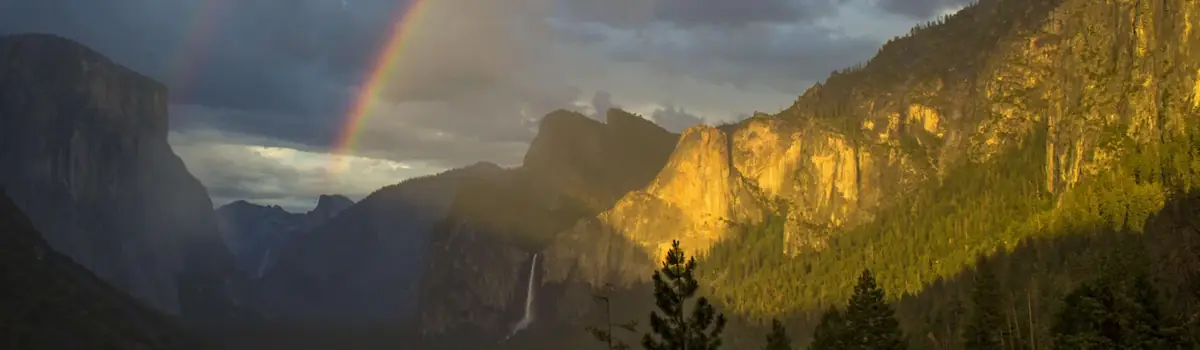
Not just a great valley, but a shrine to human foresight, the strength of granite, the power of glaciers, the persistence of life, and the tranquility of the High Sierra.
First protected in 1864, Yosemite National Park is best known for its waterfalls, but within its nearly 1,200 square miles, you can find deep valleys, grand meadows, ancient giant sequoias, a vast wilderness area, and much more.
Huge mountains, rugged foothills, deep canyons, vast caverns, and the world’s largest trees exemplify the diversity of landscapes, life, and beauty here. Explore these pages to plan your visit or to learn about the plants and animals here and the threats they face. Ancient giant sequoias may seem invincible, but they, too are vulnerable.
Huge mountains, rugged foothills, deep canyons, vast caverns, and the world’s largest trees exemplify the diversity of landscapes, life, and beauty here. Explore these pages to plan your visit or to learn about the plants and animals here and the threats they face. Ancient giant sequoias may seem invincible, but they, too are vulnerable.








 Forests