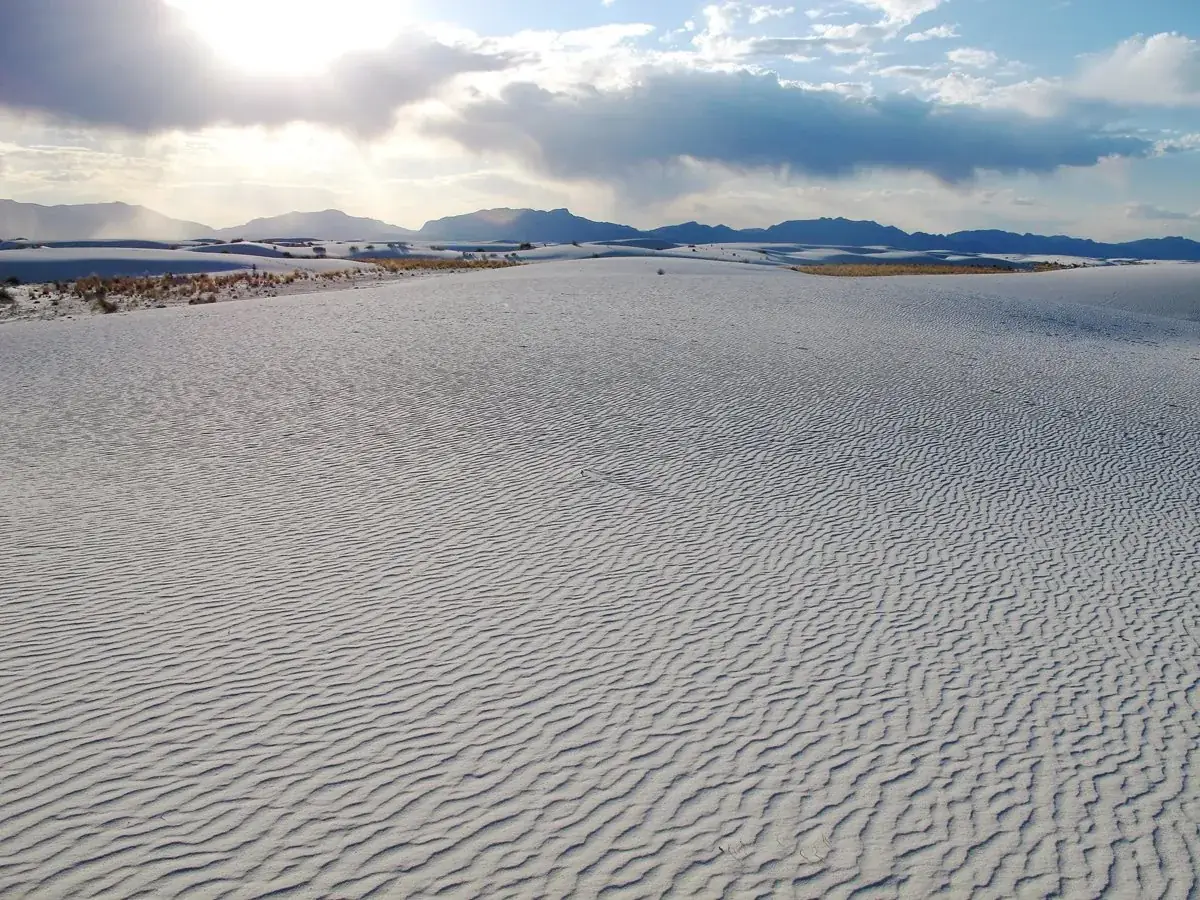
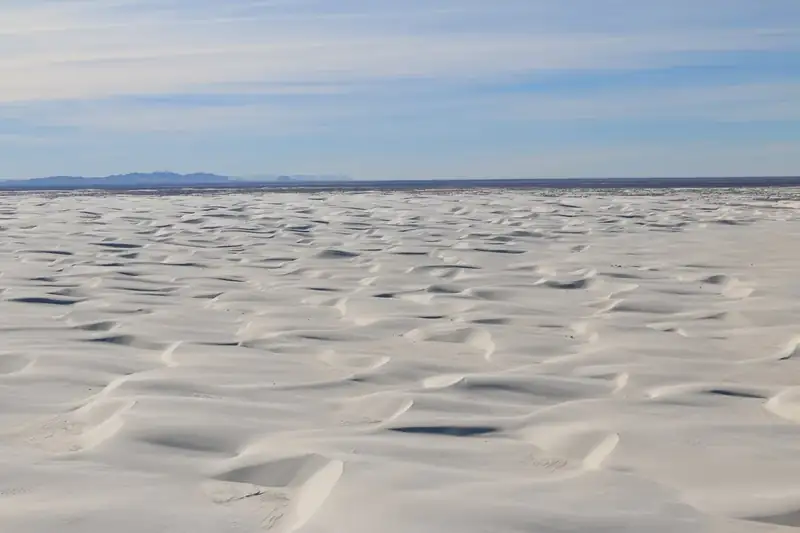
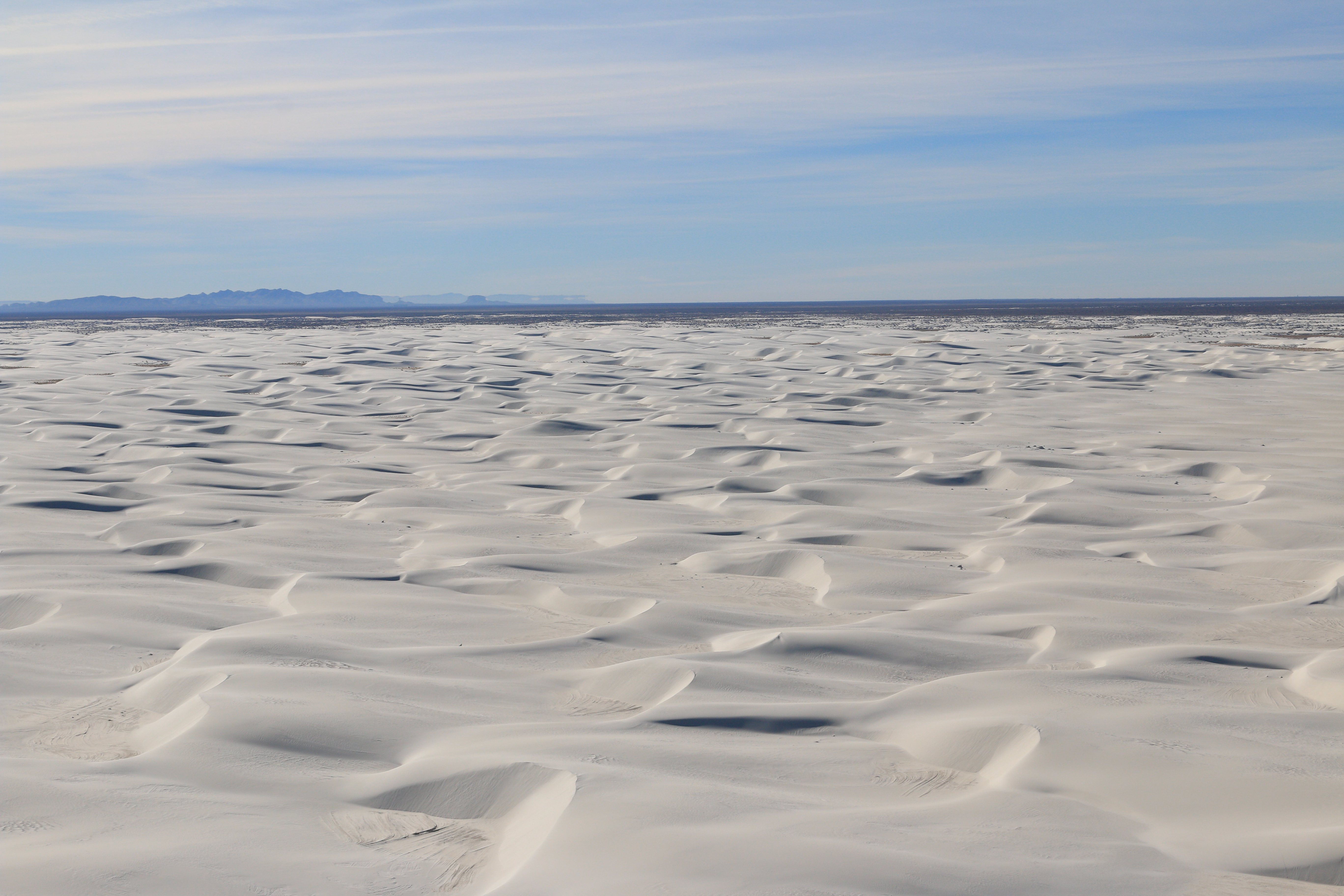
Rising from the heart of the Tularosa Basin is one of the world's great natural wonders - the glistening white sands of New Mexico. Great wave-like dunes of gypsum sand have engulfed 275 square miles of desert, creating the world's largest gypsum dunefield. White Sands National Park preserves a major portion of this unique dunefield, along with the plants and animals that live here.
146.3Kacres of parkland
659.7Krecreation visits, 2025
Apr · May · Octnearby climate picks
Seasonal access & reservations
No reviewed guidance for this selection. Check the park's official planning pages; missing coverage does not establish access.
Selected guidance only; separate from climate comfort and current conditions.
Official conditions Loading saved check
Loading the latest saved conditions. You can also check the official report below.
Allow 1 day for a first look. A useful base: Alamogordo.
Missile-range activity can close the access road. Heat, wind, and confusing dune terrain require preparation.
A day-by-day starting point
01
DAY 1
A day among the gypsum dunes
Start at the visitor center, follow the open Dunes Drive, and choose short marked walks during a suitable cool period. Check closures before traveling.
Editorial recommendations, reviewed 2026-10-17. Full park days, excluding travel to and from the region. A first-visit outline for a general traveler; adapt to mobility, fitness, season, reservations, and current conditions. These are suggested days, not reserved activities or guaranteed routes.
Backcountry camping is currently closed while park staff assess environmental conditions and other key factors to determine whether camping is safe and feasible.
No date has been determined for its reopening. Currently, overnight stays are not permitted within White Sands National Park.
Still want to experience White Sands after dark? Check out our Full Moon Night and Moonlight hike opportunities!
Bicycling at White Sands is truly a unique experience—nowhere else in the world can you ride a bike on a hard-packed gypsum sand road through the heart of an immense gypsum dunefield! This distinctive experience requires one to be a prepared and alert cyclist.
The following tips will help you have a more enjoyable and safe riding experience along Dunes Drive.
The use of a bicycle is permitted on park roads and in parking areas that are otherwise open for motor vehicle use by the general public. Off-road travel is not permitted (36 CFR 4.30 (a)). Just remember a bike can go anywhere a car can go.
You are sharing a narrow, winding road with trucks, cars, RVs, and motorcyclists. Be considerate of traffic. Ride single-file at all times.
There are many blind curves along Dunes Drive, which lacks much of a shoulder. Ride to the right of the road and listen for traffic.
Dunes Drive lacks much of a shoulder. This shoulder may sometimes be steeply sloped and may have loose sand. Use caution in these areas.
Bicycle helmets are highly recommended for all cyclists. New Mexico law requires anyone 17 years and younger to wear a helmet.
Be prepared for your ride. Dunes Drive is 16 miles round-trip. Wear sunglasses and sunscreen. Bring at least two liters of water and high energy snacks with you on your bike ride.
What kind of bike is best for Dunes Drive?
Rangers are frequently asked this question, and the response is, "It depends." The answer typically depends on the condition of the road. Dunes Drive is eight miles one-way. The first four miles are paved, and the rest of the road is hard-packed gypsum sand. Dunes Drive will frequently have a rough "washboard" surface, potholes, and sand drifts. These hazards make riding a bike on Dunes Drive challenging. Experienced riders on mountain and city/beach cruiser bikes with wide tires should be able to handle the varied road conditions and hazards. Road bikes with skinny street tires are not recommend on the sand-portion of Dunes Drive due to the above-listed hazards.
During periods of heavy rain or snow, Dunes Drive will be very slick with water, snow, and/or ice. The sand portion of the road may be unpassable on a bike. Call the park to check on the road conditions if you are planning to ride your bike in the park.
Off-Road Travel is Not Permitted
Fat tire and mountain bikes are perfect for exploring Dunes Drive. Their ability to float over the sand may make it tempting to ride your fat tire or mountain bike on the dunes. Off-road travel on a bike will result in a fine of $50 with a $30 processing fee (36 CFR 4.30 (a)).
Entrance Fees for Cyclists
Park entrance fees apply to visitors entering on a bike.
Dunes Drive is an eight-mile (13 km) scenic drive that leads from the visitor center into the heart of the gypsum dunefield. The 16-mile (26km) round-trip drive takes approximately 45 minutes. However, you may want to allow additional time to explore the dunes, take photos, and/or learn about the natural and cultural history of the world's largest gypsum dunefield. Along the road, you will find outdoor exhibits, hiking trails, picnic areas, vault toilets, and parking areas.
The first five miles of Dunes Drive are paved and the last three miles are a hard-packed gypsum sand road. The road is suitable for cars, motorcycles, recreational vehicles, and buses.
Missile Tests and Road Closures
From time to time, White Sands Missile Range performs missile tests that may close Highway 70 to traffic. Depending on the nature of the testing, Dunes Drive may also be closed during missile tests for visitor safety. During these times, the visitor center remains open. Visitors are invited to view the museum exhibits, watch our 17-minute orientation film, and peruse the park store and gift shop while Dunes Drive is closed.
Motorists must abide all New Mexico motor vehicle laws, such as wearing seatbelts and obeying posted speed limits. Be aware that speed limits vary throughout the park from 45 mph down to 15 mph (72 kph –24 kph) in high visitor use areas. Therefore, be especially vigilant for pedestrians and people sledding near the roadway. Animals may also be on the road, especially during the early morning or evening. Use pullouts to make stops along the road.
Weather conditions can change drastically—from sudden downpours to dust storms. The road can be slippery when wet especially during the winter. It may also be harder to spot frozen water. For your safety, decrease your speed and brake gently to avoid skidding. Dust storms can drastically reduce visibility. Do not drive during a dust storm.
The nearest gas stations to the park are located in the town of Alamogordo, 13 miles northeast of the park on Highway 70. Be sure to fill up before coming to the park.
Heavy Equipment
The dunefield is as rugged and untamable as it is scenic and awe inspiring. The strong winds that help create the dunes also necessitate constant road maintenance. Park staff use heavy equipment almost daily to clear sand drifts and grade Dunes Drive. During road maintenance, please slow down, maintain your distance, and wait for an appropriate moment to pass.
Motorcycles/Bicycles
Riding a bicycle or motorcycle through the park offers unobstructed views of an ever-changing landscape and allows your senses to truly experience the sights and sounds of this unique place. Visitors planning to explore by motorcycle or bicycle should be aware that they are only allowed on Dunes Drive and not on hiking trails or off-trail in backcountry areas.
While motorcycles and bicycles are allowed on the road, it is not without its hazards. Expect large buses and RVs on the road, and there are several blind curves along the road. Dunes Drive will frequently have a rough "washboard" surface, potholes, and sand drifts. These hazards may make riding bicycle or motorcycle on Dunes Drive challenging. Obey all traffic regulations and wear bright colors, protective clothing, and a helmet.
There is no better way to experience the unique landscape of White Sands National Park than by venturing out onto any of our five established trails. Explore the dunes and enjoy the silence and solitude of the dunefield with its stunning views of the surrounding mountains. The trails vary in terms of difficulty and scenery. Plan ahead to ensure you have a great and safe hike.
If you are new to the park, consult with rangers at the visitor center before heading out on your hike. Rangers will provide advice about trails as well as recommendations for different fitness and experience levels. We do not recommend that you begin a hike if the temperature is at or above 85°F (30°C).
Each trail is marked with a specific colored post (i.e., green, blue, orange, or red) and a symbol (i.e., hearts, clubs, spades, or diamonds). Please familiarize yourself with these colors and symbols to help orient yourself to the trail before you start your hike. This information will be critical if you become lost. The Interdune Boardwalk is the only trail with no colored posts or symbol.
Hiking Safety Tips
Exploring the outdoors comes with risks. The National Park Service works to reduce those risks, but your safety depends on your own good judgment, adequate preparation, and constant awareness. Keep in mind that minor and moderate health or medical issues can be easily exacerbated by hiking up and down steep dunes. The elevation at White Sands is 4,235 feet (1,291 m). Know your limits, pace yourself, and pay attention to how you are feeling. Your safety is your responsibility. Your tomorrow depends on the decisions that you make today.
Horse-riding and pack animal permits will not be issued until further notice. Horses and pack animals should not be brought into the park until permits resume.
Riding horses in the white sands is a very unique experience and a wonderful way to experience the expansive scenery of the dunefield. Private individual use of horses and other pack animals are welcome at White Sands National Park.
Horse and Other Pack Animals Permit
Prior to entering the park, a free day-use horse and other pack animals permit must be completed at the entrance fee station on Dunes drive. Downloading and completing the form before arriving at the park will speed up processing time and help you get out in the dunes and your horse sooner.
This permit is not for commercial horse riding businesses attempting to operate within the park. A special use permit and proof of insurance will need to be obtained and verified.
General Information
Group size is limited to no more than five (5) stock animals at any given time.
There is only one designated parking area for horse trailers, which is specified on the back of the day use permit and is clearly marked with a road sign. If an alternate parking area has been temporarily designated, you will be notified by the park ranger before entering the park.
Racing and all types of unsafe riding are PROHIBITED .
Riders must maintain physical control/restraint of their animals. When not under physical control, horses or pack animals must be securely tied to trailers or hitching fences. No free trailing or free riding is allowed.
Animals are prohibited from grazing on all plant life within the park.
To avoid conflict with other park visitors and park resources, horses and other pack animals are prohibited from picnic areas, the Group Use Area, the Backcountry Camping sites, all trails, the Interdune Boardwalk and the Co-Use area.
Additionally, horses and other pack animals may not be ridden on any roadway including sand packed roads. Most of these areas are identified on the Dunes Drive map on the back of the permit.
Riding is permitted only during normal operating hours. No overnight camping with stock animals is allowed. Horses are not permitted in the park during missile tests even for tests where Dunes Drive is open to the public.
Pets, such as dogs, accompanying riders must be on a leash no longer than six feet (2 m), and under physical control at all times. Animals and pets, like humans, should leave only footprints.
Waste Cleanup and Disposal
All debris (hay, grass, alfalfa, etc.) and animal manure in the vicinity of the trailer, the Horse Trailer Parking Area, or any alternate designated parking area must also be cleaned up, and such materials must be disposed of by the owners outside of the park.
These conditions are necessary to permit the safe interaction of horse riders and other visitors and reduce the visual pollution, smell and possible health hazards associated with improperly disposed waste.
Unexploded Ordinance
We are surrounded by an active missile range. From time to time, debris from missile tests falls into the park and is buried by sand. If you see any strange objects , do not touch them as they may still be able to detonate. Make a note of their location and tell a ranger so that appropriate personnel may remove the object in question.
We are always happy to add another name to our Junior Ranger team. We invite YOU to become a member of this very special group of people. When you take the time to learn about the park and its valuable resources, you will be able to share your knowledge with friends and family to help them understand why White Sands National Park is a special place.
There are four different age activity-levels: preschool (ages five and under), ages 6–8, ages 9–12, and age 13 and over. Riley, our Junior Ranger mascot, leads you through the activities. There are word puzzles, desert safety activities, visitor center scavenger hunts, a wildlife checklist, nature manners, and many other activities. There are TWO ways to become a Junior Ranger. You can visit the park and earn the badge in person. Please visit the park visitor center and pick up a free booklet, or with using our website (and some help from Google), just click on the workbook below and print out the pages. Complete the activities, answer the questions, and mail or email it to us at whsa_interpretation@nps.gov . A Park Ranger will review your answers.
The Junior Ranger program at White Sands is geared towards children, but ALL ages may participate! Have fun!
The Junior Dunes Ranger activity booklet (5,800 KB) is for ages six and up.
With the shifting light, shadows, and truly out-of-this world landscape make White Sands a photographer's paradise. You do not need an expensive camera to capture the beauty of the dunes. Great pictures, however, require the same techniques and way of looking at things that pros have learned.
The dunes can be a dangerous environment for your digital camera. Blowing sand can cause irreversible damage to your camera.
It's important to protect your camera from the elements when you're in the dunes, particularly avoiding sand. When your camera is inundated with tiny grains of sand, the grains can scratch the lens, penetrate the case, ruin the internal electronics, and clog buttons and dials. Be careful when and where you change your camera lenses. Always take a camera bag or backpack with you to store your camera when not in use. Use a soft microfiber cloth to clean the sand off your camera. Do not use canned air to clean your camera.
Most professionals know the golden hours are around two hours after sunrise and the same before sunset. Every day is different. Sometimes there are crystal clear views of the surrounding mountains and sometimes awesome cloud formations that change hues by the minute. The Sacramento Mountains to the east are especially beautiful just after the sun dips below the horizon. They are bathed in a pink afterglow followed by the rise of the earth's shadow.
Change Your Point of View
Climb high! Hike to the top of the tallest dune around and take in the bird's eye view. The tallest dunes are toward the end of Dunes Drive near the Alkali Flat trailhead.
Get down! Drop to your knees and look up. Yuccas against the sky and the delicacy of dune grasses are especially interesting from a low angle.
Get close! The patterns left in the sand by grasses and leaves blown by the wind are fascinating. Sometimes you will find the tiny tracks of a darkling beetle just waiting to be recorded, and sometimes you'll find the actual beetle. The interdunal areas are great places to find animal tracks and rugged, gnarly plant growth.
Avoid symmetry! Most beginners tend to center objects and include the entire object in the frame. However, you'll end up with a more interesting photo when you shoot slightly off center and occasionally only include half of the object or two-thirds of it in the frame. This results in an unexpected look for the photo and in interesting composition.
Show depth! Placing a plant or rock in the near foreground of your photo will help the viewer see the depth and distance in your photograph. Give the viewer an object which will help them understand size and distance of your intended subject.
Watch Where You Walk
Avoid walking through the middle of dunes, since that'll mess up those nice lines in the sand and ruin any opportunity to photograph the dune. Instead, walk around dunes, or only walk through dunes you know you don't want to photograph.
Avoid the Biggest Dunes
When you first see a large field of sand dunes, you might think of always heading to the tallest dunes in the field, but these dunes don't always make the best photographs. These dunes are often the most visited, so they'll likely have human footprints all over them. If you're looking to photograph some undisturbed dunes, then head out towards the edges of the dunefield.
Look for Layers
Many dune fields are surrounded by large mountain ranges, so you can also create some nice images by layering the dunes with mountains in the background. This works especially well when the mountains are much darker or lighter than the dunes and provide a nice contrast.
Control your Subject Matter
Try to not include too much of the surrounding mountains or the viewer's eye may lose focus on the sand dunes as your main subject in the foreground.
The most important thing to remember is that the photographs you take are your own view of the subject and you have recorded these images for your own enjoyment.Taking good photographs is a way to record your memories of White Sands and other places you visit and to share those memories with family and friends.
If you see a good photo, take it. Don't get so wrapped up in all the technical aspects of taking the photo that you miss the opportunity. Go out, have fun, enjoy the dunes and remember "leave footprints and take only pictures."
Find the Right Location
The Playa Trail is the first trail you will encounter from the entrance station. Follow the green trail markers with a heart symbol that leads to a small playa. The playa undergoing constant change. It may be brown, white, filled with water, or have growing crystals.
The Dune Life Nature Trail is a mix of dunes and native plants. Follow the blue trail markers with a club symbol that leads to an array of Rio Grande Cottonwoods and animals tracks.
Backcountry Camping Trail is a shorter hike through the heart of the dunes. Follow the orange trail markers with a spade symbol into an area of beautifully varied dunes and vegetation
The Alkali Flat Trail skirts the edge of what is now the final remnant of Lake Otero. Follow the red trail markers with a diamond symbol into the tallest dunes in the monument with little vegetation.
It is easy to become disoriented in the dunefield especially when looking for the perfect photography spot. More than a few photographers have an unplanned night in the dunes after becoming lost while capturing sunset photos.
Have a plan . Tell someone, who is not with you, where you are going and when you plan to return.
Use park trail markers. Carry a park map and compass. Orient yourself to landmarks such as mountains or a water tower and know how to return to your car. GPS can be unreliable here. Have a fully charged cell phone. Bring a portable charger if you have one. Turn your cell phone off while hiking. Conserve battery power for emergencies. Be prepared for the unexpected.
Hike established trails to minimize safety concerns.
Know the temperature before you hike. It is recommended that you do not start a hike if the temperature is at or above 85°F (30°C).
Remember water is life! Bring enough to survive. Drink water before you start exploring. Have at least one gallon (4L) of water per person per day. Carry at least 2 quarts/liter of water per person even for short trips. Fill up water containers at the visitor center. There is no water available in the dunefield.
Weather in the Tularosa Basin can change quickly. Temperatures can drop very quickly once the sun sets or during storms. Visitors need to be prepared for a variety of weather conditions.
During the warm season, wear a wide-brimmed hat, sunscreen with an SPF of 15 or higher, sunglasses, and lightweight, loose-fitting clothing. Long sleeves and long pants help protect your skin from the sun. Sunburn reduces the skin's ability to release excess heat, making you more susceptible to heat-related illness.
An active missile range surrounds us. From time to time, debris from missile tests falls into the park and is buried by sand. If you see any strange objects , do not touch them, as they may still be able to detonate. Make a note of their location and tell a ranger what appropriate personnel to remove the object in question.
Picnicking with family and friends is a wonderful way to enjoy the peace, tranquility, and beauty of the park. The Yucca, Roadrunner, and Primrose picnic areas are named after several of the most iconic plant and animal species in the park. These picnic areas are located off Dunes Drive about six to seven miles (9. 65 –11.26 km) from the fee station.
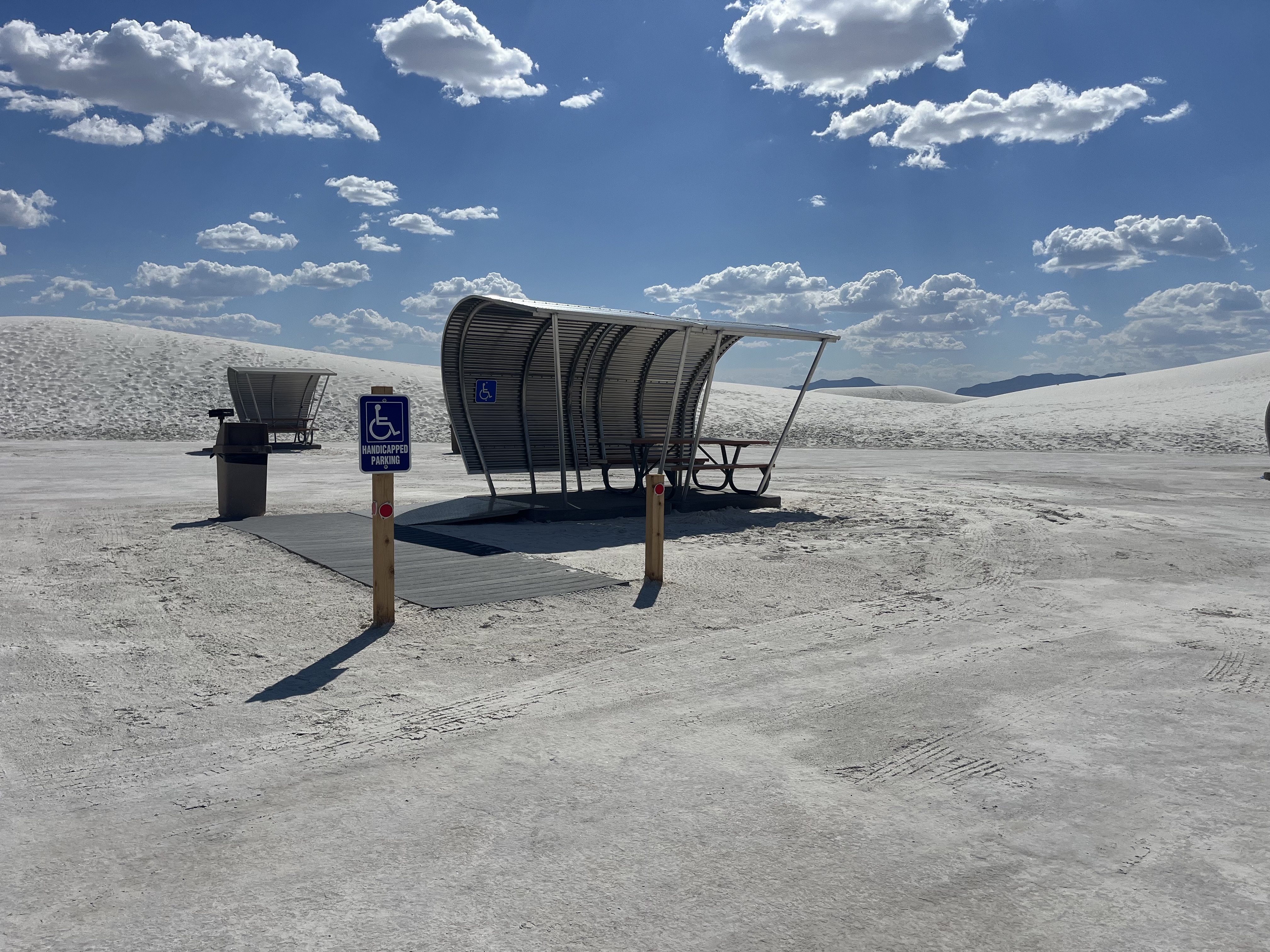
There are a total of 62 shaded tables in the three designated public picnic areas. Tables are available on a first-come, first-served basis. There are typically plenty of picnic tables for everyone to enjoy. Some tables are ADA accessible, and each has an elevated grill.
Personal grills are allowed in picnic areas and pull outs along Dunes Drive. When using personal grills, charcoal must be removed from the park. If using one of the park's grills, please leave the charcoal in the grill and douse with water.
In the Roadrunner Picnic Area there are two picnic pavilions that will accommodate groups up to 20 individuals. These tables are available on a first-come, first-served basis.
For larger groups, the Group Use Area offers a private location with several picnic tables and one large picnic pavilion. The group use area also has two grills and a vault toilet. Reservations are required to use this area.
Tips for a great picnic:
Use colored plates, napkins, cups, and silverware. White, plastic dinnerware is not easily visible on the white sand. Remember to Leave No Trace .
When you are done with your picnic, use our recycling bins by the vault toilets to recycle plastic and aluminum.
Consider using reusable tableware to reduce the amount trash left behind in the park.
Trash dumpsters are provided in the picnic areas for your use. If the small trash cans are full please throw trash in the large dumpsters.
Bag your trash. Wind will pick up things like paper plates and napkins and carry them into the dunes.
Helping to keep picnic areas clean allows our wildlife to stay wild and the park pristine.
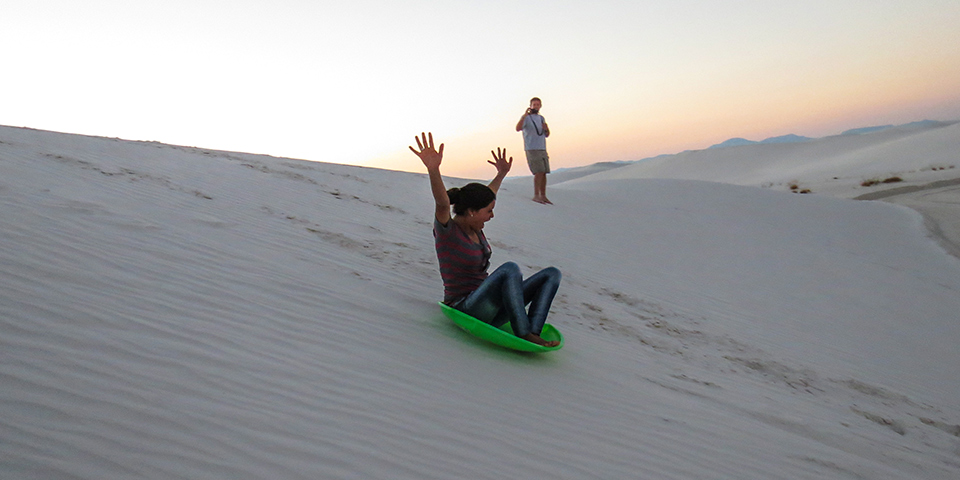
Sledding on the beautiful soft sand at White Sands National Park is a popular activity and great fun for children and adults alike. Unlike snow, sand is not slippery and sledding down the face of a dune can take some practice unless you have the correct equipment, know proper techniques and use safety precautions.
Waxed plastic snow saucers work best and can be rented or purchased at the park's gift shop. You may also bring your own sleds. Choose a dune with a gently sloping face and a level run-off at the end so that you can come to a halt safely. Be aware of where the dune slope meets the desert floor. While the dune sand is soft, the area at the base of the dune can be very hard, and unintentional injuries are surprisingly common. Make sure the sledding path does not cross the roadway or parking areas and is free from hazards such as vegetation, hard clumps of sand, or other obstructions. The area around the interdune boardwalk trail is off limits to sledding activities.
To get the most out of this exhilarating experience, sit or lay on the sled, with your feet pointing downhill.Sledding head first increases the risk of injury and should be avoided. Do not stand up while sledding.
As with any sport, adult supervision of children is advised.Children ages 5 to 9 are most susceptible to injury. Parents of young children should not let them sled alone. Older children should be coached on how to check for hazards.
There are two parking areas for the visitor center. The largest, and main parking lot is the south parking lot, closest to highway 70. There is limited space for parking for recreational vehicles and trailers in the parking lot directly in front (south) of the visitor center. Personal vehicles should refrain from parking in the striped areas for oversized vehicles in the front (south) parking lot. There is no space for recreational or oversized vehicles in the back (north) parking lot. There is no parking space for tractor trailers at all in White Sands National Park.
The main restrooms are located next to the visitor center structure and are open during visitor center hours. These hours change throughout the season. Please refer to the Visitor Center hours to know when the bathrooms are open. Additonal vault toilets are available along Dunes Drive.
Visitor Center Information Desk
When you enter the through the main doors the visitor center information desk is located just to your right. Park rangers will be available to help give you information and answer your park questions. You can also obtain junior ranger books and get sworn in at this location. In addition, the park store, Western National Parks Association, will be selling a small amount of the park's most popular souvenirs. Remember, you do not need to stop at the visitor center to pay the park fee or get a brochure - you'll do that at the park's entrance station 0.25 miles farther along Dunes Drives.
White Sands Trading Post Gift Shop
The gift shop has two entrances, one from the visitor center courtyard and the other are double doors facing the north parking lot. The interior of the gift shop is three rooms with merchandise fixtures placed on the floor. The spacing between merchandise fixtures exceeds 36 inches wide, with the proper turnaround radius at cash registers. The White Sands Trading Post is the location where you can purchase sleds to go sledding at the park. The trading post also has an assortment of pre packaged food options, bottled water, and general souvenier items. The visitor center and gift shop are open 363 days a year, closing on Thanksgiving and Christmas Day. Hours of operation vary by season. Fill up your water containers at the visitor center area; there is no water available in the dunefield. Please visit the Western National Park Association's online park store .
The nearest restaurants and gas stations to the monument are located in the town of Alamogordo, 13 miles northeast of the park on US Highway 70.
Museum Exhibits
Are open the same hours as the visitor center. The exhbits help visitors learn the history, geology, and natural history of White Sands National Park.
The 17-minute park film plays every 30 minutes beginning at 9:00 am to 30 minutes befor the visitor center closes.. Spanish and audio description versions are available on request. Please see front desk for any information related to versions of the movie
You are welcome to bring pets to the park. Animals are not permitted in the visitor center or gift shop, with the exception of service animals. Do not leave pets unattended or locked in your vehicle. Please use the pet waste stations located on the western side of the visitor center parking lot and west side of gift shop parking lot.
Historic Visitor Center
The interior of the visitor center presents various examples of artistry in construction and furnishings, such as decoratively carved corbels, benches and chairs, and individually crafted tin lighting fixtures.In 1990, the visitor center and adjacent seven buildings, also built between 1936 and 1940, were officially designated as the White Sands National Park Historic District . Set in a landscape of native plants, the historic district preserves this unique architectural style and is a tribute to the plans of the architects and the fine artisanship of the WPA workers.
The park is located on Highway 70 west between the cities of Alamogordo and Las Cruces. Please reference the parks directions page to figure out what is the best way for you to get to White Sands National Park.
Official NPS features and USGS park boundaries, imported 2026-10-17. An inventory snapshot, not live trail or parking availability.
Loading official park features…
TrailsPoints of interestParkingZoom with buttons or pinch. Toggle layers on the map.
Map coverage varies. Trail names may represent segments, connectors, or shared park units; mapped lines are not a hiking recommendation. Use official conditions and navigation resources before heading out.
Lake Lucero Trail Inventory record · 1 source segments; not a route distance.
Sand
Unknown
Playa Trail Inventory record · 1 source segments; not a route distance.
Sand
Unknown
NPS public GIS inventory, imported 2026-10-17. “Existing” is an inventory classification, not confirmation that a trail is open. Segment counts are not route distances. Parking records do not indicate space availability, fees, or accessibility certification. View government source ↗
Climate for Alamogordo, 24 km from the park reference point. 1991–2020 normals. Source elevation: 1,323 m.
Daytime highNighttime lowOctober: 71° / 48°
Daytime high71°
Precipitation21 mm
Daylight11.2 hrs
Wind8.3 km/h
Mountain, rim, valley, and coastal conditions can differ sharply from the source town. Check park forecasts and current conditions before travel.
Monthly climate data 12 months · °F
Month
High
Low
Rain / snow water
Wet days
Daylight
50°
30°
19 mm
3.7
10.1 h
55°
34°
17 mm
4.0
10.8 h
63°
39°
14 mm
3.3
11.7 h
70°
46°
9 mm
1.7
12.8 h
79°
54°
12 mm
2.4
13.7 h
87°
62°
16 mm
3.5
14.1 h
87°
64°
66 mm
11.1
13.9 h
85°
63°
44 mm
8.3
13.2 h
80°
58°
29 mm
4.4
12.2 h
71°
48°
21 mm
3.6
11.2 h
59°
37°
16 mm
3.0
10.3 h
50°
31°
22 mm
4.2
9.9 h
RESEARCH WITH THE SOURCE IN VIEW
The practical field guide.
Official NPS excerpts imported 2026-10-17. Fees, permits, road access, and operations can change; use the source link to confirm the latest information.
Visitors are welcome to bring their pets to the park as long as they are kept on a leash. However, pets are not permitted in the visitor center or gift shop; service animals are allowed. Do not leave pets unattended or locked in your vehicle. Please leash your pets before opening your car doors.
Backcountry camping is currently closed while park staff assess environmental conditions and other key factors to determine whether camping is safe and feasible.
No date has been determined for its reopening. Currently, overnight stays are not permitted within White Sands National Park.
Still want to experience White Sands after dark? Check out our Full Moon Night and Moonlight hike opportunities!
U.S. citizens or permanent residents who are permanently disabled may be eligible for the Interagency Access Pass. This free, lifetime admission pass is valid at National Park Service, Bureau of Land Management, US Fish and Wildlife Service, US Forest Service, US Army Corps of Engineers, and Bureau of Reclamation sites.
Must be obtained with valid identification
Does not cover or reduce special recreation permit fees or fees charged by concessioners
Service Animals
Service animals are allowed in all park facilities and on all park trails unless closed by order of the superintendent. National Park Service policy defines a service animal as a dog that has been individually trained to do work or perform tasks for the benefit of an individual with a disability, including a physical, sensory, psychiatric, intellectual, or other mental disability. The tasks performed by the animal must be directly related to the person’s disability. Emotional support, therapy, comfort or companion animals are not considered service animals. Under the ADA, National Park Service policy, and park regulations, service animals must be harnessed, leashed, or tethered, unless (1) these devices interfere with the service animal’s work or (2) the individual’s disability prevents using these devices. In those cases, the individual must maintain control of the animal through voice, signal, or other effective means. Service animals must also be housebroken. Make sure you have enough water for yourselves and your service animal while visiting the park. Please pick up after your service animal and dispose of waste appropriately at trash receptacles located throughout the park.
Get an entrance pass All visitors must have one of these entrance passes: Pass Price Standard Pass $15.00–$25.00 Annual Pass $45.00 America the Beautiful Pass (includes Senior Passes) FREE–$250.00 Help me choose an entrance pass
Choosing an Entrance Pass
Do you have or qualify for a discounted America the Beautiful Pass?
If you already have an America the Beautiful—the National Parks and Federal Recreational Lands Pass, that's the only entrance pass you need. Seniors, military, visitors with a permanent disability, and families with a 4th grader are eligible for a free or discounted America the Beautiful pass.
America the Beautiful Pass
How often do you plan to visit national parks in the next 12 months?
If you don't qualify for a discounted America the Beautiful pass, we recommend choosing an entrance pass based on your trip plans.
Entrance Passes
All entrance passes admits a driver and all passengers in a private non-commercial vehicle into the park for free for a period of one year from month of purchase. These passes do not apply to special use fees, such as interpretive program fees.
Standard Entrance Pass
If you enter the park in a motorized vehicle, your entrance pass covers both you and your passengers. Your passengers do not need a separate pass.
Costs for vehicles with more than 15 passengers are listed below under Organizations and Businesses .
Private Vehicle $25.00
In-person Purchase Locations
White Sands Entrance Station Cash or Credit/Debit
Motorcycle $20.00
For Individuals without a Vehicle
If you enter the park on a bicycle or on foot and are at least 16 years old, you need your own entrance pass. Children under the age of 16 don't need an entrance pass.
Per Person $15.00
For Organizations & Businesses
Commercial Van (7-15 seats) $50.00
Commercial Mini-bus (16-25 seats) $60.00
Commercial Motor Coach (26+ seats) $150.00
Annual Entrance - Park
This pass admits the pass holder and three persons (16 years and older) in a private non-commercial vehicle into the park for free for a period of one year from month of purchase. It can only be purchased at the entrance station to White Sands National Park. This pass does not apply to special use fees, such as camping and interpretive program fees.
US citizens and residents
America the Beautiful—the National Parks and Federal Recreational Lands Pass
Covers entrance fees and standard amenity (day-use) fees at lands managed by
National Park Service
US Fish & Wildlife Service
US Forest Service
Bureau of Land Management
Bureau of Reclamation
US Army of Corps of Engineers
Depending on the type of entrance fee charged at a site, covers One private vehicle fee or Four per person fees
America the Beautiful Passes are non-refundable, non-transferable and cannot be replaced if lost or stolen . Passholders must show valid photo identification (ID) with each pass.
How to Get an America the Beautiful Pass
Physical passes can be purchased or picked up at over 1,000 federal recreation sites.
Purchase and pickup locations
To receive your pass by mail, order online at the USGS Online Store . Online orders are for physical passes, not digital passes, and may take up to three weeks to be processed and delivered. Order receipts may not be used in place of a physical pass. We recommend ordering at least three weeks in advance of your visit, or picking up a pass in person instead.
Skip the wait! Get a Digital America the Beautiful Pass through recreation.gov. Your digital pass can be saved to a mobile device and used immediately.
Get a Digital America the Beautiful Pass
2026 Free Entrance Days in the National Parks
Come experience the national parks! All National Park Service sites that charge an entrance fee will offer free admission to US citizens and residents (other fees, including timed entry or reservation fees, may apply). Mark your calendar for these entrance fee-free dates:
February 16 : Presidents Day (Washington's Birthday)
May 25 : Memorial Day
June 14: Flag Day/President Trump's birthday
July 3–5: Independence Day weekend
August 25: 110th Birthday of the National Park Service
September 17: Constitution Day
October 27 : Theodore Roosevelt's birthday
November 11: Veterans Day
Special Permits and Reservations
Certain types of activities require a special use permit or reservation. These include many types of organized gatherings, commerical activities, filming and photography, distribution of printed material, public expressions of opinion, and other activities that are controlled or prohibited. Examples include: weddings, other ceremonies or public assemblies, events sponsored by an organization for which the park acts as the venue, and more. Permit Fees are non-refundable and are based on an annual cost recovery analysis approved by the Superintendent. These fees include the cost of permit processing, administration, and the basic monitoring of events. Information on all permits and reservations can be found on the Permits & Reservations page .
Pass
Price
Standard Pass
$15.00–$25.00
Annual Pass
$45.00
America the Beautiful Pass (includes Senior Passes)
FREE–$250.00
I'm visiting...
We recommend
This park, once
Standard Pass
This park, multiple times
Annual Pass
More than one national park or federal recreation site
America the Beautiful Pass
Type
Available to
Price
Resident Annual Pass
US citizens and residents
$80.00
Non-Resident Annual Pass
Non-US residents
$250.00
Senior Annual Pass
US citizens and residents 62+ years old
$20.00
Senior Lifetime Pass
US citizens and residents 62+ years old
$80.00
Military Annual Pass
Current US military and dependents
Free
Military Lifetime Pass
Gold Star Family members and veterans
Free
Access Pass
US citizens and residents with permanent disability
Free
4th Grade Pass
US 4th graders
Free
Volunteer Pass
Federal recreation site volunteers with 250 service hours
Free
Pass
Price
Standard Pass
$15.00–$25.00
Annual Pass
$45.00
America the Beautiful Pass (includes Senior Passes)
FREE–$250.00
I'm visiting...
We recommend
This park, once
Standard Pass
This park, multiple times
Annual Pass
More than one national park or federal recreation site
America the Beautiful Pass
Type
Available to
Price
Resident Annual Pass
US citizens and residents
$80.00
Non-Resident Annual Pass
Non-US residents
$250.00
Senior Annual Pass
US citizens and residents 62+ years old
$20.00
Senior Lifetime Pass
US citizens and residents 62+ years old
$80.00
Military Annual Pass
Current US military and dependents
Free
Military Lifetime Pass
Gold Star Family members and veterans
Free
Access Pass
US citizens and residents with permanent disability
Free
4th Grade Pass
US 4th graders
Free
Volunteer Pass
Federal recreation site volunteers with 250 service hours
Tell someone your plans. Let them know where you're going, and when you plan to return.
Be aware of the weather. Sudden wind storms are frequent from February - May. Fast building thunderstorms are common in the basin July - September.
Be prepared for varying temperatures throughout the day. Summer daytime temperatures can often reach over 100ºF (38ºC) in the summer and as cold as 10ºF (-12ºC) in the winter.
Bring plenty of food and water. One gallon (4 liters) of water per person per day is recommended. Water is only available at the visitor center. Have salty snacks available. Make sure to balance water intake with eating to stay properly hydrated.
Remain in one place if you become separated from your group.
Drive safely, obey traffic signs, and wear your seatbelt at all times.
Do not drink and drive.
Be extremely careful digging holes in the sand. Sand is unstable and can easily collapse causing injury or suffocation.
Do not touch unknown items out in the dunefield. Unexploded ordinance can sometimes be found in the park.
When in doubt, ask a ranger first
What Should I Bring?
Water: at least 1 gallon (4 liters) per person per day.
Salty Snacks. Balance drinking water and eating snacks to stay properly hydrated.
Map. Do not rely on your phone— cell service is spotty in the park.
Fully Charged Cell Phone. In case of an emergency it is important to have a charged phone to try and make an emergency services call to 911.
Sun Protection. A hat, sunscreen, and long sleeves are all recommended to protect yourself from sunburn in the dunes. Sun protection is still needed in the dunes during the winter season.
Adequate clothing (rain jacket and warm layers). Weather can be unpredictable and change quickly.
Closed toed shoes are suggested. Venomous creatures can be found throughout the dunefield.
First aid kit for outdoor excursions
Know Before You Go
People have died in White Sands National Park from heat related illnesses, hypothermia, dehydration, and getting lost. Please check the activity checklist below to help you have a safe visit to White Sands National Park.
Heat exhaustion is a very serious threat when recreating in White Sands National Park. Signs of heat exhaustion include nausea, vomiting, fatigue, headaches, pale appearance, stomach cramps, and cool clammy skin. If you or a member of your party begins suffering from these symptoms: Find a shaded area Drink water slowly Loosen tight clothing Apply cool wet cloths or ice packs to the skin. If heat exhaustion symptoms persist, seek medical help by calling 911
Find a shaded area
Drink water slowly
Loosen tight clothing
Apply cool wet cloths or ice packs to the skin.
If heat exhaustion symptoms persist, seek medical help by calling 911
Please take signs of heat exhaustion seriously when in the park. If untreated, heat exhaustion often progresses into heat stroke. The body is unable to cool itself if this point is reached. It is imperative to lower their body temperature using any means necessary and obtain immediate medical assistance.
Winter months can be just as dangerous to people visiting White Sands National Park. Although winter highs are in the high 50's (10's Celsius), the temperature drastically falls into the low 20's (below zero Celsius) after the sun goes down. If people are not prepared for these cold temperatures, hypothermia can occur quickly.
White Sands is located at 4,235 feet (1,291 m) above sea level. For those traveling from lower altitudes, make sure you allow your body to acclimate to these altitudes. Take frequent breaks and drink water. Headache and loss of appetite are common sympotoms of altitude sickness. People not acclimated to the altitude must take even more precaution to aviod heat exhaustion.
Safety Checklist
Park with all four wheels on asphalt or compact sand parking areas. Do not drive offroad or park off the side of the road. Protect sensitive dune vegetation.
Use established pull outs and parking areas.
Pass pedestrians and bicyclists with at least three feet of separation.
Watch out for wildlife.
Drive safely and wear your seatbelt at all times.
Do not drive while impaired. Note that recreational use of marijuana is prohibited on federal land regardless of state laws.
Hiking and Trail Safety
Carry water; at least 1 gallon (4 L) per person. Water is only available at the visitor center.
Bring salty snacks. Maintain a balance in drinking water and eating snacks to stay properly hydrated.
Hiking shoes are suggested for hiking in the dune field. Venomous snakes, scorpions, pointy plants, and unexploded ordinance can be hidden by the sand.
Stay on established trails. Dune hikes are marked by trail posts. Due to high winds, trail posts can fall over. If you are unsure where to go next on a hike, please turn around. It is easy to become disoriented in the sand dunes.
Be aware of the daily weather. Prepare for varying temperatures and predicted weather events.
Do not rely on your phone for maps or flashlights. Limited cell service, GPS, and flashlight use drain batteries quickly.
Know the difficulty level of the trail before you go. Plan to the physical abilities and limitations of everyone in your group.
Keep Wildlife Wild: Do not feed or disturb wildlife, including birds. If your presence changes the behavior of wild animals, you are too close.
Do not pick up or get close to unknown debris or trash when out in the dunefields. Unexploded ordinance occurs within the park.
Practice Leave No Trace principles.
It is not advised to hike in the park when temperatures are above 85ºF (29ºC).
Choose a dune with a gently sloping face and a level run-off at the end so that you can come to a halt safely
Never sled into a parking area or roadway.
Check sledding path for vegetation, hard sand, or any other obstructions before sledding the first time.
Sit or lay on the sledding saucer with your feet pointing down the hill.
Climbing the dunes to sled can be strenuous. It is not advised to do strenuos activities in the park when the temperature is above 85ºF (29ºC).
Biking Dunes Drive
Obey traffic signals and speed limits.
Be prepared to stop. Sudden stops are dangerous on the packed gypsum sand road.
Bring salty snacks. Balance drinking water and eating snacks to stay properly hydrated.
Stay to the right. Give a clear warning before passing on the left.
Move to the side when stopped.
Leave no trace. Carry out what you carry in.
Strenuous activities are not advised when temperatures are above 85ºF (29ºC).
Visiting with Pets
Do not leave pets unattended in your vehicle.
Bring as much water for you pets as you do yourself. 1 gallon (4 L) of water is suggested. Water is only available at the visitor center.
Avoid wildlife encounters
Bites: Please don't allow yourself to be surprised by your own dog's behavior toward others, and please don't assume predictable behavior of dogs that are new to you.
Leash (6 feet or less) at all times secured to a person.
There is no better way to experience the unique landscape of White Sands National Park than by venturing out onto any of our five established trails. Explore the dunes and enjoy the silence and solitude of the dunefield with its stunning views of the surrounding mountains. The trails vary in terms of difficulty and scenery. Plan ahead to ensure you have a great and safe hike.
If you are new to the park, consult with rangers at the visitor center before heading out on your hike. Rangers will provide advice about trails as well as recommendations for different fitness and experience levels. We do not recommend that you begin a hike if the temperature is at or above 85°F (30°C).
Each trail is marked with a specific colored post (i.e., green, blue, orange, or red) and a symbol (i.e., hearts, clubs, spades, or diamonds). Please familiarize yourself with these colors and symbols to help orient yourself to the trail before you start your hike. This information will be critical if you become lost. The Interdune Boardwalk is the only trail with no colored posts or symbol.
Hiking Safety Tips
Exploring the outdoors comes with risks. The National Park Service works to reduce those risks, but your safety depends on your own good judgment, adequate preparation, and constant awareness. Keep in mind that minor and moderate health or medical issues can be easily exacerbated by hiking up and down steep dunes. The elevation at White Sands is 4,235 feet (1,291 m). Know your limits, pace yourself, and pay attention to how you are feeling. Your safety is your responsibility. Your tomorrow depends on the decisions that you make today.
Pets love White Sands! To them, it's full of new scents, sights, cool, soft sand, and excitement! You'll love bringing your furry companions with you to the park, too.as long as they are non-disruptive, on a leash no longer than six feet, and are under physical control at all times.
We ask you to follow these simple rules for everyone's enjoyment and safety:
Pick up after your pet. Please help keep White Sands clean and beautiful for your enjoyment and for the enjoyment of future generations. Cleaning up after your pet allows the area to remain sanitary and keeps diseases from spreading—helping to keep you and your family as well as your pet safe and healthy! Please consider the many people who walk barefoot, play, and sled in the sand—no one wants to step or sled into pet waste.
For your added convenience, White Sands National Park has two designated pet walking stations complete with pet poop pick-up bags to help facilitate with the removal of pet excrement. Both are located outside the visitor center;one is adjacent to the women's restroom and the other is behind the picnic tables.
Keep pets on a leash. Leashing your pet ensures your much-loved friend doesn't run away and get lost. It also prevents them from tangling with hazards such as cacti and rattlesnakes. Federal law prohibits dogs from being off the leash in public areas ( 36 CFR 2.15) . The leash can be no longer than six feet (2 m).
Give pets plenty of water. Like you, pets get thirsty too. Especially in the summer pets can become dehydrated very quickly. They can also suffer from heat stroke and die.
Do not bring pets inside the visitor center. While we love seeing pets in the park, they are not allowed in federal buildings ( 36 CFR 2.15).
Do not leave pets unattended, especially in vehicles. It is prohibited to leave a pet unattended and tied to an object ( 36 CFR 2.15) .
Temperatures at White Sands National Park can reach extreme highs. Pets should never be left alone inside your vehicle. Within just ten minutes, the inside vehicle temperature will become 25 degrees warmer than the outside temperature. Within 30 minutes, inside temperatures can rise over 30 degrees. Pets left unattended in hot vehicles have suffered severe organ damage or even death.
The chart below shows how quickly the inside of your vehicle heats up:
Service Animals Service animals are allowed in all facilities and on all trails unless an area has been closed by the superintendent to protect park resources. Definition of Service Animal The 2010 revision to Title II of the Americans with Disabilities Act (ADA) defines a "service animal" as a dog that has been individually trained to do work or perform tasks for the benefit of an individual with a disability, including a physical, sensory, psychiatric, intellectual, or other mental disability.
When visiting White Sands National Park, always be aware of the weather conditions. If high winds are predicted, it can be unsafe to be in the park due to blowing sand. When heavy rainds are predicted, the back half of Dunes Drive can become difficult to pass. Always check the weather before arriving at the park and be prepared for changing weather conditions.
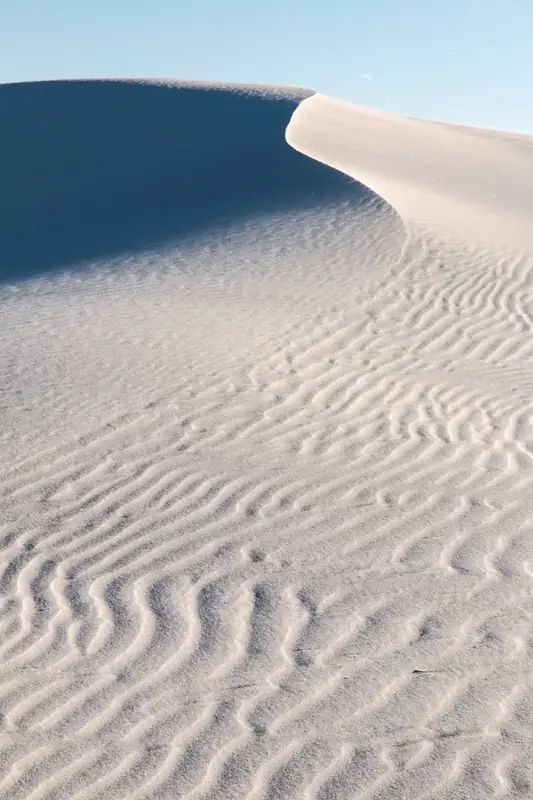
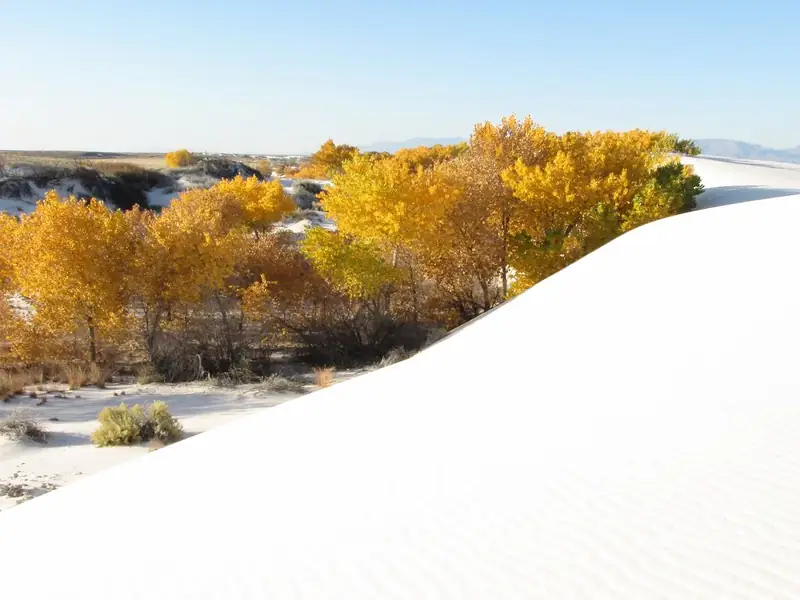
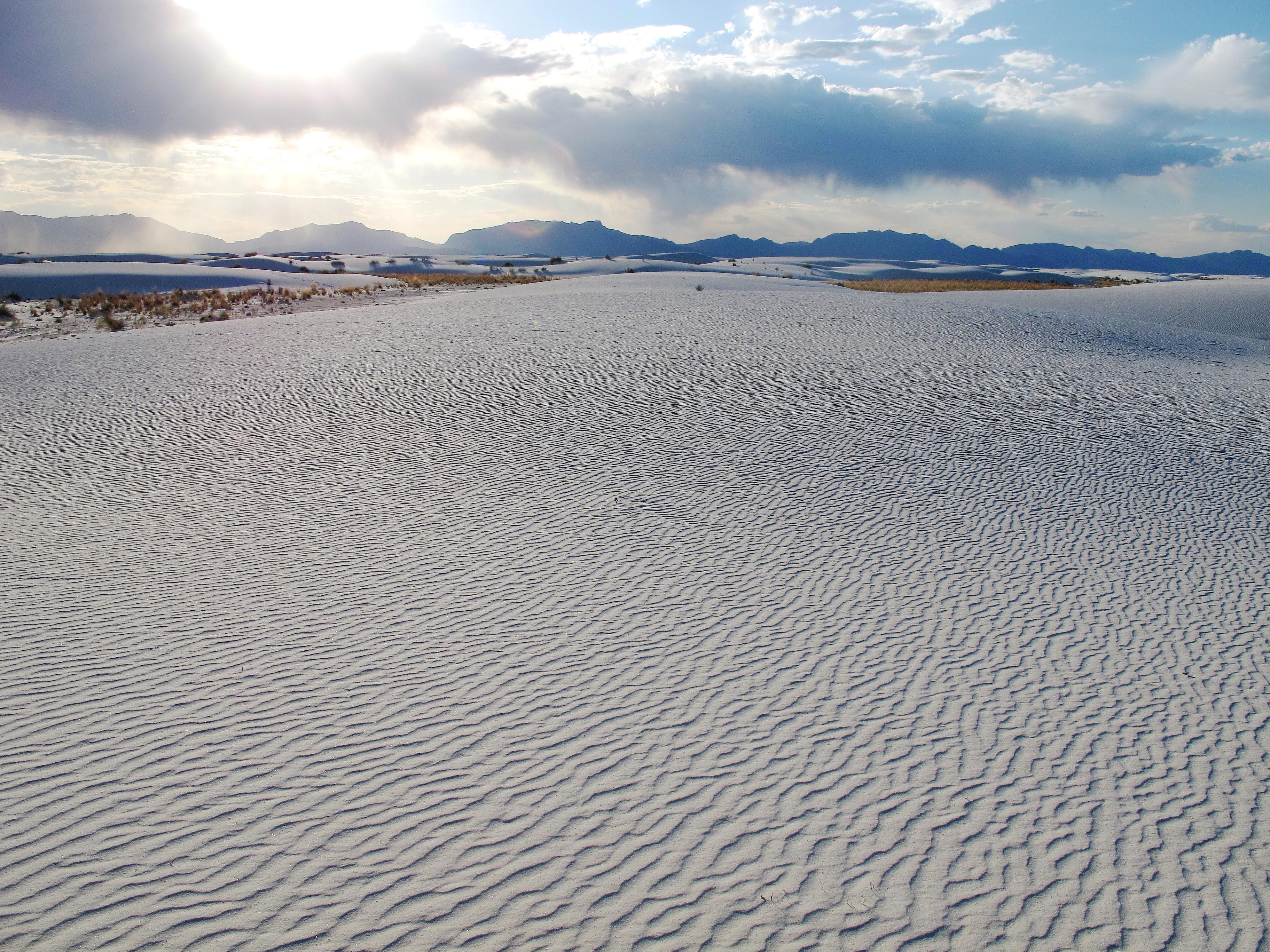
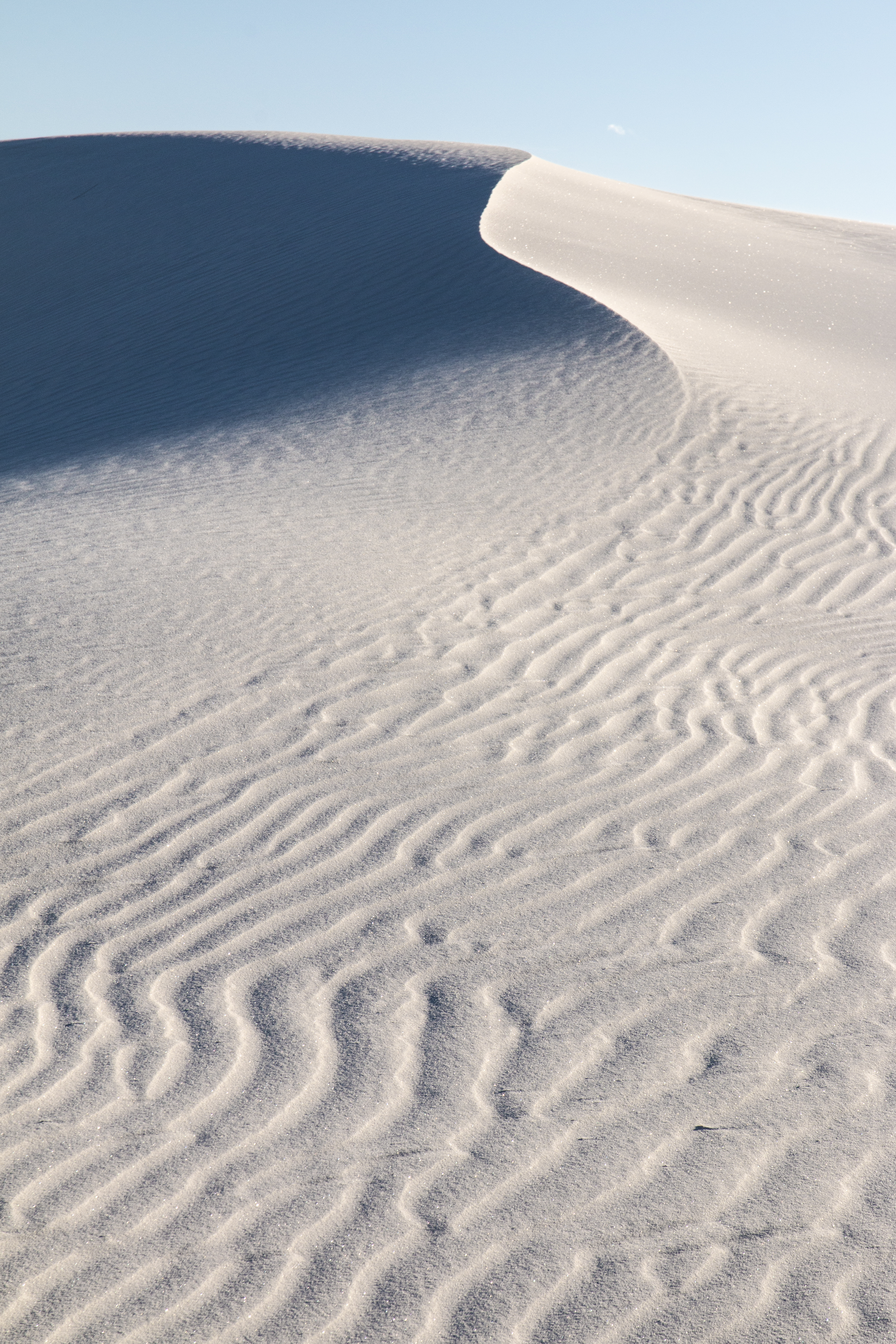
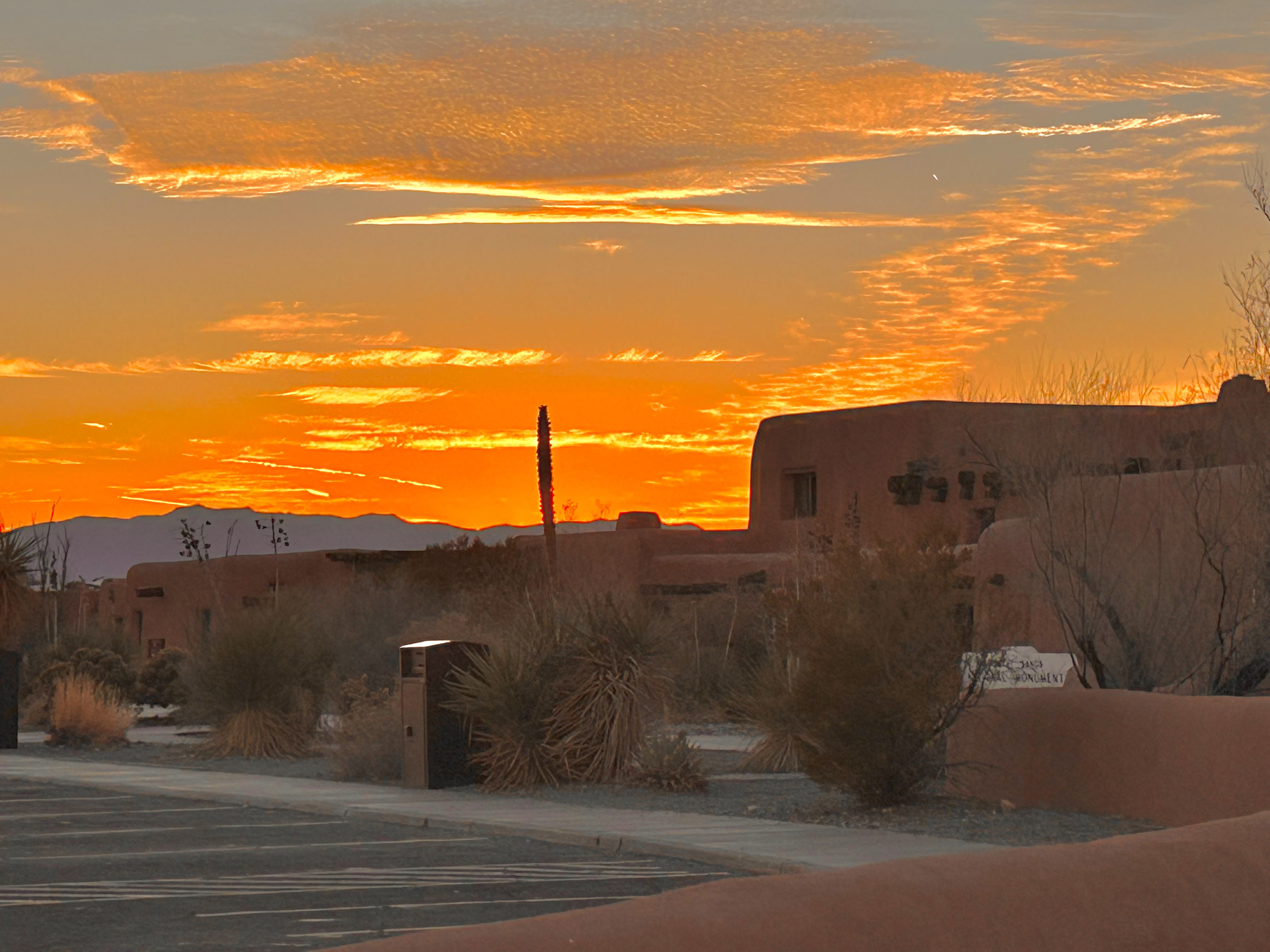
Sunsets are one of the most popular times to visit White Sands. Visitors can experience sunset every day of the year.NPS Photo Images link to the original government source.The dunes at White Sands cover 275 square miles of the Tularosa Basin.NPS Photo The wind shapes and moves the dunes as a whole but gives each individual dune the texture of ripples.NPS Photo Fall is a wonderful time to visit as most of our plants with leaves change beautiful colors.NPS Photo As the sun changes its angle through the sky it allows shadow to roll across the dunes.NPS Photo Wheelchair and stroller accessible, the Interdune Boardwalk gives visitors the opportunity to travel through the dunes on a solid boardwalk surface.NPS Photo An experience that cannot be matched is sledding down the sand dunes.NPS Photo Picnic shelters at White Sands provide an excellent place to find some well needed shade during a day in the park.NPS Photo Accessible picnic shelters are located at each picnic area within the park.NPS Photo New Mexico's state flower, the soaptree yucca, is a very popular plant to take pictures of.NPS Photo The visitor center offers many things including a museum with exhibits, an orientation film, and a park store.NPS Photo, Joe Elsen Park Ranger swearing in Junior RangersNPS Photo
Look closer at accessibility.
No structured outing assessments have been reviewed for this park yet. Check the official accessibility guide for your requirements.
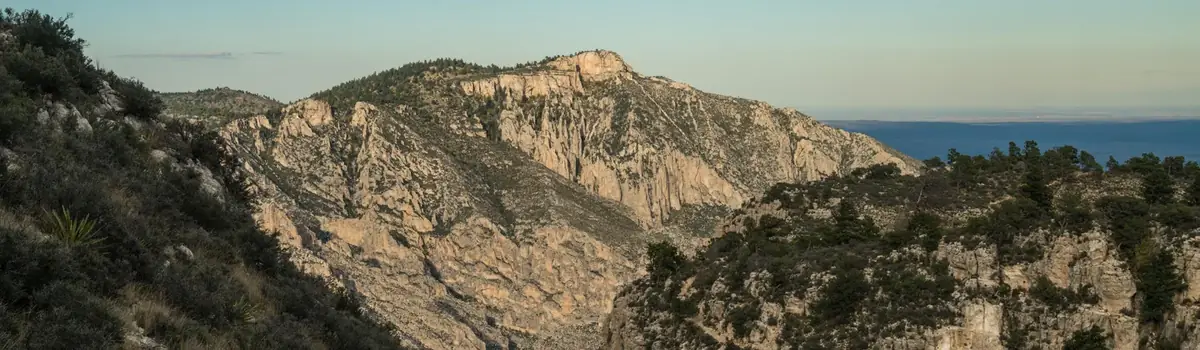
Come experience mountains and canyons, desert and dunes, night skies and spectacular vistas within a place unlike any other. Guadalupe Mountains National Park protects the world's most extensive Permian fossil reef, the four highest peaks in Texas, an environmentally diverse collection of flora and fauna, and the stories of lives shaped through conflict, cooperation and survival.
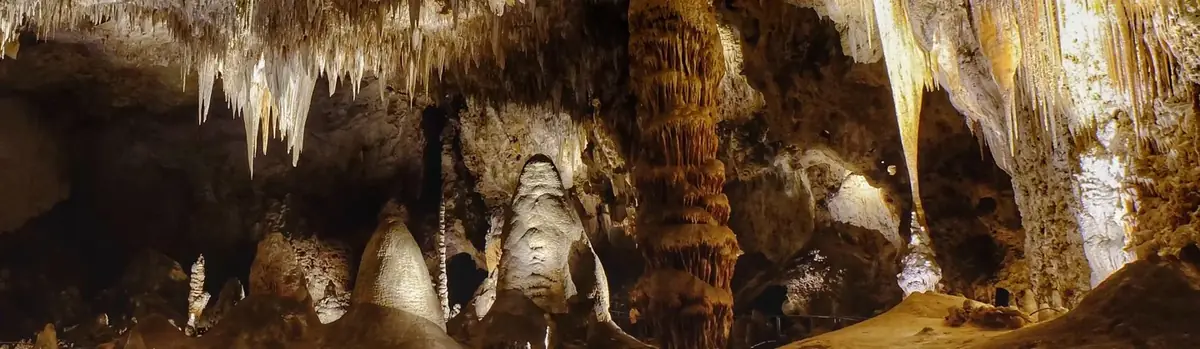
High ancient sea ledges, deep rocky canyons, flowering cactus, and desert wildlife—treasures above the ground in the Chihuahuan Desert. Hidden beneath the surface are more than 119 caves—formed when sulfuric acid dissolved limestone leaving behind caverns of all sizes.
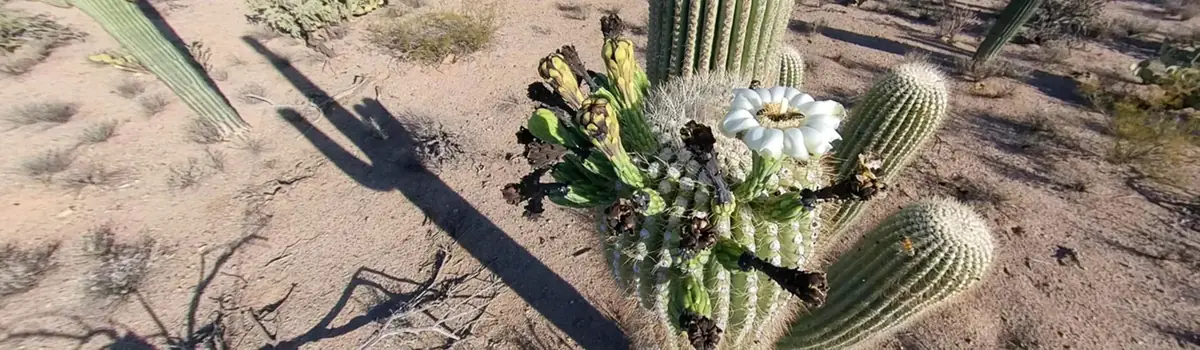
Tucson, Arizona is home to the nation's largest cacti. The giant saguaro is the universal symbol of the American west. These majestic plants, found only in a small portion of the United States, are protected by Saguaro National Park, to the east and west of the modern city of Tucson. Here you have a chance to see these enormous cacti, silhouetted by the beauty of a magnificent desert sunset.





 Mountains