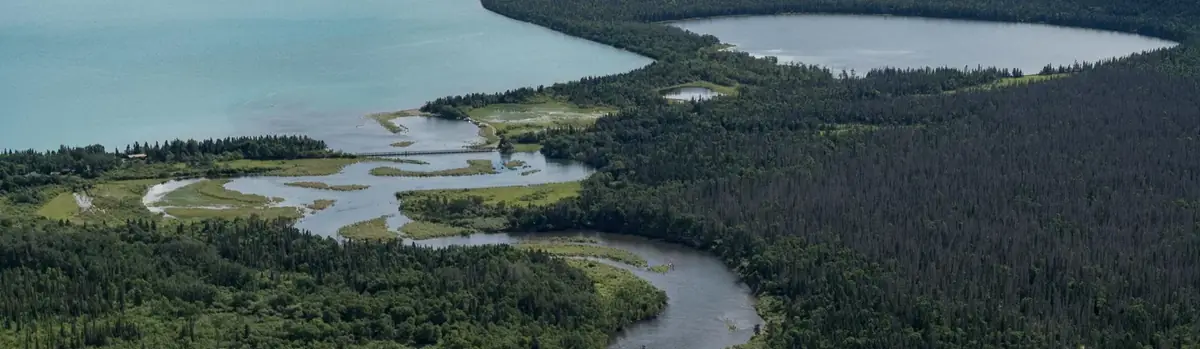
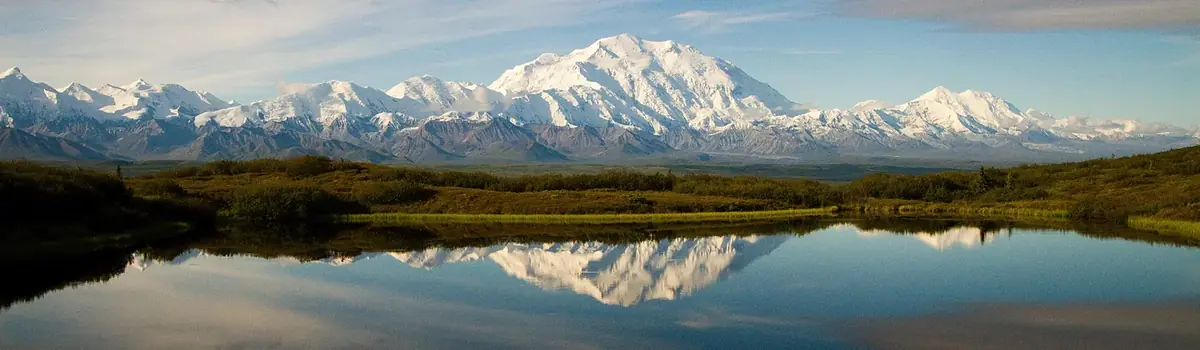
At the edge of the Kenai Peninsula lies a land where the ice age lingers. Nearly 40 glaciers flow from the Harding Icefield, Kenai Fjords' crowning feature. Wildlife thrives in icy waters and lush forests along the fjords once carved by the vast expanse of ice. Today, shrinking glaciers bear witness to the effects of our changing climate.
669.7Kacres of parkland
425.4Krecreation visits, 2025
Jun · Jul · Augnearby climate picks
Seasonal access & reservations
No reviewed guidance for this selection. Check the park's official planning pages; missing coverage does not establish access.
Selected guidance only; separate from climate comfort and current conditions.
Official conditions Loading saved check
Loading the latest saved conditions. You can also check the official report below.
Editorial recommendations, reviewed 2026-10-17. Full park days, excluding travel to and from the region. A first-visit outline for a general traveler; adapt to mobility, fitness, season, reservations, and current conditions. These are suggested days, not reserved activities or guaranteed routes.
Kenai Fjords National Park has Something for Everyone
What if I Need a Ride?
The Kenai Fjords National Park Visitor Center sits outside the park, nestled in the Seward Small Boat Harbor. The only road into Kenai Fjords National Park is 12 miles long, bringing you to the Exit Glacier frontcountry area. For those short on time, these locations offer a lower barrier of entry to the magic of Kenai Fjords
The Exit Glacier area is the only part of the park accessible by road. Witness up close how a glacier re-shapes a landscape.
Join a park ranger on a journey to deepen your connection to Kenai Fjords' beautiful, changing landscape.
Interested in becoming a Junior Ranger? Learn about activities for curious folks of all ages.
Get oriented and learn with us. Get your park stamp and shop at the Alaska Geographic bookstore.
Overflights provide dramatic views of the park's glaciers, fjords, and wildlife.
Local boat companies seek playful wildlife and calving glaciers along Kenai Fjords' rugged coastline.
Be prepared for a strenuous hike with unparalleled rewards.
By dipping your paddle into these waters, you're participating in the long history of human powered travel along the Kenai Peninsula coast.
Commercial visitor service providers can often help with trip planning, transportation, equipment, and guides.
What winter activities can you enjoy at Kenai Fjords?
What do I need to know to camp in Kenai Fjords? Use the tent-only campground at Exit Glacier or find your own in the backcountry.
Learn what to consider to stay safe in Kenai Fjords' backcountry.
Parties wishing to explore the icefield should be well versed in glacier travel and crevasse rescue techniques and experienced skiers
Learn how you can reserve a cabin at Kenai Fjords.
Plan to access the backcountry by water? Learn important information about safely camping along the Kenai Fjords coast.
Still Looking for More?
There are additional trail options within nearby public lands such as Chugach National Forest and Caines Head State Park. Many allow pets.
Doing a special event, commercial activities/guiding, or research in the park? Find how to get the permit you need.
What You Need to Know to Get to and Around Kenai Fjords National Park
Getting to Kenai Fjords
Kenai Fjords National Park is located just outside the town of Seward in south-central Alaska, 126 miles south of Anchorage. Even though the park is often inaccessible during the winter months, Seward is accessible year-round via the Seward Highway, a National Scenic Byway .
Follow the Seward Highway (AK-1) south from Anchorage. It will become AK-9 around mile 35 (87 miles from Anchorage) with AK-1 heading to Homer and Kenai. Continue on AK-9 to Seward.
Alaska's state-owned railroad connects Anchorage to Seward during the summer months (May - September). For more information, please visit the Alaska Railroad .
Air travel to Anchorage (ANC) is the easiest entry to Alaska. Then you'll want to use a car, bus, or train to reach Kenai Fjords. Charter flights may be available to Seward. Contact the Seward Chamber of Commerce for more information.
Other Transportation
In summer, many cruise ships begin or end their voyages in Seward. In addition, a variety of private bus and van services operate daily from Anchorage to Seward. Contact a travel agent or search the Internet for available bus companies or cruise lines operating to Seward.
Driving Directions
Kenai Fjords National Park Visitor Center
1212 4th Avenue, Seward, AK 99664 Once within the city limits of the town of Seward, turn left on S. Harbor Street (mile 1 of the Seward Highway - AK-9). Go one block, and turn right on Fourth Street. It will be the second building on the left. Google Map Coordinates: 60.1165108,-149.4405508
Exit Glacier Nature Center and trail head for the Harding Icefield Trail
Exit Glacier Campground
Kenai Fjords National Park Administrative Offices
Getting Around Kenai Fjords
Check out park maps to help orient yourself to the layout of Kenai Fjords.
Exit Glacier is the only area of the park accessible by car. If you are here without a car, shuttle and taxi services are available between Exit Glacier and Seward.
Boat tours provide day trips to view the fjords, tidewater glaciers, and marine wildlife. A variety of lengths and times are available to accommodate schedules. Many include Park Ranger interpretation.
Become more intimate with the park by exploring the fjords up close. Stay in a coastal public use cabin or camp on the beach . Kayaking allows a slower, more personal view of the area. Water taxis or air taxis can provide access to the further reaches of the park. Flightseeing can give an eagle's eye view of the fjords, glaciers, and Harding Icefield.
Bicycles can follow the trail which parallels the Seward Highway, and Herman Leirer Road to Exit Glacier. They are permitted on any part of the park road, but not on the trails.
Weather conditions make the park a little more difficult to access in the winter , but there are still great experiences to be had.
Travel throughout Alaska
Driving Conditions
Alaska 511: Alaska's Department of Transportation website will continuously update the driving conditions on the state's highways. The Seward Highway (AK-9) is the only road that provides access to Kenai Fjords National Park. For the current open/close status of Exit Glacier Road check Current Conditions & Alerts .
Finding Transportation: By Air, Land & Sea
Kenai Fjords can be a challenging place to visit. Air taxi services will drop you off and pick you up in the park.
Shuttle Bus & Taxi Service
Kenai Fjords National Park does not provide shuttles, but there are plenty of options from the town of Seward.
Find potential options for accessing Kenai Fjords' rugged coastline.
Current Conditions & Alerts
Alerts, closures and conditions including Exit Glacier Road status.
Operating Hours & Seasons
The park is open year round. The primary months to visit are June through August, with reduced services during the shoulder seasons.
Discover Kenai Fjords' three main areas: Exit Glacier, the coastal fjords, and the Harding Icefield
Here you can explore the trails with magnificent views or take your experience further with a ranger-led walk . It is a place where you can witness up close how glaciers re-shape a landscape and learn how plant life reclaims the barren rocky land exposed by a glacier's retreat.
The Exit Glacier area is the only part of the park accessible by road.
There is no cell phone service or public wifi within Kenai Fjords National Park including the Exit Glacier Area. Check the Current Conditions and Alerts page ahead of time to see if the road is open and you are prepared for current trail conditions. Due to wildlife and visitor safety concerns pets are not allowed on trails within Kenai Fjords National Park.
There is no cell phone service or public wifi within Kenai Fjords National Park including the Exit Glacier Area.
Check the Current Conditions and Alerts page ahead of time to see if the road is open and you are prepared for current trail conditions.
Due to wildlife and visitor safety concerns pets are not allowed on trails within Kenai Fjords National Park.
Exit Glacier Year-Round
While most visit in June, July and August, the Exit Glacier Area is open all year. However, in late-October to mid-May, the road to Exit Glacier is inaccessible to cars, usually due to snow. The road often remains closed through mid-May, so be sure to check current conditions if you are visiting during the off season (fall through spring).
Trail & Road Updates
Directions to Exit Glacier
Turn on to Herman Leirer Road, commonly called "Exit Glacier Road," at mile 3 of the Seward Highway (AK-9). Proceed 8.4 miles. The road will end at the parking lot for the nature center.
Note: There is limited parking at Exit Glacier, especially during the hours of 10:30 am - 3:30pm. Please consider the hours you come, carpooling, bicycling, or taking a shuttle or taxi, when you plan your trip.
Shuttle Bus/Taxi Service: For transportation between Seward and the Exit Glacier area.
Winter shuttle service: For transportation in the winter months.
Exit Glacier Trails
A network of short trails leads to different views of Exit Glacier, beginning at the Exit Glacier Nature Center and the parking lot. To hike all the trails, start by turning left at the nature center and following the accessible Glacier View Loop Trail through the cottonwood forest to the Glacier View , a panoramic vista of Exit Glacier spilling down from the Harding Icefield. This one-mile accessible trail loops back to the parking area, or you can turn left at the trail-side kiosk and continue .6 miles on to the Exit Glacier Overlook via the Glacier Overlook Trail .
The Glacier Overlook Trail is a well maintained trail which provides views of Exit Glacier. Follow this moderately strenuous trail to the Exit Glacier Overlook and view the glacier in its own glacially carved valley.
If you are looking for a longer day hike, don't miss the 8 mile round trip Harding Icefield Trail . Pets are not allowed on the trails at anytime.
Exit Glacier Nature Center
The nature center includes exhibits about the Exit Glacier area, an Alaska Geographic bookstore , and rangers to help answer questions about the area.
Operating hours of the nature center.
Learn a little more about the park by participating in a ranger-led program , which occur daily during the summer.
Flush toilets, near the nature center, are operable from Memorial Day through Labor Day. The rest of the year pit toilets are available.
During the summer, potable water is available at the restroom building, through both water-fountains and a water-bottle filling station. Reusable water bottles are available in the bookstore.
Picnic tables are located next to the parking lot. Bear-proof garbage and recycling bins are also available.
There is a 12-site, tent-only campground available about 1/4 of a mile before the nature center.
Leashed pets and bicycles are allowed on the road to Exit Glacier and in the parking lot. Bikes and pets are not allowed on the trails at anytime.
Enhance Your Exit Glacier Experience
Join a Ranger-led Program
Join a park ranger on a journey to deepen your connection to Kenai Fjords' beautiful, changing landscape.
Exit Glacier Campground
Exit Glacier has 12 first-come first-served tent sites in summer.
Learn about accessibility across various locations and mediums in your National Park depending on your needs.
Harding Icefield Trail
Learn how to prepare for a hike on the Harding Icefield Trail.
The well-being of pets and park wildlife is of the utmost importance to us. For the safety of all, pets are only allowed in select areas.
Joining a park ranger for an interpretive program is a great way to learn more about and deepen your connection with Kenai Fjords National Park. Programs are offered between Memorial Day weekend (the weekend before the last Monday of May) and Labor Day (first Monday in September), unless otherwise noted.
Guided walks at Exit Glacier are offered every day throughout the summer season.
Lasting about 1 hour, 30 minutes, the walk will follow the trail to the Glacier Overlook. The first part of the program will follow the trail to the Glacier View lookout, and is wheelchair accessible. For summer 2026, ranger-led walks are scheduled twice daily: May 23 - September 7, 2026 10:00 AM 2:00 PM
Please meet the ranger or park volunteer just outside the Exit Glacier Nature Center . No reservations are required.
Lasting about 20 minutes, the ranger will give an interactive presentation on a topic important to Kenai Fjords National Park. Join to learn and connect before your walk, or maybe just get out of the rain. For summer 2026, pavilion talks are scheduled once daily: June 6 - August 15, 2026 1:30 PM
Please meet the ranger or park volunteer at the Pavilion, which is about 40 yards from the Exit Glacier Nature Center . To reach the Pavilion, take the first left at the Exit Glacier trailhead along the Glacier View Loop. No reservations are required.
Explore and discover with a park ranger featuring our latest Junior Ranger Journal. Lasting about 1 hour and 30 minutes, the walk will make multiple activity stops along the lower trails of the Exit Glacier area. While the program is ideal for those with school-aged visitors, all ages are welcome! Kids must be accompanied by an adult. For summer 2026, Exit Glacier Junior Ranger Walks will occur: June 6 - August 15, 2026 Tuesdays, Thursdays, and Saturdays 11:00 AM
This guided walk along the Seward waterfront gives Junior Rangers an interactive look at the fjord ecosystem of Resurrection Bay, and the chance to earn their Junior Fjord Ranger Patch. Lasting about 1 hour and 30 minutes, the walk will follow the coastline near town, and depending on tides, the walk will take place on rocky beach with some uneven footing.
Best suited for ages 8-12, with one or more accompanying adults. However, any age can join! For summer 2026, Fjord Junior Ranger Walks will occur: June 7 - August 12, 2026 Wednesdays and Sundays 3:00 PM
Please meet the ranger at the Kenai Fjords Visitor Center in the Seward Small Boat Harbor. No reservations are required.
Interested in becoming a Junior Ranger? Learn about activities for curious folks of all ages.
Kenai Fjords has something for everyone. Take as much time as you have and experience your park.
Nature & Science, History & Culture, Glaciers & Wildlife. Learn all about what makes Kenai Fjords spectacular.
Interested in becoming a Junior Ranger? Would you like to learn more about the park for a school project? Are you just preparing for a visit? Get the information you need right here!
Become a Junior Ranger
Learn more about how to complete a Kenai Fjords' Junior Ranger Adventure Guide (ages 4-12) and Explorer Journal (ages 13+) whether at the park or at home!
Visiting Kenai Fjords
Exit Glacier Nature Center
Junior Glacier Ranger walks are available for visitors (recommended ages 5-12) in the summer. All participants will have the opportunity to earn a Junior Glacier Ranger patch. Check the visitor center for current dates and times.
Check out an Art for Parks or a Discovery backpack. Kids and their families can use it to explore their artistic or scientific side while visiting the park. Ask a ranger or volunteer about earning the Junior Glacier Ranger patch.
Kenai Fjords Visitor Center
Junior Fjord Ranger walks are available for visitors (recommended ages 8-12) in the summer. All participants will have the opportunity to earn a Junior Fjord Ranger patch. Check the visitor center for current dates and times.
Check out a Fjord backpack. Kids and their families can use it to explore their artistic or scientific side while visiting the park. Ask a ranger or volunteer about earning the Junior Fjord Ranger patch.
Learn from Home
Many people are looking for information about their national parks. The following documents have it all. Whether it's acreage, staffing, or budget, it's there!
Find the updated Park Fact Sheet on Kenai Fjords' management page - Need some facts or figures about the park? From the size of the Harding Icefield to annual visitation, this fact sheet is for you.
Student Report - Looking for a combination of images and information for that next school paper? This four-page document is for you!
Tales from the Tides (Alaska Science Stories for Kids)
The Kenai Fjords National Park Visitor Center is located in the small boat harbor of the town of Seward, Alaska, and is a great place to visit either before or after your boat tour of Kenai Fjords.
The Exit Glacier Nature Center is the trailhead for all that the Exit Glacier area has to offer, including the Harding Icefield Trail.
Both buildings include exhibits about the park, an Alaska Geographic bookstore , cancellation stamps for your National Parks Passport , and rangers to help answer questions about the area.
Hours & Seasons
Contact Information
What Can I Do There?
Join a park ranger on a journey to deepen your connection to Kenai Fjords' beautiful, changing landscape.
Interested in becoming a Junior Ranger? Learn about activities for curious folks of all ages.
Stamp your "Passport to Your National Parks" for Kenai Fjords National Park
Overflights also provide dramatic views of the park's glaciers, fjords, and wildlife. You may catch a glimpse of a mountain goat traversing a rocky ledge or peer down at a brown bear fishing in a salmon-choked stream. Flightseeing is one of the best ways to get a sense of the vastness of the Harding Icefield. Soaring over this expanse of ice broken only by isolated mountain peaks, or nunataks, is like traveling back, over 12,000 years ago, to the Pleistocene.
The Seward Chamber of Commerce may have more information or a list of operators that offer scenic overflights of the park, departing from Seward. Because they are not landing in the park, flightseeing tours are not required to have a Commercial Use Authorization (CUA). An authorized air taxi service can provide transportation services by picking up or dropping you off in the park.
Kenai Fjords has something for everyone. Take as much time as you have and experience your park.
Discover your park - whether along the coast, at Exit Glacier, or far across the Harding Icefield.
Camping, cabins and more. Find options for staying overnight inside and outside Kenai Fjords National Park.
Kenai Fjords can be a challenging place to visit, with much of it only accessible from the water. The waters around Kenai Fjords and Resurrection Bay provide a unique experience, whether seeing the awe-inspiring power of a tidewater glacier and the expanse of the Gulf of Alaska or spotting any of the numerous birds and marine mammals who call these food-rich waters their summer home. A boat tour can provide all of this and more from the safety and comfort of a motorized vessel.
Boat tours depart Seward's small boat harbor daily in the summer months. It's a good idea to make reservations in advance. Kenai Fjords National Park does not provide boat tours or use concessionares: several local companies provide a variety of tour options, schedules, and amenities. Full-day tours that venture out to the park's tidewater glaciers are available as well as half-day tours that stay in the more protected waters of Resurrection Bay while giving you a taste of the park's wildlife and scenery.
How Do I Book A Boat Tour?
Kenai Fjords National Park does not have any authorized concessioners or park rangers on boat tours, nor can it recommend specific companies. Therefore, it is recommended to find local companies for day cruises and boat charters into the waters surrounding the Kenai Fjords coast.
Tips for an Enjoyable Trip
Dress in warm layers that include a windproof and waterproof outer shell, a warm hat and gloves or mittens. The best place to enjoy views of wildlife and scenery is out on deck, but the winds can be surprisingly cold, even on sunny days. Consider taking a look at the weather forecast before you leave.
The Alaska sun can be intense. A broad-brimmed rain hat is also recommended, as well as sunglasses, sunscreen, a camera, and binoculars.
Many tour companies provide meals and/or snacks, but if they’re not included with your tour, be sure to bring some food.
If you are prone to seasickness, consider a shorter trip within the more protected waters of Resurrection Bay or taking medication. Your tour company may be able to provide some insight as well.
When taking medication, be sure to take it before your trip starts, if you wait til you feel sick, it is too late.
Find More to Explore
Kenai Fjords has something for everyone. Take as much time as you have and experience your park.
Discover your park - whether along the coast, at Exit Glacier, or far across the Harding Icefield.
Camping, cabins and more. Find options for staying overnight inside and outside Kenai Fjords National Park.
Check the latest trail report on the current conditions page . Note that in summer, snow cover and avalanche risk can still make parts of the trail difficult to access even into July . Consider your timing if your goal is to reach the end of the trail (3.9 miles from trail register). It is not recommended to hike into areas with potential avalanche risk unless you are trained and prepared for those conditions and hazards.
What You Need to Know
The trail is strenuous! Hikers gain approximately 1,000 feet of elevation with every mile. Allow at least 6-8 hours for the hike. Although the view from the top is well worth the effort, you need not hike all the way to the top to experience the wonders of this trail. Even a short hike up the trail affords impressive views of the valley floor and Exit Glacier's terminus.
Be prepared! Check on trail conditions before starting out - the upper portion of the trail is often covered with snow through early July and there may be avalanche danger. Be prepared for storms, high winds, intense sunlight, and sudden temperature changes. Bring warm clothes, rain gear, sturdy footwear, sunglasses, and sunscreen. Carry plenty of water (at least 2 liters per person), or bring along a filter - untreated water from streams along the trail may contain Giardia, a parasite that can cause severe abdominal distress.
Stay on the trail. Alpine vegetation is extremely fragile. Careless hikers who cut switchbacks, along with frequent summer rains, cause tremendous erosion. Volunteers help restore and maintain this trail every year. Please respect their hard work by sticking to the trail.
This is bear country ! The vegetation along the trail is dense and passes through thickets of salmonberries, a favorite food of black bears. Black bears are spotted almost everyday from the Harding Icefield Trail. Take precautions and be aware of your surroundings at all times. Make noise when you hike to avoid surprising a bear. Be especially on the lookout for mother bears with cubs. You may see the cubs first, possibly up a tree, but the mother will be close by. Never get between a mother bear and her cubs.
Pack it out. There are no garbage cans or toilet facilities along the trail. Pack out all litter. If you have to “go”, dig a small cat hole at least 100 feet from the trail or from any streams or water sources. Be sure to backfill your cat hole when you are done. Toilet paper should be packed out with other trash.
Planning to camp? Camping is permitted along the Harding Icefield Trail corridor, but you must set up camp at least 1/8 mile from the trail on bare rock or snow. Follow the principles of Leave No Trace – limit group size, find a camp spot that is out of sight from the trail, and avoid crushing fragile vegetation. Camping is not permitted in the shelter at the top of the Icefield trail – it is for emergency use only. No pets on trails. The well-being of your pets and park wildlife is of the utmost importance to us. Learn more about where pets are allowed in Kenai Fjords National Park.
Winter conditions on the Harding Icefield Trail
During the winter, the Harding Icefield Trail is covered in snow and is considered a “mountaineering route.” You can expect to find steep, snow-covered slopes, difficult route-finding, and avalanche hazards. Many of these challenges exist during the shoulder seasons (Oct, Nov, May, Jun) as well, when the trail will be covered in varying amounts of snow. When planning a trip in these conditions, we recommend that visitors have mountaineering skills, equipment, and experience to travel safely in this terrain. Necessary skills include route-finding, steep snow climbing and descending, self-arrest, and avalanche terrain recognition and rescue. Recommended equipment includes (but is not limited to) sturdy, warm, waterproof footwear, cold weather clothing including synthetic layers and waterproofing, communication devices (no cell service), trekking poles, ice axe, snowshoes or skis, avalanche transceiver, probe, and shovel.
During the winter, the Harding Icefield Trail is covered in snow and is considered a “mountaineering route.” You can expect to find steep, snow-covered slopes, difficult route-finding, and avalanche hazards. Many of these challenges exist during the shoulder seasons (Oct, Nov, May, Jun) as well, when the trail will be covered in varying amounts of snow.
When planning a trip in these conditions, we recommend that visitors have mountaineering skills, equipment, and experience to travel safely in this terrain.
Necessary skills include route-finding, steep snow climbing and descending, self-arrest, and avalanche terrain recognition and rescue. Recommended equipment includes (but is not limited to) sturdy, warm, waterproof footwear, cold weather clothing including synthetic layers and waterproofing, communication devices (no cell service), trekking poles, ice axe, snowshoes or skis, avalanche transceiver, probe, and shovel.
Alerts, closures and conditions including Exit Glacier Road status.
Be prepared for your overnight into the backcountry.
Kenai Fjords has something for everyone. Take as much time as you have and experience your park.
This film features master qayaq builder Joseph Tabios and his son, Kris Tabios, as they build a traditional Sugpiaq qayaq (kayak). The qayaq was one of the most essential methods used for travel and the survival of the Sugpiaq/Alutiiq people in the Chugach Region. This traditional qayaq was built in a partnership between Chugachmiut Heritage Preservation and Kenai Fjords National Park. It now proudly hangs in the Kenai Fjords National Park Visitor Center in Seward, Alaska.
The Beautiful Legacy of a Bountiful Coast
By dipping your paddle into these waters, you're participating in the long history of human powered travel along the Kenai Peninsula coast. You can experience the awe-inspiring power of a tidewater glacier, while dipping a hand into these frigid waters. And keep a sharp eye peeled for birds and marine mammals, part of an interconnected marine food web that has sustained people for generations. Paddling in Kenai Fjords can be a once in a lifetime experience, but it requires proper skills and preparation for a safe journey. Learn what you need to know to kayak at Kenai Fjords below.
For all their beauty, these waters are not for beginners. The fjords are exposed to the Gulf of Alaska, with only a few protected coves, leading to challenging landings and sea conditions. Fortunately, with a variety of afternoon trips in Resurrection Bay to longer day or multi-day trips in the park, there is something for everyone of any experience level. Fortunately, many guides in the community provide opportunities to explore this area by kayak. Check out our directory for guides with Commercial Use Authorizations for Kenai Fjords.
Essential Planning
Coastal Camping & Landing Beaches
Visit Bear Glacier Lagoon
Stay in a Public Use Cabin
Outfitters & Guides
Know Your Park Regulations
What You Need to Know to Kayak Kenai Fjords
Traveling with a guide is strongly recommended for inexperienced paddlers. The fjords are exposed to the Gulf of Alaska, with only a few protected coves. If you are not an experienced sea kayaker or looking for a guided trip, consider using one of many experienced guides when planning your kayak adventure in Kenai Fjords. Landings often involve surf, particularly when afternoon breezes kick up from the south. Wind and rainfall can be excessive, and summer storms often push an ocean swell of three feet or more into the fjords. Think safety, and be sure to consider potential risks as well as your own limits when planning a paddling trip in this area.
Seward is a great jumping off point to explore the park and surrounding areas. Visit the various Alaska State Parks recreation areas in Resurrection Bay , with a day or more, you can reach beautful sites like Caines Head , Thumb Cove , or many more. Paddling to the park directly from Seward is not recommended. There are long stretches of exposed coastline with no landing sites between Callisto Head and the Aialik Cape, and the waters around the Cape can be extremely treacherous. Most kayakers access the park by with a guide, water taxi, or charter boat from Seward and get dropped off in Aialik Bay, Northwestern Lagoon or Bear Glacier Lagoon. Another alternative is to fly in to the less-visited Nuka Bay area from Homer.
Be Aware of Abandoned Mines Hazard
Abandoned mines exist on remote coastal park lands. Explosives, mine openings, unsafe structures and toxic chemicals may be present. Visitors should use extreme caution and avoid abandoned mineral properties
Kenai Fjords has something for everyone. Take as much time as you have and experience your park.
Discover your park - whether along the coast, at Exit Glacier, or far across the Harding Icefield.
Camping, cabins and more. Find options for staying overnight inside and outside Kenai Fjords National Park.
Visiting Kenai Fjords, like most parts of Alaska, can challenge any traveler. We are remote, and much of the park is not easy to access. Commercial visitor service providers can often help with trip planning, transportation, equipment, and guides. As in all national parks, commercial service providers wishing to work in Kenai Fjords, must have a Commercial Use Authorization (CUA) from the National Park Service before any guided activity or business can occur. Among other things, a CUA guarantees that the operator carries basic minimum insurance for clients and adheres to park regulations designed to protect park resources and your continued enjoyment of them.
A variety of free ranger-led hikes and talks at Exit Glacier are available daily during the summer.
Outfitters and Guides Required to Have a Commercial Use Authorization (CUA)
Consult our CUA directory to find outfitters, guides and other private businesses with permission to guide a wide variety of experiences in the park, including:
mountaineering / glacier travel
photography trips
Find an authorized guide
Outfitters and Guides Not Required to Have a Commercial Use Authorization
With so many different ways to experience the park, some companies are not required to have a CUA because they technically operate outside of park boundaries. These include:
Tour boats in the fjords
Water taxi services that drop kayakers below the mean high tide line
Flightseeing companies that fly over the park but do not land in it
Shuttle or taxi service to Exit Glacier
Find More Options
A visit to Alaska can be a once in a lifetime trip, and there are more experiences that it is possible to list, which can be found in the area surrounding Kenai Fjords. The Seward Chamber of Commerce may be able to help with trip planning or ideas to help you have the most memorable visit possible.
Kenai Fjords has something for everyone. Take as much time as you have and experience your park.
Discover your park - whether along the coast, at Exit Glacier, or far across the Harding Icefield.
Camping, cabins and more. Find options for staying overnight inside and outside Kenai Fjords National Park.
The state and federal agencies that oversee the road to Exit Glacier close it to cars from around November to May each year - allowing for several winter recreation opportunities when conditions allow:
Cross-country skiing
Fat tire biking
Snowmobiling (when allowed)
Traveling beyond the first closed gate to the Exit Glacier Area is a further 7 miles (11.5 km), and an additional 1 mile to the Exit Glacier Overlook. If continuing to the Exit Glacier Area, it is important to be prepared for minimal daylight and winter weather conditions. The winter conditions can vary greatly from season to season, so be sure to check on current conditions before starting out:
Moose like trails and roads
Winter is one of the best times of year to spot moose at Exit Glacier. Enjoy viewing moose from a distance since they are likely to be stressed in this season of food scarcity.
Available Facilities at Exit Glacier
A warming hut with wood stove and benches is available for day use when visiting the Exit Glacier Area. Bringing your own firewood is recommended.
Pit toilets are available, located just off the parking area.
No potable water is available, so all drinking water should be brought in or properly treated before drinking.
Public Use Cabin
The Willow Public Use Cabin , in the Exit Glacier Area, can be rented by the night, providing visitors with a once-in-a-lifetime winter backcountry experience.
Snowmobile use is prohibited until the park superintendent has made a determination that there is adequate snow cover. Check the current conditions page to see if snowmobile access is open . Adequate snow cover is determined by evaluating the ability of the snow pack to support snowmobile use in a manner that does not damage resource values such as vegetation and soils. A combination of factors such as snow depth, snow structure, and the characteristics of the vegetation in the area are considered in this evaluation. The Harding Icefield has adequate snow cover year-round, but the rest of the park is generally open to snowmobile use from November through April.
The use of snowmobiles is prohibited within the Exit Glacier Developed Area, except on the road to Exit Glacier, in the parking areas, and on a designated route through the Exit Glacier Campground to Exit Creek, as shown on the Exit Glacier Developed Area Winter Map.
Be sure to read and understand the snowmobile regulations , as riders must follow all Alaska State Laws and NPS regulations that govern snowmobile use in the park. As always, be sure to be a safe rider, and follow these safety tips for all snowmobile users .
Technical ice climbing is permitted on the glacier’s terminus from November through March. The rest of the year, climbers must be at least ½ mile above the terminus. Ice climbing opportunities are very limited due to unstable ice conditions.
Booking a trip with an experienced mountaineering guide company is a great idea. It saves on the expense of costly mountaineering gear, and gives added security and safety to the trip.
Guided Excursions
Mountaineering / glacier travel
Snowmobile tours
Winter Boat Tours
Accessing the fjords and tidewater glaciers during the winter can be very challenging. Weather in the Gulf of Alaska during winter can be cold and unpredictable. In addtion, most commercial boat tours are only available from mid-March to late-September. You can get a list of tour boat opperators from the Seward Chamber of Commerce if you are interested in seeing who might be providing winter tours.
Safety Information
This is Alaska - remote, rugged, and unpredictable. Anything can happen from wildlife encounters to changing weather. Be prepared.
Current Conditions & Alerts
Find alerts, closures and conditions at Kenai Fjords. Road and snowmobile access status updated here.
Operating Hours & Seasons
The park is open year-round, with reduced services in shoulder seasons and winter.
What You Need to Know to Camp at Kenai Fjords National Park
Where can I camp?
Are there accessible campsites?
Do I need a permit or reservation to camp?
What about food storage?
Are campfires allowed in the park?
Yes campfires are allowed, but please use Leave No Trace principles to reduce campfire impacts . Only wood that is dead and down may be collected by hand for fuel. In the Exit Glacier area, fires are limited to the steel fire rings at the campground cooking shelter and the picnic area. In other areas, we strongly encourage the use of fire pans and/or the building of fires below the tide line on beaches. Any trash and burnt food must be removed from fire rings and packed out with other garbage. If you build a fire ring in the backcountry, dismantle it and scatter the rocks to leave a more pristine site for the next user.
Are there Recreational Vehicle (RV) campsites or overnight parking?
May I leave a cache of food, fuel, or other equipment?
Property may not be left unattended for longer than 30 days. It must be marked with the owners name and address, and cannot contain more than 10 gallons of fuel. Exceptions to this rule may be made by the Superintendent on a case by case basis through a Special Use Permit.
Exit Glacier has 12 first-come first-served tent sites in summer.
Be prepared for your overnight into the backcountry.
Plan to access the backcountry by water? Learn important information about safely camping along the Kenai Fjords coast.
Proper food storage is mandatory throughout Kenai Fjords National Park.
The well-being of pets and park wildlife is of the utmost importance to us. For the safety of all, pets are only allowed in select areas.
Find alerts, closures and safety updates
This is Alaska - remote, rugged, and unpredictable. Anything can happen from wildlife encounters to changing weather. Be prepared.
Abandoned mines exist on remote coastal park lands. Explosives, mine openings, unsafe structures and toxic chemicals may be present. Visitors should use extreme caution and avoid abandoned mineral properties
Coastal Camping & Landing Beaches
Kayak & Boat Safety
Bear Glacier Lagoon
Hiking & Camping in the Backcountry
Preparation Necessary
Backcountry Safety
Being prepared can make the difference between the adventure of a lifetime and a cold, wet, miserable experience you may not survive.
Have a Trip Plan
Always let a responsible person know where you are going and when you expect to return. Let them know how long overdue you can be before they should start to worry.
Prepare for the Unexpected
Ocean storms can sweep through the Kenai Fjords any time of year. Good rain gear and extra food supplies are a must since weather may delay a charter pick-up for days. A properly prepared party can usually wait out bad weather and thus may be a few days overdue with no cause for alarm. Travel with a marine radio to stay informed of upcoming conditions. Don’t make your schedule too tight; allow extra time for delays and always have a backup plan. Better to get home late than to risk paddling through potentially deadly seas. When in doubt, stay on the beach.
Avoid landing on beaches within two miles of a tidewater glacier. Sudden waves from calving ice can slam the shore with surprising power, sweeping away kayaks and gear stored well above the apparent high tide line.
When choosing a landing/camping site , use clues such as driftwood accumulation, beach steepness and cobble size to judge what the wave action is likely to be in storm conditions. Make sure you will be able to launch from the beach in the morning if the wind or weather changes overnight.
Find potential options for accessing Kenai Fjords' rugged coastline.
Kenai Fjords can be a challenging place to visit. Air taxi services will drop you off and pick you up in the park.
Commercial visitor service providers can often help with trip planning, transportation, equipment, and guides.
By dipping your paddle into these waters, you're participating in the long history of human powered travel along the Kenai Peninsula coast.
Kenai Fjords has something for everyone. Take as much time as you have and experience your park.
The Harding Icefield offers excellent mountaineering possibilities. Parties wishing to explore the icefield should be well versed in glacier travel and crevasse rescue techniques and should be experienced skiers. However, people can also travel on the icefield with snowshoes. Travelers should rope together whenever moving on the icefield as buried crevasses can be encountered anywhere.
April is generally the best time of year for crossing the icefield. The days are getting longer and warmer but there is still plenty of snow to ski and pull sleds on the approach and descent. The easiest access points are Exit Glacier on the east side and Tustemena or Chernof glaciers on the west.
The most popular routes are from Tustemena Glacier to Exit Glacier and from Chernof Glacier (via the Fox River on Kachemak Bay) to Exit Glacier. Exit Glacier is the ideal ‘exit’ since it is the one access point where you don’t have to rely on meeting a boat or a plane. There is no way to predict exactly how long a traverse will take, so it is easier to end the trip where you don’t have to have a pre-arranged pick up date/time.
Successful traverses have taken anywhere from six days to two weeks, but many parties have been turned back by the weather. Storms from the Gulf of Alaska can sweep in at any time of year, bringing winds in excess of 100 miles per hour. Anyone attempting to travel on or transverse the icefield must be prepared for the possibility of being pinned down by winds and whiteout for days at a time.
Carry a shovel and always build a snow wall around your camp – even if it looks like a beautiful evening. Storms can come up quickly and unexpectedly and high winds can tear up an unprotected tent.
Proper food storage is required throughout the park. Bear resistant food storage canisters are recommended for icefield crossings. You may encounter bears and other wildlife several miles from the icefield’s edge and there are no other viable food storage options.
Human Waste Disposal
Human waste should be disposed of in a deep crevasse or packed out.
Don't Forget These Essentials...
Stove and plenty of fuel (enough for cooking and melting snow for drinking water)
Extra stove and repair kit
Four season expedition quality tent
Foot care products (to combat blisters, etc.)
Climbing gear for glacial travel and crevasse rescue
Maps, Compass and GPS for navigation (especially in poor visibility)
Those lucky enough to have good weather can experience an awesome glimpse back into the ice age, when entire continents were dominated by glaciers. Isolated nunataks jut up from the vast white expanse like dark islands in a smooth sea, begging to be explored. The view from the summit of one of these jagged peaks is indescribably beautiful and eerie.
Excerpted and adapted from "The Complete Guide to Kenai Fjords" copyright Greatland Graphics
Learn how to safely access the Kenai Fjords backcountry.
Find current conditions, road status, alerts and safety updates.
This is Alaska - remote, rugged, and unpredictable. Anything can happen from wildlife encounters to changing weather. Be prepared.
Consider staying in one of the Kenai Fjords National Park's three public use cabins. You can experience the solitude and enjoyment of your park while still enjoying a roof over your head. Follow the links below to learn more and find how to make a reservation.
Two coastal public use cabins are available on the Kenai Fjords coast during the summer months.
The Willow public use cabin may be reserved during the winter months.
Throughout Kenai Fjords are many beautiful coves that are only accessible by kayak or water taxi . Due to glacial weathering, erosion, and rough seas, there are sharp cliffs and finding safe landing beaches can be challenging. We recommend carrying a chart and/or map of the area (some are available in park bookstores ). Consulting online satellite maps, such as Google Earth, before your trip, can also help provide a more current view of potential landings and beaches.
When choosing a landing or camping site, use clues such as driftwood accumulation, beach steepness and cobble size to judge what the wave action is likely to be in storm conditions. Look for vegetation clues that indicate levels of seawater intrusion (more or older vegetation equals less intrusion). Make sure you will be able to launch from the beach in the morning if the wind or weather changes overnight. Avoid landing on beaches within two miles of a tidewater glacier.
Camping in these remote backcountry areas of the park can be an amazing experience. It is up to all of us to help maintain these pristine areas for future visitors and the wildlife who live here. Please practice Leave No Trace principles during your time in the coastal backcountry and acquaint yourself with the regulations for our coastal areas, specifically regarding proper food storage and human waste disposal.
If you'd prefer a roof over your head, consider staying in one of the two reservable Public Use Cabins (PUC) in Aialik Bay. Aialik PUC is located in Abra Cove and has a view of Aialik Glacier. Holgate PUC is located in Holgate Arm with views of Holgate Glacier.
This is Bear Country
Remember, you are not the only visitor to these beaches. Bears are common in the coastal backcountry. For your safety and the bear's, it is important to follow proper food storage rules and be bear aware as you set up your campsite.
Be Aware of Abandoned Mines Hazard
Abandoned mines exist on remote coastal park lands. Explosives, mine openings, unsafe structures and toxic chemicals may be present. Visitors should use extreme caution and avoid abandoned mineral properties
Descriptions of the Camping & Landing Beaches
Below you can find an alphabetical listing of some of the camping and landing beaches in the park. Be sure to consult a map or chart to verify their locations. Each description contains information about food storage , landing, and potential closures. Some of these sites may be on private property owned by the Port Graham Village Corporation , in which case, a permit from the Corporation may be necessary.
Please note, for locations notated with an asterik (*), these are local names, and not recognized by the US Geological Survey's Board on Geographic Names .
Up-close and Personal with wildlife! Alaska SeaLife Center Located in downtown Seward and on the edge of Resurrection Bay, this is Alaska's only public aquarium and ocean wildlife rescue center.
Get Outside! Chugach National Forest America's most northerly national forest stretching across south-central Alaska, from Prince William Sound to the Kenai Peninsula.
Explore Resurrection Bay! Caines Head/Resurrection Bay State Parks Caines Head and 5 state marine parks scattered around Resurrection Bay are great for camping, cabins, kayaking, hiking, and more.
Camp, Fish, Hike, Canoe, and More... Kenai National Wildlife Refuge Nearly two million acres in size and the most visited refuge in Alaska, Kenai Refuge is characterized by its diverse habitats and wildlife.
Start Birding! Alaska Maritime National Wildlife Refuge The refuge's 3.4 million acres include many of the islands near the park, including the Chiswell and Pye Islands.
Learn More About Alaska! Alaska Public Lands Information Centers Locations in Anchorage, Fairbanks, Ketchikan, & Tok provide info, trip-planning, and resource education for Alaska's public lands.
Official NPS features and USGS park boundaries, imported 2026-10-17. An inventory snapshot, not live trail or parking availability.
Loading official park features…
TrailsPoints of interestParkingZoom with buttons or pinch. Toggle layers on the map.
Map coverage varies. Trail names may represent segments, connectors, or shared park units; mapped lines are not a hiking recommendation. Use official conditions and navigation resources before heading out.
Upper Loop Trail Inventory record · 2 source segments; not a route distance.
Gravel
Hiker/Pedestrian
NPS public GIS inventory, imported 2026-10-17. “Existing” is an inventory classification, not confirmation that a trail is open. Segment counts are not route distances. Parking records do not indicate space availability, fees, or accessibility certification. View government source ↗
Climate for Anchorage, 145 km from the park reference point. 1991–2020 normals. Source elevation: 31 m.
Daytime highNighttime lowOctober: 41° / 33°
Daytime high41°
Precipitation90 mm
Daylight9.6 hrs
Wind7.8 km/h
Mountain, rim, valley, and coastal conditions can differ sharply from the source town. Check park forecasts and current conditions before travel.
Monthly climate data 12 months · °F
Month
High
Low
Rain / snow water
Wet days
Daylight
21°
14°
50 mm
10.4
6.0 h
26°
18°
49 mm
9.6
8.5 h
32°
21°
38 mm
8.5
11.3 h
42°
30°
29 mm
7.3
14.3 h
51°
39°
31 mm
7.1
17.0 h
59°
49°
40 mm
9.0
18.8 h
62°
54°
73 mm
12.5
18.1 h
61°
53°
107 mm
14.8
15.5 h
54°
46°
117 mm
15.3
12.6 h
41°
33°
90 mm
13.2
9.6 h
29°
22°
66 mm
11.7
6.9 h
23°
16°
73 mm
12.8
5.2 h
RESEARCH WITH THE SOURCE IN VIEW
The practical field guide.
Official NPS excerpts imported 2026-10-17. Fees, permits, road access, and operations can change; use the source link to confirm the latest information.
What You Need to Know to Camp at Kenai Fjords National Park
Where can I camp?
Are there accessible campsites?
Do I need a permit or reservation to camp?
What about food storage?
Are campfires allowed in the park?
Yes campfires are allowed, but please use Leave No Trace principles to reduce campfire impacts . Only wood that is dead and down may be collected by hand for fuel. In the Exit Glacier area, fires are limited to the steel fire rings at the campground cooking shelter and the picnic area. In other areas, we strongly encourage the use of fire pans and/or the building of fires below the tide line on beaches. Any trash and burnt food must be removed from fire rings and packed out with other garbage. If you build a fire ring in the backcountry, dismantle it and scatter the rocks to leave a more pristine site for the next user.
Are there Recreational Vehicle (RV) campsites or overnight parking?
May I leave a cache of food, fuel, or other equipment?
Property may not be left unattended for longer than 30 days. It must be marked with the owners name and address, and cannot contain more than 10 gallons of fuel. Exceptions to this rule may be made by the Superintendent on a case by case basis through a Special Use Permit.
Exit Glacier has 12 first-come first-served tent sites in summer.
Be prepared for your overnight into the backcountry.
Plan to access the backcountry by water? Learn important information about safely camping along the Kenai Fjords coast.
Proper food storage is mandatory throughout Kenai Fjords National Park.
The well-being of pets and park wildlife is of the utmost importance to us. For the safety of all, pets are only allowed in select areas.
Find alerts, closures and safety updates
This is Alaska - remote, rugged, and unpredictable. Anything can happen from wildlife encounters to changing weather. Be prepared.
A one-mile wheelchair-accessible loop (partially paved, partially compressed gravel) leads to a panoramic view of Exit Glacier spilling down from the Harding Icefield. This loop can be traveled clockwise or counter-clockwise, with a slight descent of either paved or compressed gravel on the return. A limited number of wheelchairs are available for check out from the Exit Glacier Nature Center during open hours .
Please be aware that the level of snow may make the trail inaccessible as the park road to Exit Glacier opens, typically in the month of May.
Visitor Centers
The Kenai Fjords National Park Visitor Center in Seward, the Exit Glacier Nature Center , and their restroom facilities are wheelchair-accessible. Audio Description tours are available for the indoor and outdoor exhibits at the Visitor Center in Seward through the NPS App . If you do not have the app or compatible device, see the park ranger at the desk to check one out. The park theater in the Visitor Center in Seward requires a separate assisted listening device for Audio Description or Enhanced Audio. Please see the park ranger at the desk to check one out.
All tours on the waters around Kenai Fjords are operated by commercial tour boat operators , and not the National Park Service. Most tour boats are wheelchair-accessible, but not all, and exceptions are listed on the companies' websites. Any concerns should be mentioned at the time of the booking of the tour.
Public Use Cabins
Both of the coastal public use cabins ( Aialik and Holgate ) and the winter public use cabin ( Willow ) have wheelchair-accessible decks and doors. Assistance may be required to access the coastal cabins from the beach.
The Exit Glacier campground has two accessible sites available on a first-come, first-served basis. Paths to the two sites, vault toilets, and cooking area are crushed rock or asphalt.
Service Animals
Service animals are allowed in all facilities (including public-use cabins and campgrounds) and on trails unless an area has been closed by the superintendent to protect park resources. The 2010 revision to Title II of the Americans with Disabilities Act (ADA) defines a service animal "as a dog that has been individually trained to do work or perform tasks for the benefit of an individual with a disability, including a physical, sensory, psychiatric, intellectual, or other mental disability." Dogs which are not trained to perform tasks that mitigate the effects of a disability, including dogs that are used to purely provide comfort or emotional support (therapy animals) are considered pets.
The Exit Glacier area is the only part of the park accessible by road. Witness up close how a glacier re-shapes a landscape.
This is Alaska - remote, rugged, and unpredictable. Anything can happen from wildlife encounters to changing weather. Be prepared.
An entrance pass is not required to access Kenai Fjords National Park.
Other National Park Service sites may require an entrance pass or fee. Depending on your trip plans, an interagency pass may save you money.
2026 Free Entrance Days in the National Parks
Come experience the national parks! All National Park Service sites that charge an entrance fee will offer free admission to US citizens and residents (other fees, including timed entry or reservation fees, may apply). Mark your calendar for these entrance fee-free dates:
February 16 : Presidents Day (Washington's Birthday)
May 25 : Memorial Day
June 14: Flag Day/President Trump's birthday
July 3–5: Independence Day weekend
August 25: 110th Birthday of the National Park Service
September 17: Constitution Day
October 27 : Theodore Roosevelt's birthday
November 11: Veterans Day
No entrance fees are charged at Kenai Fjords National Park.
No camping fees are charged at Kenai Fjords National Park.
There is a 12-site, tent-only campground available at the Exit Glacier Area.
Public Use Cabins
Reservations are required for the park's Public Use Cabins .
Coastal Public Use Cabins (summer only): $75 per night
Willow Cabin at Exit Glacier (winter only): $50 per night
Permit, Commercial and Special Use Fees
Permits and fees may be required for special events, filming and photography, and commercial activities.
America the Beautiful: The National Parks and Federal Recreational Lands Pass Series
Kenai Fjords National Park does not sell or require any park passes . You can learn more about the passes for other locations from the National Park Service and other federal agencies on the main NPS page.
Special events, research, and commercial activities require specific permits
Find what you need to know to camp in Kenai Fjords National Park
Learn how to safely access the Kenai Fjords backcountry.
What You Need to Know to Get to and Around Kenai Fjords National Park
Getting to Kenai Fjords
Kenai Fjords National Park is located just outside the town of Seward in south-central Alaska, 126 miles south of Anchorage. Even though the park is often inaccessible during the winter months, Seward is accessible year-round via the Seward Highway, a National Scenic Byway .
Follow the Seward Highway (AK-1) south from Anchorage. It will become AK-9 around mile 35 (87 miles from Anchorage) with AK-1 heading to Homer and Kenai. Continue on AK-9 to Seward.
Alaska's state-owned railroad connects Anchorage to Seward during the summer months (May - September). For more information, please visit the Alaska Railroad .
Air travel to Anchorage (ANC) is the easiest entry to Alaska. Then you'll want to use a car, bus, or train to reach Kenai Fjords. Charter flights may be available to Seward. Contact the Seward Chamber of Commerce for more information.
Other Transportation
In summer, many cruise ships begin or end their voyages in Seward. In addition, a variety of private bus and van services operate daily from Anchorage to Seward. Contact a travel agent or search the Internet for available bus companies or cruise lines operating to Seward.
Driving Directions
Kenai Fjords National Park Visitor Center
1212 4th Avenue, Seward, AK 99664 Once within the city limits of the town of Seward, turn left on S. Harbor Street (mile 1 of the Seward Highway - AK-9). Go one block, and turn right on Fourth Street. It will be the second building on the left. Google Map Coordinates: 60.1165108,-149.4405508
Exit Glacier Nature Center and trail head for the Harding Icefield Trail
Exit Glacier Campground
Kenai Fjords National Park Administrative Offices
Getting Around Kenai Fjords
Check out park maps to help orient yourself to the layout of Kenai Fjords.
Exit Glacier is the only area of the park accessible by car. If you are here without a car, shuttle and taxi services are available between Exit Glacier and Seward.
Boat tours provide day trips to view the fjords, tidewater glaciers, and marine wildlife. A variety of lengths and times are available to accommodate schedules. Many include Park Ranger interpretation.
Become more intimate with the park by exploring the fjords up close. Stay in a coastal public use cabin or camp on the beach . Kayaking allows a slower, more personal view of the area. Water taxis or air taxis can provide access to the further reaches of the park. Flightseeing can give an eagle's eye view of the fjords, glaciers, and Harding Icefield.
Bicycles can follow the trail which parallels the Seward Highway, and Herman Leirer Road to Exit Glacier. They are permitted on any part of the park road, but not on the trails.
Weather conditions make the park a little more difficult to access in the winter , but there are still great experiences to be had.
Travel throughout Alaska
Driving Conditions
Alaska 511: Alaska's Department of Transportation website will continuously update the driving conditions on the state's highways. The Seward Highway (AK-9) is the only road that provides access to Kenai Fjords National Park. For the current open/close status of Exit Glacier Road check Current Conditions & Alerts .
Finding Transportation: By Air, Land & Sea
Kenai Fjords can be a challenging place to visit. Air taxi services will drop you off and pick you up in the park.
Shuttle Bus & Taxi Service
Kenai Fjords National Park does not provide shuttles, but there are plenty of options from the town of Seward.
Find potential options for accessing Kenai Fjords' rugged coastline.
Current Conditions & Alerts
Alerts, closures and conditions including Exit Glacier Road status.
Operating Hours & Seasons
The park is open year round. The primary months to visit are June through August, with reduced services during the shoulder seasons.
Discover Kenai Fjords' three main areas: Exit Glacier, the coastal fjords, and the Harding Icefield
While cell phone coverage is very spotty in the park, there may be some areas where cell coverage may still exist. Dispatchers from the Seward area may be able to assist you. Within the Exit Glacier Area , emergencies should be reported to rangers on patrol, or to staff at the Exit Glacier Nature Center. On the Kenai Fjords coast, a marine VHF radio (channel 16) or satellite phone may be the best way to contact the park or Coast Guard.
While cell phone coverage is very spotty in the park, there may be some areas where cell coverage may still exist. Dispatchers from the Seward area may be able to assist you.
Within the Exit Glacier Area , emergencies should be reported to rangers on patrol, or to staff at the Exit Glacier Nature Center.
On the Kenai Fjords coast, a marine VHF radio (channel 16) or satellite phone may be the best way to contact the park or Coast Guard.
Welcome to Alaska - Remote, Rugged, and Unpredictable
Anything can happen, including bear encounters, falling ice, radical shifts in the weather, earthquakes, or avalanches. Preparation can make the difference between the adventure of a lifetime and tragedy. Your national parks can be great places to challenge yourself physically and mentally. Yet, it is important to know your limits and remember you are responsible for your own safety.
Whether you're headed out on a day hike, backcountry trip, or even just a scenic drive, it's always a good idea to have emergency supplies with you including extra food and water, warm layers, a first aid kit, and at least one type of communication device. Let someone know your plans and who to contact if you don't check in. Even experienced wilderness travelers can have an accident that results in an injury or even death. Accidents are possible anywhere, as many variables are out of our control - so the information below is important to all visitors. Depending on your trip type, you may also want to read more specific safety information from this page to prepare for your trip:
Make sure you are properly prepared
Be Aware of Abandoned Mines Hazard
Abandoned mines exist on remote coastal park lands. Explosives, mine openings, unsafe structures and toxic chemicals may be present. Visitors should use extreme caution and avoid abandoned mineral properties
Help keep Kenai Fjords' animals wild by learning what to do when encountering wildlife.
With all paddling in the park, we recommend knowing your experience level and proper planning for a safe trip.
Sudden weather changes, equipment breakdowns, or encounters with wildlife can turn a short ride into a long day.
Find current conditions, road status, alerts and safety updates.
Are you ready to visit a coastal rainforest? The weather at Kenai Fjords is difficult to predict and can change rapidly.
Kenai Fjords' rainy, cold, and windy weather make hypothermia one of the greatest potential dangers to park visitors.
The only maintained trails in Kenai Fjords National Park are the connected Exit Glacier Trails and Harding Icefield Trail. The trailhead for both starts just beyond the parking lot at the end of Exit Glacier Road .
There is no cell phone service or public wifi within Kenai Fjords National Park including the Exit Glacier Area. Check the Current Conditions and Alerts page ahead of time to see if the road is open and you are prepared for current trail conditions. Due to wildlife and visitor safety concerns pets are not allowed on trails within Kenai Fjords National Park.
There is no cell phone service or public wifi within Kenai Fjords National Park including the Exit Glacier Area.
Check the Current Conditions and Alerts page ahead of time to see if the road is open and you are prepared for current trail conditions.
Due to wildlife and visitor safety concerns pets are not allowed on trails within Kenai Fjords National Park.
Explore the network of trails that wind through the valley carved by Exit Glacier.
Be prepared for a strenuous hike with unparalleled rewards.
Being prepared can make the difference between the adventure of a lifetime and a cold, wet, miserable experience you may not survive.
There are additional trail options within nearby public lands such as Chugach National Forest and Caines Head State Park. Many allow pets.
Learn about accessibility across various locations and mediums in your National Park depending on your needs.
Make sure you know the trail conditions before you set out.
Help keep Kenai Fjords' animals wild by learning what to do when encountering wildlife.
The park map included in the brochure is available for download For visitors looking for their own paper copy, the park's official brochure (unigrid) is available at park visitor centers when open to the public, or by contacting us .
Maps for Navigation or Backpacking
The maps on this website are for trip planning purposes only. They should not be used for navigation or backpacking. Use a navigational chart and tide tables for navigation on the water. Topographic maps of the park, such as the National Geographic Trails Illustrated map (available in park bookstores ) provide a broad view of the park.
Check out more detailed directions and learn about getting around the park.
Exit Glacier Area
The Exit Glacier area is the only part of the park accessible by road during the summer, located about 12 miles from the Seward small boat harbor. Parking is available for automobiles and RVs, though it can be limited during midday. Shuttle and taxi service is also available. This map gives an overview of the area trails and amenities which can be found here:
Camping in the coastal fjords can be challenging. The fjords can be a harsh environment with only a few protected coves. These coves can provide an accessible area for landing or camping and are only accessible by boat, kayak , or water taxi . Using a navigational chart and tide tables is vital for navigation, trip planning and safety . L earn about Camping & Landing Beaches , detailed information about many locations, food storage lockers , and more.
National Parks of Alaska National Parks cover approximately 54 million acres of land in Alaska (over 60% of all land managed by the National Park Service). Find out more about the state's 23 national park units, 4 public lands information centers, and 2 Science and Learning Centers by visiting the Alaska Regional Office .
The well-being of your pets and park wildlife is of the utmost importance to us. For the safety of all, pets are allowed in only a few select areas, and may not be left unattended. Your pet must be leashed or physically restrained at all times. Please clean up after your pet and dispose of waste properly.
Pets are allowed:
on the road to Exit Glacier (the Herman Leirer Road).
in the parking lot of the Exit Glacier Nature Center.
Pets are NOT allowed:
on trails, such as the trails of the Exit Glacier area or the Harding Icefield Trail .
in the park campground or public-use cabins .
in the coastal backcountry . Pets are not allowed along the coast in an area extending from the mean high tide line to 1/4 mile inland from 5/30 - 11/1.
Pets are not allowed along the coast in an area extending from the mean high tide line to 1/4 mile inland from 5/30 - 11/1.
in any park building.
Service Animals
Service animals are allowed in all facilities (including public-use cabins and campgrounds) and on trails unless an area has been closed by the superintendent to protect park resources.
The 2010 revision to Title II of the Americans with Disabilities Act (ADA) defines a service animal "as a dog that has been individually trained to do work or perform tasks for the benefit of an individual with a disability, including a physical, sensory, psychiatric, intellectual, or other mental disability." Dogs which are not trained to perform tasks that mitigate the effects of a disability, including dogs that are used to purely provide comfort or emotional support (therapy animals) are considered pets.
Dog Mushing / Skijoring
Learn about accessibility considerations at Kenai Fjords.
Help keep Kenai Fjords' animals wild by learning what to do when encountering wildlife.
There are a variety of rules and regulations that help us protect park resources and provide visitors with a safe and enjoyable experience.
The weather at Kenai Fjords is difficult to predict and can change rapidly. The area generally enjoys a relatively temperate maritime climate, primarily due to the influence of the Japanese current that flows through the Gulf of Alaska. Summer daytime temperatures range from the mid 40s to the low 70s (Fahrenheit). Overcast and cool rainy days are frequent. It is not unusual to get several long periods of continuous rain in the summer months, but we do have some glorious sunny days as well. Snow often remains in the higher elevations through June or July. Winter temperatures can range from the low 30s to -20. The Exit Glacier area averages close to 200 inches of snowfall annually, but conditions vary greatly. Storms dumping several feet of snow are common, as are rainy mid-winter days with temperatures hovering in the mid-upper 30s.
Since this is a temperate rainforest, it's a good idea to be prepared for cool, rainy weather - but don't forget your sunglasses and sunscreen either. The sunlight reflected off of the water or ice can be very intense. It's best to dress in layers and always carry raingear - no matter how nice the weather looks when you're starting out.
As your visit gets closer, check out the various forecasts for the area.
Current and 10-day Forecast for the Seward, Alaska area.
A marine forecast is best to see wind, wave, and weather conditions for the coastal areas that are visited by most commercial boat tours . " Cape Cleare to Gore Point " covers the open Gulf of Alaska, which is crossed on most Park tours, Glacier Tours, or to reach Aialik Bay. " Resurrection Bay " is the area visited by Bay tours or Wildlife tours.
" Cape Cleare to Gore Point " covers the open Gulf of Alaska, which is crossed on most Park tours, Glacier Tours, or to reach Aialik Bay.
" Resurrection Bay " is the area visited by Bay tours or Wildlife tours.
Kenai Fjords National Park is actively involved in the research and monitoring of the climate . This includes weather stations positioned throughout the park where current (and historical) temperature and precipitation amounts can be tracked.
Find current conditions, closures, alerts and safety updates.
Learn what to consider to stay safe in Kenai Fjords' backcountry.
Learn how to prepare for a hike on the Harding Icefield Trail
Here you can explore the trails with magnificent views or take your experience further with a ranger-led walk . It is a place where you can witness up close how glaciers re-shape a landscape and learn how plant life reclaims the barren rocky land exposed by a glacier's retreat.
The Exit Glacier area is the only part of the park accessible by road.
There is no cell phone service or public wifi within Kenai Fjords National Park including the Exit Glacier Area. Check the Current Conditions and Alerts page ahead of time to see if the road is open and you are prepared for current trail conditions. Due to wildlife and visitor safety concerns pets are not allowed on trails within Kenai Fjords National Park.
There is no cell phone service or public wifi within Kenai Fjords National Park including the Exit Glacier Area.
Check the Current Conditions and Alerts page ahead of time to see if the road is open and you are prepared for current trail conditions.
Due to wildlife and visitor safety concerns pets are not allowed on trails within Kenai Fjords National Park.
Exit Glacier Year-Round
While most visit in June, July and August, the Exit Glacier Area is open all year. However, in late-October to mid-May, the road to Exit Glacier is inaccessible to cars, usually due to snow. The road often remains closed through mid-May, so be sure to check current conditions if you are visiting during the off season (fall through spring).
Trail & Road Updates
Directions to Exit Glacier
Turn on to Herman Leirer Road, commonly called "Exit Glacier Road," at mile 3 of the Seward Highway (AK-9). Proceed 8.4 miles. The road will end at the parking lot for the nature center.
Note: There is limited parking at Exit Glacier, especially during the hours of 10:30 am - 3:30pm. Please consider the hours you come, carpooling, bicycling, or taking a shuttle or taxi, when you plan your trip.
Shuttle Bus/Taxi Service: For transportation between Seward and the Exit Glacier area.
Winter shuttle service: For transportation in the winter months.
Exit Glacier Trails
A network of short trails leads to different views of Exit Glacier, beginning at the Exit Glacier Nature Center and the parking lot. To hike all the trails, start by turning left at the nature center and following the accessible Glacier View Loop Trail through the cottonwood forest to the Glacier View , a panoramic vista of Exit Glacier spilling down from the Harding Icefield. This one-mile accessible trail loops back to the parking area, or you can turn left at the trail-side kiosk and continue .6 miles on to the Exit Glacier Overlook via the Glacier Overlook Trail .
The Glacier Overlook Trail is a well maintained trail which provides views of Exit Glacier. Follow this moderately strenuous trail to the Exit Glacier Overlook and view the glacier in its own glacially carved valley.
If you are looking for a longer day hike, don't miss the 8 mile round trip Harding Icefield Trail . Pets are not allowed on the trails at anytime.
Exit Glacier Nature Center
The nature center includes exhibits about the Exit Glacier area, an Alaska Geographic bookstore , and rangers to help answer questions about the area.
Operating hours of the nature center.
Learn a little more about the park by participating in a ranger-led program , which occur daily during the summer.
Flush toilets, near the nature center, are operable from Memorial Day through Labor Day. The rest of the year pit toilets are available.
During the summer, potable water is available at the restroom building, through both water-fountains and a water-bottle filling station. Reusable water bottles are available in the bookstore.
Picnic tables are located next to the parking lot. Bear-proof garbage and recycling bins are also available.
There is a 12-site, tent-only campground available about 1/4 of a mile before the nature center.
Leashed pets and bicycles are allowed on the road to Exit Glacier and in the parking lot. Bikes and pets are not allowed on the trails at anytime.
Enhance Your Exit Glacier Experience
Join a Ranger-led Program
Join a park ranger on a journey to deepen your connection to Kenai Fjords' beautiful, changing landscape.
Exit Glacier Campground
Exit Glacier has 12 first-come first-served tent sites in summer.
Learn about accessibility across various locations and mediums in your National Park depending on your needs.
Harding Icefield Trail
Learn how to prepare for a hike on the Harding Icefield Trail.
The well-being of pets and park wildlife is of the utmost importance to us. For the safety of all, pets are only allowed in select areas.
Check the latest trail report on the current conditions page . Note that in summer, snow cover and avalanche risk can still make parts of the trail difficult to access even into July . Consider your timing if your goal is to reach the end of the trail (3.9 miles from trail register). It is not recommended to hike into areas with potential avalanche risk unless you are trained and prepared for those conditions and hazards.
What You Need to Know
The trail is strenuous! Hikers gain approximately 1,000 feet of elevation with every mile. Allow at least 6-8 hours for the hike. Although the view from the top is well worth the effort, you need not hike all the way to the top to experience the wonders of this trail. Even a short hike up the trail affords impressive views of the valley floor and Exit Glacier's terminus.
Be prepared! Check on trail conditions before starting out - the upper portion of the trail is often covered with snow through early July and there may be avalanche danger. Be prepared for storms, high winds, intense sunlight, and sudden temperature changes. Bring warm clothes, rain gear, sturdy footwear, sunglasses, and sunscreen. Carry plenty of water (at least 2 liters per person), or bring along a filter - untreated water from streams along the trail may contain Giardia, a parasite that can cause severe abdominal distress.
Stay on the trail. Alpine vegetation is extremely fragile. Careless hikers who cut switchbacks, along with frequent summer rains, cause tremendous erosion. Volunteers help restore and maintain this trail every year. Please respect their hard work by sticking to the trail.
This is bear country ! The vegetation along the trail is dense and passes through thickets of salmonberries, a favorite food of black bears. Black bears are spotted almost everyday from the Harding Icefield Trail. Take precautions and be aware of your surroundings at all times. Make noise when you hike to avoid surprising a bear. Be especially on the lookout for mother bears with cubs. You may see the cubs first, possibly up a tree, but the mother will be close by. Never get between a mother bear and her cubs.
Pack it out. There are no garbage cans or toilet facilities along the trail. Pack out all litter. If you have to “go”, dig a small cat hole at least 100 feet from the trail or from any streams or water sources. Be sure to backfill your cat hole when you are done. Toilet paper should be packed out with other trash.
Planning to camp? Camping is permitted along the Harding Icefield Trail corridor, but you must set up camp at least 1/8 mile from the trail on bare rock or snow. Follow the principles of Leave No Trace – limit group size, find a camp spot that is out of sight from the trail, and avoid crushing fragile vegetation. Camping is not permitted in the shelter at the top of the Icefield trail – it is for emergency use only. No pets on trails. The well-being of your pets and park wildlife is of the utmost importance to us. Learn more about where pets are allowed in Kenai Fjords National Park.
Winter conditions on the Harding Icefield Trail
During the winter, the Harding Icefield Trail is covered in snow and is considered a “mountaineering route.” You can expect to find steep, snow-covered slopes, difficult route-finding, and avalanche hazards. Many of these challenges exist during the shoulder seasons (Oct, Nov, May, Jun) as well, when the trail will be covered in varying amounts of snow. When planning a trip in these conditions, we recommend that visitors have mountaineering skills, equipment, and experience to travel safely in this terrain. Necessary skills include route-finding, steep snow climbing and descending, self-arrest, and avalanche terrain recognition and rescue. Recommended equipment includes (but is not limited to) sturdy, warm, waterproof footwear, cold weather clothing including synthetic layers and waterproofing, communication devices (no cell service), trekking poles, ice axe, snowshoes or skis, avalanche transceiver, probe, and shovel.
During the winter, the Harding Icefield Trail is covered in snow and is considered a “mountaineering route.” You can expect to find steep, snow-covered slopes, difficult route-finding, and avalanche hazards. Many of these challenges exist during the shoulder seasons (Oct, Nov, May, Jun) as well, when the trail will be covered in varying amounts of snow.
When planning a trip in these conditions, we recommend that visitors have mountaineering skills, equipment, and experience to travel safely in this terrain.
Necessary skills include route-finding, steep snow climbing and descending, self-arrest, and avalanche terrain recognition and rescue. Recommended equipment includes (but is not limited to) sturdy, warm, waterproof footwear, cold weather clothing including synthetic layers and waterproofing, communication devices (no cell service), trekking poles, ice axe, snowshoes or skis, avalanche transceiver, probe, and shovel.
Alerts, closures and conditions including Exit Glacier Road status.
Be prepared for your overnight into the backcountry.
Kenai Fjords has something for everyone. Take as much time as you have and experience your park.
Abandoned mines exist on remote coastal park lands. Explosives, mine openings, unsafe structures and toxic chemicals may be present. Visitors should use extreme caution and avoid abandoned mineral properties
Coastal Camping & Landing Beaches
Kayak & Boat Safety
Bear Glacier Lagoon
Hiking & Camping in the Backcountry
Preparation Necessary
Backcountry Safety
Being prepared can make the difference between the adventure of a lifetime and a cold, wet, miserable experience you may not survive.
Have a Trip Plan
Always let a responsible person know where you are going and when you expect to return. Let them know how long overdue you can be before they should start to worry.
Prepare for the Unexpected
Ocean storms can sweep through the Kenai Fjords any time of year. Good rain gear and extra food supplies are a must since weather may delay a charter pick-up for days. A properly prepared party can usually wait out bad weather and thus may be a few days overdue with no cause for alarm. Travel with a marine radio to stay informed of upcoming conditions. Don’t make your schedule too tight; allow extra time for delays and always have a backup plan. Better to get home late than to risk paddling through potentially deadly seas. When in doubt, stay on the beach.
Avoid landing on beaches within two miles of a tidewater glacier. Sudden waves from calving ice can slam the shore with surprising power, sweeping away kayaks and gear stored well above the apparent high tide line.
When choosing a landing/camping site , use clues such as driftwood accumulation, beach steepness and cobble size to judge what the wave action is likely to be in storm conditions. Make sure you will be able to launch from the beach in the morning if the wind or weather changes overnight.
Find potential options for accessing Kenai Fjords' rugged coastline.
Kenai Fjords can be a challenging place to visit. Air taxi services will drop you off and pick you up in the park.
Commercial visitor service providers can often help with trip planning, transportation, equipment, and guides.
By dipping your paddle into these waters, you're participating in the long history of human powered travel along the Kenai Peninsula coast.
Kenai Fjords has something for everyone. Take as much time as you have and experience your park.
Up-close and Personal with wildlife! Alaska SeaLife Center Located in downtown Seward and on the edge of Resurrection Bay, this is Alaska's only public aquarium and ocean wildlife rescue center.
Get Outside! Chugach National Forest America's most northerly national forest stretching across south-central Alaska, from Prince William Sound to the Kenai Peninsula.
Explore Resurrection Bay! Caines Head/Resurrection Bay State Parks Caines Head and 5 state marine parks scattered around Resurrection Bay are great for camping, cabins, kayaking, hiking, and more.
Camp, Fish, Hike, Canoe, and More... Kenai National Wildlife Refuge Nearly two million acres in size and the most visited refuge in Alaska, Kenai Refuge is characterized by its diverse habitats and wildlife.
Start Birding! Alaska Maritime National Wildlife Refuge The refuge's 3.4 million acres include many of the islands near the park, including the Chiswell and Pye Islands.
Learn More About Alaska! Alaska Public Lands Information Centers Locations in Anchorage, Fairbanks, Ketchikan, & Tok provide info, trip-planning, and resource education for Alaska's public lands.
Kenai Fjords National Park has one frontcountry 12-site, walk-in, tent-only campground at Exit Glacier . Sites are available on a first-come, first-served basis. There are no reservations or camping fees. There is a fourteen-day stay limit. Campers must be in a designated site and are limited to a maximum of two tents and/or eight people per site. The campground frequently fills by early evening in July and August. Two of the campsites, #1 & #12, are accessible sites. Paths to the two sites, vault toilets, and cooking area are crushed rock or asphalt. All sites are accessed by short trail from a campground parking area. You may not sleep in a RV, camper or other vehicle in the campground parking area and overnight parking is not permitted in any other part of the Exit Glacier area. A central food storage, cooking and dining shelter is provided. Cooking and/or storing food in campsites is prohibited. There is a pump for drinking water and pit toilets are available. Pets are not permitted in campsites. There are no Recreational Vehicle (RV) campsites within Kenai Fjords National Park. Overnight stay is not permitted in the Exit Glacier parking lot. Tent and RV camping is also available in nearby Chugach National Forest and through the Seward Parks and Recreation Department . Look to the Seward Chamber of Commerce for information on private tent and RV campgrounds in the area.
Throughout Kenai Fjords are many beautiful coves that are only accessible by kayak or water taxi . Due to glacial weathering, erosion, and rough seas, there are sharp cliffs and finding safe landing beaches can be challenging. We recommend carrying a chart and/or map of the area (some are available in park bookstores ). Consulting online satellite maps, such as Google Earth, before your trip, can also help provide a more current view of potential landings and beaches.
When choosing a landing or camping site, use clues such as driftwood accumulation, beach steepness and cobble size to judge what the wave action is likely to be in storm conditions. Look for vegetation clues that indicate levels of seawater intrusion (more or older vegetation equals less intrusion). Make sure you will be able to launch from the beach in the morning if the wind or weather changes overnight. Avoid landing on beaches within two miles of a tidewater glacier.
Camping in these remote backcountry areas of the park can be an amazing experience. It is up to all of us to help maintain these pristine areas for future visitors and the wildlife who live here. Please practice Leave No Trace principles during your time in the coastal backcountry and acquaint yourself with the regulations for our coastal areas, specifically regarding proper food storage and human waste disposal.
If you'd prefer a roof over your head, consider staying in one of the two reservable Public Use Cabins (PUC) in Aialik Bay. Aialik PUC is located in Abra Cove and has a view of Aialik Glacier. Holgate PUC is located in Holgate Arm with views of Holgate Glacier.
This is Bear Country
Remember, you are not the only visitor to these beaches. Bears are common in the coastal backcountry. For your safety and the bear's, it is important to follow proper food storage rules and be bear aware as you set up your campsite.
Be Aware of Abandoned Mines Hazard
Abandoned mines exist on remote coastal park lands. Explosives, mine openings, unsafe structures and toxic chemicals may be present. Visitors should use extreme caution and avoid abandoned mineral properties
Descriptions of the Camping & Landing Beaches
Below you can find an alphabetical listing of some of the camping and landing beaches in the park. Be sure to consult a map or chart to verify their locations. Each description contains information about food storage , landing, and potential closures. Some of these sites may be on private property owned by the Port Graham Village Corporation , in which case, a permit from the Corporation may be necessary.
Please note, for locations notated with an asterik (*), these are local names, and not recognized by the US Geological Survey's Board on Geographic Names .
Abra Cove with Aialik Public Use Cabin
Coleman Bay Area
Holgate Arm with Holgate Public Use Cabin
Northeastern Glacier Beach*
Northwestern Glacier
Northwestern Lagoon
Pedersen Lagoon*
Redstone Glacier Beach*
Southwestern Glacier*
Sunlight Glacier Beach*
Tooth Cove Area
Adventures in Kayaking
A FEW REASONS TO GO
A closer look.
42 official park photos
Rapidly receding glaciers reveal dramatic fjordsNPS Photo, S. Rainone Images link to the original government source.Views from the Harding Icefield Trail offer a window to past ice ages.NPS Photo Orcas make their way along the Kenai Fjords coast in summer.NPS Photo Learn from Exit Glacier's retreat with a park rangerNPS Photo Participate in the long history of human powered travel along the Kenai Peninsula coast.NPS Photo All trails start from the same trailhead at Exit Glacier, including the accessible Glacier View loopNPS Photo Humpback whales cooperatively bubble net feed on the bounty of the fjords in summer.NPS Photo Keep an eye up high for mountain goats making their home on precarious terrainNPS Photo View captivating sea stacks, playful wildlife, and calving glaciers along Kenai Fjords' rugged coast.NPS Photo Wildflowers bloom all along the lower trails at Exit Glacier.NPS Photo The Glacier View Trail is a 1 mile accessible trail leading to views of Exit Glacier.NPS Photo Watch in wonder. Witness humpback whales feeding on the bounty of the fjords late spring through summer.NPS Photo / K. Thoresen
Look closer at accessibility.
No structured outing assessments have been reviewed for this park yet. Check the official accessibility guide for your requirements.
Lake Clark National Park and Preserve is a land of stunning beauty. Volcanoes steam, salmon run, bears forage, and craggy mountains reflect in shimmering turquoise lakes. Here, too, local people and culture still depend on the land and water. Venture into the park to become part of the wilderness.
A landscape is alive underneath our feet, filled with creatures that remind us what it is to be wild.
Katmai was established in 1918 to protect the volcanically devastated region surrounding Novarupta and the Valley of Ten Thousand Smokes. Today, Katmai National Park and Preserve also protects 9,000 years of human history and important habitat for salmon and thousands of brown bears.
Denali is six million acres of wild land, bisected by one ribbon of road. Travelers along it see the relatively low-elevation taiga forest give way to high alpine tundra and snowy mountains, culminating in North America's tallest peak, 20,310' Mount McKinley. Wild animals large and small roam un-fenced lands, living as they have for ages. Solitude, tranquility and wilderness await.
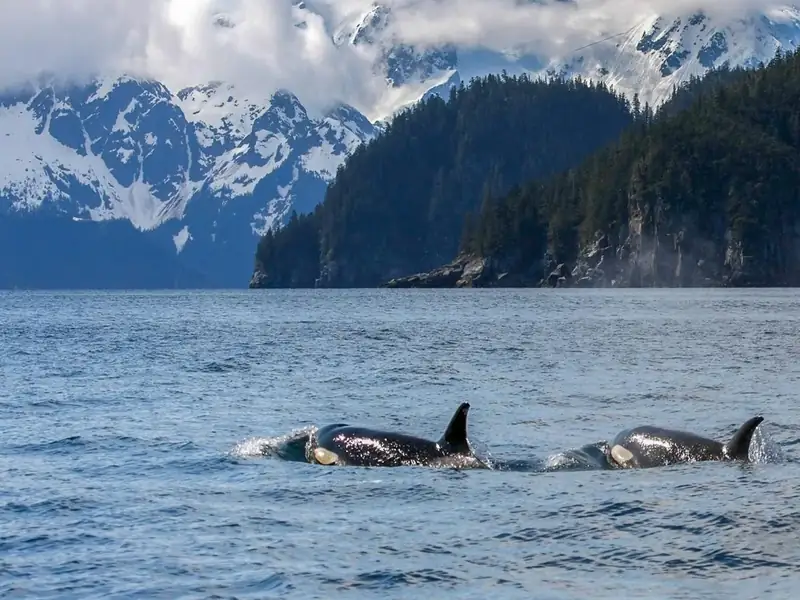
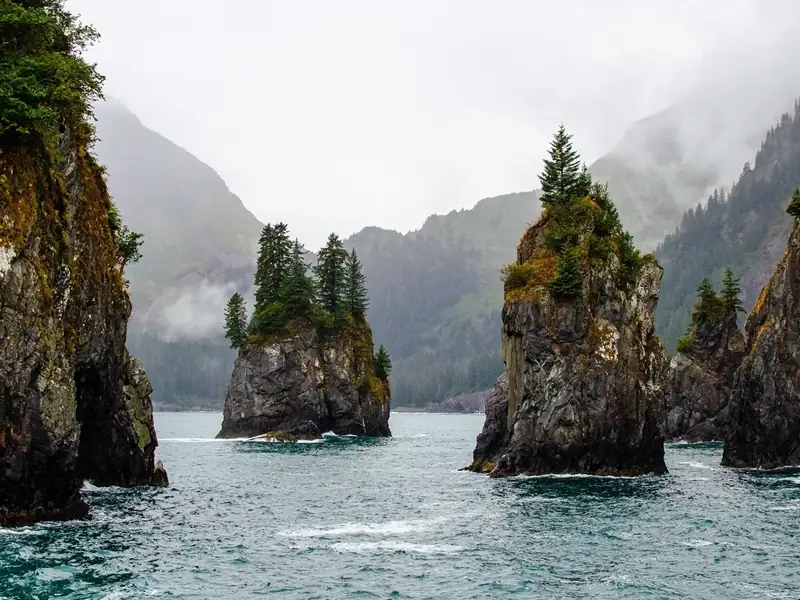
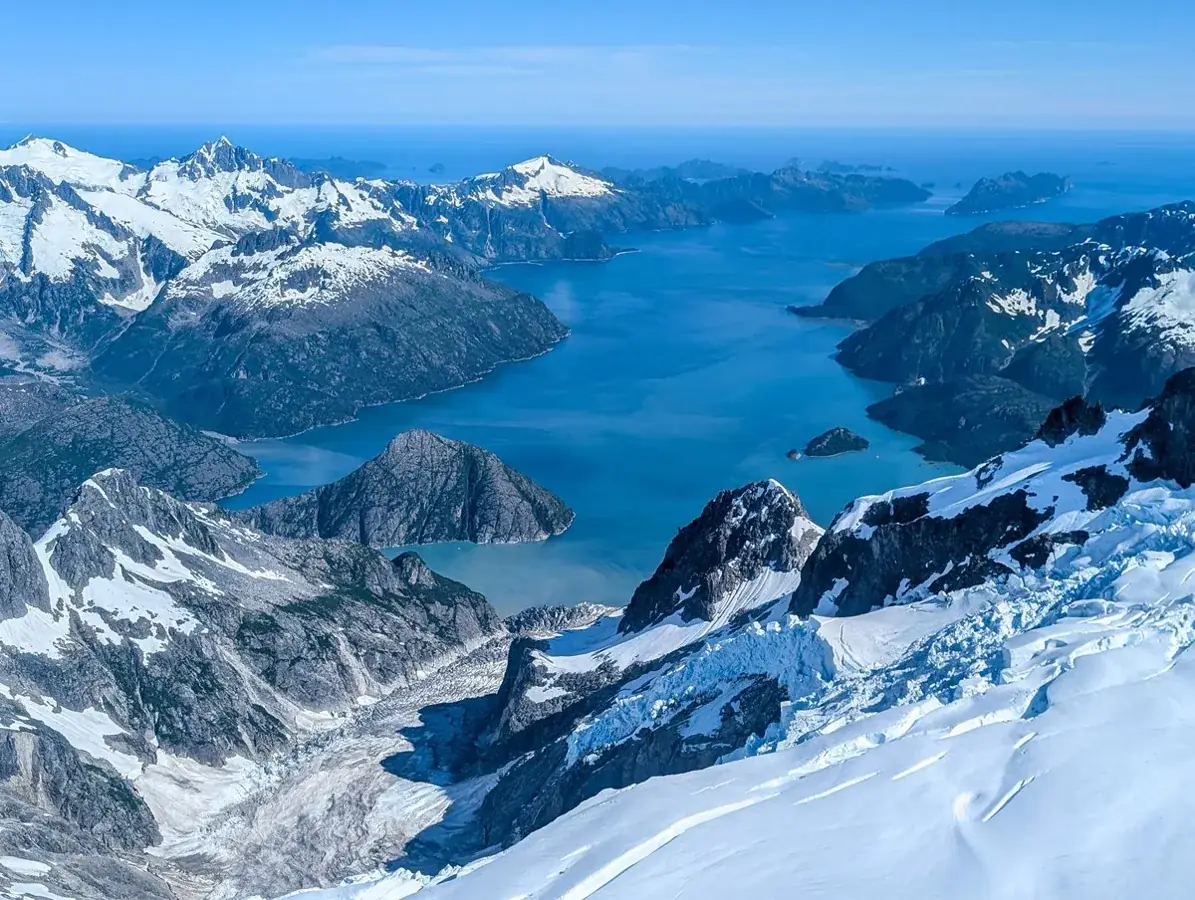
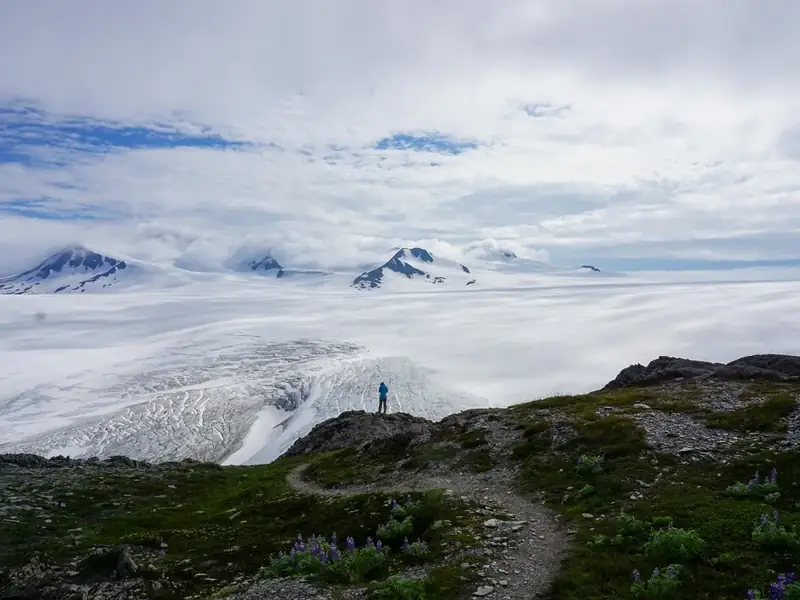
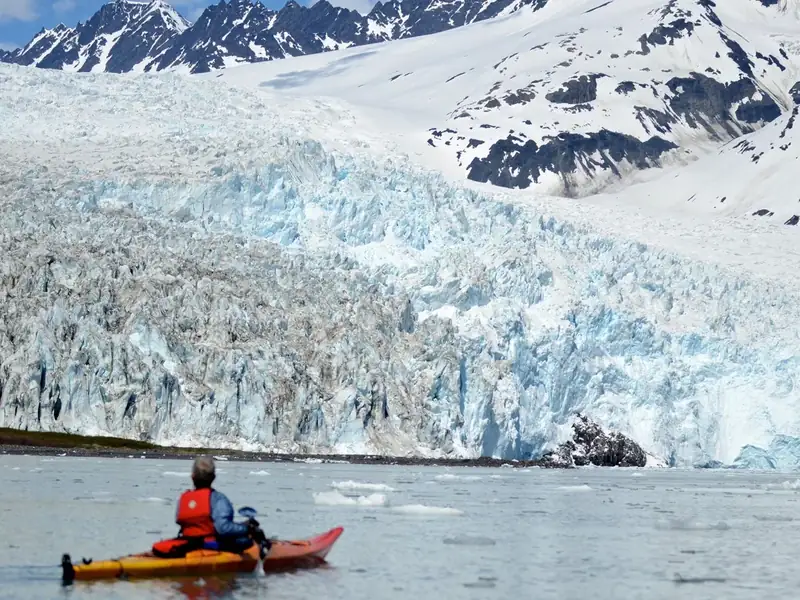
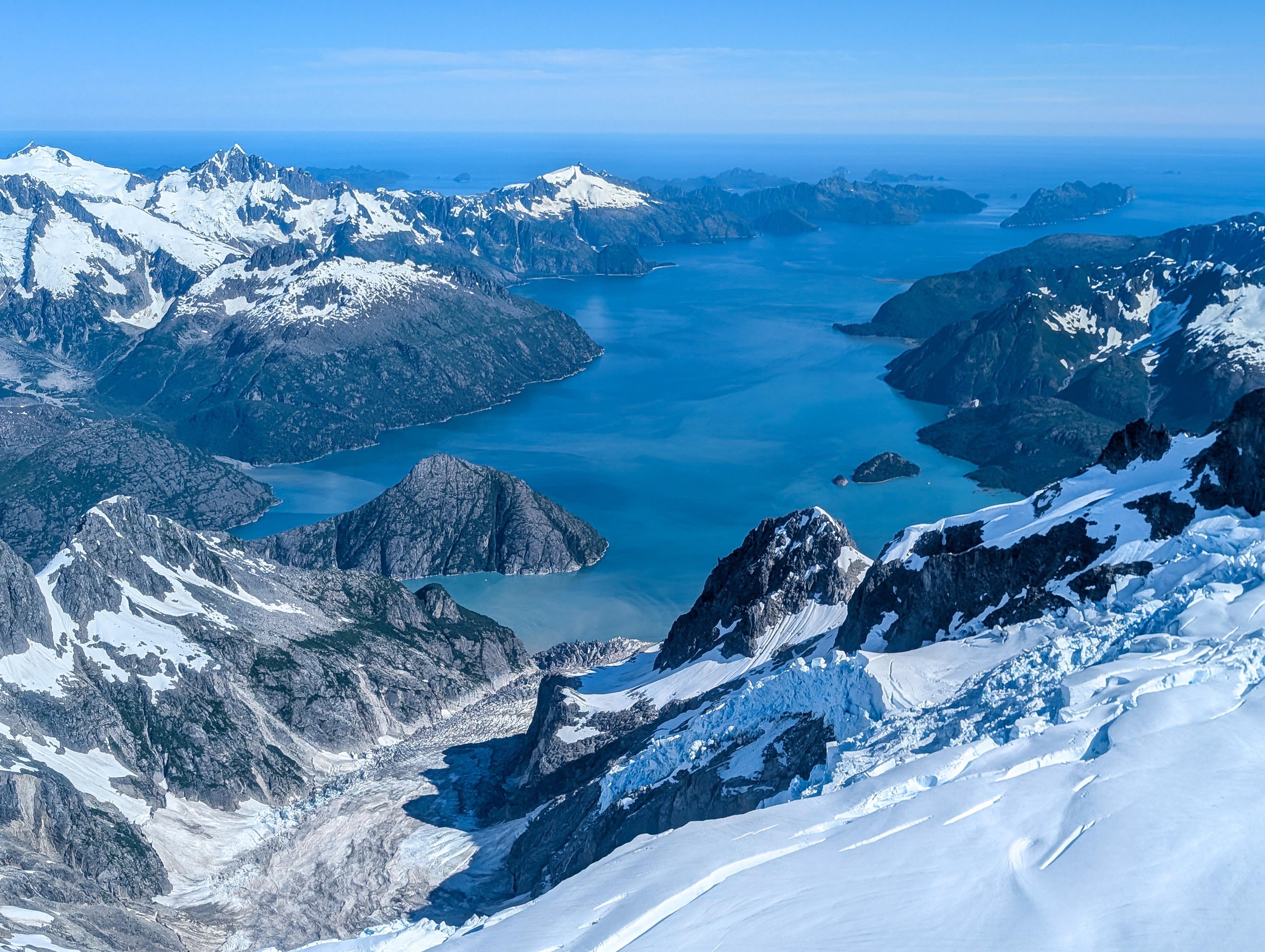


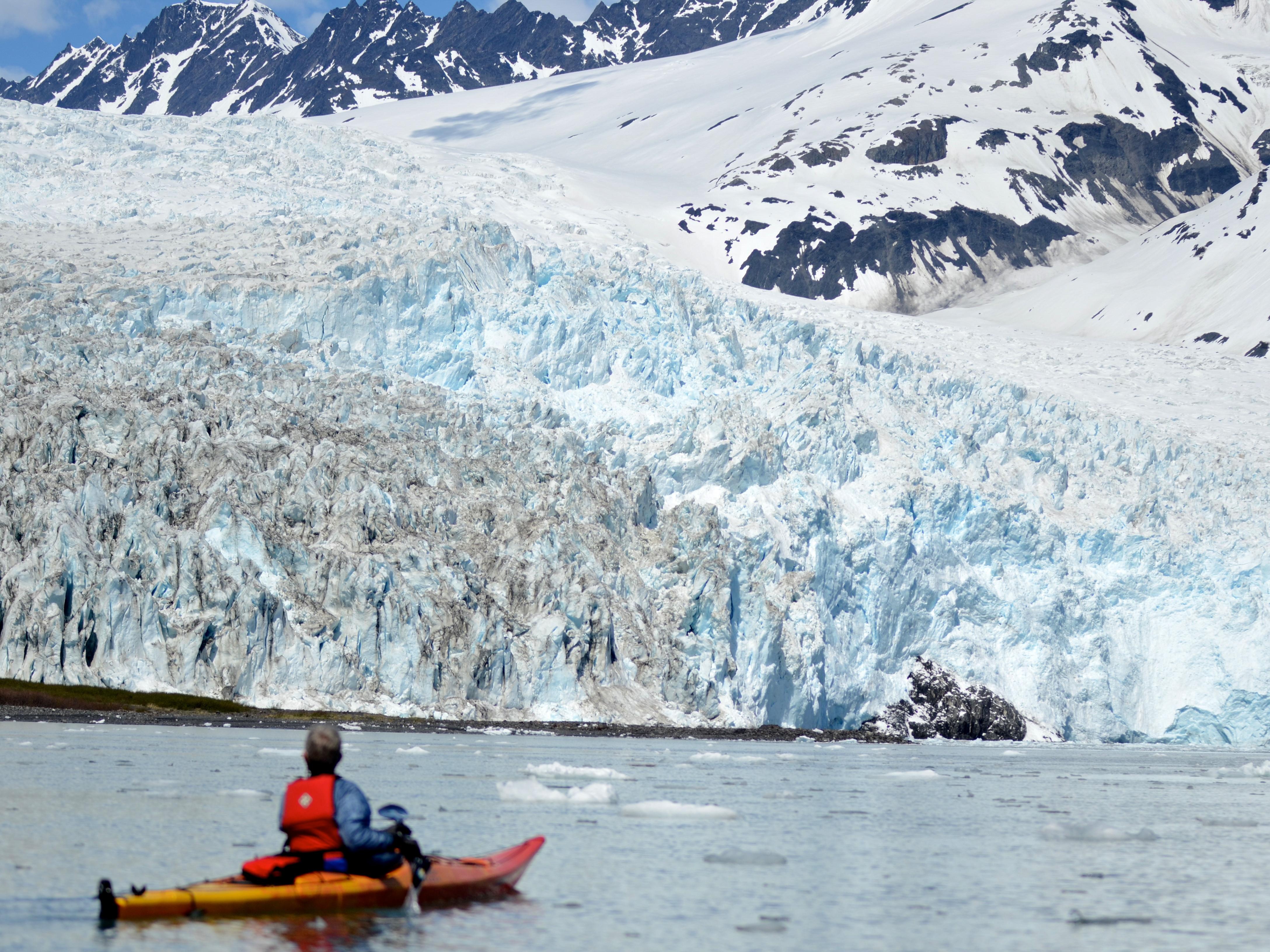
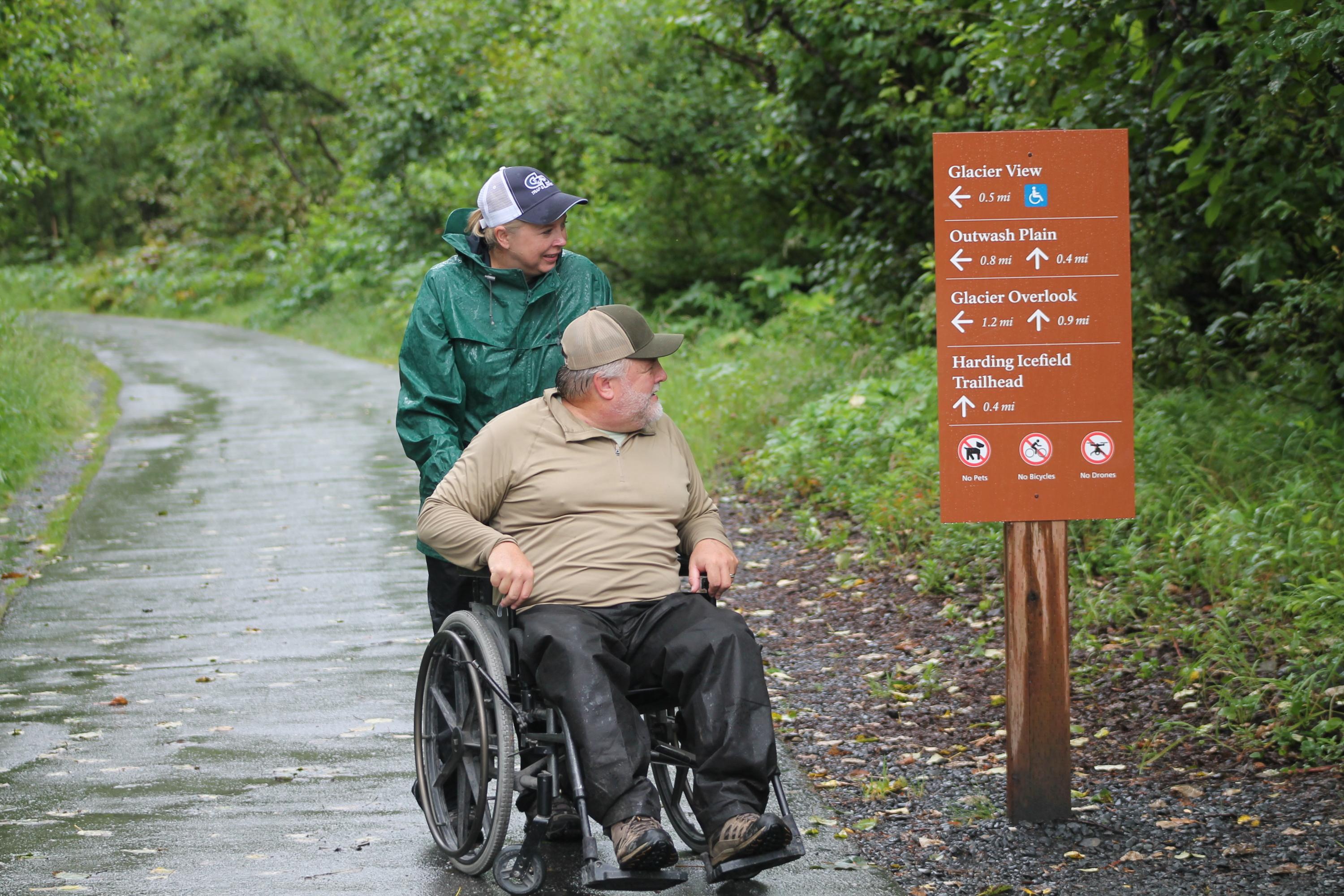


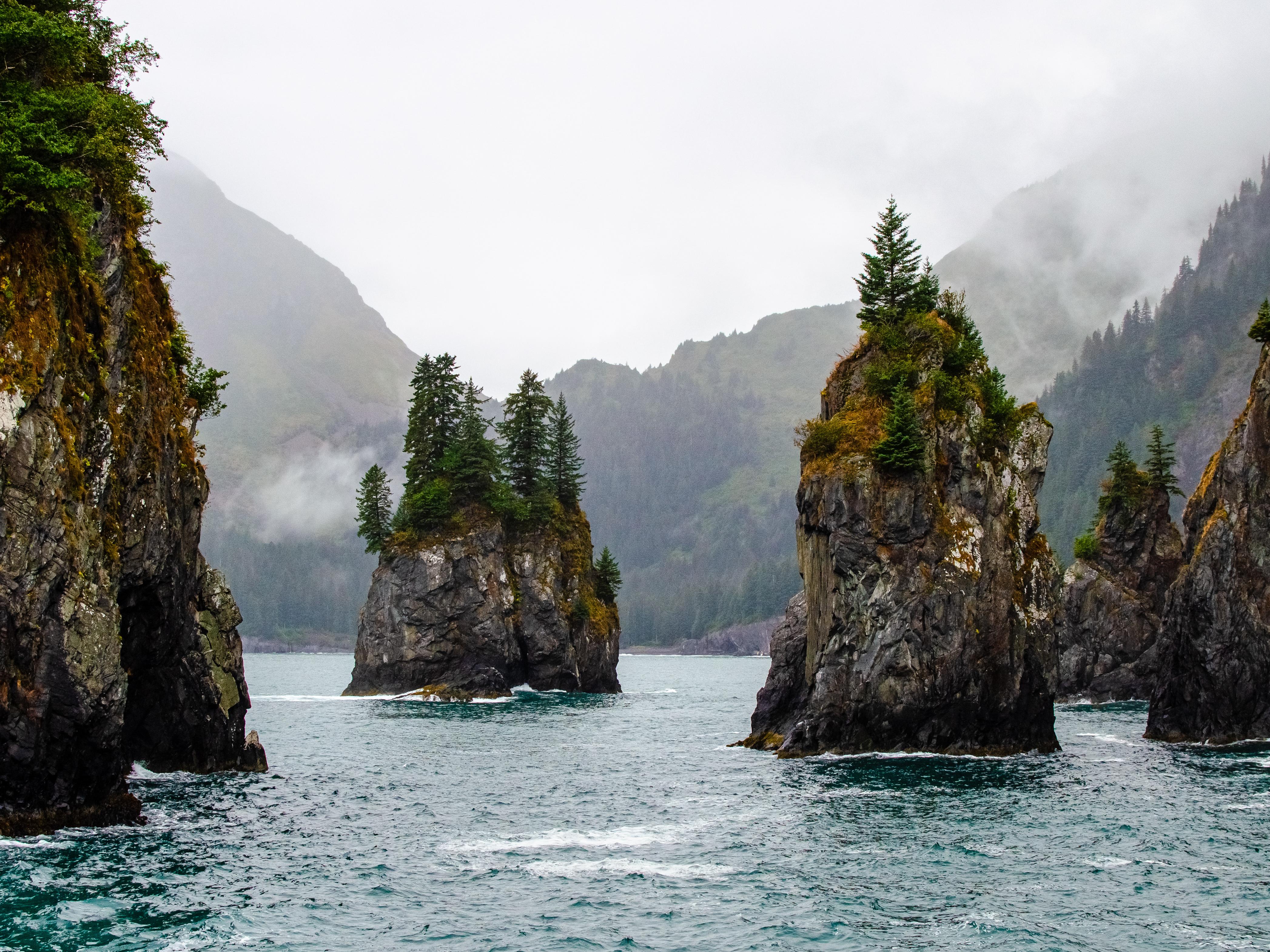

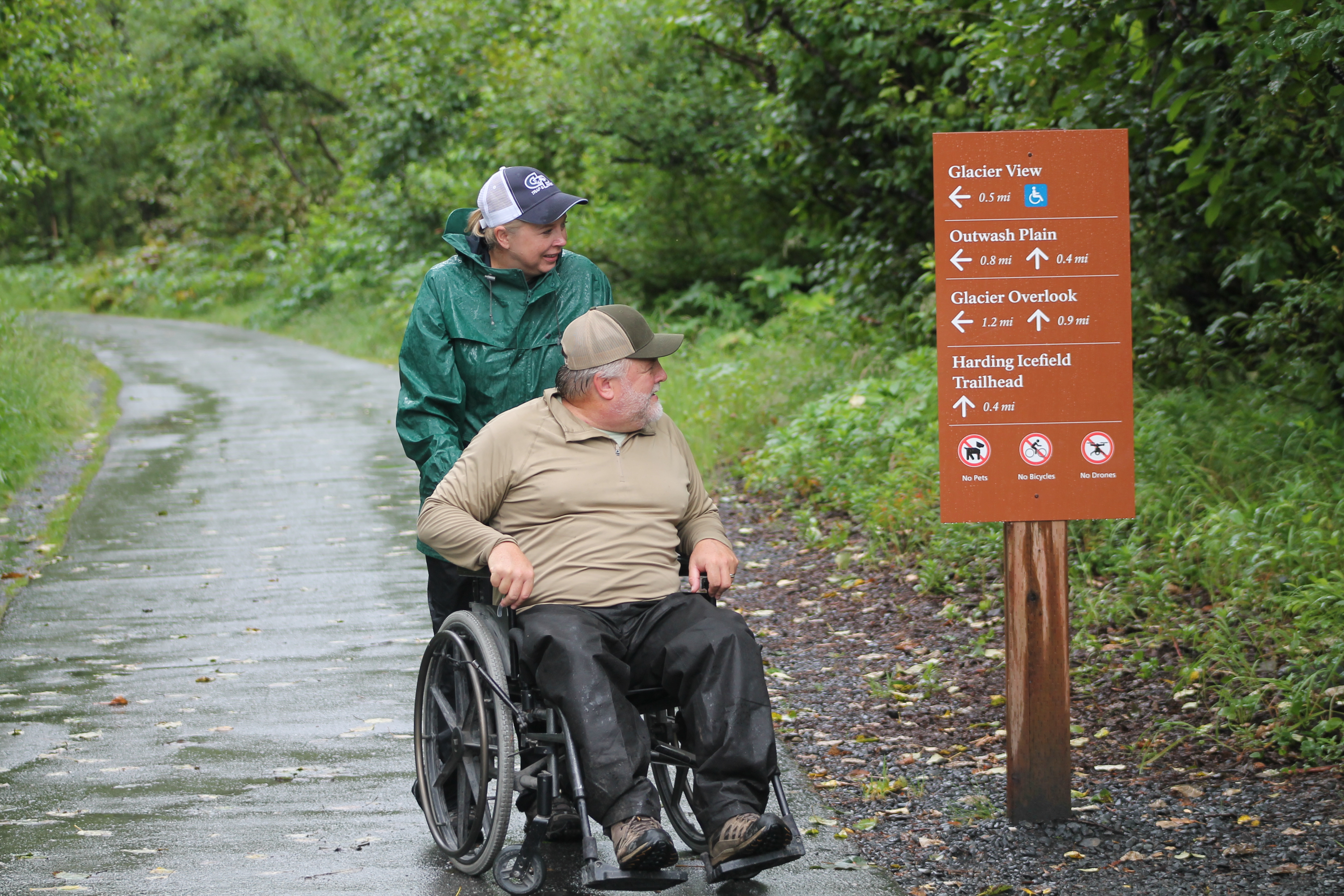

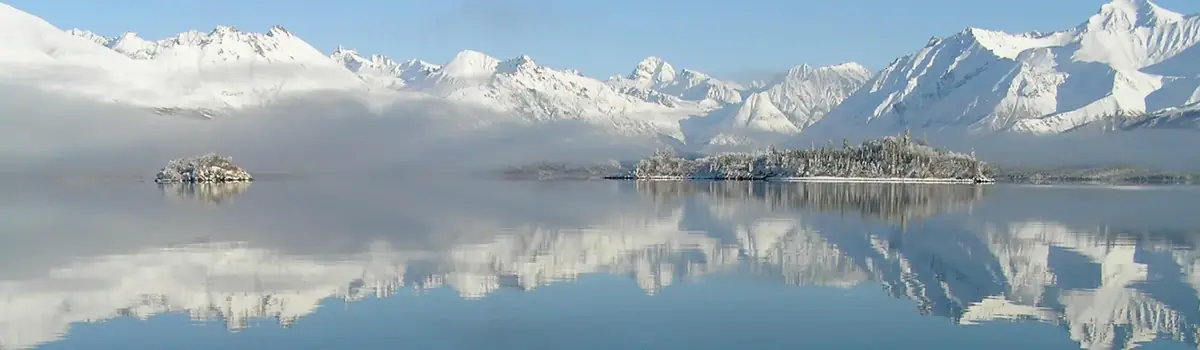 Lakes & rivers